
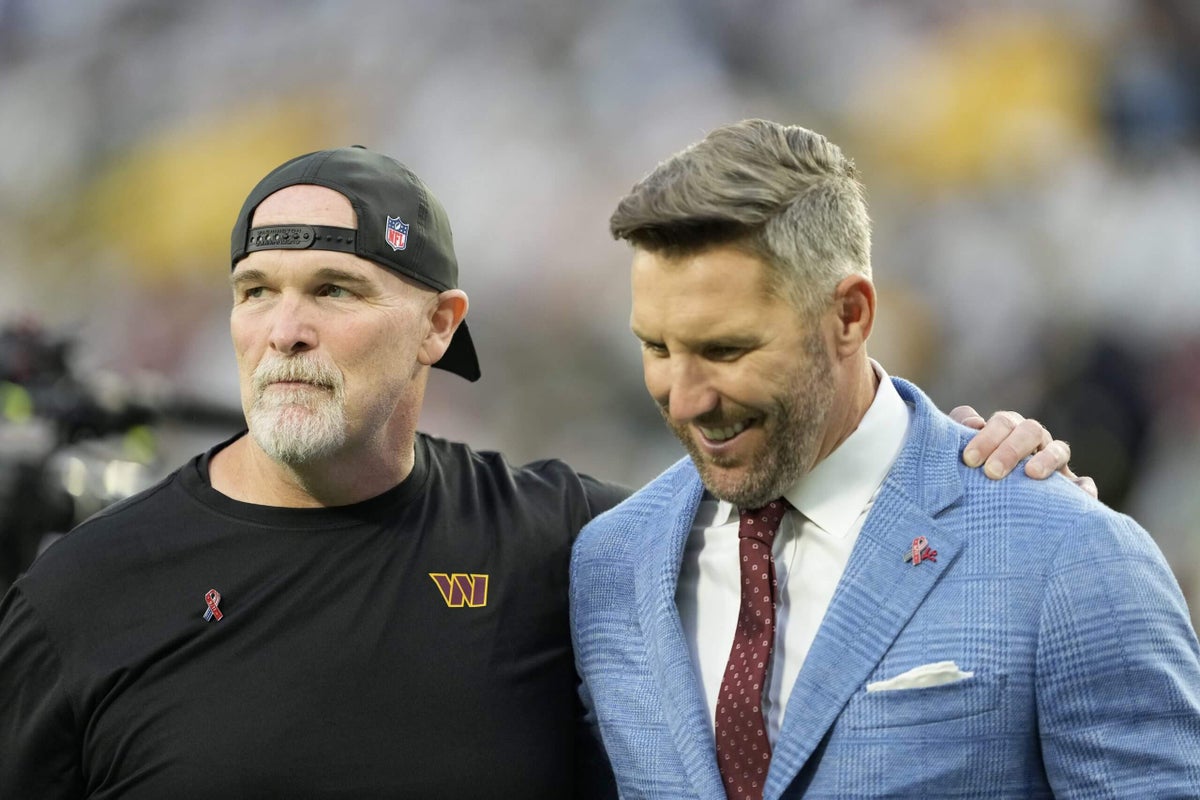
After going 5-12 last season with one of the league’s worst defenses, the Commanders are starting anew with a pair of first-time coordinators, David Blough and Daronte Jones. The recent history of teams with two first-timers on the headset is pretty terrible — the 2020 Carolina Panthers won all of five games, while the 2021 New York Jets, 2023 Arizona Cardinals and 2024 New England Patriots each won only four — but it’s a gamble coach Dan Quinn believes is worth taking.
“I thought it was time for change. A new vision of how we’d want to go about it and so that’s what we did,” he said Tuesday.
The Commanders’ new vision is just beginning to take shape. With the NFL scouting combine in late February, the start of the free-agent signing period in March and the draft in April, the team will yet again try to retool its roster. And the shopping list is extensive.
As the Commanders begin their busy offseason, let’s dive into the mailbag.
(Note: Questions may have been edited for clarity and length.)
To what extent is general manager Adam Peters accountable for the team’s performance and ability to contend? Half of his draft picks and trades look regrettable and will hamstring the 2026 season. Should Peters be on a hot seat, too? — Justin H.
If the team has another dreadful season and fails to find talent who contributes and develops consistently, he will probably be on the hot seat, Justin. The level of urgency among NFL teams seems greater than ever; if John Harbaugh and Sean McDermott are deemed fireable, then anything is fair game, really. And there’s a strong argument to be made that Peters miscalculated in 2024, when it went 12-5. Sure, the Commanders made it to the NFC Championship Game, but the roster was thin (and old), and instead of staying on a course to develop through the draft, he traded for three costly veterans on the belief the team wasn’t far from being able to compete deep into the postseason annually. In my view, only one of those veterans — left tackle Laremy Tunsil — was worth the value of the trade.
Peters vowed at the beginning of 2024 that he would build through the draft, and supplement via free agency. The San Francisco 49ers, his former team, were an example of hitting on late-round picks, certainly. However, with the moves made in 2024 and 2025 (the trades for Lattimore, Tunsil and Samuel), we depleted draft picks in 2025 and 2026. What have we actually learned from his moves and does it mesh with what he says? Have there been previous examples adding talent through trades working out long term and being a good strategy? — Anonymous U.
It’s not about what “we” learned. It’s about Peters. And it’s too early to tell what he “learned.” Maybe he feels like those moves were risks worth taking. Maybe he regrets one or two. I think it was wise to acquire a premium left tackle, and Tunsil is one of the best in the game. He was worth it. Lattimore, however, has obviously not been the player they were expecting. I think that’s on them for expecting anything different. Lattimore, in his prime, was exceptional. Lattimore, over the last few years, had been pretty good when healthy. However, it was clear he lost a step before suffering the hamstring injury that delayed his start in Washington.
While Samuel turned out to be the most consistently healthy wideout on the team last season, the Commanders hoped he would morph into something he’s never been in his career: a true “No. 2” receiver who stays on the field almost as much as the No. 1. I don’t like the term “gadget player” because it carries a negative connotation. Samuel is the rare player who can essentially play two or three different roles, but he has to be used wisely. The Commanders didn’t seem to have an intent to do that, and then injuries forced them to rely heavily on him anyway.
Back to your question: Yes, there have absolutely been plenty of examples of trades being viable team-building strategies. Philadelphia GM Howie Roseman is the poster child for it. Still, he doesn’t rely solely on acquired veteran talent. He supplements through the draft.
I’d say it’s still too early to know what Washington’s last two draft classes really are. Year 1 was a bit of a smokescreen; they were good, but the schedule and play of Jayden Daniels masked a lot of deficiencies. And Year 2 was overwhelmed by injuries.
When you talk to NFL insiders about the Commanders, do you most often hear that the team’s priority should be providing Daniels with more offensive weapons or fixing the defense? — Mike S.
I get the sense the team is prioritizing both. The team’s leaders know they need a near-overhaul of the defense. It’s why they brought in a new coordinator with a new philosophy and new scheme. They also know they need to give Daniels more to work with. It’s why they changed coordinators but gave him someone he’s familiar with, and are tweaking the system to support him better. They need more pass catchers and the run game will be more of a focus.
What players does the organization view as no-question (within reason, obviously) 2026 starters going into the offseason? — Benjamin P.
My best guess: Daniels, Terry McLaurin and Trey Amos (when healthy) are the only true locks. The team may have more in mind, but in just scanning the roster, those are true locks I see.
I’ve got a different take on the hirings of Blough and Jones as first-time coordinators. I view it as a subtle endorsement of Dan Quinn. By hiring two first-timers, I feel the Commanders are less likely to move on from Quinn, given the circumstances. They’d have to fall even further into the mess to move on. Agree or not? — Steve L.
Hmm, I’m not sure I’m following, Steve. They are supporting the move to change coordinators, but if they have another terrible season, I could definitely see them moving on from Quinn, which means both coordinators could be gone as well; any new head coach would hire his own staff and likely bring in new play callers. I don’t think simply because the coordinators are first-timers that the team would extend Quinn’s leash a bit. Now, if this were his first season as the Commanders’ head coach and he decided to hire Blough and Jones as part of his inaugural staff, sure, he would likely get more time to rebuild. But that’s not the case here. This will be Year 3.
And even still, the NFL has shown greater urgency than ever with players and coaches. I’m old enough to remember when firings after two seasons felt ridiculous. Nowadays coaches don’t even get that long to rebuild.
The Commanders were not big free-agent spenders last year, with a lot of one-year deals, unlike other teams who drafted franchise QBs in 2024. Without getting in the weeds on things like cash over cap, does ownership have a cash problem that’s holding back Peters and the team on spending? If you don’t think so, would Tunsil negotiations dragging on change your mind or is this just not an issue at all? — Josh S.
I don’t think so. Remember, last year they signed 28 guys. The New England Patriots, Minnesota Vikings and Chicago Bears — other teams that drafted QBs early in the 2024 draft — signed on average 16 free agents.
The largest contract in total value Washington gave out to a free agent last year was $45 million, to Javon Kinlaw. The Patriots and Vikings each signed three players to contracts that topped $50 million in total value. But remember that Washington’s top two veteran acquisitions arrived via trade in Samuel and Tunsil. And to be fair, the team did spend big on Tunsil by essentially giving up three draft picks (it swapped another) and taking on the remaining $42 million in cash in his deal. And that’s before the Commanders try to re-sign him.
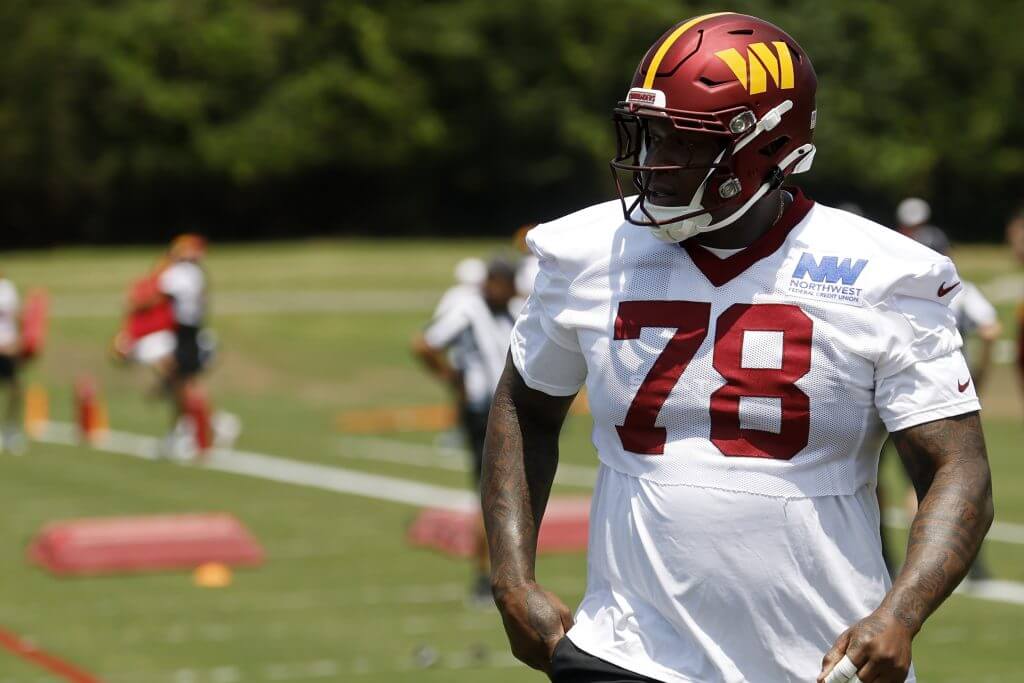
Washington Commanders left tackle Laremy Tunsil came at a high cost, but delivered high-caliber play. (Geoff Burke / Imagn Images)
Washington purposely tried to keep its roster flexible over the last two years, since Peters became general manager. In Year 1, the Commanders said they wanted to build through the draft and bring in veterans on shorter deals to set a standard and lay a foundation. But then they went 12-5 and made it to the NFC Championship Game and all of a sudden that rebuilding team looked more like a contender. So they retained a lot of their key veteran free agents and bolstered areas that were obvious issues (except pass rusher, which still baffles me). The problem with that thinking was that the team was and remains a rebuild; the success of 2024 seemed to mask their deficiencies. So now they’re sort of starting over two years in with Quinn.
I think they will spend bigger this offseason. I think they know they need more elite talent on this roster, and that ultimately comes at a cost. But they have a lot of holes to fill, so there could be tough decisions on where to draw the line.
As for Tunsil, I would be surprised if a deal doesn’t get done. Both sides know he should and will be paid.
What is the current status of negotiations with Tunsil on a contract extension? This can’t turn into another McLaurin melodrama, right?! — Jake S.
I think people forget that he does have a year left on his deal. But, yes, they are talking and Peters has said flat-out that they want to get a deal done and “sooner rather than later.” Neither side wants this to drag out. Could it? I would never say never in the NFL. But this one seems pretty clear: Tunsil will likely get top dollar at left tackle — here or elsewhere. It would be hard to fathom the team not coming through when it gave up the draft haul it did to acquire him from Houston.
With so many needs given the current roster (TE, WR, LB, safety, edge, corner…) , do you think Washington will trade down in the draft from No. 7, or try to obtain an elite player by sticking with its current draft position? — Kent L.
I think a trade down is very possible, but it’s also impossible to know at this point. The Commanders don’t even know. I’m sure they’re listening to everything, but those types of deals usually happen during the draft, as teams see how the board is playing out. But it’s worth reminding: Even if the Commanders want to trade back, they need a partner who is willing to trade up at the right price. Doesn’t just happen out of nowhere.
What do you think a trade back out of the seventh pick would look like for the Commanders? — Matt G.
Depends on their trade partner(s) and how far back they’d move. But even then, the return can vary widely.
In 2018, the Tampa Bay Buccaneers got two second-round picks from the Buffalo Bills when they moved back five spots from No. 7 to No. 12. (The Bucs also sent Buffalo a late seventh-round pick in the deal.)
Four years earlier, when Minnesota moved back just one spot from No. 8 to No. 9, the Vikings received only a fifth-round pick from the Cleveland Browns.
In 2005, the Raiders gave up their No. 7 pick, linebacker Napoleon Harris and a seventh-round selection to the Vikings for receiver Randy Moss.
And if you go back even farther, to 1995, Tampa pulled off one of the greatest draft-day trades when it flipped the No. 7 pick and a third-round (No. 72) pick to land two future Hall of Famers in the first round: Warren Sapp and Derrick Brooks.
With an old and unathletic roster, any chance Washington trades its talented albeit skinny and injury-prone QB to a QB-desperate team like the New York Jets for multiple first-rounders?? — Jim Z.
Jim. Come on.