
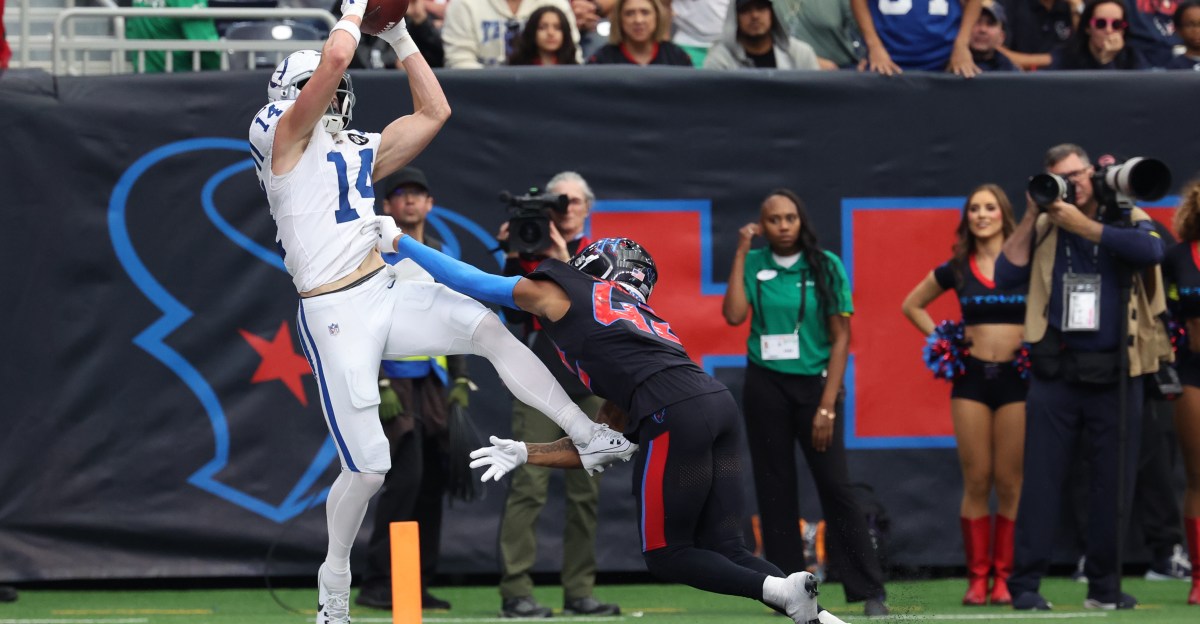
With the draft approaching, this series has been about stripping away hype and getting back to what actually translates on Sundays. Quarterback and running back evaluations get most of the attention, but wide receiver is the position where casual scouting often falls apart the fastest. Too many prospects get labeled as “NFL-ready” because they’re fast, put up big numbers, or dominate weaker college competition. In reality, receiver is one of the most technical and mentally demanding positions in football, and the gap between looking good on Saturdays and winning consistently on Sundays is enormous.
At the college level, many receivers thrive on scheme advantages, free releases, and mismatches against overmatched defensive backs. They’re often the best athlete on the field and rarely have to win with precision. In the NFL, that disappears. Corners are faster, stronger, smarter, and coached just as well. Windows are smaller. Timing is tighter. Separation has to be earned. Routes have to be exact. And toughness matters far more than most fans realize.
For this installment, the goal is simple: break down what actually makes a receiver valuable at the next level. Not highlight plays. Not box score production. Traits. Habits. Patterns that show up over and over on film. The same things coaches and scouts look for when they’re deciding whether a player is a future starter, a role player, or someone who will struggle to stick.
This framework comes from conversations with people who evaluate players for a living, combined with experience studying and coaching the position at the high school and college levels. It’s built to be practical. Something you can use while watching live games, cutting clips, or reviewing prospects in depth. If you want to understand why some receivers transition smoothly and others disappear, this is where to start.
Separation & Route Running
Speed & Deep Threat Ability
Ball Tracking & Body Control
Plays in Traffic & Toughness
Football IQ & Spatial Awareness
Special Teams Value (For Non-Elite Prospects)
In the end, receiver scouting comes down to separation and dependability. Speed gets attention. Production gets headlines. But scouts care about something simpler: can he get open, can he catch it cleanly, and can he be trusted when the ball is in the air on third down? If you evaluate with that lens, the tape becomes much clearer. Look for consistent separation, strong hands in traffic, body control down the field, and effort in the run game. The flashy plays matter, but the repeatable habits matter more. When you stack receivers using this framework, you start to see who will survive against NFL corners and who was simply winning on Saturdays.