
Whenever we do a mailbag, the unofficial rule is to answer the question that gets the most likes. The reason this is an unofficial rule is this week’s question with the most likes: “If the SEC coaches were playing Mario Kart, which characters do you think each of them would use?”
Mario Cristobal? No problem. Mario Lopez, Mario Puzo, even Super Mario Brothers — 1 and 2 — are in my wheelhouse. Mario Kart, sadly, is a blind spot.
So we’ll go with topics such as the impact of the nine-game schedule, the SEC coach most likely to be on an unexpected hot seat, and Will Muschamp, because why not? But first …
(Note: Submitted questions have been edited for clarity and length.)
Since both of these things were options in the 2026 championship game, which is more likely to happen again: Another historical have-not like Indiana winning a national championship (maybe, say: Vanderbilt, Mississippi State, Purdue, or Northwestern), or a team outside the SEC or Big Ten winning a national championship? — Jason H.
Happen again, or happen this season? If it’s the latter, you’d have to go with a non-SEC/Big Ten national champion, since Miami seems a lot closer than any of the traditional have-nots. Indiana, lest we forget, made the College Football Playoff in 2024, then just took it to another level last season. The closest parallel this year would be Ole Miss, which could do it with Trinidad Chambliss coming back, but I’m not sure anyone is putting Ole Miss in the same bucket as Indiana, Vanderbilt, or the teams you mentioned. Ole Miss wasn’t a have-not, just more an average team with good spurts.
But that led me down a bit of a rabbit hole: Who are the have-nots? And how do you define them? So I went to the wonderful site Winsipedia, and honed in on one stat that may show it best: bowl appearances. The fewer you have, the more bad seasons you’ve had, and since bowl eligibility is more of a modern thing, it avoids propping up teams that were stronger in the pre-World War II era.
The SEC teams with the fewest bowl appearances: Vanderbilt (11), Kentucky (23), South Carolina (26), Mississippi State (28), Missouri (38).
The Big Ten teams: Rutgers (13), Indiana (16), Northwestern (18), Purdue (21), Illinois (22), Minnesota (26), Michigan State (30), Maryland (30), Wisconsin (35), UCLA (38), Oregon (38).
The cutoff for me was if you were in the top 25 all time. You’ll notice how many more Big Ten teams are in there — although one just won the national title. Minnesota is also the last program to three-peat as national champions, although it happened in the 1930s. Many of those other programs would also push back on being the have-not category.
This just shows, once again, how amazing Indiana’s story is, but whether it’s repeatable, we just don’t know. Vanderbilt, the Indiana of the SEC, serves as supplementary evidence that it may be. But this season? Not sure I see it.
Speaking of which:
Who is the surprise team to compete for an SEC championship and/or CFP bid this year? — Josh V.
Piggybacking off the last question, what constitutes a legitimate surprise? Throw out the five SEC teams that made last year’s CFP, plus Texas, because, duh. And you also couldn’t count LSU as a surprise because of Lane Kiffin and his portal haul.
Missouri is not a team with tremendous buzz, but the Tigers came in at No. 13 on Stewart Mandel’s too-early top 25. That’s ahead of Ole Miss, LSU and Alabama, among others.
Florida snuck into Stewart’s list at No. 25, but the Gators would qualify as a surprise: 4-8 last year, new coach, new quarterback, everything. Still, while I like what coach Jon Sumrall has done so far, especially hiring Buster Faulkner as offensive coordinator, a playoff run in Year 1 seems a stretch.
Vanderbilt is expected to dip without Diego Pavia and Eli Stowers, but it does have five-star quarterback Jared Curtis, and after going 10-3, would making the CFP really be a surprise?
Auburn offers intrigue if Alex Golesh bringing quarterback Byrum Brown with him from South Florida improves an offense — even with the losses at receiver — and the defense is as salty as last year. But the Tigers have road games at Tennessee, Georgia, Ole Miss and Alabama. Yikes.
Kentucky gets a jolt of energy under Will Stein, who had a good transfer class. But new quarterback Kenny Minchey has zero career starts, and the Cats are going from the experienced Mark Stoops to a first-time head coach, so I don’t see it right away.
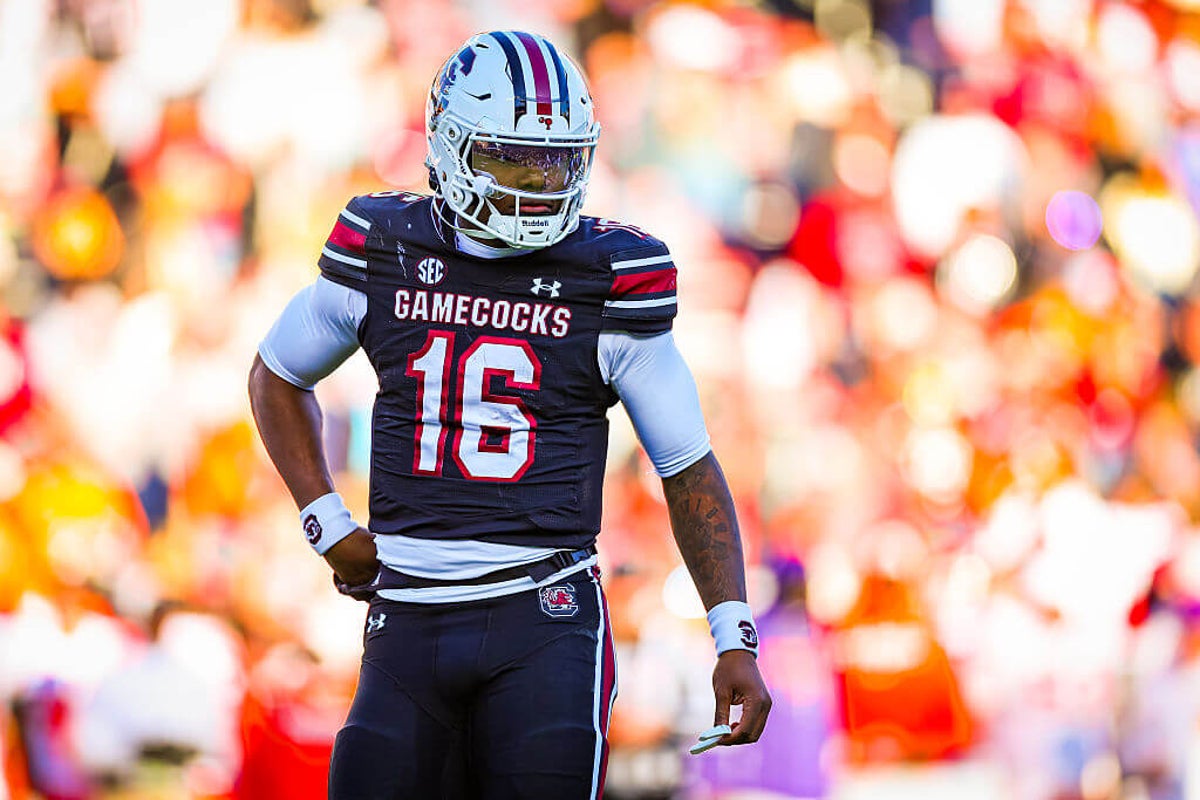
There isn’t one team I’m in love with as a dark horse right now. So I’ll go with the team that was out of nowhere two years ago but a disappointment last year: South Carolina, which still has the same coach, quarterback and several other pieces from that 2024 team. The schedule is back-loaded, so there’s a path where the Gamecocks are 6-1 going into Oklahoma on Halloween, with a chance to carry momentum down the stretch.
With the SEC moving to nine games, do you think the teams with in-state ACC rivals will keep other previously scheduled nonconference games? I’m not sure the current risk/reward justifies playing an 11th Power 4 game. The committee still seems to look first at the number of losses, with other metrics seemingly more like tiebreakers. — Robby W.
This centers on four teams, and the one that had been the most aggressive in scheduling — Georgia — has started canceling games: Future series with Louisville (2026-27) and NC State (2032-33) were mutually canceled, with both of those opponents also seeing their ACC schedule go to nine games.
But Georgia still has three other marquee series on the books: Florida State (2027-28), Clemson (2028-29) and Ohio State (2029-30). Florida still has Colorado (2028-29) and Notre Dame (2030-31). South Carolina still has North Carolina (2028-29).
You’ll notice the remaining series are all pretty marquee programs, or will be if Deion Sanders and Bill Belichick are still coaching those programs. Based on that, it appears revenue trumps competitive difficulty. But it won’t necessarily stay that way.
We don’t know the format of the future Playoff. It will almost certainly be 16 teams, which would give a little more leeway, and 24 would be even more room to absorb a loss. And what if conferences end up with guaranteed bids that are decided by conference record? Then those nonconference games are a bonus, and in that case, why not schedule a huge game that television will love?
We’ll throw another one in: What if the regular season is moved to start in what is now Week 0 — allowing at least two bye weeks each season? Then coaches will feel better signing off on another difficult game.
Then again, what if none of this happens and it’s back to a committee? The SEC did get five teams in last season, after it pushed for strength of schedule to matter more. But one of the 9-3 teams left out was Texas, which would have been 10-2 if it scheduled Ohio Wesleyan instead of Ohio State. The SEC will keep its requirement that everyone play another power-conference opponent, so Texas and 11 other schools still have to navigate that 10th game. But the other four have to figure out how many seasons they want to schedule an 11th power-conference opponent.
“We’ve got to take a hard look at what are we gonna do with those other two games,” Georgia athletic director Josh Brooks said in late January, mentioning the CFP metrics. “We’re having a lot of discussions with the CFP about metrics and metrics to look at about the strength of schedule. And we need to see that be rewarded if we’re gonna continue to play this 11th game of a P4.”
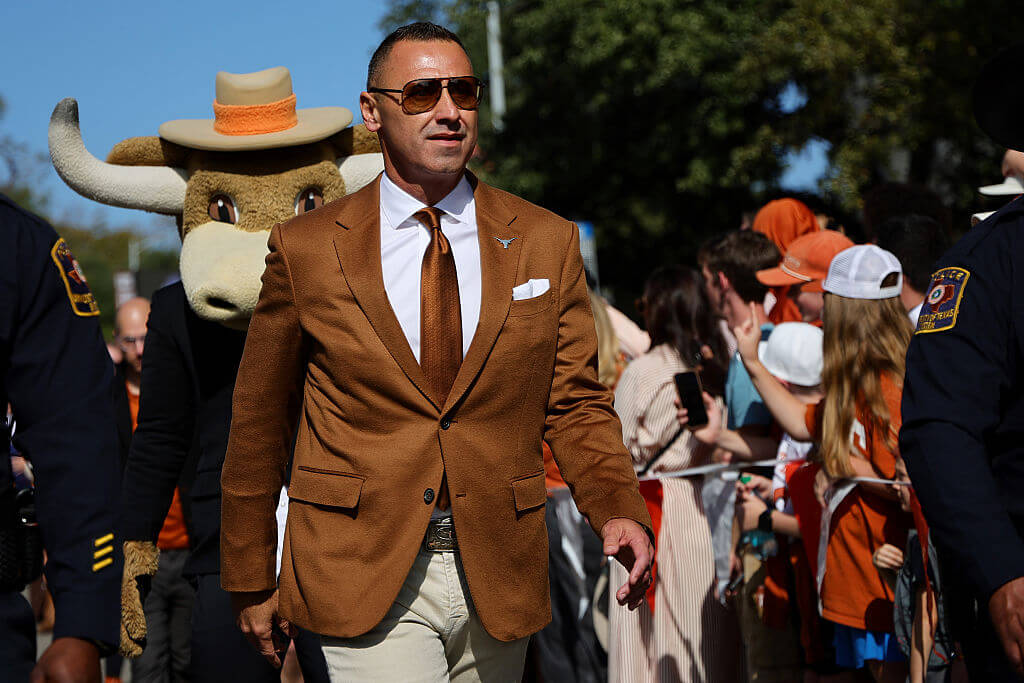
Steve Sarkisian doesn’t enter 2026 on the hot seat, but expectations will be through the roof in Austin. (Alex Slitz / Getty Images)
Let’s fast forward to Oct. 18, 2026. Who is the SEC coach who becomes the next James Franklin, Brian Kelly or Hugh Freeze? Which coach will suddenly be on the hot seat? Tennessee has a tough schedule. South Carolina? What if Texas lost at home to Ohio State, then at Tennessee and then in the rivalry with Oklahoma? He better beat Florida at home Oct. 17. — Ben D.
Shane Beamer, who has been largely good at South Carolina but is coming off a bad year and wasn’t hired by his current athletic director, is a clear hot-seat situation. So he doesn’t qualify for this question. Otherwise, you nailed the two coaches that most resemble Franklin and Kelly, coaches who weren’t really considered on the hot seat, but things went so bad early that the move was made.
Josh Heupel shouldn’t be in danger. He has done a great job making Tennessee relevant again. But I’ve always wondered if there’s a ceiling with him, and Volunteer fans are wondering that now and getting antsy. His athletic director, Danny White, is a pretty aggressive guy, but he has also hired Heupel twice.
Steve Sarkisian has also been very good at Texas, but it’s Texas. If next season starts to unravel, look out.
Kalen DeBoer, who you didn’t name, is in a similar boat. He’s won 71 percent of his games in two seasons at Alabama. But he’s replacing a guy who seemed to win 99 percent of the time (it was 87 percent, but whatever). You can tell Alabama fans that the game has changed, even Saban wouldn’t dominate in this era, but their angst will remain. Alabama’s administration believes in DeBoer, and he could probably afford another 9-3 type season. But if things get worse than that …
Brett Venables seemed to take himself off the hot seat last year. But if Oklahoma goes in the wrong direction, with the offense again struggling, you could see a new athletic director making a quick hook.
Let me throw in another name: Pete Golding. Yes, he had a great playoff run. And he’ll be fine if Ole Miss is in the territory of 8-4, competitive if not Playoff-worthy. But if this team struggles — if it gets embarrassed at home by Lane Kiffin and LSU in Week 3 — there will be questions on whether Golding was the right long-term hire.
Is the SEC still imposing scholarship limits for football? — GM M.
The SEC actually voted in December to allow teams to scholarship all 105 players on the roster. This was after a season playing with a self-imposed 85-scholarship limit, even after the House settlement eliminated scholarship limits, replaced by roster limits.
But I’m skeptical this is a huge deal, some secret reason the SEC isn’t dominating anymore. Sarkisian is the only coach I heard complaining about it last year, and even he said he wasn’t sure he’d use all 105. The revenue-sharing cap doesn’t go up as a result of doing it, so you’re paying more players with the same amount you’d have if you only had 85.
The issue for the SEC isn’t being beat out for the best players ranked 86th to 105th on your roster. Those guys hardly play, and as we know, stocking them on your roster for development reasons doesn’t always work in the transfer portal era.
The issue for the SEC is getting the best 40-50 players. The conference ended its limit so teams had flexibility, not because it was seen as a huge competitive disadvantage.
How big of a blow does the Georgia program feel the loss of Will Muschamp is? — Aaron H.
Another reader, Lp. P. gave a pretty accurate response: “It feels like this is a much bigger ‘get’ for Texas than it is a loss for UGA, given how he had winnowed down his role in Athens. But he’s a DGD (Damn Good Dawg), and undoubtedly had big impact during his return.”
Muschamp wasn’t really doing much last season in Athens, and the assumption was he was all but in retirement mode. So taking the Texas job probably elicited a reaction akin to, “Wait, could we have done that?” But word came down last week that Texas is paying Muschamp well over $2 million over the next three years. Georgia already has a defensive coordinator, Glenn Schumann, who’s been calling the defense since the 2022 national championship season, after Dan Lanning left. And while the defense hasn’t been quite up to the 2021 standard, especially early last year, it got better down the stretch of the 2025 season, without Muschamp being in any obvious big role.
Plus, Kirby Smart will always be very involved with the defense. So it’s fair to call this good for Texas, although the defense hasn’t really been the main problem there. If the Longhorns are great next year it’ll probably have more to do with an improved run game, blocking and consistency from the quarterback.
Which SEC teams would benefit the most from the NCAA being granted antitrust status and the ability to regulate NIL, eligibility and transfers? — Stephen S.
Let’s save this question for when the NCAA is eventually granted that antitrust status. So … never.