
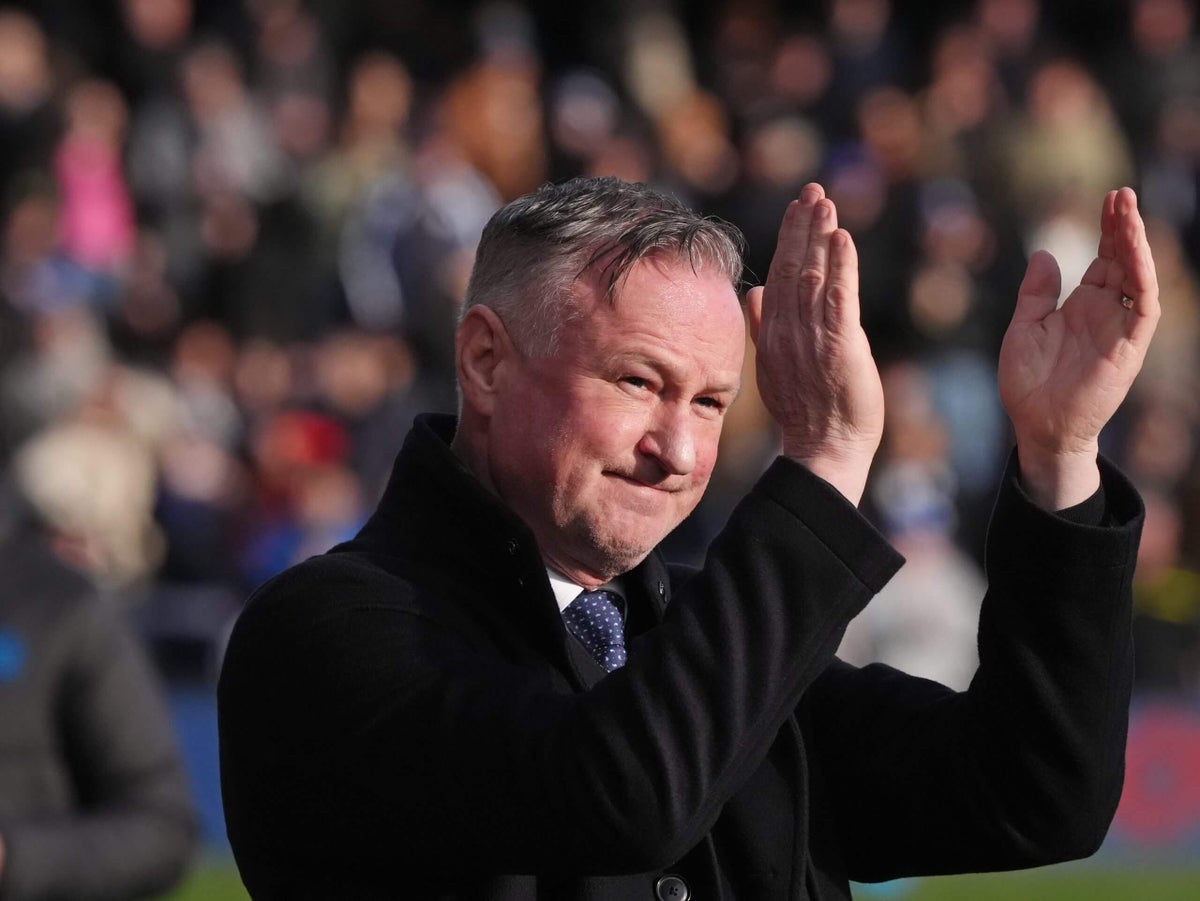
Blackburn Rovers’ appointment of Michael O’Neill as the Championship club’s new head coach has raised a few eyebrows and split opinion.
There is little doubt about the 56-year-old’s managerial credentials or his suitability to help steer the club away from the relegation zone of English football’s second division.
O’Neill’s arrival, however, contained one significant caveat: he will remain in his position as manager of Northern Ireland, overseeing the nation’s World Cup qualification play-off semi-final against Italy on March 26 and, if they win that, a final five days later.
He joins Blackburn on a short-term deal until the end of the domestic season, with his contract with the Irish Football Association (IFA) — the governing body of Northern Irish football — running through to the summer of 2028.
His new club are in the thick of a relegation battle; O’Neill oversaw last weekend’s 3-1 victory at Queens Park Rangers, a result that lifted Blackburn out of the drop zone. There are 14 league matches remaining before the Championship’s regular season ends on the first weekend in May.
Yet he is also preparing for an international play-off challenge next month that could book Northern Ireland’s first World Cup appearance in 40 years. That crucial game in Italy comes just five days after Blackburn face Middlesbrough, who are pushing for Premier League promotion. Steve Davis, who previously captained Northern Ireland under O’Neill, will be part of his coaching setup for both club and country.
O’Neill, a former midfielder whose playing career included two seasons at Newcastle United, must now balance two managerial jobs and two very different objectives.
Is managing two football teams at once common?
Managing a club and an international team simultaneously is rare, but has happened before.
Sir Alex Ferguson famously led Scotland at the 1986 World Cup in Mexico while still being in charge of Aberdeen. Ferguson had been part of the Scotland coaching staff under head coach Jock Stein, who collapsed and died during the nation’s 1-1 draw away to Wales in September 1985. Ferguson agreed to oversee Scotland’s World Cup play-off against Australia and, when they won that, subsequently the tournament. He appointed Archie Knox as his co-manager at Aberdeen to help balance responsibilities.
Kevin Keegan was appointed England head coach in February 1999 while still managing Fulham. However, he decided he could not balance both roles simultaneously and left the then second-division club three months later. Rinus Michels also spent a year managing both Barcelona and the Netherlands in 1974, taking them to the World Cup final. His compatriot Guus Hiddink simultaneously coached Australia and Dutch club PSV in 2006, and was appointed Chelsea’s interim head coach in 2009 while also managing Russia.
Blackburn have themselves had a boss who co-managed a national side. When the club appointed Mark Hughes in September 2004, he agreed to stay on in his role with Wales for the two matches in the October international break to allow the Welsh FA time to source his successor.
Nobody had as much experience balancing club and international duties as legendary former Northern Ireland manager Billy Bingham, who oversaw the nation’s 1982 and 1986 World Cup campaigns. Across his two stints, he also managed Southport, Plymouth Argyle, Linfield and Al Nassr.
O’Neill — arguably Northern Ireland’s most successful manager since Bingham — attempted a job-share when he was appointed at Stoke City in November 2019. He had provisionally agreed to stay temporarily at international level to oversee the following March’s play-offs to reach the 2020 European Championship. However, those matches were delayed until the autumn due to Covid-19, with the tournament postponed until 2021. O’Neill stepped back from Northern Ireland duties, and without him they failed to qualify.
What has the Northern Irish reaction been?
O’Neill’s appointment as Stoke boss had been met with well-wishes from Northern Ireland’s fans, appreciative of the eight-year spell that saw him end the nation’s three-decade wait for a major tournament with Euro 2016 qualification.
“That goodwill has gone for me this time,” Northern Ireland fan Ian Stevenson, a long-term season-ticket holder for the international side, tells The Athletic. “The timing for both is the same, before a crucial play-off. In 2019, he deserved that opportunity, but history repeating itself has left a bit of a sour taste.
“If he succeeds at Blackburn and they offer him the job permanently, where does that leave us? Nobody can answer that, and the uncertainty cannot possibly help ahead of such a big match.”
O’Neill has described combining both roles as a “forward-thinking approach” in which he can use his time “creatively and proactively”.
“Being out on the grass every day, involved in matches, tactical work and the intensity of club football, keeps you at your best,” he said. “If this experience helps sharpen me and enhances our preparation even marginally, then it’s a positive step for us.”
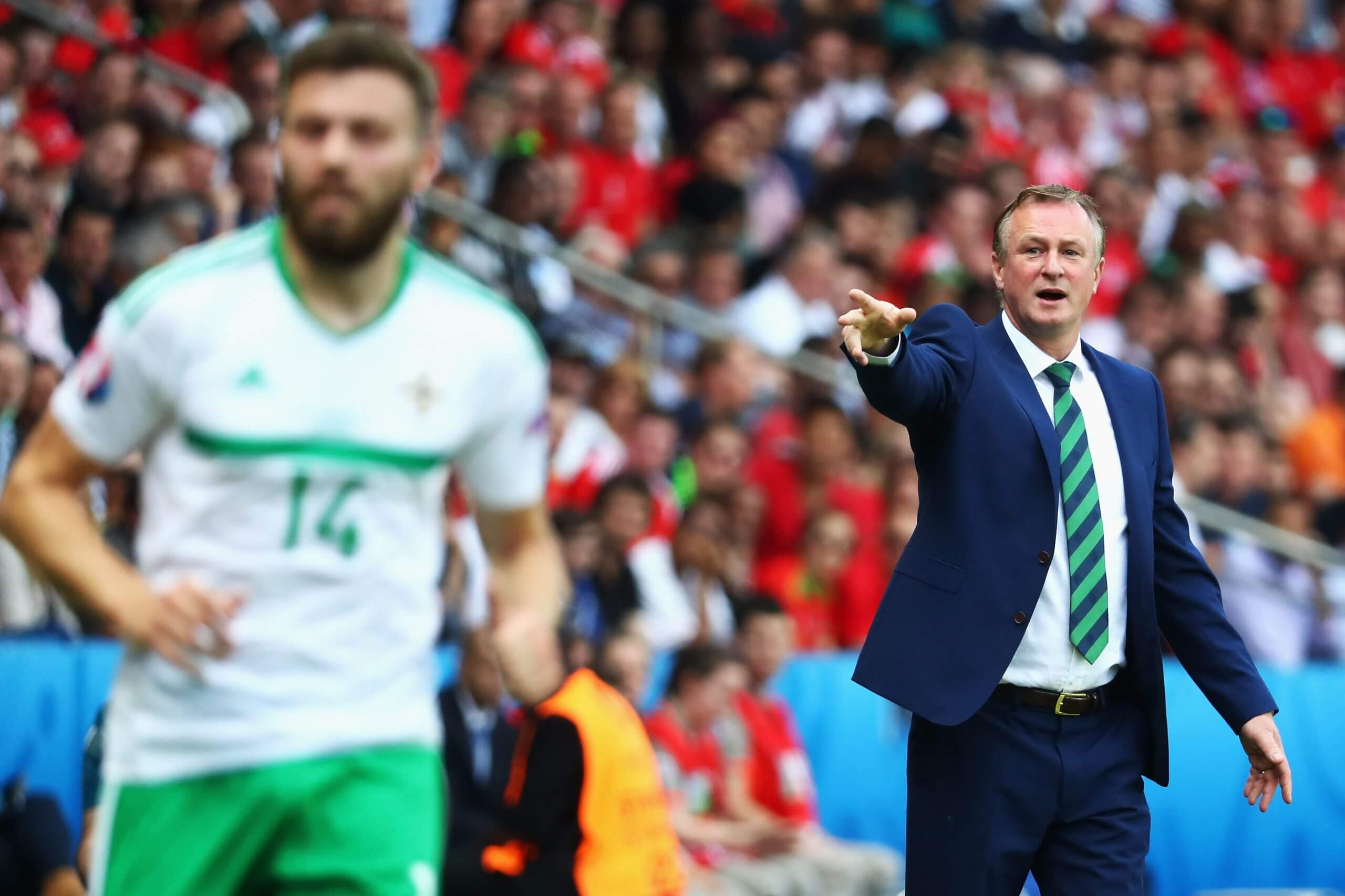
O’Neill managed Northern Ireland to the last-16 stage of Euro 2016 (Alex Grimm – UEFA/UEFA via Getty Images)
IFA chief executive Patrick Nelson called O’Neill’s Blackburn appointment a “progressive move” and insisted “everything remains on track” for the nation’s World Cup play-off preparations. Many of their supporters, however, are sceptical.
“A lot of fans disagreed with how the IFA presented this,” Northern Ireland fans spokesperson Gary McAllister tells The Athletic. “We are not qualified to make judgments on how this will have an impact, but it certainly is unusual.”
McAllister says the speed of the appointment “took most fans by surprise”, and there had been no expectation that O’Neill would receive a job offer at club level: “The reaction has been mixed. There is quite a bit of negativity, but mainly, nobody is sure how it will play out, and a lot of it is purely speculative.”
From Northern Ireland’s perspective, O’Neill feels he has done everything necessary to prepare for next month’s play-off. He has already visited Bergamo, the city in northern Italy that will stage the tie.
In Blackburn’s Championship match tonight (Friday) against Lancashire neighbours Preston North End, they will face three Northern Ireland internationals: left-back Jamal Lewis and midfielders Jordan Thompson and Ali McCann. Northern Ireland are well represented in England’s second tier; Oxford United, for example, who Blackburn visit on March 11, have four players from the country in their squad.
The response among Northern Ireland fans to O’Neill’s decision to try to juggle the two jobs has been far from unanimous.
“He has got us into another play-off and this won’t change any of our spirits going to Italy,” says Daniel Anderson, who has travelled to Northern Ireland away matches for over a decade. “Michael has been, by a distance, our best manager in my lifetime.
“He deserves to manage his way, on his terms. If he thinks it will benefit us, who are we to disagree?”
What has the Blackburn reaction been?
There is also a degree of scepticism among Blackburn’s weary fanbase.
However, a victory for O’Neill in that opening match at QPR helped lift spirits. They are 20th in the table, a point and place above West Bromwich Albion, who sit in the highest of the three relegation spots.
“We are concerned that his eyes are not going to be completely on Blackburn Rovers,” Neil Liver, from the club’s Supporters’ Coalition, tells The Athletic. “We’re fighting for our lives, in a relegation battle, and in an ideal world, you’d want the manager on the training ground every day working with his players.
“However, I think we’re such a circus of a club at the moment that one win suddenly changes the picture around it and people are more accepting of the circumstances.”
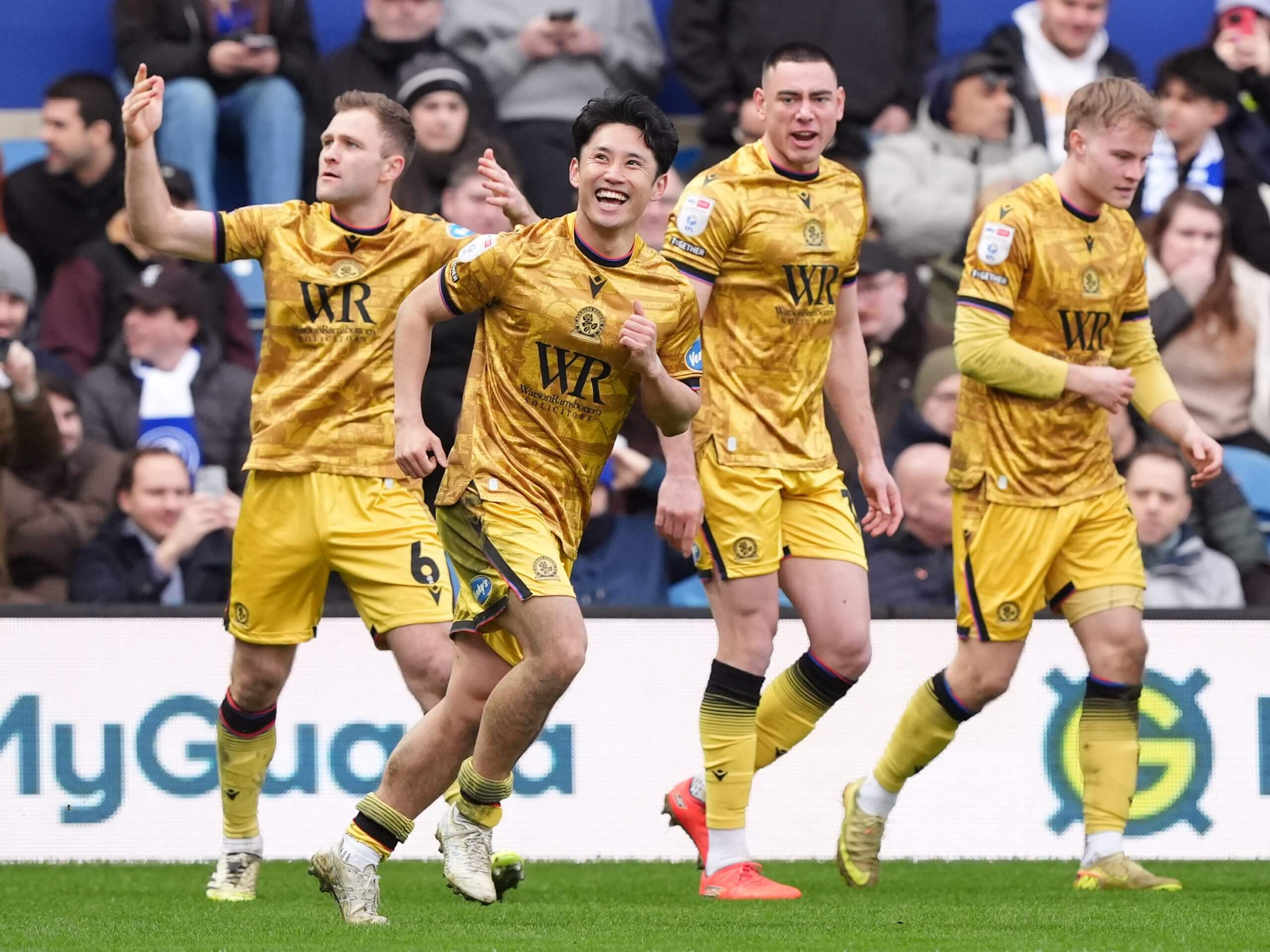
O’Neill oversaw Blackburn’s win at QPR last weekend (Jonathan Brady/PA Images via Getty Images)
Harrison Richmond, from fans’ media channel Rovers Xtra, agrees.
“He has experience in the Championship with Stoke City, when he kept them up a few seasons ago, but I still feel like we should have got a manager that is fully committed to the team,” he says. “That said, Mark Hughes managed Wales and Blackburn at the same time and got us results. After O’Neill’s first game in charge against QPR, there’s been a positive feeling around.
“If he keeps us up, fans would likely want him to step away from the Northern Ireland role (should they miss out on the World Cup) and commit to us full-time on a contract.”
Richmond’s biggest worry is when O’Neill will head off to oversee at least that March 26 game against Italy, as that’s also a crunch time in Blackburn’s calendar. If Northern Ireland win in Bergamo, they will then face either Wales or Bosnia & Herzegovina in a play-off final on Tuesday, March 31.
Around those two dates, Blackburn meet second-placed Middlesbrough at home on Saturday, March 21, before playing twice over Easter weekend — Birmingham City away on Friday, April 3 and West Brom at home on Monday, April 6 in a potentially crucial game at the bottom of the Championship.
“He won’t have much input in that time and won’t get to train and implement his style of football,” Richmond adds. “Our relegation rivals will have that time to regroup and try to sort things out. He will return for the final run of games before the season ends without having spent much time training with the squad.”
Richmond is also concerned that coach Davis will be departing for Northern Ireland’s trip to Italy as well, leaving Damien Johnson to step up, although he welcomed the return of former Blackburn player Phil Jones to the club as part of O’Neill’s coaching setup.
Blackburn are confident their players will be fully prepared for every fixture between now and the end of the season. They feel O’Neill’s experience from the international stage of working with players in a short space of time to get results suits their current predicament. They also noted that when O’Neill leaves for the Italy game, several of their players will be away on international duty, too, and the rest of the squad will likely have a few days off.
The disillusioned Blackburn fans have far bigger concerns than O’Neill’s short-term hire, though.
Ewood Park attendances have dipped, with some supporters staying away as a show of protest at how the club are being run. Despite the sale of key players in recent years, including now England midfielder Adam Wharton, there has been minimal reinvestment into the training ground, stadium or playing squad. Though Blackburn did spend £3million ($4m) in January on Danish striker Mathias Jorgensen, who scored twice in that QPR win, and it is also true they have been unlucky with injuries this season and have had two matches abandoned due to bad weather when they were leading (they took four points from those rearranged fixtures).
But “apathy” is a major problem among the fanbase, says Liver, referencing a lack of communication from the owners, the Venky’s group, who have not attended a match since 2013.
“People are so tired that you’re at a stage now where there’s no fight left,” he says. “The club means the world to us, we bleed blue and white, but the ownership is like some distant vanity project, or an asset they’ve forgotten about. I liken us to a subscription that keeps coming out, but they’ve forgotten what they’ve signed up for.
“People do not feel a connection to the club. It’s not the club they fell in love with.”