
The Ravens have never chased rosters on the open market. While other franchises write their biggest checks each March, Baltimore does its most important work each April. It is a slower, more deliberate way of building a team. This offseason, General Manager Eric DeCosta made that philosophy impossible to ignore.
“We don’t spend a lot of money in free agency. We’ve never been a free agency team. We’re a draft and develop team,” DeCosta said on The Inner Circle Podcast on February 18.
Advertisement
That commitment does not begin on draft day. It begins well before sunrise.
During preparation season, DeCosta wakes up on Saturday mornings at 3 a.m. and watches tape until 10 a.m. For him, watching those tapes is non-negotiable. You “can’t cheat the system,” he said.
That relentless film study feeds directly into how the Ravens approach draft week. Every pick Baltimore makes is a long-term investment, not a short-term fix. DeCosta and his staff identify players they believe the coaching staff can shape into meaningful contributors over multiple seasons.
However, the draft in their model is only the first step. The real purpose of acquiring those picks is what comes after: development.
“A lot of our resources are going to be acquiring as many draft picks as possible and then using those on players, trying to hit on as many picks as we can, trying to hit on 60% of our draft picks every single year, and trying to retain as many of those guys as we can for a second contract,” Eric DeCosta added.
Advertisement
Some examples of that model are visible across Baltimore’s current roster. Wide receiver Zay Flowers and safety Kyle Hamilton, both first-round selections under DeCosta. In December 2025, Flowers earned his second consecutive Pro Bowl selection, becoming the first wide receiver in Baltimore Ravens franchise history to achieve that honor.
Hamilton, entering his fifth year with the team, has collected three Pro Bowl nods. He is the only Ravens defensive back in franchise history to accomplish that feat within his first four seasons.
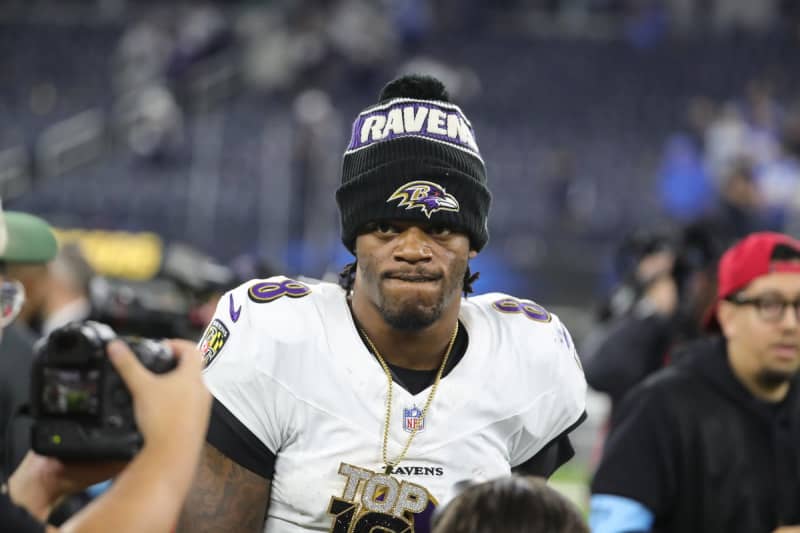
But beyond Hamilton and Flowers, the crown selection of DeCosta’s time in the front office, drafted during his final year as assistant GM under Ozzie Newsome, has been quarterback Lamar Jackson (another first-round pick). Yet heading into the 2026 season, his future in Baltimore poses the most complex challenge to the franchise’s draft-and-develop philosophy.
Lamar Jackson’s cap hit could derail DeCosta’s draft plans
Lamar Jackson has two years remaining on the five-year, $260 million extension he signed with the Ravens in 2023. A deal that made him the highest-paid player in the league at the time of signing.
Advertisement
However, this season his cap hit climbs to a staggering $74.5 million. That number does not just complicate Baltimore’s offseason plans. It effectively freezes them, threatening DeCosta’s ability to accumulate picks and retain the homegrown talent his entire model depends on.
One potential path forward sits in Kansas City. Geoffrey A. Knox of Ravens Wire argues that Baltimore should follow the Chiefs’ way with Patrick Mahomes and restructure Jackson’s deal to relieve the immediate cap burden.
“By doing so, they dropped his [Patrick Mahomes’] 2026 cap number from $78.2 million to roughly $34.65 million. They also created more than $43 million in flexibility,” Knox wrote.
Meanwhile, the urgency around Jackson’s long-term future coincides with one of the franchise’s most consequential shifts this year. Following the team’s severe underachievement, falling from Super Bowl contenders to an 8-9 finish and missing the playoffs, the Ravens fired former head coach John Harbaugh after 18 seasons.
Advertisement
Jackson himself was actively involved in Baltimore’s search for a new head coach and has consistently maintained his desire to remain in Baltimore, expressing appreciation for the front office’s timeline to get a deal done. So the question is, can Jesse Minter and DeCosta get Jackson to sign on the dotted line before the massive cap hit?