
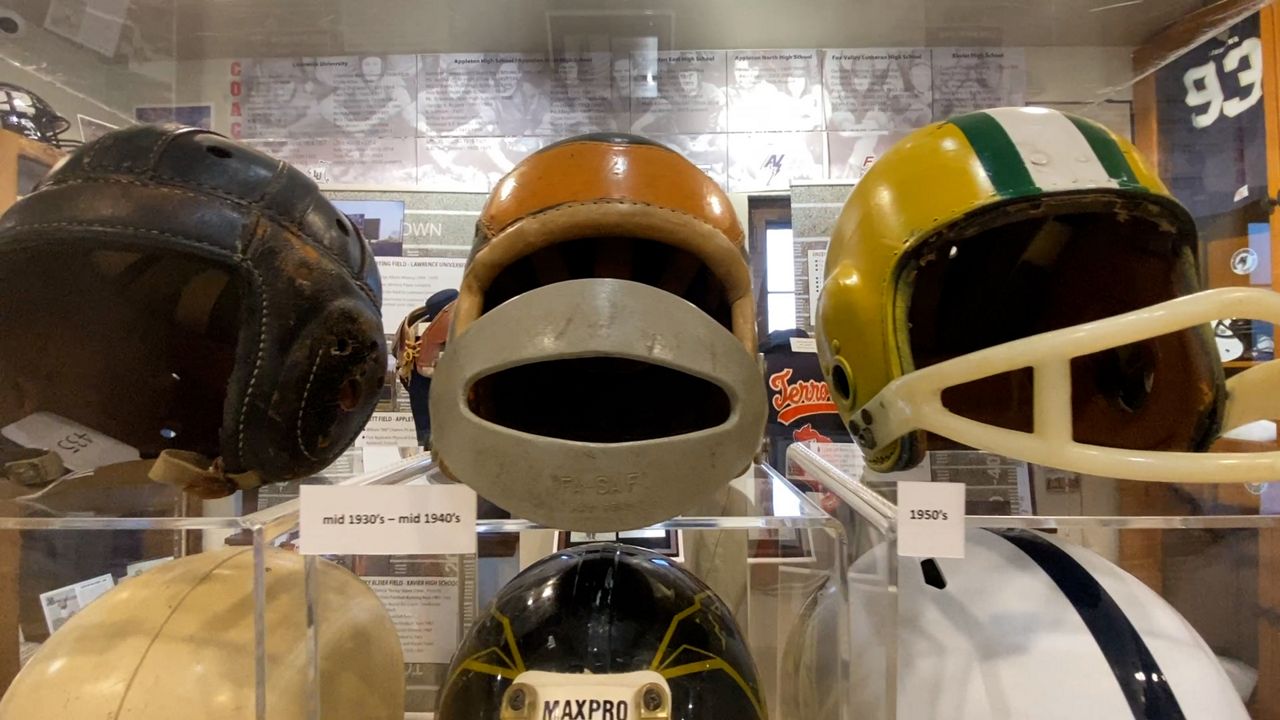
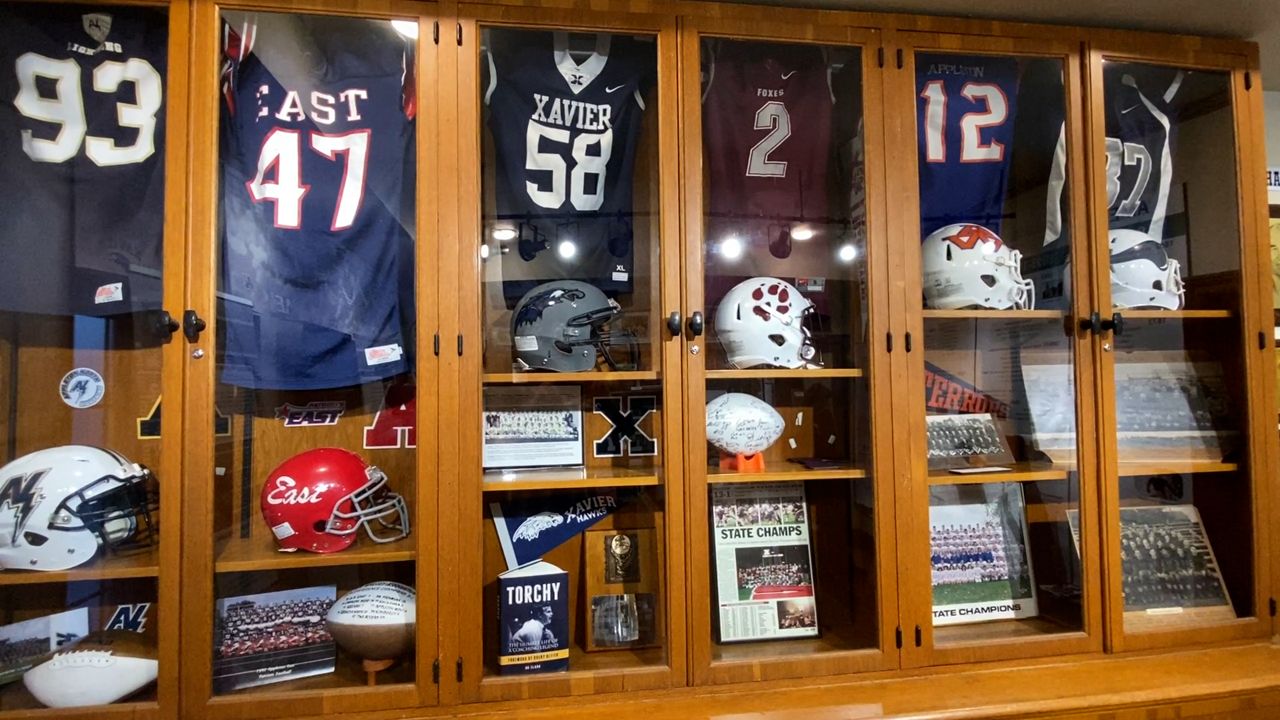
APPLETON, Wis. — The sports room inside the Appleton Historical Society Museum currently showcases the city’s rich football history.
What You Need To Know
Appleton Historical Society Museum currently has an Appleton football exhibit
The exhibit features high school, college and pro football artifacts
Appleton native Dr. Ann McKee, a renowned CTE expert, is featured
McKee held a public presentation at the Appleton Public Library
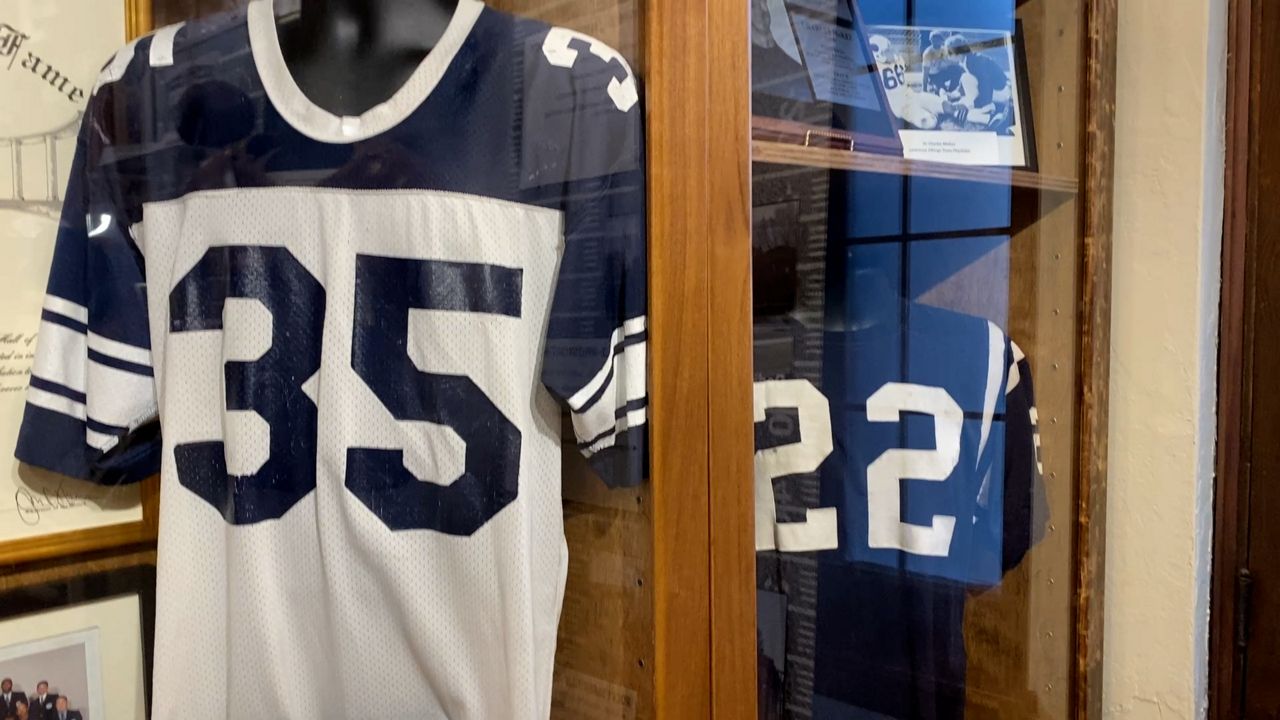
“This is my brother. This is Chuck. He was big at Lawrence. He was a little All-American, and I thought he was the greatest,” said Dr. Ann McKee as she pointed out one of the exhibits.
It was a walk down memory lane for the Appleton native, who is now an acclaimed doctor at Boston University.
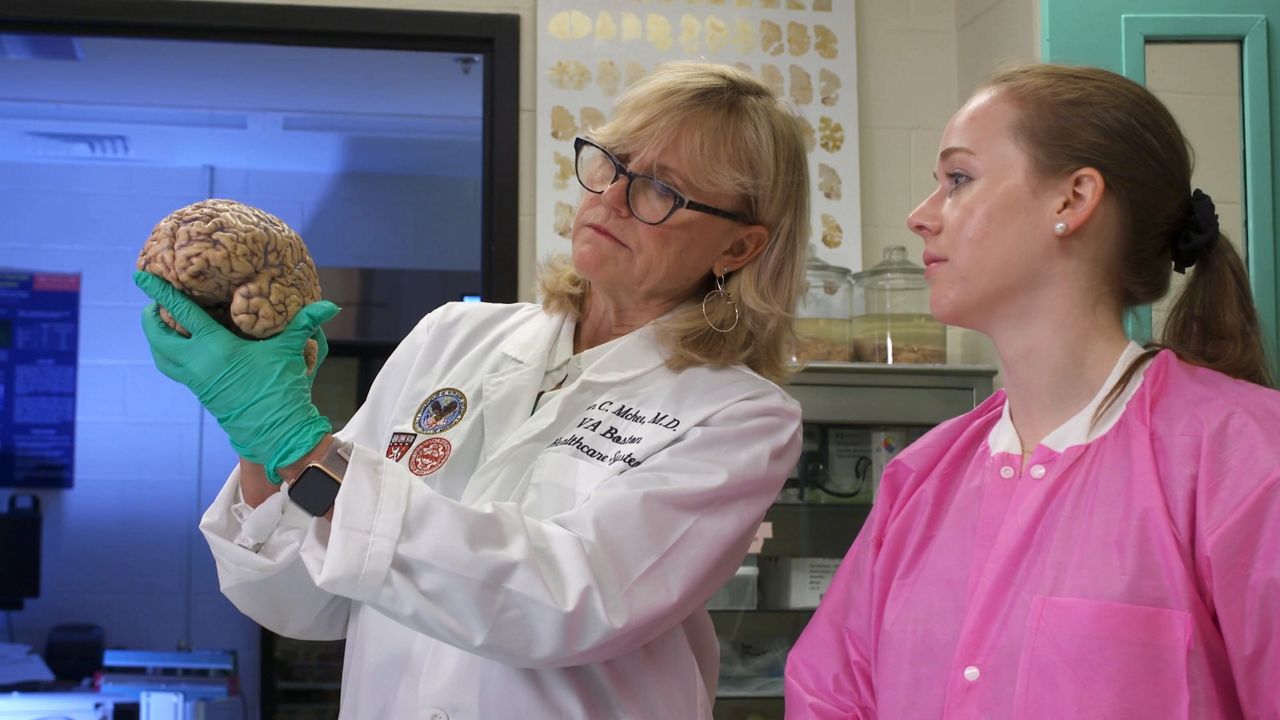
“Football was in my blood. I was a huge football fan. My career took a hairpin turn when I discovered that the play of football was actually damaging people’s brains,” said McKee.
(Spectrum News 1/Jon Fuller)
She’s renowned for her expertise on CTE, or chronic traumatic encephalopathy.
“It was shocking to me. I had no concept, even though I’m a neurologist and neuropathologist, I had no idea that they could get brain damage from playing the sport,” said McKee.
When Carol Jansen and museum staff put the exhibit together, they wanted to feature local football teams and highlight individuals.
“Rocky Bleier was a Xavier High School graduate, and he went on to play football for Notre Dame and then the Pittsburgh Steelers. He also has a history of being a war hero,” said Jansen.
The museum gave a nod to McKee and her contributions to football.
“She’s really globally known for what she’s done. There’s a lot of pride,” said Jansen.
(Boston University)
McKee has studied over 1,700 brains and documented over 1,000 cases of CTE. The degenerative disease can lead to big problems, including dementia, depression, aggression and possibly suicide. McKee said concussions may receive a lot of the attention, but it’s really the total number of hits in contact sports that contribute to CTE.
“The risk for CTE is not related to the number of concussions. It’s related to the length of your playing career. The more years, the more hits, the higher the risk,” said McKee. “For every 2.6 years of playing football, your risk for CTE doubles. That can be at any level. If you have your kids start at six, by the time they finish high school, they’re at a very increased risk for CTE.”
She grew up in a football family and loved the Packers but admittedly she said she doesn’t enjoy football like she once did. McKee is on a mission to protect athletes, especially young ones.
“We could eliminate all contact in practice. Actually, the NFL does that mostly. They’ve had really limited contact in practice, and that lowers the individual’s risk. We need to start adopting that for the younger leagues, the high school, and even younger kids that are playing football. They need to stop all contact. I don’t think you should be playing any contact or tackle football until you’re at least 14,” said McKee.
(Spectrum News 1/Jon Fuller)
It’s a somber message in a room featuring the past and present of Appleton’s football heritage, a celebration of the sport, with a cautionary tale as to what could lie ahead for those who play contact sports.
The exhibit will run through at least October 2026. Museum staff hope to extend it further until the spring of 2027. While she was in town, the historical society honored McKee with a public presentation at the Appleton Public Library on Feb. 11.