
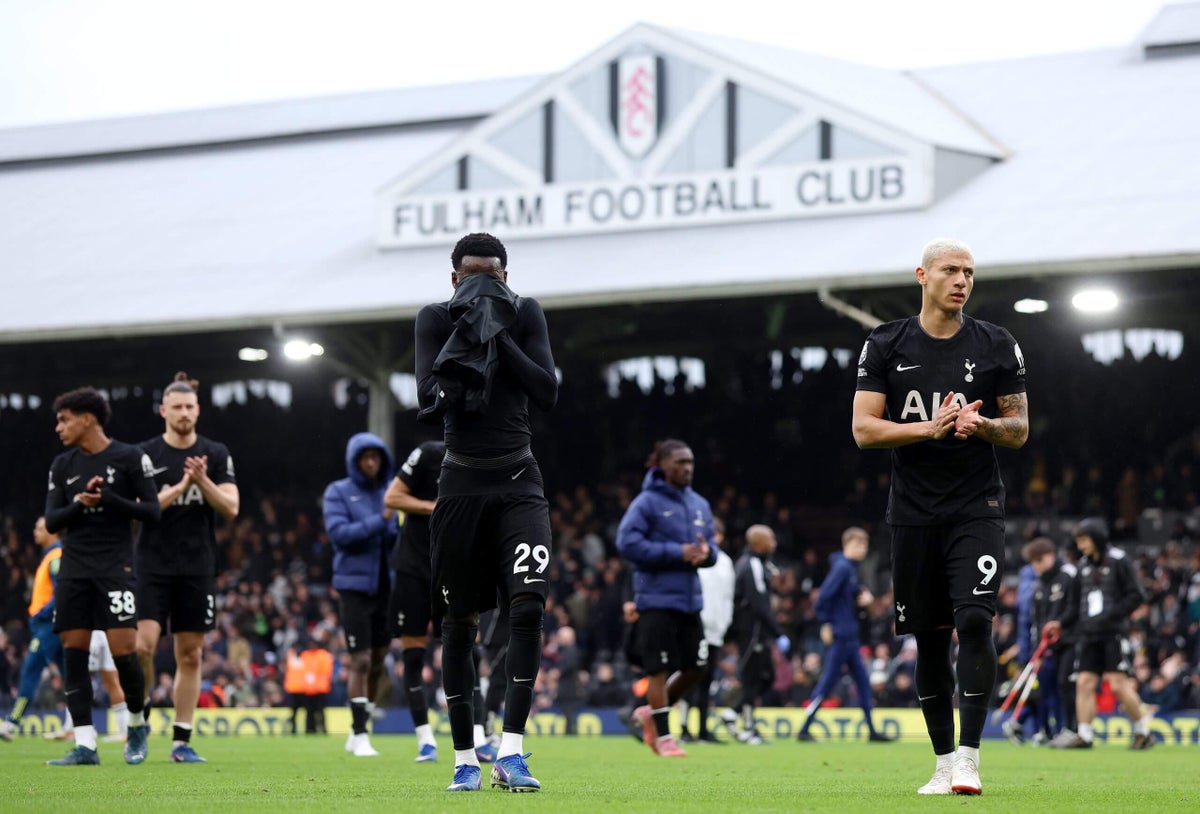
Tottenham Hotspur’s biggest problem — the top entry in a very long list — is that they look like they have forgotten how to win.
The last time Spurs won a league game was December 28. We have entered March. Since Archie Gray’s winner from a corner at Crystal Palace, Tottenham have played 10 league games. They have taken just four points. To call that run ‘relegation form’ barely does it justice. Unless they do far better than that, twice as better, in their remaining 10 games, they will not be playing in the Premier League next season.
Everyone knows the stakes. The spectre of relegation, unthinkable for a generation, is looming over this football club. It would be a disaster without precedent, the club with the ninth-biggest revenues in Europe travelling to Charlton Athletic, Portsmouth and Lincoln City next season. But anyone who watches this team knows that the threat is real.
Last month, the Spurs board pulled the only lever available to them — they fired Thomas Frank and replaced him with Igor Tudor, hoping he could conjure up a few wins. Spurs do not need to be perfect to save themselves, but they need to be far better than this.
Tudor has only had two weeks with the players and this, at Craven Cottage, was his second game. But he already looks like a man wondering what buttons he can press, what combinations he can deploy, to help this team do the one thing they look so unable to do.
If Tottenham do go down — and at least for them, they did not lose any ground to West Ham United or Nottingham Forest this weekend — then this will ultimately be what drags them down into the Championship. That is the huge hole in the hull of this sinking ship. The issue is not simply one of player quality, nor is it necessarily one of tactics and selection. The confidence of this group has been so drained that the players can barely compete.
When Tudor came through to give his post-match press conference, he was insistent that this was not just an issue of formations. “The last thing that is important is the system,” was how he put it. Which, in one sense, gets him off the hook, although it is hard to disagree that Spurs’ issues are more profound than simply tactics.
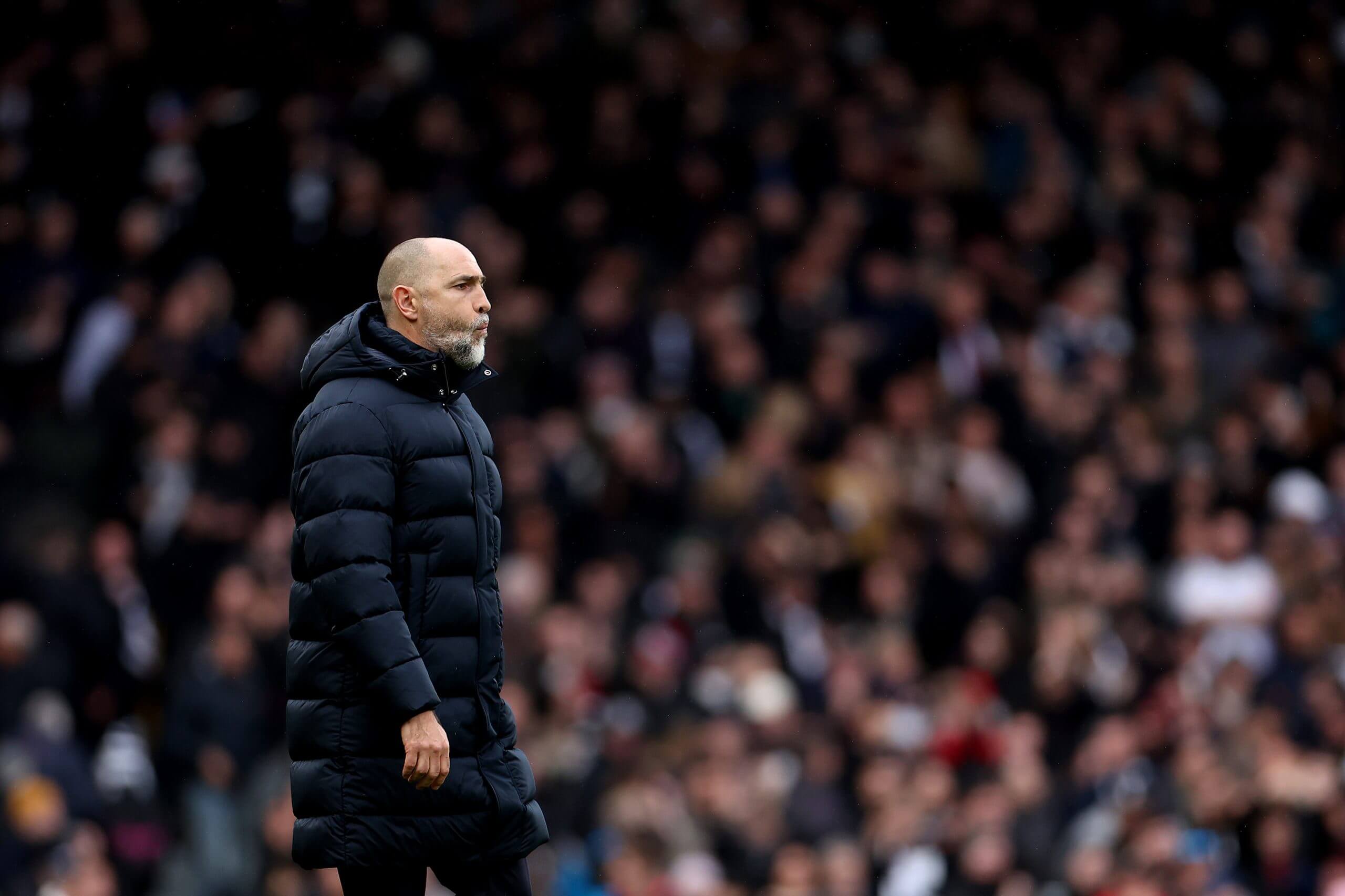
Tudor has lost his first two games in charge (Harry Murphy/Getty Images)
The players all look utterly alienated from what ought to come easily to them, struggling to do the things they have been doing their whole professional lives.
In almost every Spurs game this year, there have been long spells, even before the game is lost, when it is theoretically still in the balance, when they just fail to do the basics required. The same story we saw against Arsenal, Newcastle United and Manchester United recently was true again here against Fulham.
Tottenham did not have especially bad defensive players on the pitch, in theory. Micky van de Ven and Pedro Porro are very good. Guglielmo Vicario is a good goalkeeper having a bad year. Joao Palhinha proved at this very ground that he is adept at screening a defence. But when Kenny Tete clipped the ball into the box early on, he faced very little resistance. Oscar Bobb also had plenty of space to cross back in from the other side. Tudor complained about a push from Raul Jimenez on Radu Dragusin, but no Spurs player had the conviction to deal with the situation before Harry Wilson finished.
Almost every time Fulham attacked, they managed to work good shooting positions. The second goal came when Alex Iwobi was free to advance, play a one-two with Wilson and then, under no pressure, drive an excellent strike into the far bottom corner of the goal.
The idea of organised resistance from Spurs, making it consistently difficult for Fulham, was just a fantasy. Fulham should have had a third soon after the break when Bobb brushed off Palhinha like he was not there and set up Emile Smith Rowe.
As bad as Spurs were at the back — and they were often shambolic — their lack of quality on the ball was even more worrying. Tottenham did not show the confidence, trust or optimism required to create anything. They were reduced to trying their luck from the edge of the box or hoping for a fortunate bounce from a corner. Richarlison’s headed goal was a good move, Spurs’ best of the game, but they had no idea how to build on that or replicate it. It was a one-off.
For far too much of the afternoon, Spurs players looked like the last thing they wanted was the ball at their feet. Early in the second half, Vicario took a free kick and booted it over everyone for a goal kick to Fulham. Palhinha, at one point, with the ball in space, tackled it as if there were a Fulham player only he could see. And it was impossible to blame Porro or Dragusin or Van de Ven when they hacked the ball away, because there were never any options or passes for them.
If Spurs can just win one game, and remember how it feels, there is no reason they should not be able to win a few more and cruise to safety. But the longer it is since they last won, the more distant the memory, the bigger the mental block they will have. That is why Thursday’s game against Crystal Palace is so important. If they can find the “forces inside”, as Tudor put it, and just win once, all of this could go away. But that, even a home win against a bottom-half side, looks like a mountain to climb.