
PATRIOTS FREE AGENTS: Tommy DeVito (RFA)
NOTABLE EXTERNAL FREE AGENTS: Marcus Mariota, Mitchell Trubisky, Kenny Pickett, Jimmy Garoppolo, Zach Wilson, Trey Lance, Jake Browning, Sam Howell
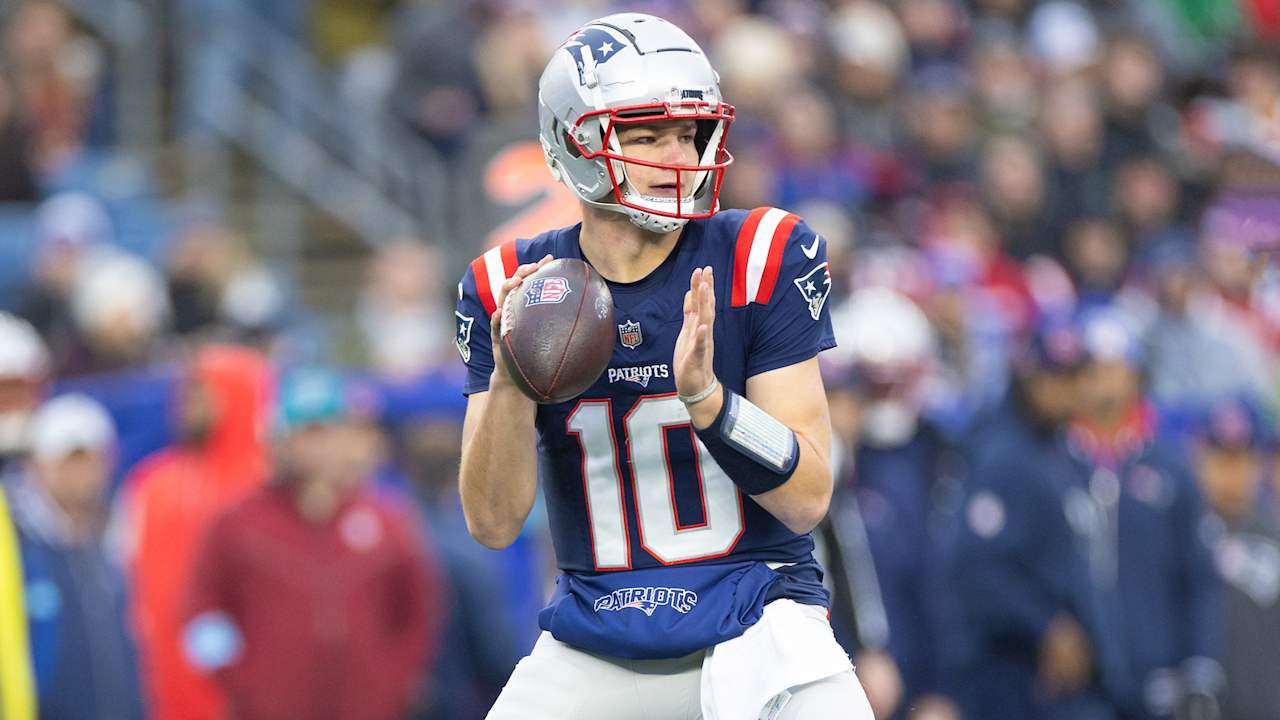
The Patriots enter free agency with one of the best quarterback rooms in the league due to the presence of MVP runner-up Drake Maye, who enters his third NFL season in 2026.
With their star quarterback entering his age-24 season, Maye led the NFL in completion percentage, passer rating, total QBR, and EPA while narrowly missing out on becoming the seventh player in league history to win MVP in his second season. Maye’s ascension to elite status means there’s zero doubt about the top of the Patriots quarterback depth chart. However, Maye and the entire offense saw a dip in production during the playoffs, averaging 16.8 PPG after ranking second in points scored during the regular season (28.8).
For Maye, it’s important to remember that he was playing in his first NFL postseason, so there’s naturally room to grow for the uber-talented 23-year-old, who has all the requisite arm talent and natural playmaking ability to lead the Patriots to a Super Bowl title. Maye will also have continuity at offensive coordinator for the first time in his pro or college career, with North Carolina and the Patriots changing play-callers in Maye’s last four seasons as a starter. Maye’s Tar Heels changed coordinators twice, while the Pats QB1 has worked with Alex Van Pelt (rookie season) and OC Josh McDaniels (2025-present) in his first two pro seasons.
Having McDaniels return will help the two biggest areas of needed growth in Maye’s game from this perspective: pre-snap blitz identification and processing two-high safety disguises. More specifically, Maye and McDaniels need more consistent answers for blitzing defensive backs and cover six, two strategies used by the Seahawks in Super Bowl LX. Seattle overloaded New England’s protections by adding on rushers from the slot, with NCB Devon Witherspoon’s blitzes having a huge impact in the Super Bowl. Whether it’s pre-snap identification or having more post-snap solutions, it’s a copy-cat league, so defenses will continue blitzing their defensive backs vs. the Patriots until they solve those schemes.
The other repeat coverage scheme against Maye was blurring the lines between cover-two and quarters zone schemes, with cover-six giving defenses the best of both worlds. Statistically, Maye produced -0.31 EPA per drop-back against cover six, which is quarters to one side and cover two to the other (quarter-quarter-half), his lowest efficiency output against any coverage. Seattle called cover six eight times in the first three quarters of Super Bowl LX and Maye went 3-of-5 for 34 yards and two sacks against it (80.4 passer rating).
Again, Maye was terrific in his second season, but those are two strategies that limited him. As the Patriots move forward in the Maye era, problem-solving some of the more successful game plans against the Pats quarterback will be some offseason homework for the young quarterback and McDaniels, who have earned the benefit of the doubt that they’ll be better for their experiences together. There’s also the caveat that Maye injured his right throwing shoulder in the AFC Championship Game, so, along with facing a gauntlet of the NFL’s best defenses, there were other possible explanations for the offense’s statistical drop-off.