
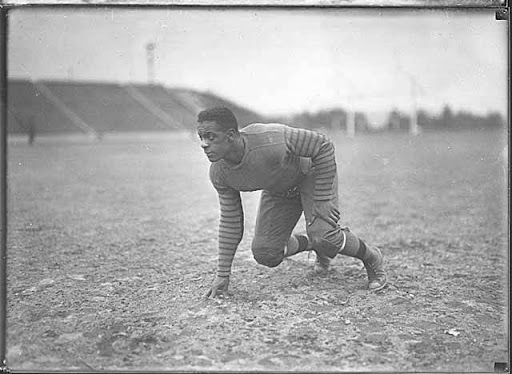
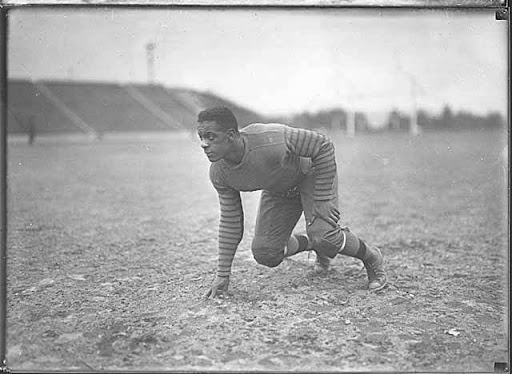
 University of Washington football player Hamilton Greene, Seattle, 1923 (Photo courtesy of Webster & Stevens via Wikimedia Commons)
From the start of the league up until the 1980s, the NFL was a predominantly white league, but now more than half of NFL players are Black. Still, these roster demographics aren’t reflective of the people who lead these teams.
In the 2023 NFL season, Black players made up 53.5 percent of the player population. In contrast, during that same season, people of color made up 18.8 percent of head coaches.
Though there is no credible data reflecting the current Black player population, as of the 2026 NFL offseason, there are just three Black head coaches out of the 32 possible positions.
During the 2026 hiring cycle, there were 10 head coaching positions up for grabs, yet none were filled by a Black candidate, and only one was awarded to a person belonging to an ethnic minority group.
Dr. Chanelle Reynolds is the head of diversity, equity and inclusion for the Washington Commanders. She spoke to the importance of having diverse leadership, especially in D.C.
“There is an importance to have people who can speak to not only the experiences that’s happening on the field… but just to speak to the community that we’re in,” said Reynolds, who has a doctorate in business administration. “We’re in ‘Chocolate City,’ so you want to ensure you have people who understand the culture, and that culture can be reflected in some of the bigger practices like game day activations, or how we show up in community engagement.”
The NFL does not have a history of diversifying its leadership roles, especially at the head coaching level. At its peak, the league’s highest number of ethnic minority head coaches was nine during the 2024 season, according to Associated Press.
Though this achievement broke a diversity record, just two seasons later there are three Black coaches. The number remains low considering the number of positions available and the racial makeup of the league.
Dr. Jason Perry, assistant professor of sport management in the Department of Health, Human Performance & Leisure Studies at Howard University, believes that leagues prioritize profit over players.
“I would argue that these leagues do not seek to represent the players; they aim to represent their pockets,” said Perry, who has a doctorate in educational leadership and management. “You look at the history of the NFL, and race-norming and the well-being of players is an afterthought.”
The NFL’s Rooney Rule was created in 2003 to combat the low number of minorities in high-level positions in the league. Named after Dan Rooney, former chairman of the NFL diversity committee, the rule required teams to interview at least one minority to be considered for high-level positions.
Since the implementation of this rule, there have been five hiring cycles where no Black coaches were hired, according to USA Today.
“The Rooney Rule in theory is good… but if there is no real intent there, then you are just checking boxes and not truly giving people of color an opportunity,” Perry said.
In 2022, the league implemented a mandate requiring every team to hire an individual belonging to an ethnic minority or a woman to be a part of the coaching staff. Incentivising draft pick compensation and other advantages, the percentage of minority assistant coaches rose to 40 percent, according to USA Today.
With a concrete, action-based initiative implemented, the league was able to see immediate improvement for entry-level and assistant positions.
In a recent interview with ESPN, NFL Commissioner Roger Goodell spoke on this matter, saying that he believes the league is moving towards progress.
“I think we have become a more diverse league across every platform including coaching, but we still have more work to do,” Goodell said.
He also told ESPN that though there were no Black head coaches hired during this cycle, each team “exceeded” the rule this year by interviewing more than two minority candidates.
Head coaching positions aren’t the only leadership role in football with low numbers in racial diversity. Currently, there are no Black majority team owners in the NFL, and only four Black people in the general manager position, according to Andscape.
This disparity trickles down to the collegiate level, where white men are overrepresented in leadership roles as well.
According to Sporting News, less than 15 percent of head coaches in the NCAA Division I Football Bowl Division (FBS) are Black, despite Black players making up more than half of the player population.
Even with Name, Image and Likeness (NIL) rights, which give athletes the ability to earn money from their personal brand, the highest paying roles remain dominated by white men.
When focusing on Power 5 programs, statistics show that less than 10 percent of head coach or athletic director hires go to Black people, according to USA Today. Black people are often found in assistant, position coach or coordinator positions.
Tiffany Tucker serves as the director of athletics at the University of Maryland, Baltimore County. As the first person of color to hold the position in program history, she shared the importance of Black leadership for Black college students specifically.
“If you can build a relationship with a student, even if they have past trauma or current trauma, they’ll know that there’s a safe space to get in front of any issues or obstacles that are coming their way,” Tucker said. “They know that there’s someone who cares and loves them enough to help them through whatever situation they’re going through.”
Additionally, college sports received a C grade for racial hiring practices in 2022 by The Institute for Diversity and Ethics in Sports (TIDES), and this statistic has barely improved three years later.
Although Black athletes are often the face of these sports, for some these statistics raise concerns about whether the individuals in these leadership roles can accurately represent their players without having shared the same experiences.
Reynolds highlighted the need for leadership that can genuinely relate to and support players in every aspect.
“I think that there needs to be some level of familiarity at least,” Reynolds said. “There needs to be people that have lived experiences that can relate to what’s going on in players’ fields, and even in their homes.”
She also said that these programs need to examine the history of Black people in America and its lasting effects on people today. With intentionality in hiring practices, certain individuals can be put in the position to support the players effectively.
Perry believes that having individuals in these spaces who can advocate for players, even on issues that may seem minor to others, is essential when fostering a comfortable workplace where athletes feel supported.
He argued that with diverse leadership at the top, decisions consider a broader range of perspectives.
“There has to be some level of empathy and awareness for those that are handling the day-to-day,” Perry said. “Research shows that diversity supports productivity for organizations and ultimately improves the workplace and culture.”
Copy edited by Daryl R. Thomas Jr.