
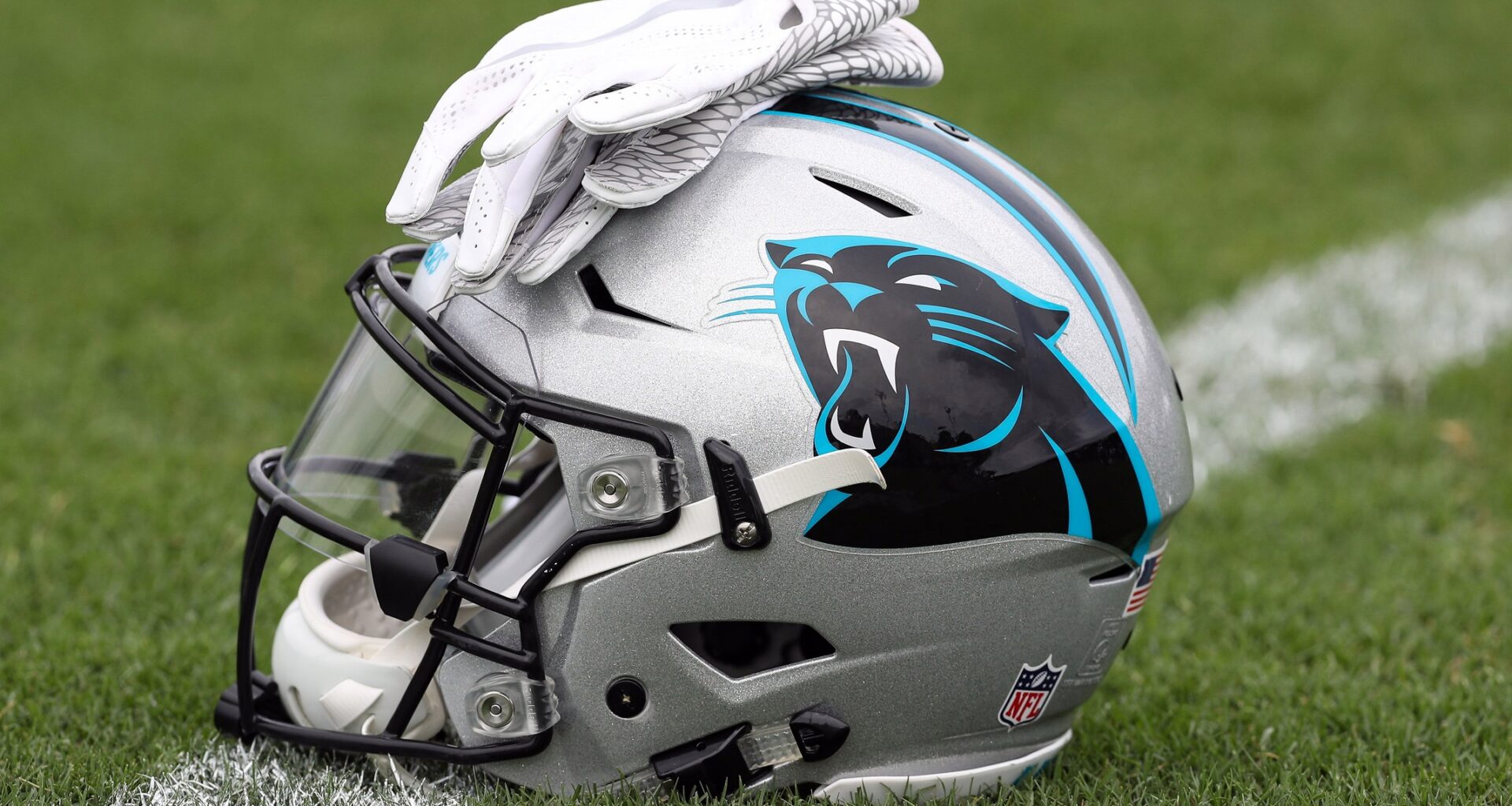
The Carolina Panthers are no longer irrelevant.
An 8–9 finish, a playoff berth, and a competitive postseason showing against the Los Angeles Rams showed legitimate progress. But the gap between “competitive” and “contender” is wide, and the 2026 NFLPA Report Card shows exactly where that gap still exists.
Roster improvements matter. Free agency and the draft will shape the next step.
But sustainable success is organizational.
And the numbers behind this report tell a revealing story.
From 31st to 23rd: Measurable Progress
In 2025, Carolina ranked 31st out of 32 teams with a D-minus ownership grade. Players ranked ownership:
32nd in commitment to building a competitive team
31st in contribution to positive culture
29th in willingness to invest in facilities
Fast forward to 2026:
Overall Rank: 23rd
Ownership Grade: B-minus
General Manager: A
Head Coach: A-minus
Strength Coaches: A-
Training Staff: A-
That eight-spot climb is so important.
Even more important: perception inside the building improved.
In 2026:
97% of players feel the head coach is efficient with their time
97% report receiving individualized strength plans
89% say they receive enough one-on-one treatment from training staff
Those are championship-level internal numbers. The football operation is stabilizing.
Dave Canales and Organizational Buy-In
Head coach Dave Canales earned strong marks not just for scheme but for leadership.
Players rank him:
10th in time efficiency
12th in receptiveness to locker room feedback
Coach’s history has shown this. Former players like Geno Smith and Baker Mayfield have praised his “infectious energy” and ability to connect. His decision to hand play-calling duties to OC Brad Idzik in 2026 shows growth, prioritizing CEO-style leadership over micromanaging offense.
That kind of self-awareness matters. It shows evolution, not ego. And that shift aligns with a broader change under owner David Tepper and GM Dan Morgan.
But culture alone does not close the gap with elite franchises.
The Infrastructure Gap
The most glaring weaknesses are not schematic; they are structural.
Home Field Surface: F
100% of players previously reported preferring grass over turf. The continued use of synthetic turf remains a source of frustration. In a league where soft-tissue injuries and recovery are constant concerns, this is more than cosmetic — it’s about player safety, longevity, and trust.
This issue runs bigger than the Panthers; players all over the league want grass to become the standard in all stadiums. The conversation has become louder each year, and the data around injury trends keeps it relevant.
What makes this situation even more problematic is that the same stadium will host FIFA World Cup games. The surface they will play on will be grass.
That contrast is impossible to ignore.
If grass is the standard for the world’s biggest global tournament, it raises a fair question about why NFL players — the building’s primary tenants — are not afforded the same consideration year-round.
It is symbolic. It shows their priorities and their investment. Symbolic of whether player concerns are truly being heard.
Team Travel: D (29th)
Only 55% of players feel they have adequate personal space on flights, ranking 29th league-wide. That is a sharp decline from previous years when travel conditions were graded B-minus.
In a league defined by recovery margins, comfort is performance.
Locker Room: D+ (19th–20th Range)
81% feel they have enough locker space
79% feel the locker room size is adequate
Those numbers sound solid until compared league-wide, where they fall near the bottom third.
Training Room Recovery Space
While staffing is strong:
89% say there are enough full-time trainers
86% say there are enough physical therapists
But only:
68% feel there is enough hot tub space (27th)
74% feel there is enough cold tub space (28th)
That’s not a staffing issue.
That’s a facility limitation.
Weight Room: 27th Ranking
Equipment quality ranked 29th.
Space ranked 28th.
Players acknowledge upgrades, but square footage limits impact.
The pattern is clear:
The Panthers are rebuilding culture faster than infrastructure.
What This Actually Means
Carolina’s coaching alignment is trending upward:
Position Coaches: A-
Offensive Coordinator: A-
Special Teams Coordinator: A-
General Manager: A
Development systems are strong.
Communication is improving.
Player trust is rising.
But elite franchises combine culture with top-tier facilities.
Right now, Carolina is middle tier organizationally.
That is progress.
But it is not a contender status.
The Last Word on the Panthers Report Card: The Tepper Inflection Point
The Panthers are trending upward, and for the first time in years, that momentum feels organizational, not accidental.
Ownership’s grade rising from D-minus to B-minus reflects real growth. Players now rate perceived willingness to invest significantly higher than the 6.12/10 average from prior years. That suggests trust is being rebuilt inside the building.
The locker room believes more.
The coaching staff is aligned.
The development systems are strong.
There is cultural momentum.
But culture alone doesn’t sustain a winning infrastructure.
Trust must now translate into tangible upgrades. If ownership invests aggressively in facilities, resolves the turf issue, and continues empowering football leadership, then 23rd becomes a stepping stone. If not, it becomes the ceiling.
Because in the NFL, belief builds momentum.
But investment builds champions.