
03.03.2026 13:19
source: StadiumDB.com ; author: Paulina Skóra
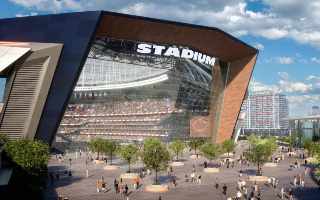
The future of the Chicago Bears hangs on the border between two states. Indiana and Illinois are openly competing to host the new stadium — Hammond and Arlington Heights currently have almost equal chances, and the decision could define the club’s trajectory for the next 40–50 years.
Hammond, Indiana as a potential stadium site for the Bears
Authorities in the state of Indiana have taken the final legislative step by approving a law enabling the creation of a special entity responsible for building and financing a new stadium for the Chicago Bears. The bill was signed by the governor shortly after passing the Senate, a move that reflects the state’s determination to attract the franchise to the northwestern part of Indiana.
The proposed project in Indiana envisions a modern, roofed stadium in the city of Hammond, near Wolf Lake and just across the border from Illinois. The specially created Northwest Indiana Stadium Authority would be in charge of financing, construction, equipment and later management of the facility. The project is seen as one of the region’s largest economic impulses in decades. Supporters highlight the potential to attract new investment, hotels, restaurants and supporting infrastructure, which could translate into long-term economic growth across the area.
The plan allows construction work to begin in 2027, with the stadium expected to open around 2029. It is an ambitious schedule, though it still depends on the club’s final decision and the completion of legal and financial analyses.
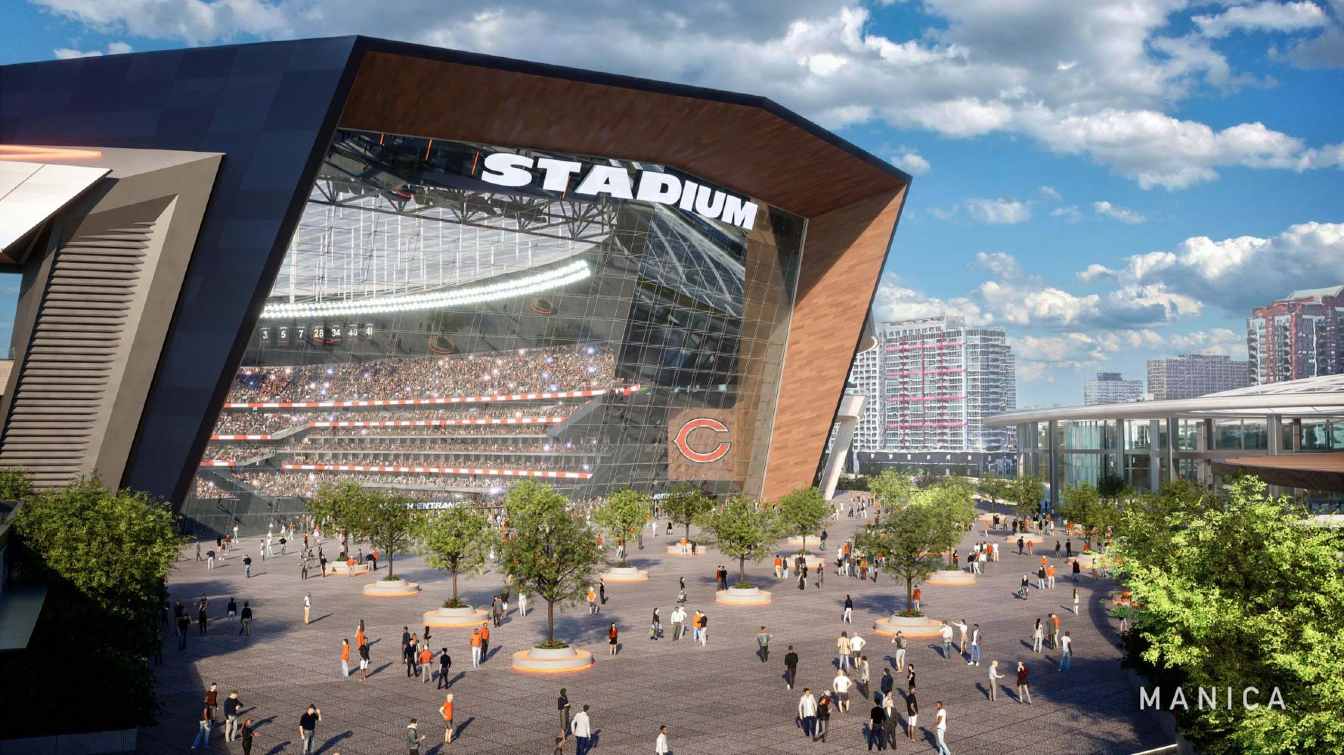 © MANICA | The Indiana state government has passed legislation creating an entity responsible for building and financing a new stadium for the Chicago Bears.
Financing and cost structure of the bears’ stadium in hammond
The financial model proposed by Indiana is based on cost-sharing between the club and the public sector. The Chicago Bears have pledged to cover roughly $2 billion of the stadium construction cost itself. State and local authorities would finance infrastructure through bond issuance repaid with revenue from new or increased taxes, including levies on restaurants, hotels and event ticket sales. A special tax district surrounding the stadium would also be created, with its income used to service the debt.
According to estimates, the public contribution could reach nearly one billion dollars. This aspect remains the most controversial among residents, especially given rising living costs and other budgetary pressures in the region.
Arlington Heights and the alternative stadium project in illinois
At the same time, efforts continue in Illinois, where the Bears own a large parcel of land in Arlington Heights, acquired after the former horse racing track was closed. State authorities are advancing a so-called mega projects bill that would allow special tax negotiations for large investments, including an NFL stadium. The mechanism would replace traditional property taxes with a fixed fee, giving the club greater long-term cost predictability.
Illinois stresses the importance of keeping the Bears in the state, arguing that a potential relocation would mean losing revenue from taxes on tickets, food services and related economic activity. At the same time, some politicians and business leaders fear that preferential treatment for the franchise could create unequal tax conditions for other residents.
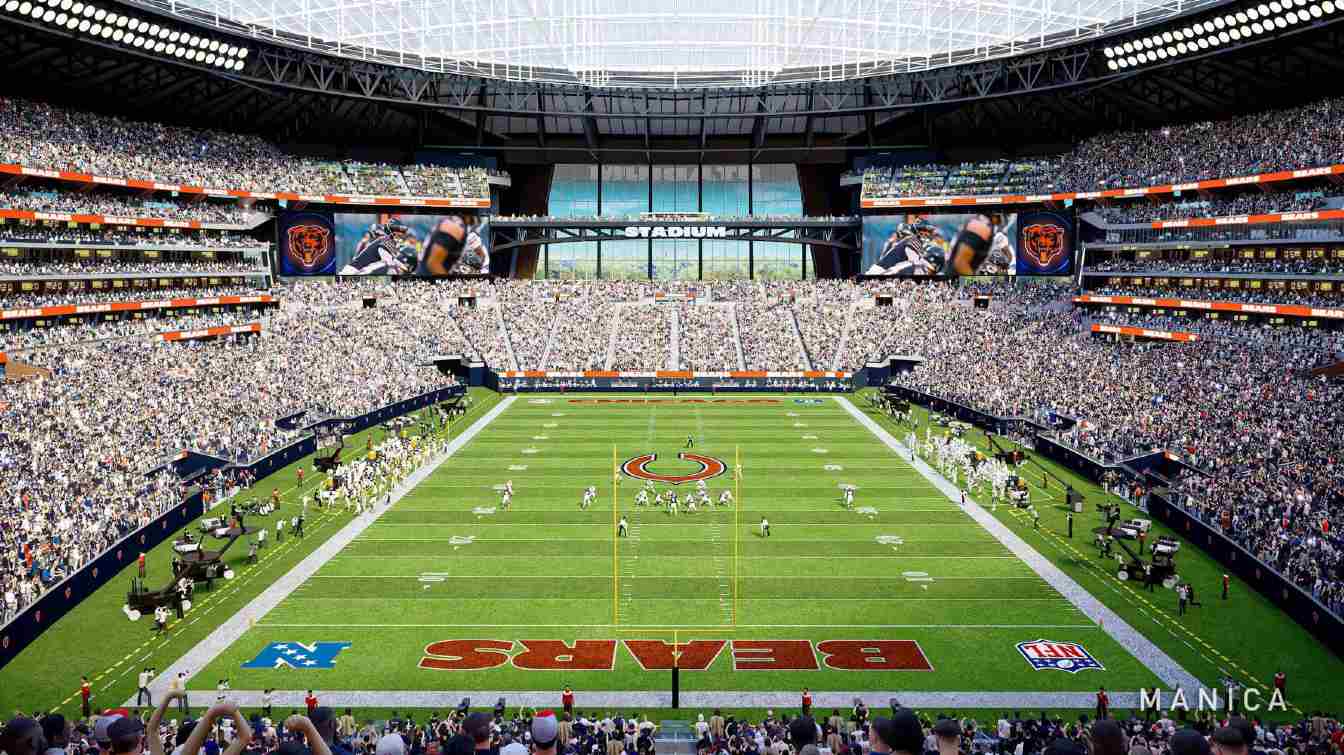 © MANICA | The Bears own a large parcel of land in Arlington Heights, purchased from a former racetrack. However, it’s unclear which site will be chosen for the future stadium.
Political rivalry between illinois and indiana over the club’s future
The situation has turned into an open competition between the two states. Indiana has already established a legal framework and is clearly signalling its readiness to cooperate, emphasising a business-friendly environment and regulatory stability. Illinois, meanwhile, points to the franchise’s historical ties with Chicago and the importance of the Bears brand for the city’s identity.
Experts note that the mere possibility of crossing state borders significantly strengthens the club’s bargaining position. Modern NFL stadium negotiations are increasingly driven by competition between jurisdictions, and the Bears are effectively using this dynamic as part of their strategy.
As of now, no binding agreement has been signed either in Indiana or Illinois. The club continues detailed analyses of transportation infrastructure, commercial potential and the long-term financial stability of the project. The final decision will carry enormous consequences — not only sporting but also economic and political. The choice between Hammond and Arlington Heights is a generational one. The new stadium is expected to operate for 40–50 years, shaping the development of the entire region and defining the future of the Chicago Bears in the NFL.