
Right around the time the Indianapolis Colts signed a 44-year-old grandfather to temporarily lead their franchise, I began to wonder about the state of the NFL.
What exactly is going on with today’s young quarterbacks?
Players are groomed for the position earlier than ever. All of the elite teenagers today have quarterback trainers or personal coaches and attend camps or academies that presumably make them more prepared than ever to play at the highest levels. Yet it’s the same handful of names atop the quarterback lists that we’ve had for a few years now — Patrick Mahomes, Lamar Jackson, Josh Allen and Joe Burrow — with nobody new really breaking through.
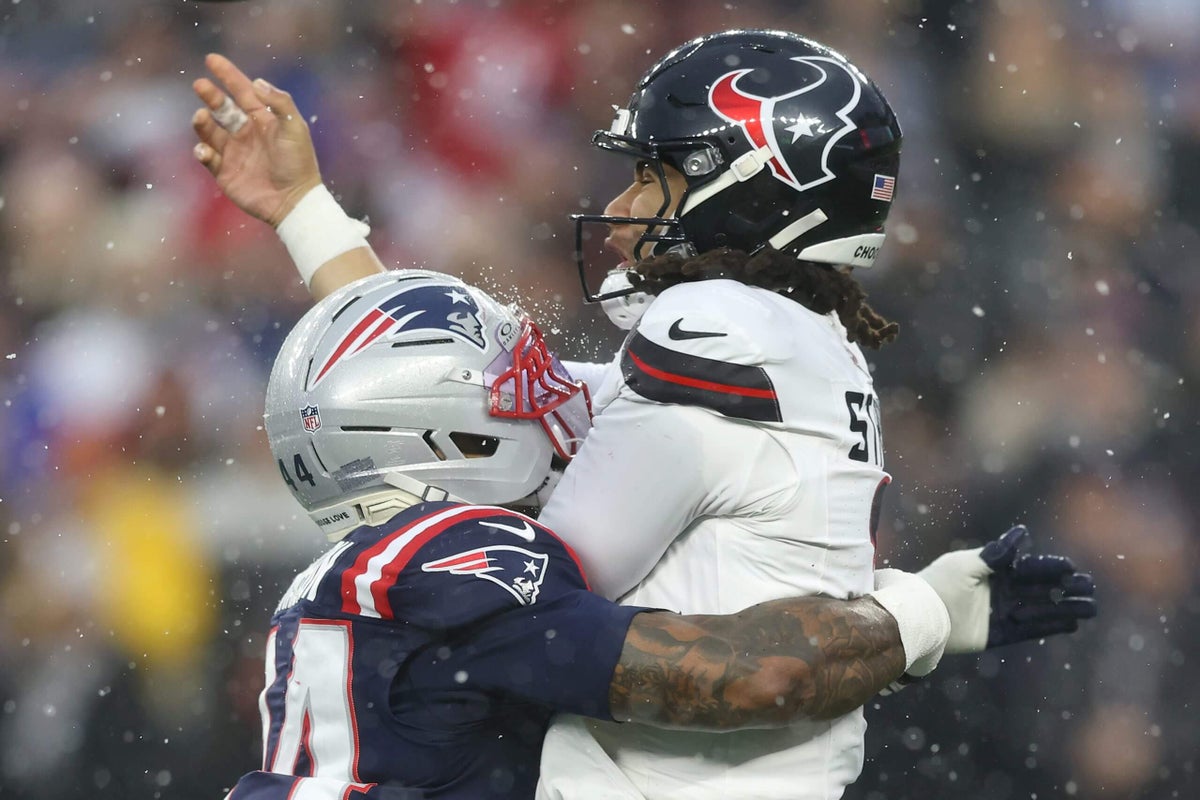
Maybe Drake Maye, Jayden Daniels or someone else will eventually change that. Daniels is one of a handful who appeared to be on the cusp early in their career, but injury or performance caused them to slide. C.J. Stroud fits into that, too. Both are still young enough to get there. For now, it’s still the foursome of Mahomes, Jackson, Allen and Burrow, while Matthew Stafford can make a compelling argument that it has always been five names at the top. But that’s it.
Burrow is the most recently drafted and that was six years ago. This is widely considered to be yet another down year for taking quarterbacks in the draft, and the Colts started old man Philip Rivers, who had been retired for four years, the same week they signed him. They bypassed their own drafted rookie, Riley Leonard, in the process.
The ability of old/retired quarterbacks such as Rivers and Joe Flacco to walk off the golf course and have various levels of success immediately upon returning to the field shows again how much the mental aspect of the position matters over the physical.
When I asked a handful of coaches and personnel people at the combine last week why there seems to be a bit of a down cycle at quarterback, it was met with shoulder shrugs and blank stares. It could just be a natural cycle that bursts in 2027 with a bounty of top college quarterback prospects, including Arch Manning and Julian Sayin. Then again, we thought that would be the case with this draft.
It leaves teams like the Cleveland Browns in a familiar purgatory. The Browns have been searching for a franchise quarterback for more than 25 years. The best odds of finding one, historically, are at the top of the first round. Only the Browns could have top 10 picks in consecutive drafts, desperately need a quarterback, and not take one with their top pick in either draft. They are the epitome of lousy timing.
Two quarterbacks were selected in the first round last year: Cam Ward at No. 1 and Jaxson Dart at No. 25. Early indications coming out of the combine are that there could be only two chosen again this year: Fernando Mendoza and Ty Simpson.
Rarely have drafts been this thin at quarterback in consecutive years.
While 2022 is perhaps the worst class of the last 25 years, when Kenny Pickett was the only quarterback to go in the first 70 picks, that was followed by 2023, when three quarterbacks were taken within the first four picks.
Bryce Young and Stroud, the top two picks in ’23, have been inconsistent. The third quarterback chosen, Anthony Richardson, was a bust with the Colts and is already looking for a new team.
Part of the recent draft dip is certainly related to name, image and likeness money. The lucrative NIL dollars are sending quarterbacks like Oregon’s Dante Moore back to school when they otherwise probably would have declared. Also, the frantic movement among players and coaches during the NIL era has perhaps stunted the growth of college quarterbacks. Whereas top guys previously spent three or four years at one place in college, now they are constantly moving toward the most money. Has it hurt some of their development? It would seem so.
When I asked our draft expert, Dane Brugler, about it in December, shortly after Rivers returned, he had perhaps the best explanation: “There are more capable quarterbacks in the NFL now than ever before. It’s just really, really hard to find the elite ones.”
The quarterback class of 2021, headlined by Trevor Lawrence, is a classic example of how we got here. Five quarterbacks were selected in the first round, including each of the first three picks. All five have been various degrees of disappointing.
Lawrence has never really met career expectations, but he certainly has outperformed the rest of his class: Zach Wilson, Trey Lance, Justin Fields and Mac Jones.
Six of the nine quarterbacks taken in the first rounds between 2021-23 have to be considered busts: the four from ’21, Pickett and Richardson. The ’24 class with Caleb Williams, Daniels, Maye and Bo Nix provides hope.
All the data available to NFL teams today and all the coaching available to young quarterbacks should theoretically make drafting them a little bit easier. Even the incoming NIL money gives teams an indication of how guys respond to wealth.
Drafting and developing quarterbacks should never be easier than it is today, but it doesn’t seem to matter. Teams are still busting at the position just as much as they were 20 and 30 years ago.
Maybe next year will be different. The bottleneck of top quarterbacks happy to stay in school and cash NIL checks will finally break, and we could have another draft of four or more quarterbacks go in the first round. Until then, quarterback-needy teams continue to sit, wait and wonder …
What’s Ben Roethlisberger up to these days?