
Those curious what the Bears’ passing game will look like without wide receiver DJ Moore don’t have to venture far for their answer. Moore had two or fewer catches in six of the Bears’ 17 regular-season games last year. He finished one game with no receiving yards, one with seven and another with -4.
Moore will forever be remembered for his walk-off overtime touchdown catch to beat the Packers in December — and, against the Rams month later, the overtime interception that quarterback Caleb Williams chalked up to miscommunication between the two. For everything the Bears liked about Moore — his intelligence, willingness to block and an undeniable toughness — the fact remains that the receiver was a statistical afterthought almost as often as he wasn’t last year. That, along $16.5 million in salary cap savings, motivated the Bears to agree to deal Moore and a fifth-round pick to the Bills for a second-rounder Thursday. The trade will become official Wednesday.
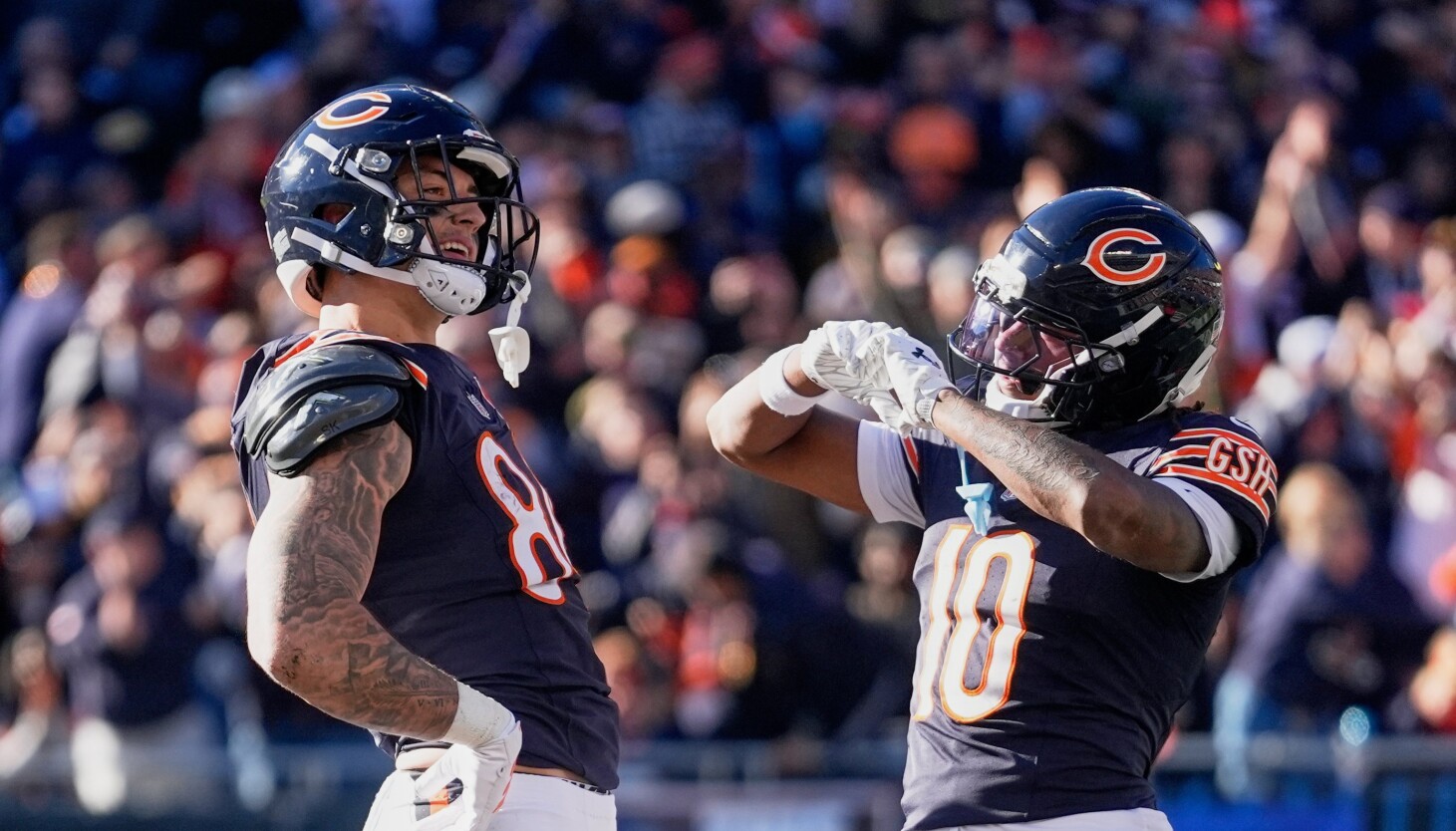
The Bears have spent the last two seasons collecting high-end pass catchers. That made keeping Moore a luxury, not a necessity. The Bears have shifted the pressure to their three top pass-catchers — receivers Rome Odunze and Luther Burden, and tight end Colston Loveland — but, most importantly, to head coach and play-caller Ben Johnson.
Johnson’s expertise means he’ll have a better chance finding the next Moore than he would a defensive lineman or safety, positions to which the Bears should devote their cap savings. In fact, he might have done so already. Odunze, Burden and Loveland all averaged more receiving yards per game than Moore did last year. If they continue to improve, they’ll be the Bears’ top trio for the next three years.
General manager Ryan Poles was stunned Odunze was available ninth overall in 2024 — in part because the Falcons shocked the league by drafting quarterback Michael Penix eighth. Odunze started his second season with a flourish — only the Rams’ Puka Nacua had more receiving touchdowns over the first four weeks — before being hampered with foot issues. He’s been solid when healthy, but the Bears need a leap from their No. 1 receiver.
Burden and Loveland finished their rookie seasons with a surge. Burden averaged 13.9 yards per catch in December, the second-most of any NFL receiver with at least 10 receptions. From Week 14-18, Burden totaled 324 receiving yards, 11th-most among receivers. Six of the 10 in front of him made the Pro Bowl last year. Loveland had 307 receiving yards during the same span, which trailed just three tight ends.
Had the Bears kept Moore, he would have cost a $24.5 million salary cap hit — the third-highest on the team — despite having stats commensurate with a secondary pass-catcher. Moore had a career-worst 50 catches for 682 yards last year, the continuation of a curious development — he had better stats with Justin Fields, and not Williams, throwing passes.
Johnson believes there’s no such thing as too many good pass-catchers. That’s why the Bears pivoted to draft Loveland 10th and Burden 39th last year after players they coveted — tackle Kelvin Banks Jr. and running back TreVeyon Henderson — were selected one spot before the Bears picked.
Thursday, those moves allowed the Bears to trade Moore. Now the pressure’s on to thrive without him.