
Trey Hendrickson didn’t get traded. He didn’t get tagged. Instead, the Bengals effectively “released” their best defensive player into the open market by declining to use the franchise tag before the March 3 deadline, allowing his contract to expire and making him an unrestricted free agent. On March 11, when the new league year opens, Hendrickson will be free to cash in elsewhere while Cincinnati gets no immediate return for one of the NFL’s top pass rushers.
Five-Year Run, Zero Exit Strategy
This isn’t some fringe rotational guy leaving in the middle of the night. Since signing a four-year, $60 million deal in 2021, Hendrickson has been the engine of Cincinnati’s pass rush and one of the league’s most productive edge players. Over five seasons and 79 games in stripes, he stacked Pro Bowls, sacks, and pressures while anchoring the front of a defense that helped push the Bengals into Super Bowl contention. After all that, the team let the clock bleed out on his contract drama and ended up with no trade, no tag, and no guaranteed compensation as he walks out the door.
From Deacon Jones Peak To Injury Cliff
The turning point came in the span of two seasons. In 2024, Hendrickson delivered a career year: he led the entire NFL with 17.5 sacks, won the Deacon Jones Award, made first-team All-Pro, and set a new Bengals single-season sack record. He added strong numbers across the board in pressures, hits, and tackles for loss, the textbook peak of a modern edge rusher’s career. One year later, he was dealing with hip and core muscle surgery, limited to part of the 2025 season with a steep dip in sack production, giving a risk-averse front office the opening to balk at another big guarantee.
The “We’ll Fix It Next Year” Lie
This breakup has been building for years. In 2023, Hendrickson agreed to a one-year extension worth more than $20 million in new money, a band-aid that delayed real guaranteed commitments. After his 2024 sack-title season, the same tension resurfaced: the Bengals stuck to their philosophy of avoiding multi-year guarantees outside Joe Burrow and their top receivers, while Hendrickson’s camp heard another round of “we’ll fix it next year.” By 2025, another rework pushed his annual pay up toward $30 million, but the repeated delays and partial solutions shredded trust on both sides.
Tag-And-Trade Dream That Never Happened
On paper, the clean way to protect the asset was obvious: slap the approximate $30 million franchise tag on Hendrickson, then shop him to a pass-rush desperate contender for a premium pick. According to league chatter, the Bengals explored elements of that path, calling around to gauge interest in a tag-and-trade scenario with his age, recent injuries, and a huge one-year figure attached. The responses were lukewarm, with teams wary of paying both a high tag number and top-of-market guarantees in a new deal. By the time the combine rolled around, internal comments about how “all trades are difficult” and require alignment with the player were as close as anyone came to admitting the relationship no longer supported a cooperative exit.
Why “Released” Fits What Happened
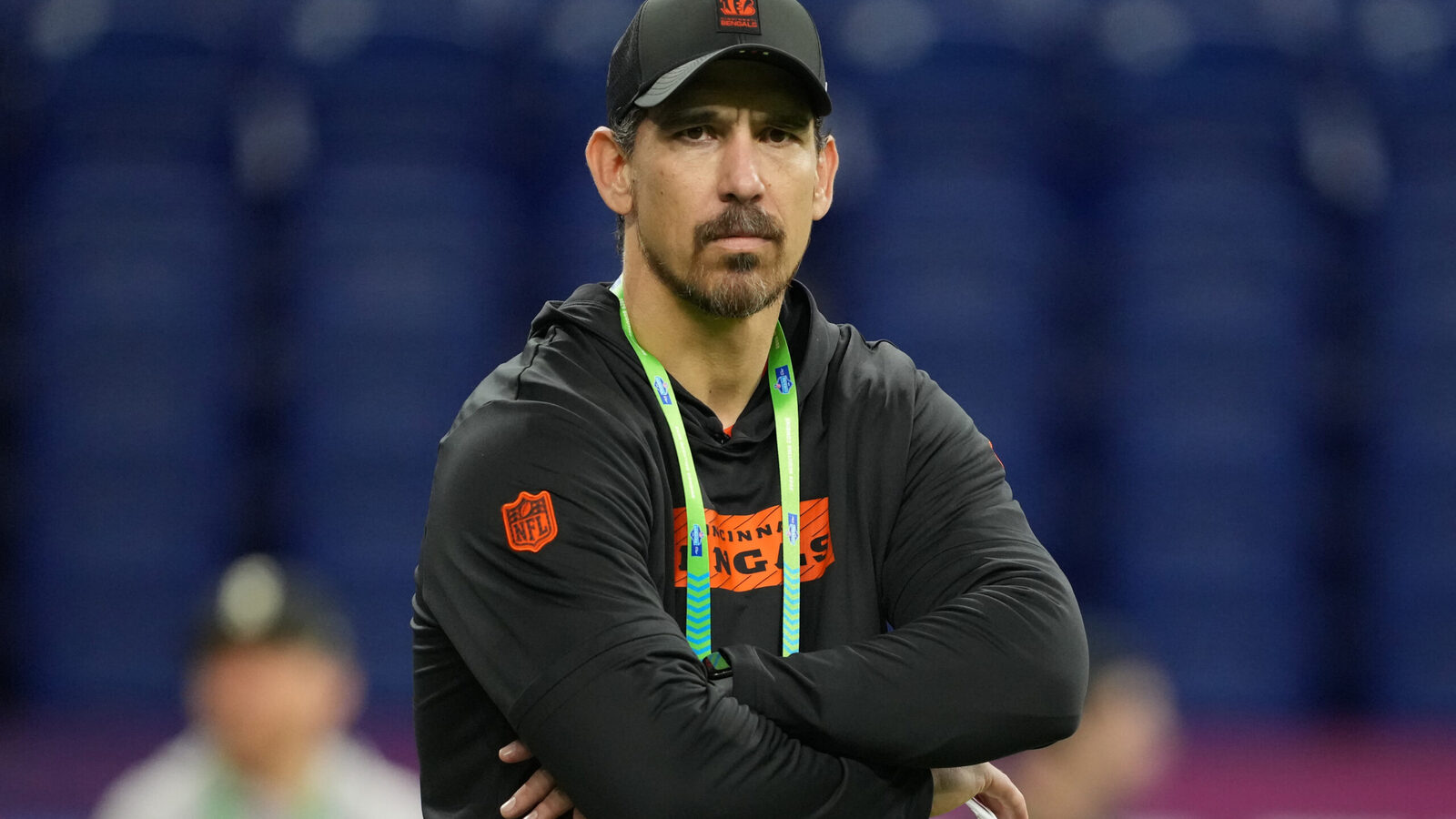
Feb 27, 2026; Indianapolis, IN, USA; Cincinnati Bengals tight end coach James Casey during the NFL Scouting Combine at Lucas Oil Stadium. Mandatory Credit: Kirby Lee-Imagn Images
Technically, the Bengals did not cut Hendrickson in the usual transaction-log sense. His original contract ran its course, and the team chose not to use the franchise tag, the one mechanism that would have kept him in Cincinnati for 2026. Functionally, though, the effect is the same as a release: by letting the deadline pass, the Bengals released Hendrickson from any obligation to the organization and allowed him to hit the market with full leverage. This was a conscious choice to let an elite player walk.
Bengals Eat The Risk, Lose The Reward
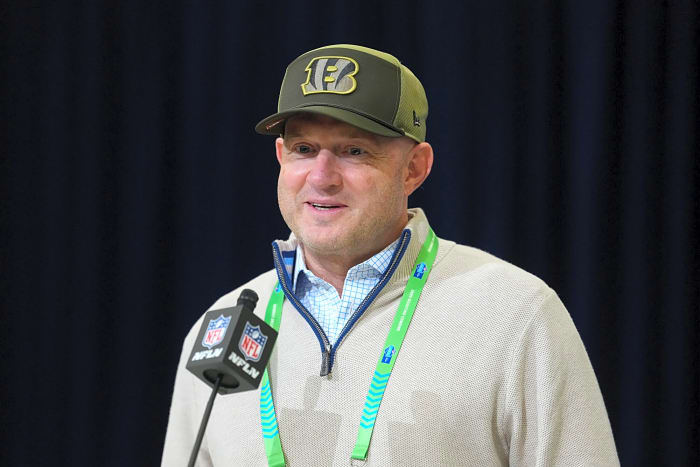
Feb 24, 2026; Indianapolis, IN, USA; Cincinnati Bengals general manager Duke Tobin speaks at the NFL Scouting Combine at the Indiana Convention Center. Mandatory Credit: Kirby Lee-Imagn Images
Cincinnati’s decision to skip the tag is as much about risk tolerance as it is about cash. Committing roughly $30 million on a one-year tag to a 31-year-old edge rusher coming off hip and core surgery is a massive bet that his body will hold up and his production will rebound to near-peak levels. Instead, the Bengals will absorb a smaller dead-money hit from void years while hoping a future compensatory pick eventually offsets the loss, a return that is far from guaranteed if they spend aggressively in free agency. They protected themselves from a short-term cap swing, but they forfeited any locked-in return on the best defensive player of the Burrow era.
Defense Already Bleeding, Now Missing Its Closer
All of this happens against the backdrop of a defense that was already leaking badly. The 2025 Bengals finished near the bottom of the league in points allowed and stumbled to a 6–11 record, their first losing season since 2020. Even in a shortened 2025 campaign, Hendrickson remained their most respected edge threat when healthy, the closer offenses had to account for on money downs. Now that safety valve is gone, and there is no obvious heir on the roster. With significant cap space to work with, Cincinnati must decide whether to chase another veteran pass rusher, lean on the draft and scheme, or simply hope that a committee can approximate the impact of a player who piled up high-end sack totals over his last three healthy seasons.
Hendrickson’s Market: Peak Tape, Red-Flag Body
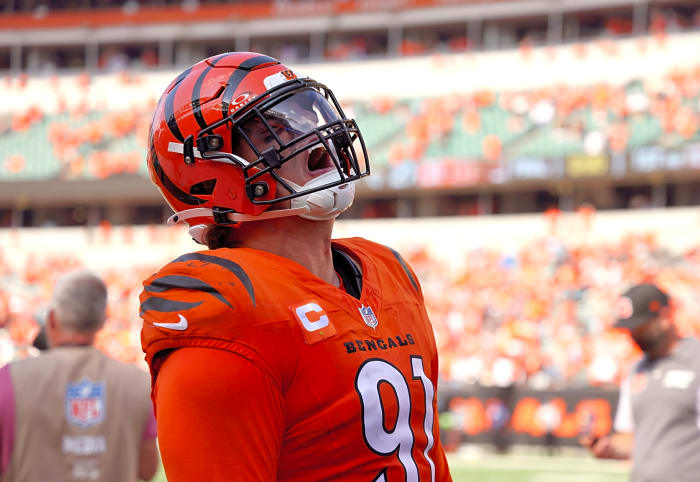
Sep 14, 2025; Cincinnati, Ohio, USA; Cincinnati Bengals defensive end Trey Hendrickson (91) celebrates the win after the game against the Jacksonville Jaguars at Paycor Stadium. Mandatory Credit: Joseph Maiorana-Imagn Images
For the rest of the league, Hendrickson is one of the most difficult evaluations in this free agent class. His recent peak is as good as it gets: a league-leading 17.5 sacks, a first-team All-Pro nod, and dominant pressure numbers in 2024 that still show up vividly on tape. At the same time, teams must price in his age, the recent hip and core muscle surgery, and a 2025 season that looked like half his previous sack pace. A miss on a top-of-market deal for a veteran edge can wreck a cap sheet, but a hit on a short window of elite production can tilt a playoff race.
Why He’s A “$105M Star”
The “$105M” tag attached to Hendrickson reflects what multiple national outlets believe he is about to be worth on the open market, with one prominent projection pegging his next deal at three years and $105 million, and others hovering just below nine figures. Taken together with his resume — Pro Bowls, an All-Pro season, the Deacon Jones Award, and a league sack title — that makes him a clear star-level player in the eyes of evaluators and cap analysts. Whether the final contract comes in slightly higher or lower, the market is bracing for Hendrickson to be paid like one of the most expensive pass rushers in football.
Lou Anarumo And The Colts Wildcard
Former Bengals defensive coordinator Lou Anarumo, who helped unlock Hendrickson’s most dominant seasons, now runs the defense in Indianapolis. Analysts have already circled the Colts as a seamless schematic fit: same language, similar pressure concepts, and a role tailored to the skill set that produced his 17.5-sack, high-pressure explosion. If Indianapolis is willing to live in that projected $100–105 million neighborhood on a three-year structure, this could shift quickly from “mystery sweepstakes” to a reunion that just needed the league year to open.
The Instagram Goodbye And What It Really Said
Minutes after the tag deadline expired without an offer, Hendrickson posted what read like a final farewell to Cincinnati on Instagram. He thanked the organization for the opportunity and referenced the “significant victories and challenging defeats” that defined his five-year run. The tone was respectful but unmistakably final, the words of a player proud of his on-field legacy but done waiting on promises in the office. For Bengals fans, it was a gut punch: one of the best free-agent signings in franchise history, acknowledging the end of a partnership that dissolved over guarantees and delayed fixes.
What This Really Says About Cincinnati

Oct 26, 2025; Cincinnati, Ohio, USA; Cincinnati Bengals defensive end Trey Hendrickson (91) runs out to the field before the game against the New York Jets at Paycor Stadium. Mandatory Credit: Katie Stratman-Imagn Images
Strip away the press conference language, and this is the core story: the Bengals found a top-five edge rusher in free agency, rode his peak during their championship window, then declined to lock in long-term guarantees and ultimately let him walk without immediate compensation. They avoided a massive one-year tag charge, but they also passed on turning an elite asset into draft picks or a cheaper, younger successor while sitting on plenty of cap flexibility and a bottom-tier scoring defense. If they don’t move quickly and aggressively to replace what he brought off the edge, Hendrickson’s departure will mark more than just a roster change; it will look like the day Cincinnati chose philosophical comfort over doing everything possible to keep its defensive window open.
Sources:
“Bengals Are Not Franchise Tagging Star Pass-Rusher Trey Hendrickson” — NFL Network (Ian Rapoport and Tom Pelissero)
“Trey Hendrickson Says Goodbye to Bengals as No Tag Used on DE” — ESPN (Ben Baby)
“Why the Bengals Didn’t Attempt a Tag-Trade for Trey Hendrickson” — The Athletic (Paul Dehner Jr. and Dianna Russini)
“Projected Contracts, Landing Spots for the NFL’s 50 Best Free Agents in 2026” — Sports Illustrated (Gilberto Manzano)
“2026 NFL Free-Agency Rankings: Top 150 Players” — The Athletic (Daniel Popper)
“Trey Hendrickson Wins 2024 Deacon Jones Award, 2025 NFL Honors” — Bengals.com / NFL Honors