
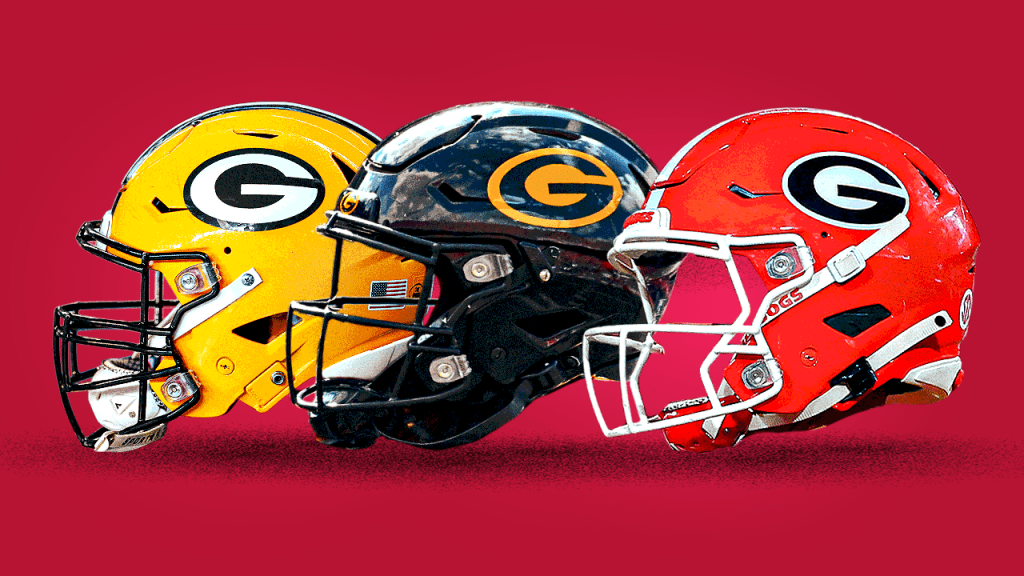
The U.S. Patent and Trademark Office recently registered to Grambling State University and its Tigers athletics program the “G” mark for apparel, merchandise, university athletic programs and related alumni, athlete and fan purposes.
The USPTO did so only after Grambling State provided the school’s cooperation agreements with the Green Bay Packers and the University of Georgia, both of which have trademark registrations for similar looking “Gs”. Grambling State, the Packers and UGA made clear none believe consumer confusion is likely, an assertion that directly addresses a USPTO concern.
Often, sports businesses with intellectual property issues turn to threatening letters and even lawsuits to protect their perceived turf. Two years ago, the University of Cincinnati sent a cease-and-desist letter to a middle school in Tennessee over its use of a bearcat mascot. In response, the middle school changed its mascot and logo. Last year Baylor University sued Boston University over its use of an interlocking BU design, and the case remains on the docket.
Grambling State, the Packers and UGA chose a different path: coming to a common-sense resolution that each can use a “G” and not interfere with each other or cause consumer confusion.
Grambling State filed its trademark application last May. The application explained the Tigers’ “G” mark consists of a stylized design of “G” in black surrounded by a gold oval shape, with the gold oval outlined in a black line. The application also noted that the university has used the mark as a source identifier for collegiate educational services, with a flyer for a Grambling State admitted-student day mentioned as an example.
Last October, USPTO examining attorney Barbara Gaynor issued a nonfinal office action indicating Grambling State’s application would be rejected unless the school could address specific concerns.
A major worry was likelihood of confusion.
Trademark law prohibits registration of a mark when that mark is too similar to another registered mark and is likely to confuse consumers as to the source of the goods or services at issue.
As Gaynor explained, the Packers and UGA already obtained registrations for similar-looking, stylized “G” marks in oval designs. According to trademark filings, color is not claimed as a feature of the Packers’ mark while the color red is claimed as a feature of UGA’s mark. Both the Packers and UGA use their marks for some of the same purposes sought by Grambling State.
Last December, attorney Devin Ricci of Kean Miller responded to the USPTO’s nonfinal office action on behalf of Grambling State.
He wrote that the school had entered into a consent agreement with the Packers and a coexistence agreement with UGA. These are two similar types of trademark contracts. A consent agreement is usually a straightforward arrangement that states the parties agree use of an arguably similar mark is allowed, while a co-existence agreement contains more detail and specifics about uses and limitations.
The Grambling State-Packers consent agreement, which was signed in September 2025, is brief and to the point. It states the “parties are unaware of any actual confusion” between their marks. Grambling State and the Packers also agreed to use their marks “in a manner intended to avoid confusion.” To that point, Grambling pledges to “only use” its mark “in the colors black and gold.”
As for the Grambling State-UGA coexistence agreement, it was signed in October 2025 and is more nuanced. However, it arrives at the same point that consumer confusion is unlikely with two stylized “G” marks.
The Grambling State-UGA agreement expresses that Grambling State agrees to “only use” the “G” in a black and gold color scheme and won’t use it in connection with “the color red or the combination of black and red.”
Further, the agreement explains that “should any confusion occur,” Grambling State and UGA would “take immediate steps to correct any misunderstanding and refer” the confused person to the other.
In his response to the USPTO, Ricci argued that Grambling State’s agreements with the Packers and UGA should “be given great weight,” since the three institutions are “most familiar” with the use of stylized “Gs” in the marketplace, and they have the most at stake in preventing consumer confusion. Ricci also cited case law standing for the proposition that “the USPTO should not substitute its judgment concerning likelihood of confusion for the judgment of the real parties in interest without good reason.”
Ricci’s letter worked, as Gaynor and the USPTO approved his client’s application, and the mark was registered on Feb. 24. Registration offers key legal benefits for Grambling State, including the exclusive right to use those marks, a presumption of ownership and anti‑counterfeiting protections from U.S. Customs and Border Protection.
The registration of Grambling State’s mark is a good illustration of how cooperation among businesses in sports can avoid costly litigation and ensure everyone involved lands in a sensible place.