
There are two bills currently in the slow process of moving through Congress related to college athletics. One is the SCORE Act, a House bill which aligns more with Republican interests and was introduced by Rep. Gus Bilirakis (R-Fla.). The other is the bipartisan-ish SAFE Act, which was introduced in the Senate by Sen. Maria Cantwell (D-Wash.).
[Sign up for Inside Texas for $1! Get the latest on the Longhorns HERE]
The current college sports environment has placed schools at the brink of financial collapse, and programs are shrinking because of it.
After today’s roundtable with @POTUS, I announced I’ll be intro’ing a bill with @SenatorCantwell to address college sports’ revenue problem. https://t.co/y1URYDQbX3
— Senator Eric Schmitt (@SenEricSchmitt) March 7, 2026
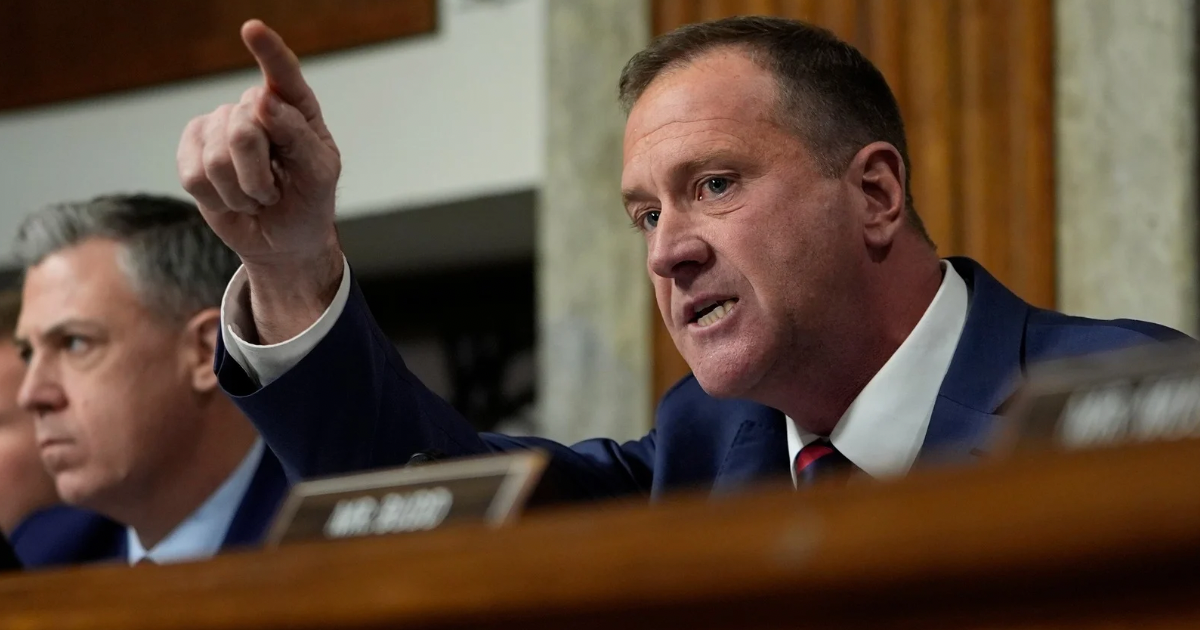
Though a third bill on the matter has not yet been introduced, Sen. Eric Schmitt (R-Mo.) announced Friday his intentions to present a new college sports related bill to the Senate. It is the result of a bipartisan effort with Cantwell, and it aligns with the interests of Texas Tech Board of Regents chairman and Red Raiders megabooster Cody Campbell.
The announcement arrives on the day President Donald Trump hosted Schmitt, Campbell, Sen. Ted Cruz (R-Texas), former Alabama head coach Nick Saban, former Ohio State head coach Urban Meyer, SEC commissioner Greg Sankey, NCAA president Charlie Baker, and numerous other movers and shakers in college sports at the White House for a College Sports Roundtable. Of note, no current student-athlete attended the roundtable.
Schmitt’s bill, which is currently in the drafting process, will ostensibly compete with Cruz’s work on the matter. Cruz, who has been the GOP face of this issue on Capitol Hill, has yet to introduce a bill into the Senate.
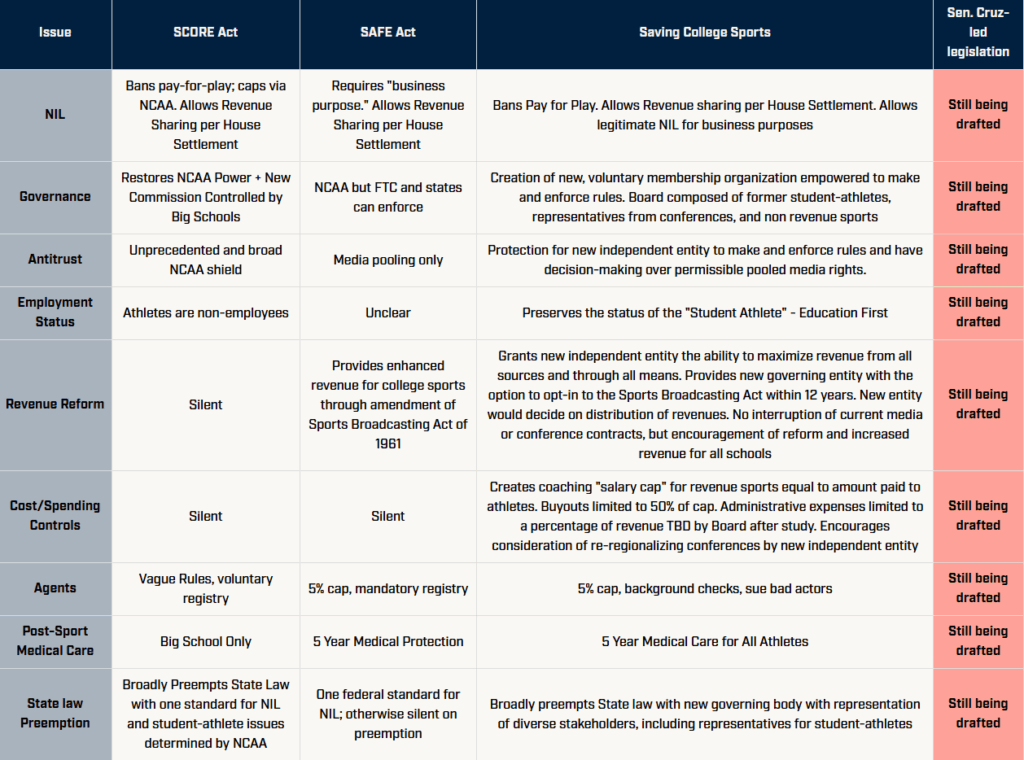
Campbell has made his preferences clear with Saving College Sports, a 501(c)(4) group “dedicated to fighting for a college sports system that protects both student-athletes and the future of college athletics at every level.” Schmitt’s planned bill aligns with SCS’s vision, which says the SCORE Act and the SAFE Act fail to meet the moment.
While there are many overlaps between the SCORE and SAFE Acts, there are key differences that partisan politics, that to this date, struggled to bridge on issues like NIL, governance, anti-trust, employment status, revenue reform, cost/spending controls, agents, post-sport medical care, and state law preemption.
Campbell’s main target throughout his time spent in Washington-related news has been the Sports Broadcasting Act of 1961. That act, signed by President John F. Kennedy, allowed professional sports leagues to pool broadcasting rights and also created timing and geographical limits on when professional football could be televised.
SCS’s preference is to create and grant to a “new independent entity the ability to maximize revenue from all sources and through all means. It “provides a new governing entity with the option to opt-in to the Sports Broadcasting Act within 12 years. A new entity would decide on distribution of revenues. No interruption of current media or conference contracts, but encouragement of reform and increased revenue for all schools.”
Currently, in Football Bowl Subdivision, the 10 conferences negotiate their media rights deals on behalf of their members. SCS’s recommendation is to modernize “how college athletics — specifically college football — monetizes its on-field product through centralized media rights deals in an effort to maximize revenue, much like the NFL and NBA models.“
The Big 10 and the SEC recently pushed back against amending the SBA in a white paper sent to lawmakers. Both conferences argued against the “thesis of these proposals,” which insinuates creating a new, centralized entity to administer media rights for the 130-plus FBS teams. The white paper said “these proposals provide no details on how schedules would be optimized, who those schedules would benefit, and how football-generated revenues, the dominant source of revenue, would be redistributed to other schools and athletic programs or the potential impacts on student-athletes, colleges, universities, and conferences.”
The SEC recently announced a $1.03 billion media rights distribution to its member schools for FY2024-25 (Sept 1. 2024 through August 31, 2025), the first year Texas and Oklahoma played football as members of the league. In May of last year, the Big 12 announced it distributed $558 million among its member schools for the 2024-25 academic year.
The SEC and Big 10 understandably rejected the idea of pooling with other conferences, believing aligning with leagues like the Big 12, the ACC, and Sun Belt would diminish the rights payouts to member institutions. Campbell’s altruistic proposal would no doubt benefit Texas Tech, where he played for Mike Leach’s Red Raiders from 2000-04. The Red Raiders recently won their first Big 12 Championship and appeared in the College Football Playoff thanks to roster-building efforts supported by Campbell, who is also CEO of the multi-billion dollar company Double Eagle Energy Holdings.
What Schmitt’s bill plans to do in regards to the SBA won’t be fully known until it reaches the Senate floor after committee consideration. It’s likely destination is the Commerce Committee, of which Cruz is the chair and Cantwell is the ranking member. Schmitt is also on the Commerce Committee.
Similar applies for other SCS preferences. Many SCS preferences already coincide with what’s in both the SCORE and SAFE Acts, including a preemption of the varying state laws that creates 50 different sets of rules. Some of those rules are more supportive of the efforts of institutions to pay players through third-party NIL deals. But there is dissent between the bills as to whether the NCAA would create the national standard or if another entity would take on that mantle.
All the same, a new player has emerged on Capitol Hill and taken to the frontlines of the ongoing college sports crisis. That player has partnered with Campbell, a leading, controversial figure in a conversation laden with controversy and polarizing figures in a topic that has college athletics uncertain of what’s to come in the near future.