
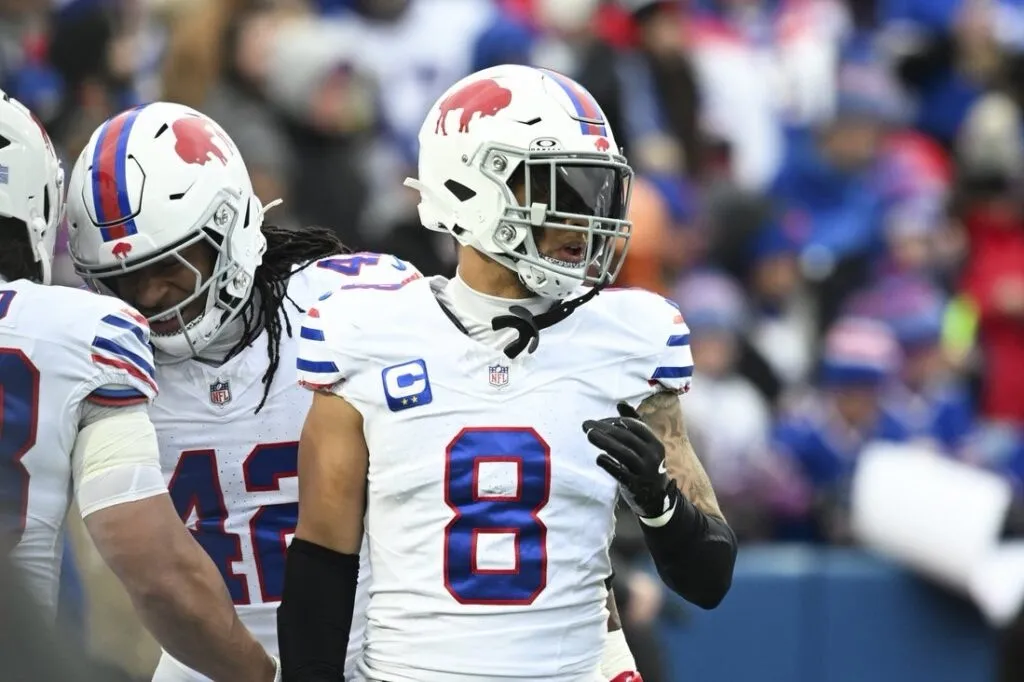
As the offseason continues, more reports, pictures, videos, and updates are revealed shedding light on what players underwent offseason surgeries. The latest athlete to reveal what they’ve gone through is Buffalo Bills LB Terrel Bernard.
At some point on March 4th, Bernard had briefly posted pictures of his ankle scars on his Instagram story before it expired.
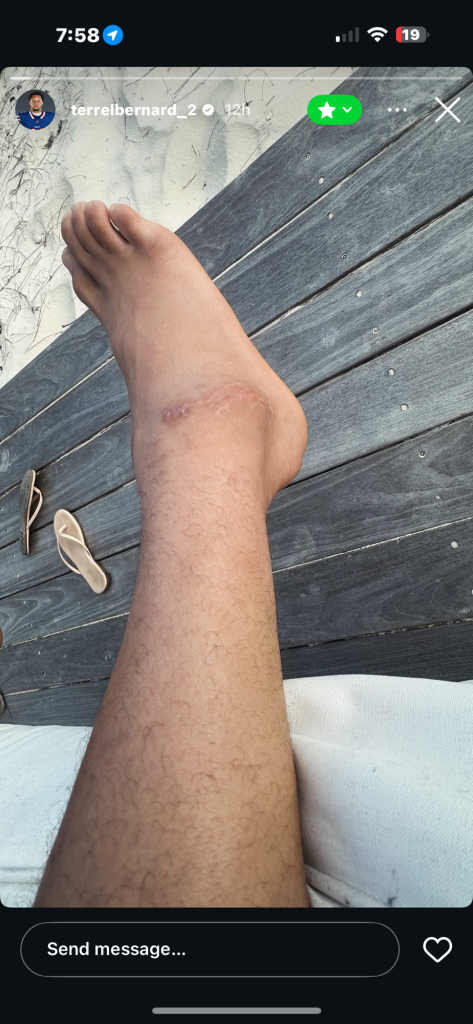 Credit: Terrel Bernard/Instagram
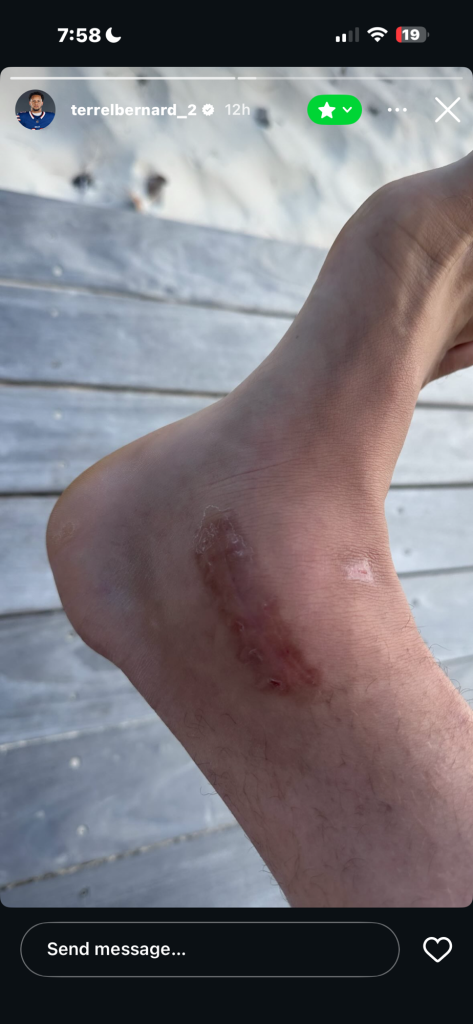 Credit: Terrel Bernard/Instagram
Fortunately, Erik Turner of Cover 1 was able to screenshot the pictures and posted them to X for further discussion.
These pictures alone confirm that Bernard did undergo surgery for his right ankle and with prior knowledge of his injury history, today’s article will dive into everything that went into the injury, his struggles, and outcomes.
Injury History
Surgery to repair Terrel Bernard’s ankle was the latest step in an injury that dates back to December 2023. Bernard had originally sprained the ankle during a routine play against the Los Angeles Chargers in Week 16 as seen below.
#Bills Terrel Bernard Right ankle/foot injury.
Hard to make out what he did, pivots on R leg as he turns around & begins hopping on the leg.
Could have been the medial ankle, possibly the foot. Went to the sideline to get it worked on or taped up, and returned to the game. pic.twitter.com/gnW5WO7SA6
— Banged Up Bills (@BangedUpBills) December 24, 2023
The injury in itself was rather innocuous, missing just three plays and he spent only one week on the injury report, limited on Wednesday and Thursday before getting a full practice in on Friday. Looking back at notes from the original injury, he had stepped with his toes outward and turned the opposite way, stressing the inside portion of the ankle which is where the deltoid ligament is located.
Bernard continued to play throughout the season before suffering a more significant ankle injury against the Pittsburgh Steelers in the Wild Card round as seen below.
#Bills Terrel Bernard right ankle injury.
Aircast came out immediately for Bernard & carted off.
That shift in the sock when the heel hits, concerned there may be some type of fibular fracture.
At best a bad ankle sprain.
Let’s hope I am dead wrong. pic.twitter.com/2uxNfDrqik
— Banged Up Bills (@BangedUpBills) January 15, 2024
As a result of the Steelers injury, he was placed in an aircast and carted off for further evaluation. Later, he was spotted in a walking boot and crutches after the game.
Terrel Bernard on crutches and in a walking boot in the #Bills locker room
— alex brasky (@alexbrasky) January 16, 2024
Bernard had told the Buffalo News that his injury against the Steelers was not as bad as it could have been due to the looseness of his ankle from the previous injury against the Chargers. He also confirmed that the prior injury was to the opposite side of his ankle which was the medial side.
As the Bills prepared for the divisional round game against the Kansas City Chiefs, he was unable to practice all week, yet he was questionable but ultimately unable to play.
Wonder how much he could have helped even in the condition he was in.
Might be looking at a Brostrom procedure if the ligaments are shredded enough.
Would be looking at a 4-6 month recovery. #Bills https://t.co/EoaJ4g5qGg
— Banged Up Bills (@BangedUpBills) January 22, 2024
Following the game, Bernard had said he would have been able to play had the Bills made the AFC Championship game.
LB Terrel Bernard said he would’ve been ready to play next week after sitting out tonight. Will get ankle looked at more this week to see if surgery is required.
— Ryan O’Halloran (@ryanohalloran) January 22, 2024
However, looking at film and what he had told Tim Graham of The Athletic, the ankle had subluxed or partially dislocated when the ankle hit the turf against the Steelers. It continued to pop out when he was testing it out during preventing him from playing against the Chiefs.
Bills MLB Terrel Bernard told me he suffered an ankle subluxation last Monday.
“Basically, it popped out.” Said he had lateral and medial sprains but doesn’t believe it will require surgery.
— Tim Graham (@ByTimGraham) January 22, 2024
After the injury, I had thought that he would require surgery given the severity of the injury, but he did not undergo surgery to our knowledge.
Wonder how much he could have helped even in the condition he was in.
Might be looking at a Brostrom procedure if the ligaments are shredded enough.
Would be looking at a 4-6 month recovery. #Bills https://t.co/EoaJ4g5qGg
— Banged Up Bills (@BangedUpBills) January 22, 2024
Once the 2024 season kicked off, Bernard was playing well until he re-injured his right ankle against the Tennessee Titans in Week 7. He was forced to miss the following game and spent the next five weeks on the injury report, six weeks total with the bye week.
Officially R ankle inj for #Bills Terrel Bernard.
Based on how the foot was stepped on, basically an acute low ankle sprain.
Likely new damage to the ATFL & CFL.
Same ankle he injured last year, likely has chronic laxity in area.pic.twitter.com/7RuWrt15nU
— Banged Up Bills (@BangedUpBills) October 20, 2024
Once again, in the 2024 offseason, we were not aware that he underwent surgery.
2025 began and Bernard was rather slow throughout the season starting with a hamstring strain in the preseason. As a result, he began having difficulty pushing off the right side at times and simply didn’t look himself. It was very likely that his ankle wasn’t helping things either. He re-injured the right ankle yet again in the Week 6 loss to the Atlanta Falcons.
LB Terrel Bernard (Right Foot/Toe)
Originally thought this was ankle, but the forefoot gets jammed into the turf.
Worry for a turf toe or midfoot sprain with how the foot jammed & twisted.
Looked to be in a lot of pain. Able to get off with training staff. pic.twitter.com/C3Pu4SyAQT
— Banged Up Bills (@BangedUpBills) October 14, 2025
He spent five weeks on the injury report and while he did not officially miss any games, he did not see any snaps in the Week 8 win over the Carolina Panthers coming off the bye.
He continued to struggle throughout the season as he battled a right elbow dislocation that cost him three games in Week 12. Finally, he injured his right calf in the loss to the Philadelphia Eagles in Week 17 and missed the final three games of the season including the playoffs. It’s possible he strained his calf due to needing to overwork to maintain some level of stability within an already unstable joint.
LB Terrel Bernard (Right Calf)
Bernard tweaked his right calf on this tackle late in the second quarter. He initially got up and then was seen assessing his calf before he went off to the medical tent.
He was initially questionable before being downgraded to out. pic.twitter.com/8RoRdKbvhh
— Banged Up Bills (@BangedUpBills) December 29, 2025
Looking back, Bernard told us what the extent of the injury was back in the 2023 season, the bigger issue was that he continued to play through the injury. Every new sprain to the area caused further laxity and instability within the ankle until he was not effectively pushing off the leg. This was a strong contributor to his subpar play this year and what likely led to his ankle finally getting fixed.
Anatomy
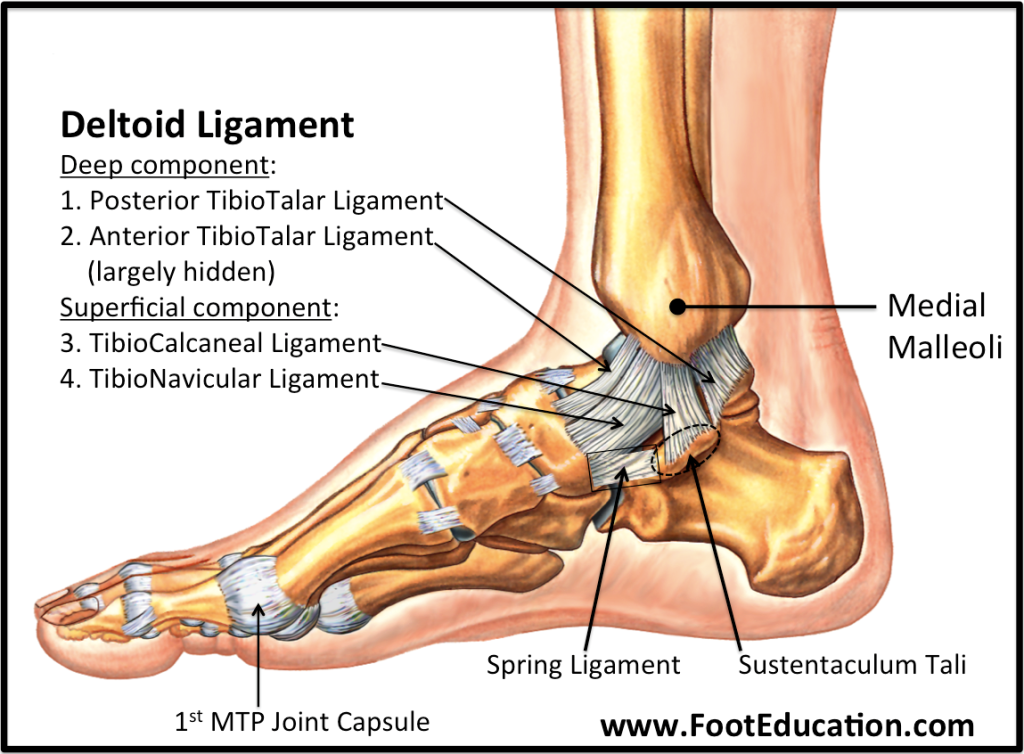
The structures that Bernard most likely had surgically repaired were the anterior talofibular ligament (ATFL), the calcaneofibular ligament (CFL) on the outside and the deltoid ligament on the inside. Considering how often he injured his ankle, the posterior talofibular ligament was also possibly affected. Due to the surgical sites, these are clues that allow us to say this with some level of confidence.
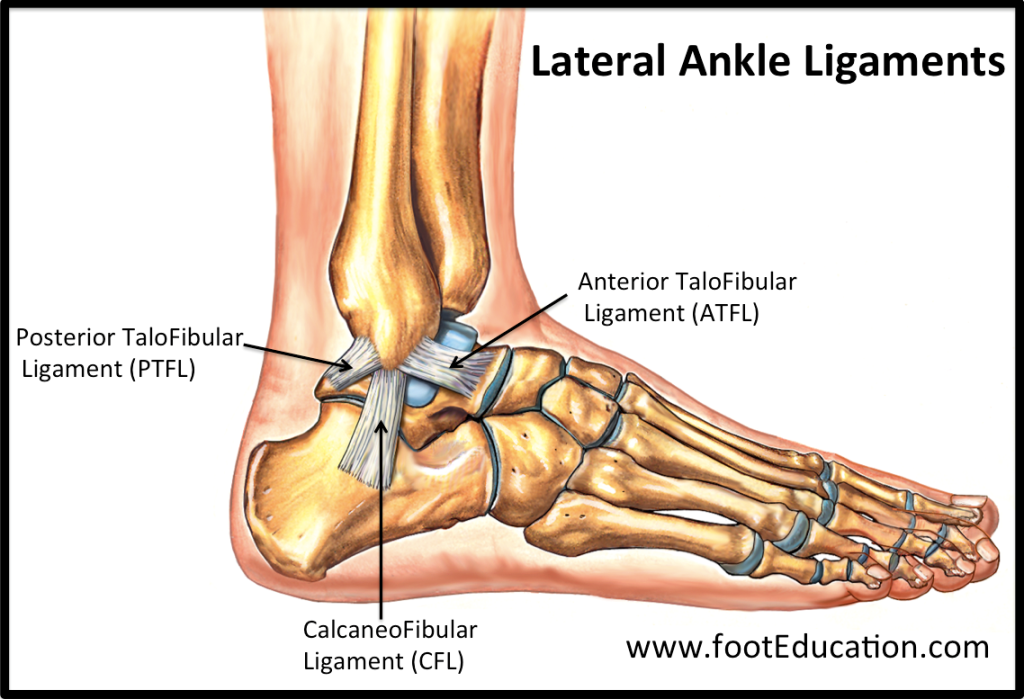
The deltoid ligament prevented rotation, eversion, and flattening of the foot. The ATFL limits plantar flexion, inversion, and forward sliding of the talus. The CFL limits dorsiflexion or rolling inward of the ankle. Bernard has sprained his ankle every which way and playing on created a significant amount of instability throughout the last two years. He had confirmed in 2023/2024 that there was initially some damage to the ligaments on both sides.
Surgery
While most people (85%) are managed nonoperatively, the remaining 15 percent require surgical correction. The procedures that Bernard likely underwent are the Brostrom or Brostrom-Gould on the outside portion of the ankle. As for the medial ankle, a deltoid ligament repair is performed as seen here. He may have also had any loose bodies, bone spurs, and fraying addressed as well.
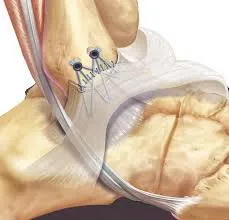 Lateral Ankle Reconstruction
Credit: Arthrex
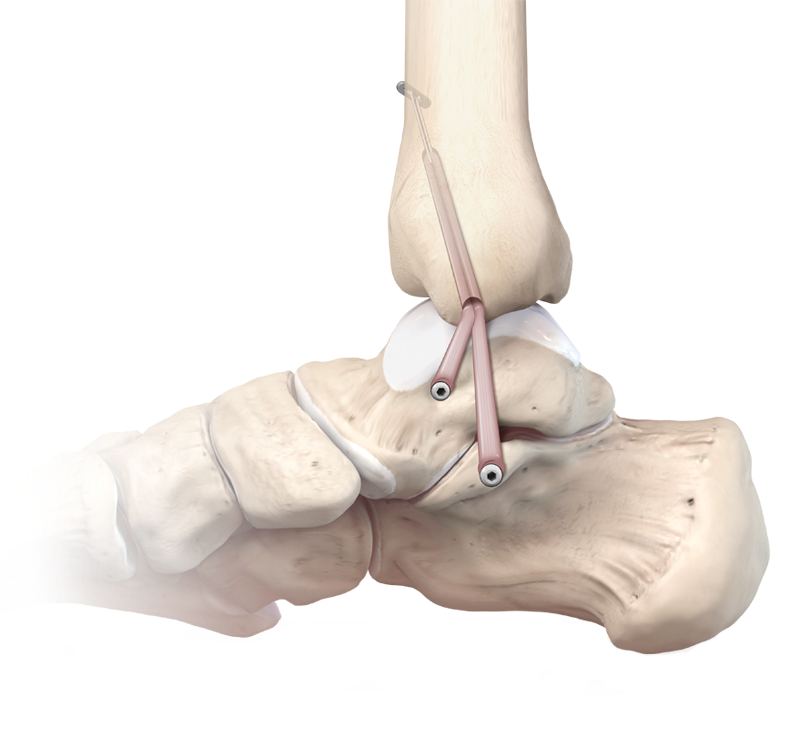 Deltoid Ligament Repair
Credit: Arthrex
Finally, we know that with a fairly high level of confidence Bernard at least damaged his ATFL due to his surgical scar. This is a very similar scar that Cover 1’s Greg Tompsett suffered last year that required surgery. He had fully torn the ATFL, damaged the CFL along with suffering a peroneal tendon tear as a result of dislocating his ankle while running on a sloped surface. Tompsett was kind enough to share his injury details and pictures after he underwent surgery. Both individuals had similar mechanisms of injury of severe inversion sprain though Tompsett’s was more acute versus the chronic nature of Bernard’s.
Note the picture below following his surgery and Bernard’s picture with the similarity in the scar location and shape above the lateral malleolus. There are some differences due to surgeon technique and damage, but similar location and mechanism of injury.
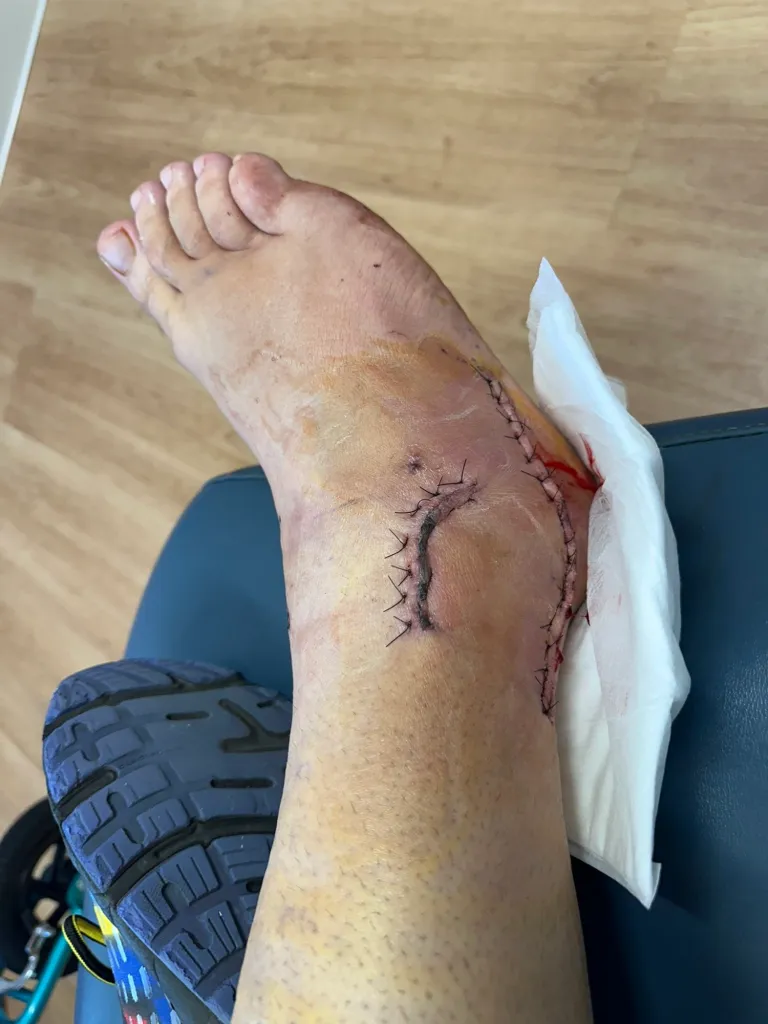 Note the top scar.
Credit: Greg Tompsett/Cover 1
Credit: Terrel Bernard/Instagram
Rehab Protocol
Once surgery is completed, the patient is non-weightbearing for at least two weeks and then slowly progresses based on the protocol until they are weightbearing as tolerated by week 4 to 6 depending on surgeon preference.
Here is one rehab protocol for the Brostrom repair and one for a lateral ankle and deltoid ligament repair.
As weight bearing is increased, the level of difficulty with strength, balance, walking, and overall function are progressed over the next ten weeks. By four months, most people are returning to their normal activities and athletes can begin to return to sport. For elite athletes, timelines can take a little longer due to getting back into sports due to the training demands.
Outcomes
Research shows that it is a fairly successful surgery in both the general and athletic populations. Within the general population, the procedure successfully returned 54 percent of athletes to their prior level of function with 88 percent satisfied with the outcomes. Of those that didn’t return, 37 percent of that group noted ankle related reasons such as pain, residual instability, or decreased range of motion.
In another systematic review, 11 percent of patients had some type of complications following their procedure including chronic instability with failure rates being between 5.7-28.5 percent. Keep in mind, out of 762 participants within all the studies, only 89 participants had some issues. There were several risk factors that led to recurrent instability including high-level sports activities, various hind foot alignment, poor quality of the ligaments prior to surgery, or being female.
These complications may have a reflection on the rehab more than the procedure. However, this systematic review included people across an entire spectrum of different activity levels.
Getting specific to elite athletes, return to play numbers vary between 89 percent and 83.3-100 percent based on the article and time taken to return. Four months was the early time to return but by eight months, it was a 100 percent success rate.
As for the deltoid ligament repair, among NFL players, overall return to play was 86 percent with those that returned taking six months.
A return to running clearance occurs when the athlete is able to demonstrate 90 percent of ankle strength compared to the contralateral ankle which is around three months. Cutting and jumping occur at four-to-six months as long as balance and proprioception are adequate. A full return to play occurs when there isn’t swelling or pain and can pass functional testing such as position specific football drills or a full speed figure eight drill or burpees. The article goes on further to advise that the player wear a brace during initial return to avoid further ankle sprains until after six months removed from surgery.
Both of these procedures appear to be relatively successful surgeries with a small portion of people still having general ankle laxity but the majority successfully returning to sport. Additionally, former Buffalo Bills running back Latavius Murray underwent two ankle surgeries that I suspected to be this procedure.
Final Thoughts
Bernard may have some residual laxity within the joint but this would be significantly improved from his prior status. Based on an estimated surgical date of late January/early February, we should see Bernard participate at OTA’s during conditioning. I don’t expect him to be a full participant during Phase 3 and mandatory minicamp to avoid overstressing the ligaments, minimize any pain, and ensure proper healing.
This was a long overdue surgery for Terrel Bernard. It’s incredible that he played two whole seasons on a significantly damaged ankle and finally got it repaired. The outcomes are solid and really, there isn’t much concern moving forward regarding his ankle. He has always had a higher risk for injuries due to his style of play and past injury history, but that comes with the territory of playing football.
I look forward to Terrel Bernard returning to an improved level of play in 2026. I hope that he stays healthy and continues to positively contribute in this new defensive scheme.
Top Photo Credit: Mark Konezny-Imagn Images
Discover more from Banged Up Bills
Subscribe to get the latest posts sent to your email.