
Legal tampering begins at noon today, but the NFL offseason is already throttling full speed ahead.
Late Friday night, the Baltimore Ravens threw every last chip into the middle of the table, trading two first-round picks to the Las Vegas Raiders in exchange for All-Pro edge rusher and consistent game-wrecker, Maxx Crosby.
Dropping Crosby alongside emerging star defensive lineman Mike Green, and potentially Nnamdi Madubuike, if he can return to form from a devastating neck injury, is the kind of move that elevates the entire defense while propping open Lamar Jackson’s Super Bowl window.
It’s also the ultimate win-win-trade, as the Raiders now have four first-round picks over the next two years, including picks No. 1 and No. 14 overall next month, and moving off Crosby gives general manager John Spytek $120 million in cap space this offseason, and a league-high $290 million in cap space in 2027, presumably to continue building around Fernando Mendoza. That is, unless Las Vegas isn’t having second thoughts about Mendoza, which could create a bidding war to add as many as two more additional first-round picks from a quarterback-desperate team such as the New York Jets or Arizona Cardinals.
Regardless, the Raiders flipped Crosby for a war chest of assets to jumpstart a rebuild around Brock Bowers and Ashton Jeanty, and the Ravens potentially catapult into the catbird seat with plenty of separation at the top of the AFC North in the immediate future.
Spytek and Eric DeCosta weren’t the only general managers with busy weekends.
Saturday afternoon, GM Brian Gutekunst and the Packers pulled off a stellar coup, adding linebacker Zaire Franklin and his elite instincts and nose for the football in a trade with the Indianapolis Colts, in exchange for nose tackle Colby Wooden.
Franklin, who led the league in tackles in 2024, and has averaged just over 91 per season over the past four years, alongside athletic rising star Edgerrin Cooper on a defense that already includes All-Pros Micah Parsons and Xavier McKinney may elevate coordinator Jonathan Gannon’s unit into one that can power a Super Bowl charge.
Imagine what the rest of today has in store. Buckle up.
Inside this column, NFL executives weigh in on why the Bears traded DJ Moore, and the impact the move is having on front offices around the league, I make my predictions for where the top-five free agents wind up signing, and we go deep on a quarterback market that few folks inside the league seem to have much of a grip on, but may be the most fascinating in years …
Beginning around 12:01 this afternoon, hundreds of millions of dollars worth of deals are going to be announced, but those contracts were really hammered out two weeks ago.
The reality of how franchise-altering decisions get made in the hours ahead is considerably less dramatic.
And considerably more calculated.
There will be hours worth of programming over the next several days of analysts breathlessly breaking down what each contract means, countless insiders explaining the cap implications of these moves.
Ahead of Monday’s soft launch of NFL free agency, also known as the “legal tampering period” or “negotiating window” Between The Hashmarks spoke to several agents and current or former general managers to get a peek behind the curtain at what this day is like for, and how the contracts come together on one of the highest stakes periods on the NFL calendar.
Everyone who agreed to those contracts, though, have known about them for weeks.
“The phone starts ringing to talk before you go to the Combine,” a current NFL agent tells Between The Hashmarks. “You talk in Indianapolis, and that’s when the tampering really starts.”
That means the deals being announced this afternoon weren’t made today.
They were made in the Westin lobby in Indianapolis, the J.W. Marriott sports bar, a private table at Prime 47 Steakhouse or the quiet corners of Lucas Oil Stadium, while the rest of the football world was focused on forty times and bench press reps.
It’s a dynamic that those on both sides of the negotiating table describe with remarkable consistency.
“Part of the reason things happen so fast when legal tampering begins is because the groundwork was laid during informal meetings between teams and agents at the Combine in Indianapolis,” a current NFL general manager tells Between The Hashmarks.
What happens today, then, is less a starting gun than an official permission slip for the unofficial conversations the Combine generates.
“When legal tampering opens, that’s when the true bidding wars begin,” a second agent explains. “That’s the first wave. Free agency starting, that’s the second wave of signings for teams.”
Understanding that framework reframes everything about how to consume today’s transaction wire.
The deals that drop at 12:01 are the ones that were never really in doubt. They’re the marriages that had been quietly arranged for weeks.
Meanwhile, the genuinely contested signings, the ones where multiple teams are legitimately competing for the same player, those tend to resolve in the days between tampering and the official start of the new league year on Wednesday.
That’s why you see the most coveted players “agreeing to terms” today, and by Wednesday both players and teams are shopping for ideal fits to fill needs and the best opportunities rather than making decisions built largely on securing a market-setting bag.
Those conversations are ones where leverage, patience, and the right phone call at the right moment actually determine outcomes.
Which brings us to the most fascinating markets of all, and the one Ryan Poles has been quietly engineering Chicago’s entire offseason around…
 Mike Dinovo-Imagn Images
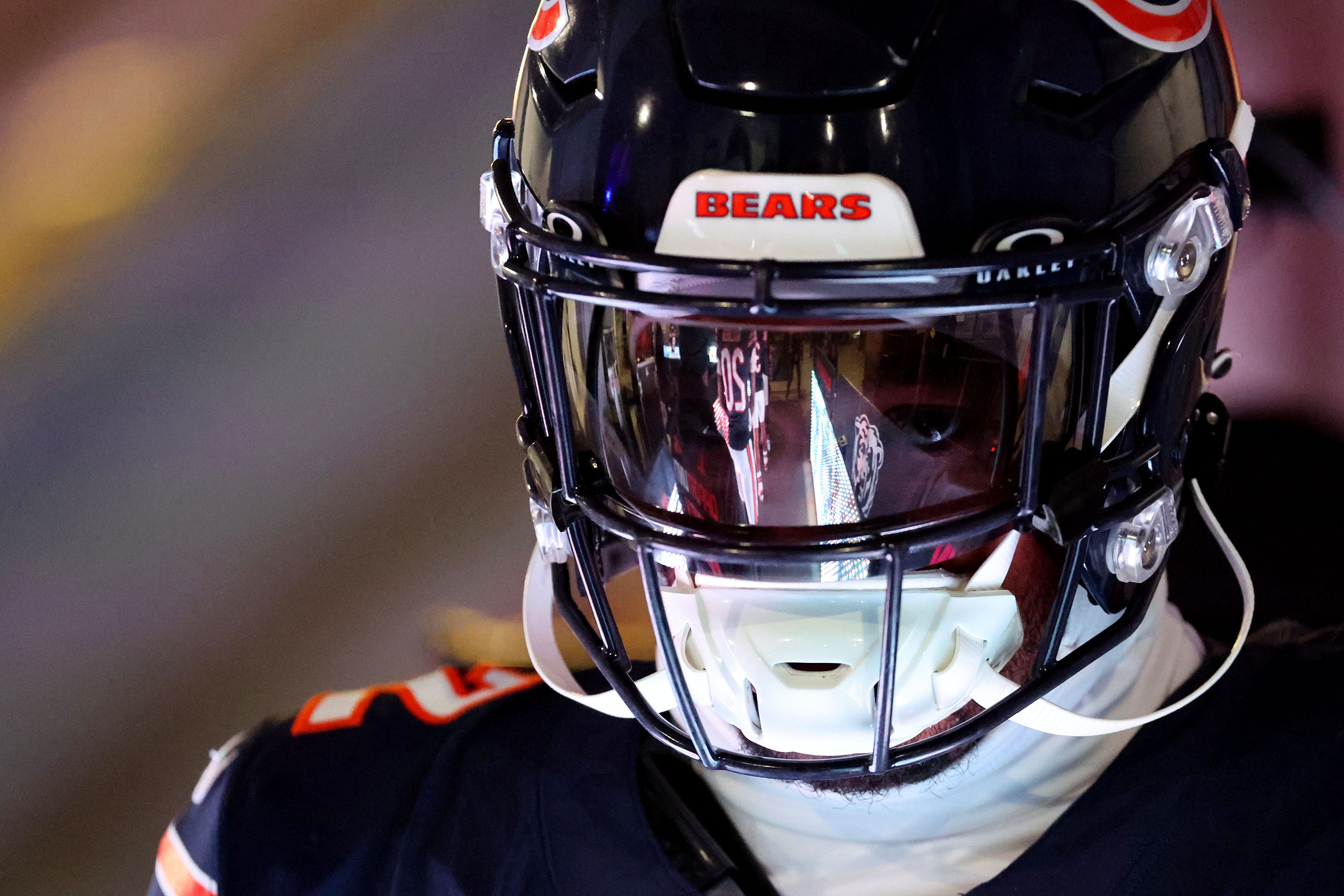
Nearly three years to the day after Ryan Poles acquired wide receiver DJ Moore as part of the trade package from the Carolina Panthers to move out of the No. 1 overall pick back in 2023, Chicago shipped the veteran receiver and a fifth-round pick off to the Buffalo Bills last Thursday, in exchange for a second-round pick in April’s NFL Draft.
“It’s a really good move for Buffalo,” an NFL scout told Between The Hashmarks, moments after the trade went down. “I don’t know why Chicago would let him go, but he’s young and has a lot of talent.”
It’s a fair question, for Chicago, until you examine what Poles has quietly constructed around Caleb Williams.
For the Bills, though, the motivation here is clear.
There is certainly a lot to be optimistic about in Buffalo, dropping a 28-year-old veteran receiver, who averaged 13.6 yards per reception last season while catching 50 of his 85 targets for 682 yards and six touchdowns into Josh Allen’s supporting cast.
That Caleb Williams posted a strong 109.5 passer rating when targeting Moore, whose 12.5 Average Depth of Target tells all you need to know about his ability to maximize Allen’s downfield accuracy in the vertical passing game.
There’s also little question that Moore now sits clearly atop the depth chart at receiver in Buffalo, alongside Khalil Shakir and the to date underachieving Keon Coleman.
That Poles was even in a position to trade Moore, creating $16.5 million in cap space while adding a premium draft choice, is a testament to what Chicago has already built around Williams. And it potentially freed the ammunition for an even more transformative move.
With Chicago now armed with an additional second-round pick to keep building, and the cap space created by Moore’s departure, the Bears find themselves uniquely positioned to make a run at the top of what is shaping up to be one of the most compelling pass rush markets in recent memory.
Whether that means pursuing a proven veteran disruptor like Trey Hendrickson or Joey Bosa, or betting on a ascending force such as Boye Mafe, Poles now has the financial flexibility to make a franchise-altering move on the defensive side of the ball, which just might define the Bears’ ceiling in the immediate future.
Moore became expendable because Bears first-round rookie tight end Colston Loveland finished the 2025 campaign as Chicago’s leading receiver with 58 catches for 713 yards and six touchdowns.
Likewise, second-round rookie wide receiver Luther Burden steadily improved as the season wore on and flashed the ability to be a burner capable of taking the top off a defense, while catching 47 passes for 652 yards and two scores.
Rome Odunze’s presence as a former first-round pick rounds out a rising, and more importantly, affordable collection of pass catchers, around one of the most exciting young quarterbacks in the sport.
“What you’re seeing in Chicago is very smart,” a former general manager and current NFC front office executive tells Between The Hashmarks. “The prices teams typically pay that [wide receiver] room can range from $25-40 million APY, and what Ryan is doing is causing other teams to rethink how that room gets built.
“Trust me when I say this, other teams are doing similar.”
That’s the strategy Poles is building the foundation of the Bears’ offense around, having tossed the keys to mastermind play-caller Ben Johnson.
Loveland, Burden, and Odunze, aren’t just young playmakers, they’re all on their rookie contracts through at least the 2027 season and each get to develop alongside Williams, building their rapport as Chicago hopes to build a consistent Super Bowl contender.
This isn’t a great year to need a quarterback.
Malik Willis is going to likely set the market in the hours ahead, as the Valedictorian of the latest class of the Matt LaFleur Quarterback Academy, with some team betting big that his 78.7 percent completion percentage for 972 passing yards with six passing touchdowns and three more rushing scores will nudge him into Super Bowl champion Sam Darnold and Baker Mayfield’s footsteps as the league’s next great reclamation quarterback.
Teams flush with cap space such as the New York Jets, head coach Mike LaFleur’s Arizona Cardinals, and perhaps, if they grow tired of waiting on Aaron Rodgers, the Pittsburgh Steelers could bid Willis’ contract as high as $30 million, annually, off of 11 career starts.
Then, there’s the other end of this market, that has the potential to be equally fascinating.
 Joe Camporeale-Imagn Images
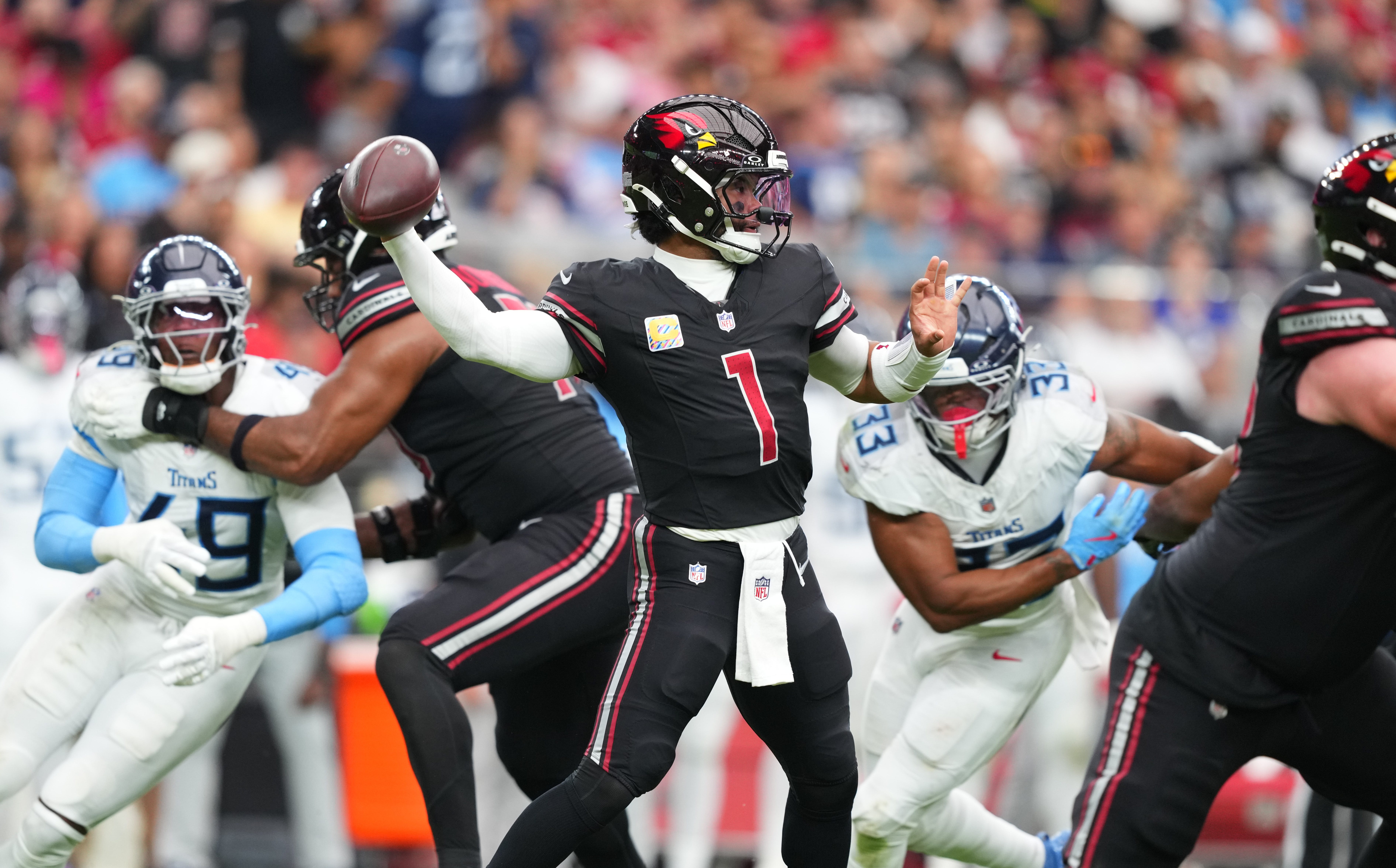
After being released by the Arizona Cardinals, but still set to collect upwards of $36.8 million from the guaranteed portion of his contract, Kyler Murray affords a team all kinds of flexibility because they won’t need to break the bank for an experienced veteran who desperately needs a head start and the chance to prove he’s more than a bridge.
To those inside the league, whose jobs depend on developing the quarterback position almost above all else, Murray presents a fascinating case study and opportunity.