
Like any addict trying to recover, the first step is admitting you have a problem. That’s something the NCAA and its member institutions have refused to do. Instead, the NCAA continues to hide behind education, funding and graduation rates when discussing their problem. The real problem lies in universities’ inability to control the athletes that operate under their name.
For years, universities hid behind the word “amateurism,” but that label no longer applies in today’s era of college sports. Football and basketball players are far closer to professionals than amateurs, and they should be treated and compensated accordingly.
It’s why the recent meeting at the White House can only be described as ridiculous and a complete waste of time. In a meeting about college athletics, not a single active player was invited to discuss what they believe is best. Instead, it was elected officials and some of the biggest names in college athletics who shared the same concerns gathered for a roundtable discussion about how to “save college sports.”
Think about that for a moment. Elected officials, including the President of the United States, took time out of their schedules to sit down and try to figure out how to fix college athletics. The mere fact that such a meeting was necessary tells you everything about how little the universities are willing to make the tough decisions to fix the problems they created.
More Sports News
.wp-block-group__inner-container:has(> .embla),
.wp-block-group:where(.alignfull) > .wp-block-group__inner-container:has(> .embla) {
width: calc(100vw – (var(–side-spacing) * 2)) !important;
}
.embla {
position: relative;
overflow: hidden;
}
.embla__container {
display: flex;
flex-wrap: nowrap;
gap: 0 !important;
width: 75%;
}
.embla__slide {
margin-inline-end: var(–column-gap);
}
.embla__arrow,
.embla__arrow:active,
.embla__arrow:target,
.embla__arrow:hover,
.embla__arrow:focus-visible {
display: none;
position: absolute;
top: 50%;
transform: translateY(-50%);
width: 40px;
height: 40px;
margin: 0;
padding: 0;
line-height: 0;
background: rgba(255, 255, 255, 0.75);
color: var(–color-primary);
border-radius: 100vw;
svg {
width: 24px;
}
}
.embla__prev {
left: 0;
}
.embla__next {
right: 0;
}
]]>
And it took place at a time when the country is dealing with trade disputes, immigration policy battles, foreign conflicts, job concerns, inflation and a government that can barely find common ground within itself. The last thing the government should be doing is trying to repair an organization that has repeatedly refused to repair itself.
Because the truth is simple. The problems in college athletics are not complicated. They come down to one thing: greed.
Leadership Failure in College Sports
The problem lies with the athletic department leaders who want to maintain their control and financial dominance without giving up any of it. Now they sit in front of lawmakers acting as if they’re lost, claiming things have gotten out of control, but have no clue how to fix them. For fans and alumni who have supported these institutions for decades, that act should be insulting.
These are the same schools that for years claimed financial hardship while continely pouring tens and in some cases hundreds of millions of dollars into football and basketball facilities and the coaches who run them.
And now, as the system they allowed to turn into a runaway freight train grows even more out of control, the same people who built the system want someone else to clean up the mess.
College athletics doesn’t need Congress. It doesn’t need the President. What it needs is for the institutions to show leadership and make the tough decisions to fix a system they allowed to become broken.
Right now, the people in charge are behaving like an addict who refuses to admit they have a problem. Instead, they blame NIL or the transfer portal when the real problem lies in not wanting to take accountability for creating the problem. Until that changes, no roundtable in Washington, D.C. is going to save college sports.
Universities Must Own Responsibility
The right foundation and the right people need to be in place. Simply put, it’s not Congress or the President who can fix this, it’s the universities themselves. These institutions put themselves in this position, and now they have to admit that what they did or failed to do was wrong.
They must figure out a way to solve it, which will require tough decisions in giving up some of their power. However, in doing so, it will give them the ability to implement and enforce rules and guidelines effectively. While it might be hard and could place some schools in a very precarious position, that is exactly what has to happen for college sports to move forward in a sustainable and fair way.
Since NIL became part of the college sports landscape, universities have continued to use collectives as a recruiting tool rather than putting a stop to them. While every athlete should have the right to earn as much money as their name allows, it is not a right to play for a specific university, but rather a privilege.
Yet, at no point have university presidents, boards of regents, athletic directors or coaches condemned collectives or refused to allow athletes who are simply being paid to play for the school to participate. Why? Because the advantage these collectives provide benefits many of the biggest brands in the sport.
The SEC is all of a sudden concerned with equality on the playing field, but commissioner Greg Sankey couldn’t be found when the money was coming in the back door instead of the front and his institutions were benefiting from it. The problem for Sankey is former coach Ed Oregon told the world just how the SEC maintained its nearly two-decade dominance, and now that it’s coming to an end, it’s a problem.
When Sports Trump School
The entire “student-athlete” idea is often little more than a delusion, its no different than someone thinking the pot of gold at the end of a rainbow is real. The unfortunate truth is they are just hiding behind the “student-athlete” label. The NCAA continues to hide behind education, funding and graduation rates when discussing the issue.
The education many athletes get in revenue sports isn’t worth the piece of paper the degree is printed on. For many athletes in sports, they are there for one reason: to play sports, not to play school.
When Cardale Jones said, “We ain’t come here to play school,” he faced criticism. But in reality, he simply said out loud what many institutions refuse to admit: that for a large number of these athletes, they are athletes first and students second.
Consider this question: why have student-athletes never been randomly tested on their education? Every course comes with a syllabus outlining what will be taught and what is required to pass. Yet there has never been a system of random academic testing to ensure that these athletes are actually living up to their commitment and attending class while meeting their educational requirements.
The reason is simple. The entire student-athlete moniker would go up in smoke. The scheme some universities run to keep athletes eligible, along with the privileges that many of them get, would all come to light. The repercussions a university would face if its starting quarterback suddenly couldn’t pass a basic test despite previous grades and attendance pointing to he should would sound alarms across the university.
Hypocrisy at the Top
It’s funny how two of the biggest voices on TV suddenly became much more critical last week. Where was the talk about collective funding being “cheating” when his former team was winning a national championship? Collective funding played a significant role then, yet nothing said just celebrated.
And where was the criticism about education when an SEC team whose head coach once served on his staff won a national championship with a quarterback who, after six years, still hadn’t earned a degree?
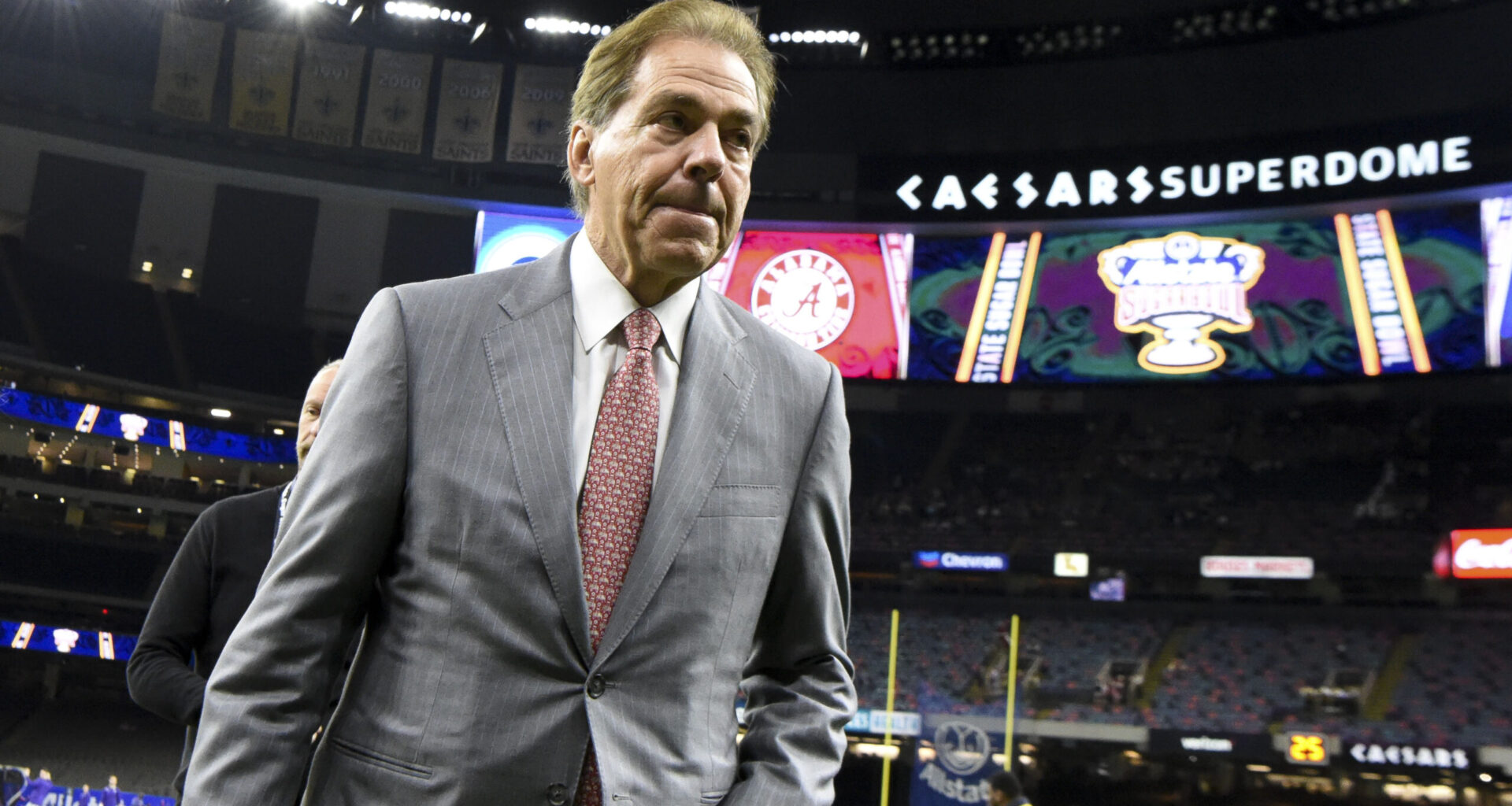
For anyone involved in the SEC to sit there and talk about NIL is preposterous. It would be like Sherrone Moore addressing a roundtable about being faithful. The SEC was built on the “so-called regional” recruiting advantage. NIL took that advantage away and made the sport more of an even playing field. It could be why Nick Saban is sitting at the roundtable instead of walking the sideline.
NIL changed the landscape. The idea that SEC dominance was the result of regional recruiting advantages was always something of a fallacy. The real advantage had far less to do with geography and far more to do with some programs’ willingness to operate in the gray areas of recruiting long before NIL ever officially existed.
The schools themselves that refuse to accept the punishments from the NCAA ruling that have put us here. It’s why NIL and the transfer portal are out of control and need real, enforceable regulations.
Like any addict trying to recover, the universities still refuse to take the first step and admit what the problem really is: greed and control. It’s something the NCAA and its member institutions have refused to do. Instead, the NCAA continues to hide behind education, funding and graduation rates when discussing the issue.
It’s comical how maintaining Olympic sports is always blamed on NIL and the transfer portal. It’s never blamed on schools paying out multimillion-dollar buyouts, multimillion-dollar head coaching salaries or the million-dollar salaries for the staff they assemble.
Schools build facilities for players, complete with barbershops, lazy rivers, gaming rooms and lounges that look more like nightclubs than locker rooms. Yet somehow the blame always falls on a small percentage of players who are said to cost programs an exorbitant amount of money to bring in, and are then used as the reason schools claim to be financially at risk.