
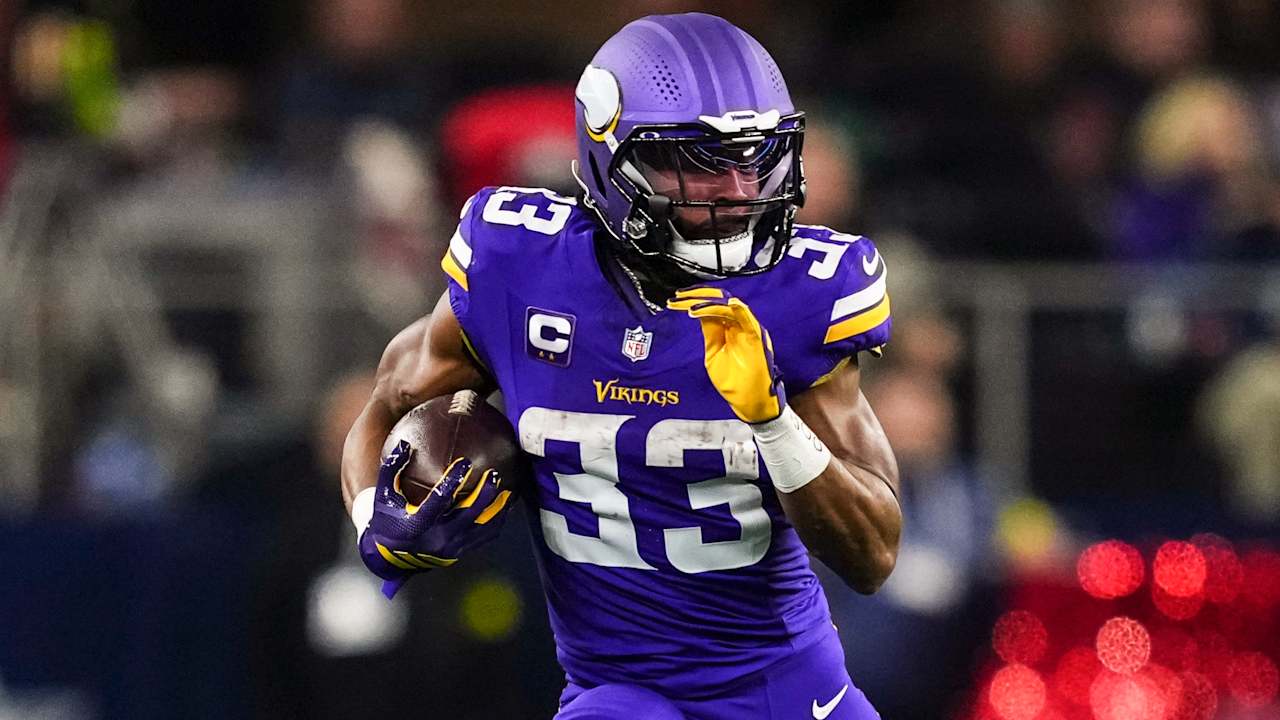
Jones has tallied 1,686 rushing yards and seven touchdowns, plus another 607 yards and three scores receiving as the Vikings’ most dynamic ball-carrier since he swapped sides in a bitter NFC North rivalry by coming over from the Packers in 2024.
Much of that production took place in his first season with Minnesota, the fourth 1,000-yard rushing campaign of his career. Injuries limited Jones to 12 appearances last season, and his 548 rushing yards marked his lowest output since his 2017 rookie season.
Given his down year and that the Vikings were one of four teams still projected to be over the salary cap a few hours ahead the start of the new league year, when clubs must be cap-compliant, his future proved a bit of a question mark.
In the end, the Vikes and Jones will stick together, keeping the veteran in an atmosphere in which he knows he can succeed and eliminating any desperation at the position as the top running back options have agreed to deals with other teams.
Minnesota moves forward with the complementary duo of Jordan Mason and Jones, now on a more manageable deal, with the possibility to add depth or find an RB1 of the future in April’s draft.