
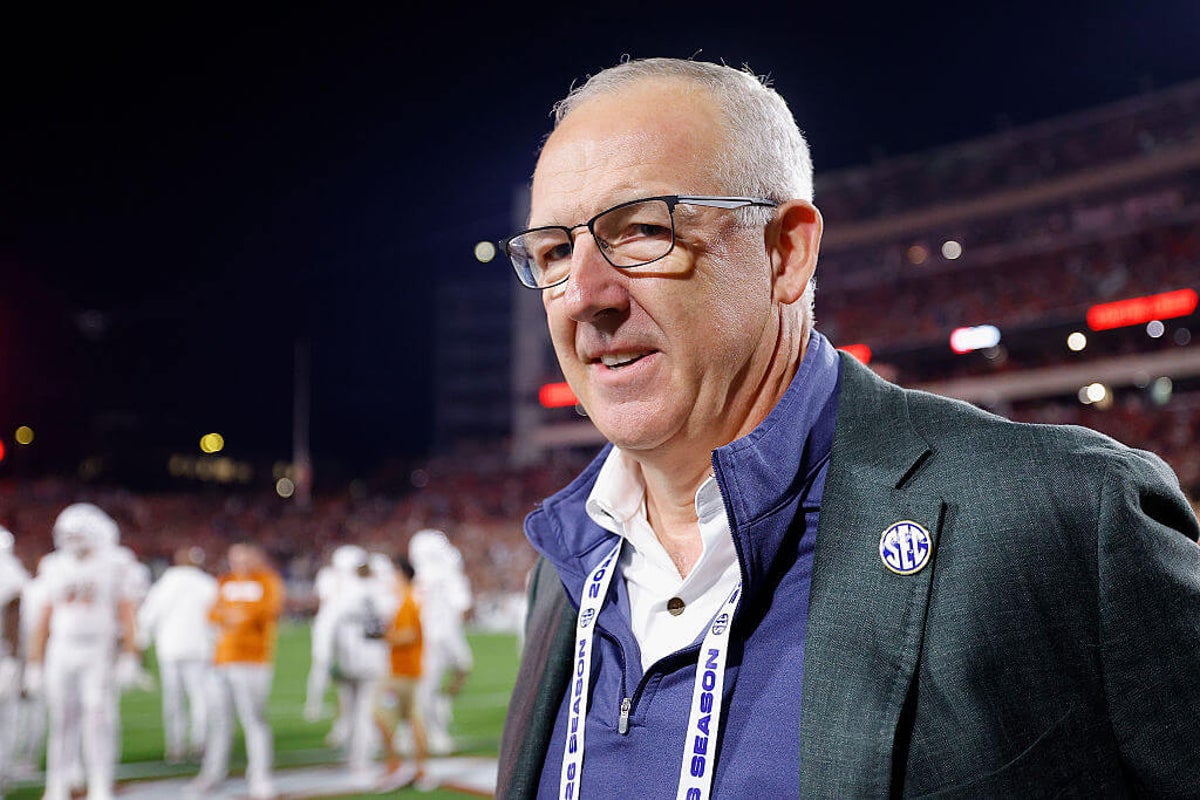
SEC commissioner Greg Sankey is an institutionalist, essentially an NCAA lifer. So is Georgia president Jere Morehead. Both men were at that White House roundtable on “saving college sports” last week.
So it was notable that both men, to varying degrees, have said the idea is on the table for the SEC to essentially pull away from the NCAA to make its own rules.
“I think we’re getting to the point that the Southeastern Conference is going to have to create its own set of rules, enforce them against our members, and hope that we can set an example that the other Power 4 conferences would then follow,” Morehead said on Jan. 30.
Sankey was more restrained when he spoke this past Monday, presenting it as a last resort, but not dismissing it — which one of the most powerful people in college sports would do if such a radical idea wasn’t possible.
So what’s going on here? Let’s dive in:
What is this about?
This is not about pulling away from everyone else for on-the-field competition. The SEC is not going to form its own football playoff — though it has talked about that before — nor does it plan to pull out of the NCAA basketball tournaments, or other NCAA events.
It is about the rules for which players everyone can use in those events. Eligibility rules, transfer rules, tampering rules, third-party payment rules. In case you haven’t noticed over the past five years, those rules are subject to the whims of court cases and state laws.
And on Tuesday came word that the College Sports Commission, set up last summer to police third-party payments, is having trouble actually policing. Which is hardly a surprise, but still frustrating to those who hoped it would rein in what they perceived as out-of-whack spending to get recruits and transfers.
Sankey and other powerbrokers have been hoping for a federal law to address all this, and they’re still hoping. But they may finally be realizing how unlikely that is.
Hence Morehead’s suggestion for the SEC to take the lead by setting its own rules, and let others follow. And if they don’t follow, then at least the 16 SEC schools know what their rules are.
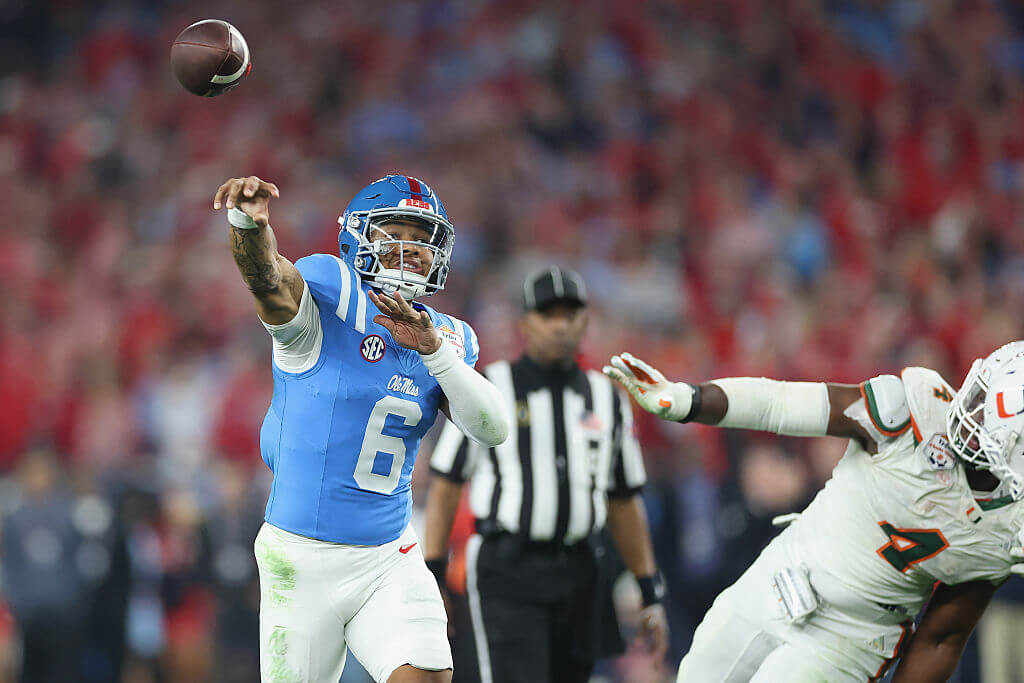
As schools like Ole Miss battle the NCAA in eligibility cases like Trinidad Chambliss’, would the SEC even be able to enforce its own rules? (Christian Peterson / Getty Images)
Yes, but …
SEC teams are challenging or flouting these rules in the first place. Ole Miss has been charged with tampering by Clemson. An Alabama basketball player sued to be able to play after appearing in an NBA game. (He lost, but only after appearing in five games.) It was Tennessee that sued the NCAA when it investigated the recruiting of Nico Iamaleava, and the NCAA backed down. Ole Miss QB Trinidad Chambliss sued for another year of eligibility and won in state court.
And so on. How can the SEC set and enforce its own rules when it can’t control its own schools?
Because under the current circumstances, it doesn’t control them. These SEC schools and athletes are suing over NCAA rules. If they were SEC rules, presumably agreeing to follow those rules would be part of being an SEC member school.
How would you stop your own players from continuing to sue over rules they don’t like? For one thing, the fact they have other options — every other conference — would seem to insulate the SEC from antitrust challenges.
If courts still don’t agree, there’s the move that could really upend everything: The SEC collectively bargains with its athletes. Sankey and most of his presidents probably aren’t there yet. But one is: Tennessee’s Donde Plowman, who went on record with her athletic director, Danny White, favoring it last year. Plowman was also part of the White House visit last week, but did not speak.
To be clear, a CBA is a last resort for many college power brokers. But many others think last-resort time is close, or already there. Either way, let’s set it aside for now and imagine this world where the SEC, within the current setup, indeed makes its own rules:
What rules, and how would it work?
First, the specifics are speculative. Second, the conference would have to decide on an umbrella question: Does it care about putting itself at a competitive disadvantage?
For instance, it could declare that players can only transfer once without sitting a season, and include transfers from other conferences in that rule. But what if other conferences allow anytime transfers?
Or the SEC could limit the transfer period to just what it is now, two weeks in January, but see other conferences open it for another period of time. (This shows one of the many complications if conferences aren’t all working under the same rules.)
Then there are pay limits. Does anyone think the SEC is going to make its teams work with less of a (legal) budget than non-SEC schools? One suspects it would go the other way: The SEC hires its own firm to police third-party spending, and won’t be beholden to anyone else. (No real limits on pay, but no more unlimited transferring, could settle things down anyway.)
This leads to plenty of other questions, such as whether the NCAA, which is made up of other conferences, would then allow an SEC operating under its own rules to still play in its events, including March Madness. Would other conferences stop playing SEC teams?
The basic conundrum: If the SEC makes its rules harsher, it puts itself at a competitive disadvantage. But if the SEC is perceived to be giving its schools more advantages, it risks alienation from groups of schools it still wants to play against.
The point of all this may be to never get to that point.
The precedents
The SEC has gone it alone before — or at least threatened to do so.
There was the 2020 football season, when the Big Ten and Pac-12 canceled their seasons in August, expecting everyone else to follow. The SEC was the one power conference that vowed to keep trying. The Big 12 was the swing conference, and when it decided to play, the ACC went along. Eventually, the Big Ten and Pac-12 changed their minds and the season went on.
But the SEC was prepared to do it alone. Whether it would have if everyone else canceled, we’ll never know, but Sankey and conference administrators left that situation feeling empowered about their place in the ecosystem.
Then there was the College Football Playoff debate: The reason the SEC and Big Ten essentially have decision-making power for the format for 2026 and beyond is they threatened to form their own playoff, creating leverage such that the other stakeholders granted them that power. Would the CFP really have gone on without Miami, Notre Dame, or anybody else in the ACC and Big 12?
Again, we’ll never know.
That’s probably what’s going on here. Perhaps the key part about Morehead’s comment was that after setting and enforcing its own rules, the SEC would “hope that we can set an example that the other Power 4 conferences would then follow.”
SEC presidents met this week in Nashville on Tuesday and Wednesday, as they usually do the week of the conference men’s basketball tournament. They did not emerge with some grand statement. But heading into it, other administrators, speaking on background, acknowledged the frustration about a lack of national standards has reached a point of drastic solutions.
Collective bargaining is an option, but still mostly spoken in hushed tones among administrators. Others may advocate for amending federal legislation to something that will pass Congress: Let the NCAA set its eligibility and transfer rules, for instance, while taking out the more controversial parts, such as athlete employment and pay-for-play limits.
Absent those drastic solutions, the SEC has its own nuclear option — with an ultimate aim of getting to a national solution.
“People are tired of talking about name, image and likeness. They’re tired of talking about lawsuits,” Sankey said during his Monday appearance on “The Paul Finebaum Show.” “What they want is, in a way, what the President spoke of, (they) want to go back to when we focused on the fields and the courts and the tracks about the competition, and we need national standards to help us achieve that objective.”