
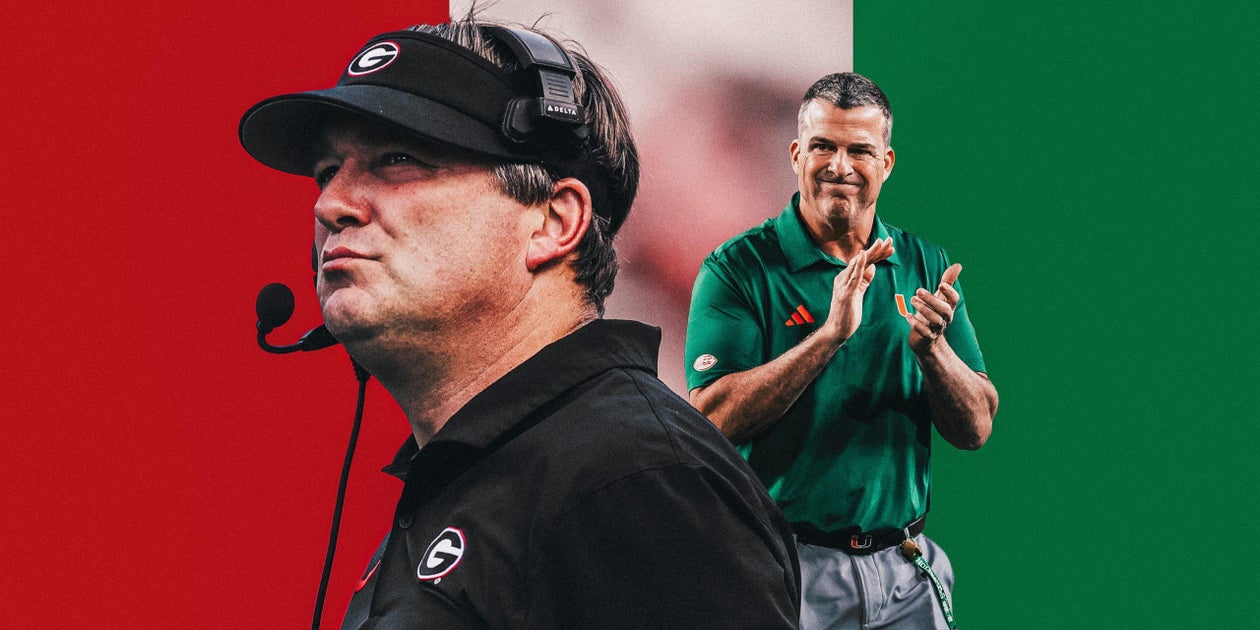
It feels like this list gets harder and harder to do because after the first few coaches, you could have anyone between No. 4 and No. 20 and make a compelling case for (or against) any of them. The spot I feel strongest about, right now, is moving Curt Cignetti into the top spot.
My criteria: Since not all jobs are created equal, I’m trying to factor in what these coaches have done relative to what the coaches before and after them did at those programs. I’m also factoring in how they do head-to-head against other top teams and if they’ve won championships, especially at places they have turned around. A coach has to have been a head coach for three seasons to be ranked.
There’s more recency bias baked in now than ever before with me and these rankings, but some of that seems more justified because the dynamic of college football has shifted so much just in the past five years with name, image and likeness and the transfer portal — meaning there’s more of a premium on team-building than program-building, and staffing matters even more.
Read Stew Mandel’s top 25 power rankings here.
1. Curt Cignetti, Indiana (2025 ranking: No. 19)
What he’s done in two years in Bloomington is, simply put, the most remarkable turnaround in the sport’s history. He transformed the losingest program in college football history into an 11-2 Playoff team in Year 1 and a 16-0 national champion in Year 2 — and his team beat a bunch of blue bloods along the way. It’s a stretch to think any other coach could’ve done what the 64-year-old Cignetti has done. Indiana won a total of three Big Ten games in the three years before Cignetti was hired. Before arriving in Bloomington, he was 52-9 at James Madison and did a terrific job at both Elon and Indiana University of Pennsylvania.
2. Kirby Smart, Georgia (2025: No. 1)
Smart has been remarkably consistent. After his 8-5 debut in 2016, he has not finished lower than No. 7 in the AP poll in the past nine years. Smart has won two national titles and is 37-3 in SEC play during the past five seasons. Smart won his second of back-to-back national titles in 2022, but that was in the “old” era of college football. Since then, his teams are an impressive 36-6, but they haven’t finished inside the top five the past two seasons. That’s relevant to Cignetti leapfrogging him.
3. Ryan Day, Ohio State (2025: No. 2)
He’s a year removed from leading the Buckeyes to the national title, and it feels like he’s in a good spot to get another. Day is 82-12 with a sterling 55-5 record in the Big Ten. In seven seasons, his teams have never finished outside the top 10. He did inherit some of the best parts of the Buckeyes program, but keeping everything on track and building on it isn’t a given. Day famously had a very rough stretch against arch-rival Michigan, but he and his team got revenge last season, whipping Michigan 27-9 in Ann Arbor. They’re as safe a bet as anyone to win the national title this year.
4. Kalen DeBoer, Alabama (2025: No. 5)
This is where things get complicated. DeBoer opted to take one of the most challenging coaching jobs in football two years ago by replacing the most successful coach in the sport. His team missed the 12-team Playoff in Year 1 and barely made it in last season’s disappointing 11-4 campaign. Still, the sport has changed significantly since the end of Nick Saban’s run: There is much more parity not just in the Power 4, but inside the SEC. DeBoer, who led Washington to the national title game two years after taking over a 4-8 program, is a more-than-respectable 3-2 against top-10 opponents at Alabama and 8-3 vs. top-10 teams the past four years.
5. Mario Cristobal, Miami (2025: t-20)
He came home to Miami after leading Oregon to a 10-3 season in 2021 (the Ducks had gone 11-14 in the two seasons before he took over). His alma mater, Miami, had been spinning its wheels for two decades. Cristobal has benefitted from NIL and the portal as much as any coach in college football, but a few other factors have played to his strengths. He has a good eye for talent, especially when it comes to the trenches, and no head coach is more committed to elite line play — something that has become more challenging because it’s so hard to develop any continuity with O-line play. Last year, in his fourth season, the Canes broke through and almost won the national title, losing in the final minutes to Indiana. This came after his team bullied its way into the title game, mauling Texas A&M, Ohio State and Ole Miss and beat Notre Dame in the season opener. For years, a big criticism of Cristobal has been his ability to manage tight games. But he deserves credit for having his team at its best in games the experts don’t think they can win. While at Oregon, Cristobal’s teams had some huge wins as an underdog, including a 2021 win at Ohio State (where the Ducks were 14-point underdogs), a 2020 victory at USC and the 2019 Pac-12 title game against Utah. He’s 8-6 against top-10 opponents over the past nine years.
6. Dan Lanning, Oregon (2025: No. 7)
He’s still 39 and it feels like only a matter of time before he leads the Ducks to their first national title — which very well might be this year. Lanning is 48-8 in four seasons after taking over for Cristobal and 6-6 against top-10 teams. Since Oregon moved to the Big Ten, the Ducks are 26-3 overall and 17-1 in Big Ten play. If there’s a knock, Lanning’s teams have been blown out in the Playoff in each of the past two seasons … but those losses did come against the eventual national champions.
7. Marcus Freeman, Notre Dame (2025: No. 6)
There are a lot of parallels with Lanning: a former defensive coordinator who took over a place that was running well and elevated it, fostering optimism that his team can now win a national title. Like Lanning, Freeman’s also proven adept at replacing top assistants. Freeman got the Irish into the national title game two years ago, and like Oregon this year, it wouldn’t be surprising if Freeman’s team won a championship. Last year, ND just barely missed the Playoff. Overall, he’s 43-12.
8. Dabo Swinney, Clemson (2025: No. 3)
He’s coming off his worst season (7-6) with the Tigers since 2010. On the bright side: He’s finally begun to embrace the transfer portal. Swinney brought in nine transfers this winter — three more than in the previous five years combined. His powerhouse program, which won two national titles and finished in the top four six straight seasons from 2015-20, has backslid, no doubt. But before last year, Clemson was still 40-14 over four seasons. Acting like he didn’t accomplish all of that at the expense of a lot of coaches who never got close to winning one national title, much less two, or until last season were riding a decade straight of finishing in the top 20, seems suspect. Dabo did accomplish all that. Keep in mind, too: Before Dabo, Clemson had only one season in the previous 16 years where it finished in the top 20. One. (And that year, 2000, the Tigers finished No. 16.)
9. Kyle Whittingham, Michigan (2025: No. 12)
The Wolverines seemed to have lucked into a massive upgrade, getting a proven winner whose rugged style should be an ideal fit in Ann Arbor. The Utes have finished ranked in the AP poll 12 times, and Whittingham was responsible for nine of those teams. Utah did sputter some late in his tenure, going 13-12 and just 7-11 in conference play in 2023-24, but Whittingham made some smart staffing moves last offseason and the Utes bounced back to 10-2 and finished No. 14.
10. Mike Elko, Texas A&M (2025: NR)
A brilliant defensive mind has shown he’s also a brilliant head coach. He won nine games in his debut season at Duke (the Blue Devils had won a combined five games in the previous two seasons), and then took only two seasons to get Texas A&M into the CFP. The Aggies have underachieved for much of the past few generations, but with Elko in College Station, it feels like those days of disappointment for a program with enormous resources might be over.
11. Matt Campbell, Penn State (2025: No. 9)
Michigan wasn’t the only Big Ten program that backed into an excellent hire. Campbell worked wonders at Iowa State for a decade. It was one of the most underrated great jobs by any football coach over the past half-century. Consider this: Since the end of World War II, Iowa State has had only 15 seasons with a winning record in conference play. Campbell produced eight of them — and did that in the past nine years. ISU has had only two top-15 finishes, both under him. He’s a terrific evaluator and has done a masterful job of developing talent and fostering a winning culture at a place that had little margin for error. Last year, the Cyclones opened 5-0 before injuries ravaged their defense, but they still rallied to finish 8-4.
12. Jeff Brohm, Louisville (2025: No. 15)
His 94-56 record all-time might not be dazzling, but he’s never been close to being at a blue blood, and at each of the three programs he’s been, he’s proven to be way more successful than the programs had been before and after he left. At Western Kentucky, his team won its first Conference USA title. Since he left Purdue, where he won 17 games in his final two seasons, the Boilermakers are 7-29 (and in the four years before he arrived, Purdue was 9-39). At Louisville, he’s gone 28-12. The Cardinals were 7-1 after knocking off No. 2 Miami last year before losing star RB Isaac Brown to injury, and they ended up losing three in a row before finishing 9-4. Since 2018, Brohm’s teams are 5-4 against top-10 opponents.
13. Steve Sarkisian, Texas (2025: No. 4)
The former BYU QB made a big jump on my list from No. 11 to No. 4 in 2025 on the heels of a second consecutive top-four finish, but last season was inconsistent and disappointing, as Texas went from preseason No. 1 to 10-3 and ranked No. 12. Still, he’s had three strong records in a row after going 13-12 in his first two years at Texas. I feel like he has this program primed for a national title run, but we’ll see. I had him in the top five last year because he was coming off two terrific seasons, but in full view, that was the bulk of his resume in over a decade as a college head coach. At Texas, he is 6-9 against top-10 opponents. Prior to that, he fizzled out at USC, where off-field issues cost him his job. At Washington, he overhauled what had been a dreadful program but was unable to get it better than 5-4 in Pac-12 play in his five seasons there.
14. James Franklin, Virginia Tech (2025: No. 8)
Last year was a disaster for the Nittany Lions. They were coming off a 13-3 season in which they were a field goal away from playing in the national title game. Then, after a 3-0 start, Penn State lost in double OT to Oregon and followed that up by losing to a then-winless UCLA squad at the Rose Bowl. PSU returned home to lose to mediocre Northwestern and Franklin, who had five top-10 finishes over the previous decade, got fired at 3-3. His biggest issue, of course, was that his teams struggled mightily to beat top teams. He went 4-21 against top-10 opponents while at Penn State. Overall, he was 104-45 at a Penn State program that was coming out of an ugly scandal and hefty NCAA sanctions. Before that, he led a horrible Vanderbilt program to two Top 25 finishes in three seasons.
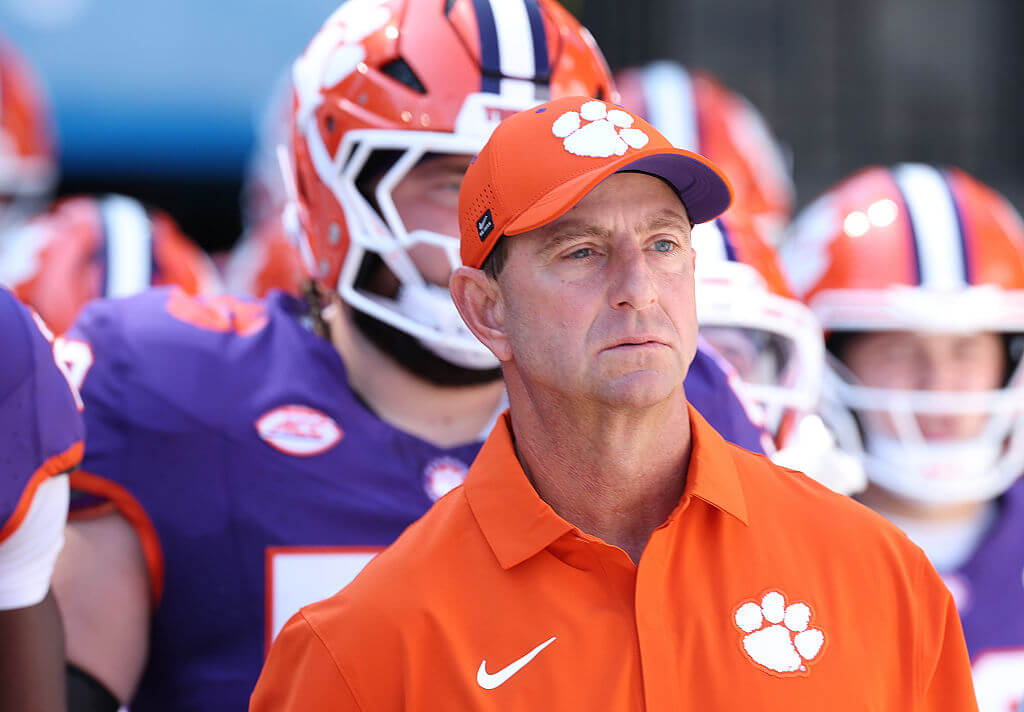
Feldman ranks Swinney much higher than Mandel does. (Photo: Kevin C. Cox / Getty Images)
15. Lane Kiffin, LSU (2025: t-20)
It has been the wildest roller coaster ride in coaching, dating back to his exit from the Raiders and landing at Tennessee. Start with this: He’s a really good offensive coach. He seems to have learned a lot from being around some great coaches. After getting fired at USC, he ended up at Alabama and picked up a lot. He won big in his first job after at Florida Atlantic. He also won big at Ole Miss and got the Rebels into the Playoff, taking the program to a level it hadn’t reached since the sport was integrated in the Deep South.
But, of course, he bailed on his team before the Playoff to take another job in the SEC. His former team actually came close to making it to the title game without him. It’ll be fascinating to see how things play out at LSU. It is a great job with a much better stadium, longer history and a stronger recruiting base. It’s national title or bust in Baton Rouge. Before Brian Kelly flamed out at LSU, the previous three head coaches all won national titles. Kiffin should, too, especially given the financial commitment that is being made. Overall, he’s 6-16 all-time against top-10 opponents and 14-25 vs. Top 25 opponents.
16. Willie Fritz, Houston (2025: NR)
The guy just wins everywhere he goes, from Blinn College to Central Missouri to Sam Houston to Georgia Southern. Then he really turned heads at Tulane, going 23-4 in his last two seasons at what had been a dismal program. He’s wasted little time at UH, going from 4-8 to 10-3 in his second season, and the Cougars figure to be a Big 12 title contender with the way his program recruits. They made a bunch of smart portal adds last year and landed the nation’s most talented QB recruit in Keisean Henderson.
17. Kalani Sitake, BYU (2025: NR)
Like his former boss Whittingham, Sitake leads teams that play exceptionally physical football, which makes them a tough out. Sitake has grown into this job as he’s reshaped his staff over the years. He’s as authentic as any head coach in college football and guys clearly love playing for him. He’s one of the rare head coaches about whom you never hear a negative word from other coaches. Since 2020, BYU has won double-digit games in four of six years, with three top-15 finishes.
18. Jon Sumrall, Florida (2025: NR)
The former Kentucky linebacker seemed like a rising star to anyone who got to know him before he took over Troy, where he more than lived up to the big expectations. In two seasons at Tulane, he went 20-8 and 14-2 in the American Conference before landing the Gators’ head job.
19. Lincoln Riley, USC (2025: No. 12)
His track record with quarterbacks is eye-popping. He’s also 90-28 as a head coach, and even though his USC tenure has felt underwhelming, he’s still produced teams that have finished in the top 20 in seven of his nine seasons. Things seem more stable now in LA, but it’s still a curious dynamic.
20. Kirk Ferentz, Iowa (2025: No. 23)
It’s been at least a decade since his team wasn’t very good. In the past eight seasons, the Hawkeyes have finished in the Top 25 six times, and in that stretch, Iowa has had three 10-win seasons. His consistency is remarkable. He also has five top-10 finishes in his career. His record against ranked teams is 8-17 since 2018, which is why he’s not higher on this list.
21. Kenny Dillingham, ASU (2025: NR)
The year before he took over his alma mater, ASU went 3-9 in 2022 — its worst season in 80 years. Attendance was the lowest it had been in over a half-century. The program had to vacate two of its three wins because of NCAA sanctions related to recruiting violations and other issues under former coach Herm Edwards. Dillingham’s roster was depleted, but the team got creative with its scheme. They went 3-9 but lost two Pac-12 games by a field goal and lost to No. 5 Washington on the road by eight points. The next season, Dillingham won the Big 12, got ASU into the Playoff and almost upset Texas. Last year, they knocked off No. 7 Texas Tech at midseason but finished 8-5. ASU doesn’t have the same resources as Texas Tech or some of the other top teams in the Big 12, but as long as Dillingham is in charge, the Sun Devils figure to be in contention.
22. Bret Bielema, Illinois (2025: No. 24)
Illinois went 10-3 in 2024, beating No. 15 South Carolina in the Citrus Bowl to produce its first double-digit-win season in 23 years (and its first bowl win since 2011). The Illini followed that by going 9-4 last year. They are 5-4 against ranked opponents the past two seasons. Bielema knows how to win in the Big Ten and has made Illinois a formidable team.
23. Josh Heupel, Tennessee (2025: No. 16)
He’s here because of what a disaster Vols football had been before he took this job. Butch Jones had two Top 25 seasons sandwiched by more than a dozen seasons of embarrassment. Heupel’s Vols were 11-2 in his second season. They made the CFP by his fourth. Last year was a step back at 8-5, but it wasn’t a shock given all his team had lost from the previous season.
24. Rhett Lashlee, SMU (2025: No. 22)
The Mustangs were headed in the right direction when Lashlee took over, having gone 25-10 in Sonny Dykes’ last three seasons. But Lashlee, an offensive coordinator under Dykes, has taken things to another level as SMU has seamlessly transitioned into the ACC. He had consecutive 11-win seasons in his second and third year on the job. Last year, SMU went 9-4 and beat No. 10 Miami and No. 17 Arizona. He’s 5-5 against Top 25 opponents.
25. Clark Lea, Vanderbilt (2025: NR)
His career record is 26-36, but he took over a program that had won three combined games in the previous two seasons. It’s been a slow build. His team went 0-8 in SEC play in two of his first three seasons. But he made some bold moves, tapping into the success New Mexico State and Jerry Kill were having by bringing in the veteran coach, along with his OC Tim Beck and star QB Diego Pavia, who completely changed the mentality. That first season, in 2024, Vanderbilt knocked off No. 1 Alabama and finished 7-6. Last year, the Commodores went 10-3, beating four teams that were ranked in the Top 25.
Dropped out: Brian Kelly (No. 10, fired by LSU), Chris Klieman (No. 11, retired from Kansas State), Kansas’ Lance Leipold (No. 14), West Virginia’s Rich Rodriguez (No. 17), Colorado’s Deion Sanders (No. 18), Army’s Jeff Monken (No. 25)
Just missed: Leipold, Missouri’s Eli Drinkwitz, New Mexico’s Jason Eck, Colorado State’s Jim Mora, Monken, Washington’s Jedd Fisch, TCU’s Sonny Dykes