
Denver Post Broncos writer Parker Gabriel posts his Broncos Mailbag weekly during the season and periodically during the offseason. Click here to submit a question.
Parker, the Broncos finally did something! With Jaylen Waddle and Courtland Sutton now our Nos. 1 and 2 receivers, how does the rest of the WR room look? Does Marvin Mims Jr. fill that joker role now that we can put him anywhere on the field? Do we turn Lil’Jordan Humphrey into a tight end?
— David Miller, Commerce City
Hey Parker, the Broncos finally made that big offseason splash trading for Jaylen Waddle. I’m assuming he’s taking the WR1 slot with Courtland Sutton shifting over to WR2. How does the rest of the WR room look now?
— Ryan K., Bennett
Hey David and Ryan, thanks for writing in and for the interesting questions about Denver’s new-look receiving group.
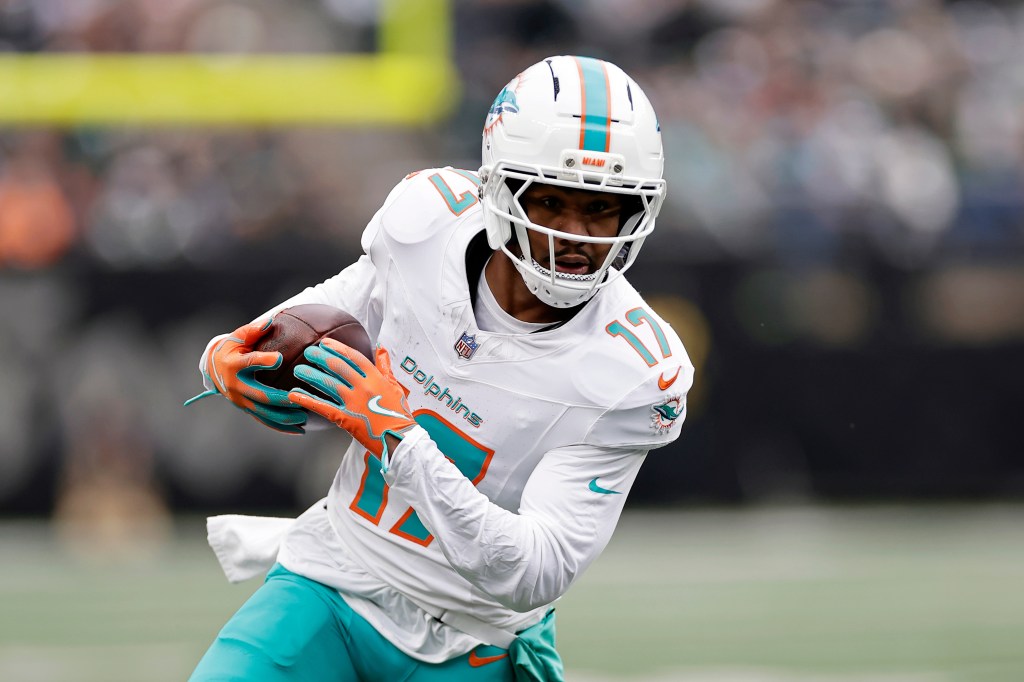
Waddle may well end up with more targets than Sutton in 2026, but there aren’t really set WR1, 2 and 3 roles like that. Guys align by position — Payton wants guys that can play multiple — and then, of course, there are primary options on every passing play. Payton refers to those as tags for certain players. There will undoubtedly be a ton of plays tagged for Waddle.
Perhaps one of the more exciting prospects for both Denver’s offensive coaching staff and for Waddle himself is the manner in which the Broncos will likely move him around. They see him as a guy who can play outside or in the slot.
What’s interesting about Waddle, in particular, is that despite his diminutive stature, the Dolphins last year used him predominantly as an outside receiver. According to Next Gen Stats, 307 of his exactly 400 routes came after being lined up outside. In 17 games, Waddle lined up in the slot just 22.8% of the time and was targeted out of the slot 16 times.
It would be a surprise if those numbers held in Denver.
Not to say Waddle will be only a slot or even line up in the slot a majority of times — we don’t know yet what his usage will look like — but he’ll likely move around quite a bit.
For comparison, Courtland Sutton, who is about as prototype outside “X” receiver as there is, lined up in the slot more frequently (23.3%) in 2025 for Denver than Waddle did for Miami.
It may surprise some to see the Broncos’ pecking order for who played in the slot most frequently by routes run.
Pat Bryant led the way as a big, power slot, running 170 of his 301 routes from the slot (56.5%). Next came Troy Franklin at 200 out of 480 (41.7%). Lil’Jordan Humphrey (56 out of 174) was at 32.1%. Last but not least, Marvin Mims ran just 62 of his 270 routes from the slot (22.9%).
All of those players will see their roles impacted and one of them may not even be on the 2026 roster unless the Broncos decide to roll with six on their initial 53-man this summer.
Who exactly sees what changes to their roles is yet to be determined, but suffice it to say Sutton and Waddle will be on the field together a ton and then Payton, offensive coordinator Davis Webb, new receivers coach Ronald Curry and the rest of the staff will mix and match third and fourth guys based on situations, matchups and more.
We don’t know exactly how that’s going to shake out, but we’re not the only ones. Mims himself spoke with Altitude after attending a recent Nuggets game and said he was “really surprised” by the trade. He spoke highly of Waddle and said he was excited to add another playmaker but also added, “It’s interesting to see how I’ll fit in in the offense.”
Marvin Mims tells @VicLombardi his initial reaction to the Jaylen Waddle trade: “It really surprised me, bringing in a guy like that. … Offensively you always need more playmakers.”
Also, “It’s interesting to see how I’ll fit in in the offense.” https://t.co/KrasYqcfM1
— Parker Gabriel (@ParkerJGabriel) March 22, 2026
Parker, this question may take a longer explanation than you have room for in your column (which I enjoy reading by the way), but I’m curious about the Denver coaching staff. I just saw an article that shows Denver has 26 coaches on staff. I was surprised at the quantity but also the titles and even duplicated titles (quality control assistants for offense, defense and special teams). I was particularly surprised that Denver has an inside and outside linebacker coach, and then you see the various run and pass game coordinators. Is there any insight you can provide on how these guys all work together or coordinate their efforts?
Thanks for the consideration!
— F.J. O’Leary, Frisco, Texas
Hey F.J., thanks for writing in and good question.
The Broncos do indeed have a large coaching staff and, like most, there are a variety of titles. Most of the time, a coordinator title (think run game coordinator or defensive pass game coordinator) is a way of giving a coach a promotion — and a raise — to keep him in your building. They can also help you ward off attempts from other teams to interview your coaches, since a club can block an interview for a lateral move but not for a promotion. Sometimes those jobs also come with added responsibilities in meetings or on game day, but if a staff is already kind of in place, there’s not necessarily a major change. Last year, for example, Davis Webb was made the offensive passing game coordinator and Jim Leonhard the defensive passing game coordinator. They each said at different times that they had a little more responsibility, but it wasn’t like suddenly they were running meetings differently or had a completely different workflow during game weeks.
Now, of course, Webb is the offensive coordinator and Leonhard the DC for Buffalo. Denver rehired John Morton as the offensive PGC and Zach Strief is once again the offensive RGC. He still coaches the offensive line, though, along with Chris Morgan.
Quality control coaches may not have specific titles, but they mostly work with certain position groups. Todd Davis works with inside linebackers. Brian Neidermeyer worked a lot with outside linebackers last year. It’ll be interesting to see how the new trio of offensive QCs splits up. Previously, Logan Kilgore was a QC working with tight ends. Now he’s the Broncos’ quarterbacks coach.
As for the inside/outside linebacker split, that’s because those groups have very different responsibilities and techniques. In many ways, OLBs are closer to defensive linemen than to inside linebackers.
It’s similar for corners and safeties. Leonhard was the PGC and defensive backs coach last year, but day to day on the practice field, he worked with the safeties, while Addison Lynch worked with the corners. Payton fired Lynch after the season.
The new-look group there is PGC Robert Livingston and defensive backs coach Doug Belk. We’ll see how they split up on-field coaching duties during practice.
With our re-signing of Alex Singleton and Justin Strnad, who do you see covering tight ends as the roster looks now?
— Mark, Albuquerque, N.M.
Hey Mark, thanks for writing in. I see largely the same group covering tight ends as last year — Singleton, Strnad and Denver’s safeties. Nickel Ja’Quan McMillian or a cornerback, depending on the matchup.
There’s a narrative out there that Singleton and Strnad are bad in coverage. They might not be the best coverage linebackers in football, but I think — and, perhaps more pertinently, coaches and people in the building believe — that’s overblown.
Denver played as much man coverage as anybody in football, but its defensive principles aren’t as simple as lining up across the board and running with the man you’re responsible for, no matter where he goes. Especially in the middle of the field, the Broncos play a lot of match-style coverage, hand-off players, etc. It’s not as simple as seeing a tight end catch the ball and get tackled in pursuit by Singleton or Strnad and saying definitively that he had responsibility.
Again, this isn’t to say they’re the most dynamic cover linebackers in football. They’re not. But it’s not as simple as saying they’re bad and can’t do the job, either.
Late in the season, defensive coordinator Vance Joseph had a lot of insight into this. Here’s what he said:
“Our corners are really good players. … Sometimes, in (offenses’) minds, their better matchups are with backers and safeties. They can control the leverage, which is smart. So we understand that.”
He said he likes to try to control tight ends and running backs by showing pressure looks that force them to think about blocking before going out on a route, referring to it as covering them using defensive structure. But he also acknowledged defenses can’t always do that and also that third downs, in particular, become prime time for targeting tight ends and backs.
“It’s tough to find tight ends, especially on first and second down. But on third downs, that’s the matchup they want because they get the leverage they want. That’s just football. It’s always been that way for my defense. We understand that.”
With Jaylen Waddle on the roster, what’s the big target in the draft? An inside linebacker? A tight end? Do we trade back our second-round pick for most picks?
— Michael Smith, Denver
Hey Michael, great questions. I’m inclined to answer yes, yes and yes. Obviously if there’s a player the Broncos feel strongly about at No. 62, they’ll take him right there. By that time in the proceedings, though, if Denver has a clump of players graded similarly, trading back and recouping a selection or two makes a lot of sense.
It’s impossible to say from here who will be available at No.62, but if you’re talking about tight ends and linebackers, there figure to be multiple or several already gone at each position by the time the late second round rolls around. Beyond just the surefire first-rounders like linebacker Sonny Styles and tight end Kenyon Sadiq, it’d be a surprise if players like Vanderbilt TE Eli Stowers, Georgia LB CJ Allen and Texas Tech LB Jacob Rodriguez are still around as the 60s approach.
Given where the Broncos are roster-wise, you really can’t count them out from taking any position if they think the value is there. I’ll agree with you on tight end and linebacker as top needs and throw running back in the mix, too. They could use a young safety and could stand to add more young, cheap options on both lines as they plan for the future.
Parker, what do you think about running back Adam Randall out of Clemson? He’s a converted wide receiver and is 6-foot-3 and 235 pounds.
— Eric Price, Altoona, Pa.
Hey Eric, thanks for writing in. He’s a really interesting prospect, that’s for sure. Big guy who can really run. Not the most refined runner at this point, but given that he hasn’t been playing running back very long, he should have considerable development in front of him. Physically, it’s an uncommon profile and not a type of back Sean Payton’s typically pursued, but if you think there’s a chance he turns into something special, it’s worth considering later in the draft.
Overall, though, he’s a fun and interesting watch. I’m guessing there aren’t many guys his size with extensive kick return experience.
David Njoku is still available. We should sign him. We need more talent in our tight ends.
— Tom, Boulder
Hey Tom, thanks for writing in. Njoku is indeed still available. So far, we haven’t heard much about any substantial interest shown by the Broncos. That, of course, could change.
Njoku, at his best, certainly would upgrade Denver’s tight end room. Given where the group’s been collectively from a production standpoint the past couple of years, it would be hard to push back too much against such a move.
Njoku, though, hasn’t been at his best in the past two seasons. He’s missed 11 games in that stretch — six in 2024, five last year – and hasn’t come close to his 2024 output of 81 catches and 882 yards.
Njoku’s played predominantly in-line, meaning adding him would be more about Adam Trautman than about Evan Engram. Even in limited time the past two years, Njoku’s been a more dangerous receiver than Trautman. Trautman has been the better blocker by most metrics and Njoku would have a long way to go to catch up to Trautman’s knowledge of the offense and the implicit trust the coaching staff has in him.
Want more Broncos news? Sign up for the Broncos Insider to get all our NFL analysis.