
March 27, 2026, 4:37 p.m. CT
Whether it is a general philosophy or specific benchmarks at certain positions, the Green Bay Packers have established a method of scouting and drafting which has been in place for the better part of 35 years, passed on from one general manager to the next.
While some of their principles are more rigid, there are outlier draft picks every year which mean they bend or break the trends established over the decades.
By examining Green Bay’s recent history of going outside their usual preferences, it can become easier to anticipate what they will or won’t be flexible with moving forward, including in this upcoming draft.
Since Brian Gutekunst took over as general manager in 2018, he has veered from the benchmarks set by his predecessor Ted Thompson in one way or another a total of 34 times in eight drafts. That means on average, more than four picks per year are an outlier in some way.
The most common “rule breaking” came via drafting six players who produced the worst result in a specific pre-draft test at their respective position compared to previously drafted Packers but with the caveat that they qualified in another drill within the same discipline.
Expert NFL picks: Exclusive betting insights only at USA TODAY.
The highest profile example is Lukas Van Ness, whose 31” vertical jump is the worst Green Bay has drafted in an EDGE player since at least 2005, but his 9-10 broad jump made up for it.
This makes sense, as a prospect’s overall testing in the core facets (speed, explosiveness, agility) is more important than ticking every box exactly. There are examples of one strong agility test making up for a poor one, or a lineman’s 10-second split overcoming a poor 40 time.
There were a further three times where the Packers took a player who posted the worst score in a given drill compared to the team’s previous picks, but in those instances Green Bay had drafted players with poor results in those disciplines in the past, just not quite as bad.
Travis Glover set a new low for a Packers offensive tackle in terms of the 3-cone, but they have taken offensive tackle prospects with poor agility before. It was the same situation with Tariq Carpenter at linebacker and Shemar Jean-Charles at cornerback.
Times are changing when it comes to the pre-draft process, as prospects are becoming more and more selective over which drills they participate in.
Gutekunst has made it clear in the past how he feels this hurts players more than it helps them, but he has had to move with the times. The old saying is that the NFL will take what the college game gives them, and a dearth of testing is becoming the new normal.
Since 2018, Green Bay has taken four players who only completed one of the two tests in a given discipline (doing the shuttle, but not the 3-cone, for example), but those players all posted an above average score in the one drill they did complete.
Again, this is logical, as getting some idea of a player’s athletic ability is better than nothing, and teams will take it.
More recently, the Packers have taken six players who skipped whole sections of the testing altogether despite being healthy, and even drafted some in the first round, which is a bit of a new world for them. In each case though, the testing that player did complete was strong.
Matthew Golden only ran the 40 but did it in 4.29 seconds. Jordan Morgan, MarShawn Lloyd and Jonathan Garvin skipped the agility testing but posted strong speed and explosion scores.
Kitan Oladapo also dodged them but posted a good speed score and okay explosion using the RAS system, while Michael Pratt did not run the 40 but fared well in the explosion and agility testing.
On three occasions under Gutekunst, they have drafted a player shorter than any they have previously taken at a given position, but their weight presumably made up for the lack of length.
Packers scout Sam Seale said of MarShawn Lloyd, who is under 5-9, but weighs 220 pounds: “He’s short, but he’s not little.” Jaire Alexander was “right on the Mendoza line” for corners according to Gutekunst at just over 5-10, but he was 196 pounds. Amari Rodgers weighed 212 pounds at around 5-9 1/2.
There were two cases (Jayden Reed, Josiah Deguara) of a prospect being lighter than any player they had drafted at their position according to measurements from the combine, but using the Senior Bowl measurements they were a bit heavier and not an outlier.
Sean Clifford and Michael Pratt were each the lightest quarterbacks Green Bay has taken since 2005 when they were drafted, but only by a pound or two, and both of them were still above average in weight at the quarterback position in the RAS database.
James Looney was the lightest defensive tackle they have drafted, but athletically he actually qualified as an EDGE player due to strong testing, and had played a bit on the outside.
Evan Williams had the shortest arms of a safety they have drafted, but they have taken short-armed safeties before, so it is a trivial difference at that stage.
The vast majority of the outliers they have taken made sense or were offset in some way, but there are a few which were less explainable.
Drafting 184-pound Jean-Charles after not taking a corner weighing 191 or less since 2005 was a surprise. They then took an even lighter corner in Micah Robinson at 183 last year, and he also set a new mark for height/weight discrepancy for the Packers.
Isaiah McDuffie was five pounds lighter than any linebacker they had taken when he was drafted, although this may more be a sign of evolution at the position, with teams wanting lighter, quicker ‘backers. Thompson’s linebacker picks weighed 241 pounds on average compared to 235 under Gutekunst.
In terms of testing, Jake Hanson was the slowest center they have drafted, running a 5.50 40. Athleticism is not as important at center, but the Packers had still coveted it before Hanson and have since.
It is worth noting though that on the whole, there are really no occasions where the Packers have excused bad testing without some kind of caveat to explain it. They want high-end athletes and always will.
All four of those true outlier picks were picked in the fifth round or later. It seems the Packers are willing to take more fliers at that stage, which makes sense.
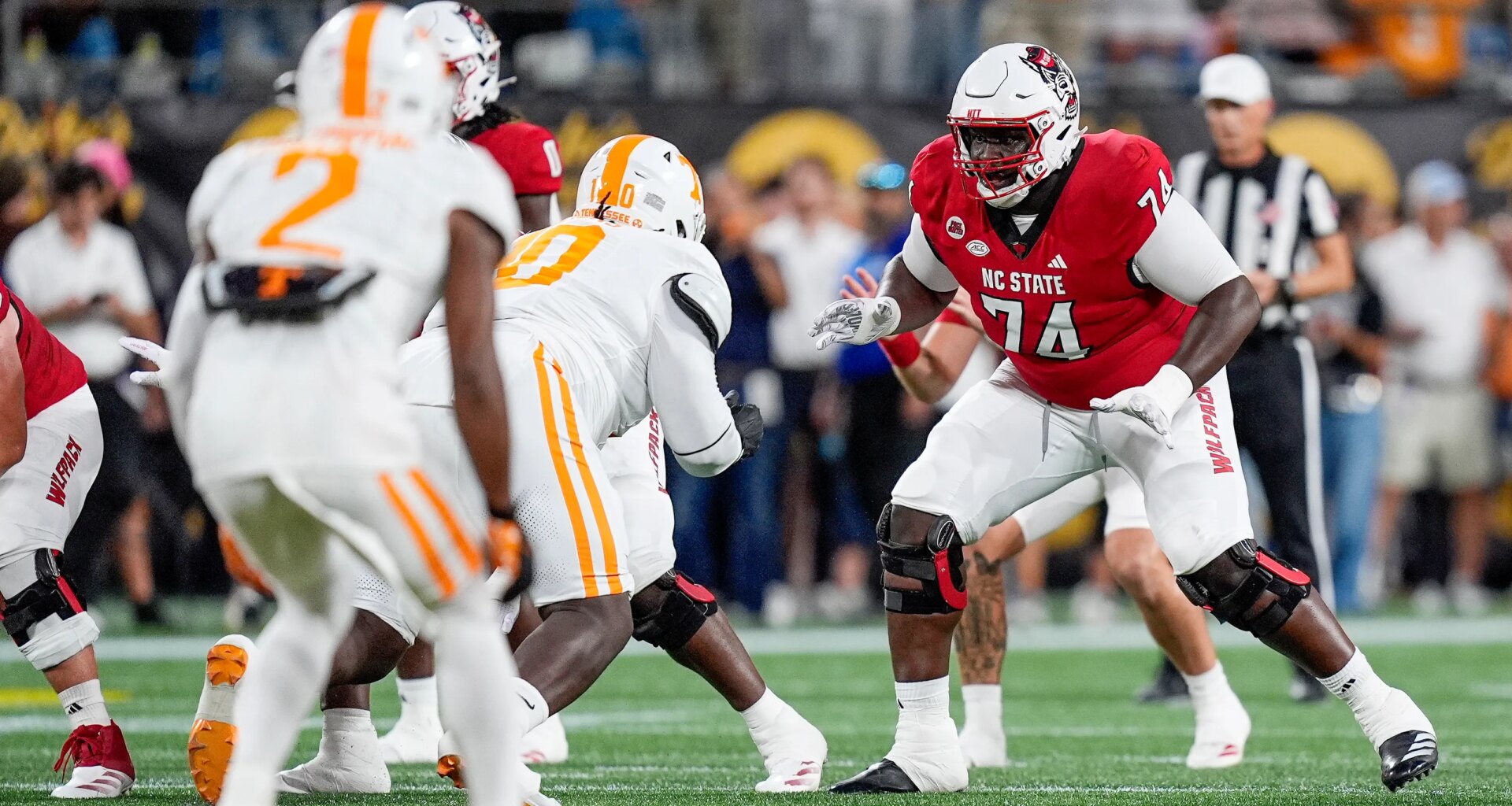
Anthony Belton was by far the heaviest O-lineman Green Bay has taken since 2005 at 336, clearing the previous bar by 15 pounds, and he was actually 345 pounds at the Senior Bowl.
It is still unclear whether the selection of a lineman like Belton was a change in approach by the Packers or something they had always wanted to do, but perhaps the right players had not fallen to them. It remains one of the most interesting picks in the Gutekunst era.
Finding perfect fits in each draft who tick every single box based on Green Bay’s draft history is a lot easier said than done, and every year they are likely to do several things they technically have not done before.
Hopefully this list provides some insight as to the types of compromises they are prepared to make.