
Let’s be clear before we hop into this: No NFL draft opinion is a bad opinion. This event has proven itself to be too random and too unpredictable for any take to be considered too spicy.
With that being said, our goal today is to deconstruct a commonly proposed draft idea for the 2026 New York Jets that doesn’t seem to make much sense upon further examination.
Certainly, when we look back on this article in five years, it will be laughable that this idea was shot down—because that’s how the NFL draft works. That unpredictability is why we love it so much.
Without further ado, let’s crush some dreams.
What the Jets absolutely must not do in the first round
While most fans and analysts agree that the Jets should take a wide receiver with the 16th overall pick, it is not uncommon to see defensive players mocked to New York in that slot.
For instance, back in mid-February, Clemson defensive tackle Peter Woods was the consensus favorite for the selection.
This idea needs to be put to rest.
Taking an offensive player at No. 16 is a must for New York.
This, of course, is assuming the Jets do what they are widely expected to do with the second overall pick: choose an edge defender, whether that’s Arvell Reese, David Bailey, or Rueben Bain.
If the Jets choose a defensive player with the second pick (which is perfectly acceptable), then they have to use their next first-rounder on an offensive player. Plain and simple.
There is no world in which a franchise that has not ranked higher than 23rd in points per game in 11 years can justify having two first-round picks and using neither on an offensive player.
This franchise has been stuck in the mud for a decade-and-a-half, and for all intents and purposes, it’s entirely because of the offense. The Jets have had many playoff-caliber defenses, earning top-10 finishes in total defense in 2015, 2019, and 2022. Where did it get them? Right back to the top of the draft order, where they have typically either whiffed on a quarterback or chosen another defender.
Since the Jets’ playoff drought began in 2011, they have used seven of their nine top-10 selections on either defenders or quarterbacks. That includes six straight such picks through 2021.
Luckily, the ship has been steered back in the right direction as of late. The Jets chose Garrett Wilson with the 10th overall pick in 2022, while current general manager Darren Mougey chose right tackle Armand Membou seventh overall in 2025, marking his first-ever draft pick.
Today, Wilson and Membou are arguably the top two most exciting building blocks on the Jets’ roster.
We’re not precisely talking about a top-10 pick in this case, and to be fair, the Jets have used three picks in the 11-16 range on non-QB offensive players: Mekhi Becton in 2020, Alijah Vera-Tucker in 2021, and Olu Fashanu in 2024.
But the point stands: The Jets franchise ignited their culture of offensive ineptitude by neglecting QB-supporting offensive positions in the top half of the first round. Mougey set the right foundation in his first draft by taking a right tackle and a tight end with his first two selections, and he must keep that going in 2026.
The Jets already plugged plenty of defensive holes in free agency. For the short-term, their defensive outlook is fine. The unit has adequate depth and a solid floor, and it will get the potential franchise-changing star it lacks with the second pick.
The offense, though, remains the priority. Leaving the first round without adding to that unit would be malpractice.
When it comes to the 16th pick, the Jets must put their board aside and think more broadly about what move would best serve the franchise as a whole.
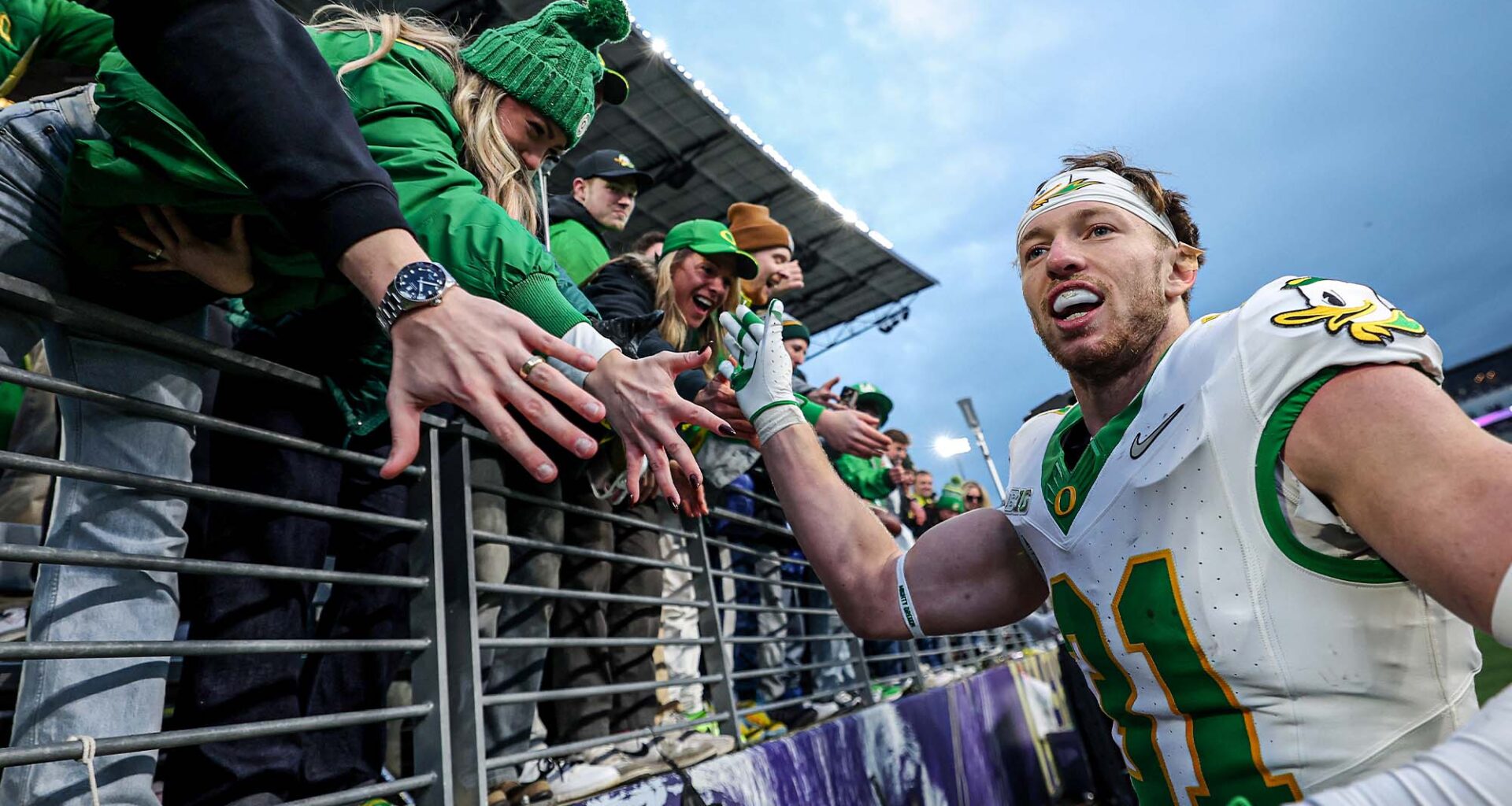
The Jets could take someone like Oregon safety Dillon Thieneman, and he might go on to become a Pro Bowler. Maybe the Jets believe Thieneman will have a better career than someone like Washington wide receiver Denzel Boston.
But who addresses the sole issue that is responsible for the Jets’ 15-year playoff drought?
That would be Boston. Even if he is a worse wide receiver than Thieneman is a safety, Boston would better serve the team’s fortunes because he aids the side of the ball that has been a far more chronic issue for the organization.
To get more specific, Boston aids the position that has been the bane of the franchise’s existence: quarterback. A wideout can directly augment the production of any quarterback who steps into the building, perhaps helping the Jets finally develop the franchise signal-caller they have long pined for.
If the Jets have to “reach” to take an offensive player with the 16th pick, so be it. Because after you adjust for how much added value each offensive player would bring to the Jets’ overall fortunes compared to a defensive player, the Jets wouldn’t be reaching at all. Given the Jets’ situation, a slightly worse offensive prospect will easily add more value than a defensive prospect.
Simply put, the Jets need to add a couple of points to the overall rating of each offensive prospect who is in play for the 16th pick. Once that is factored into the equation, selecting a defensive player should not cross their minds.