
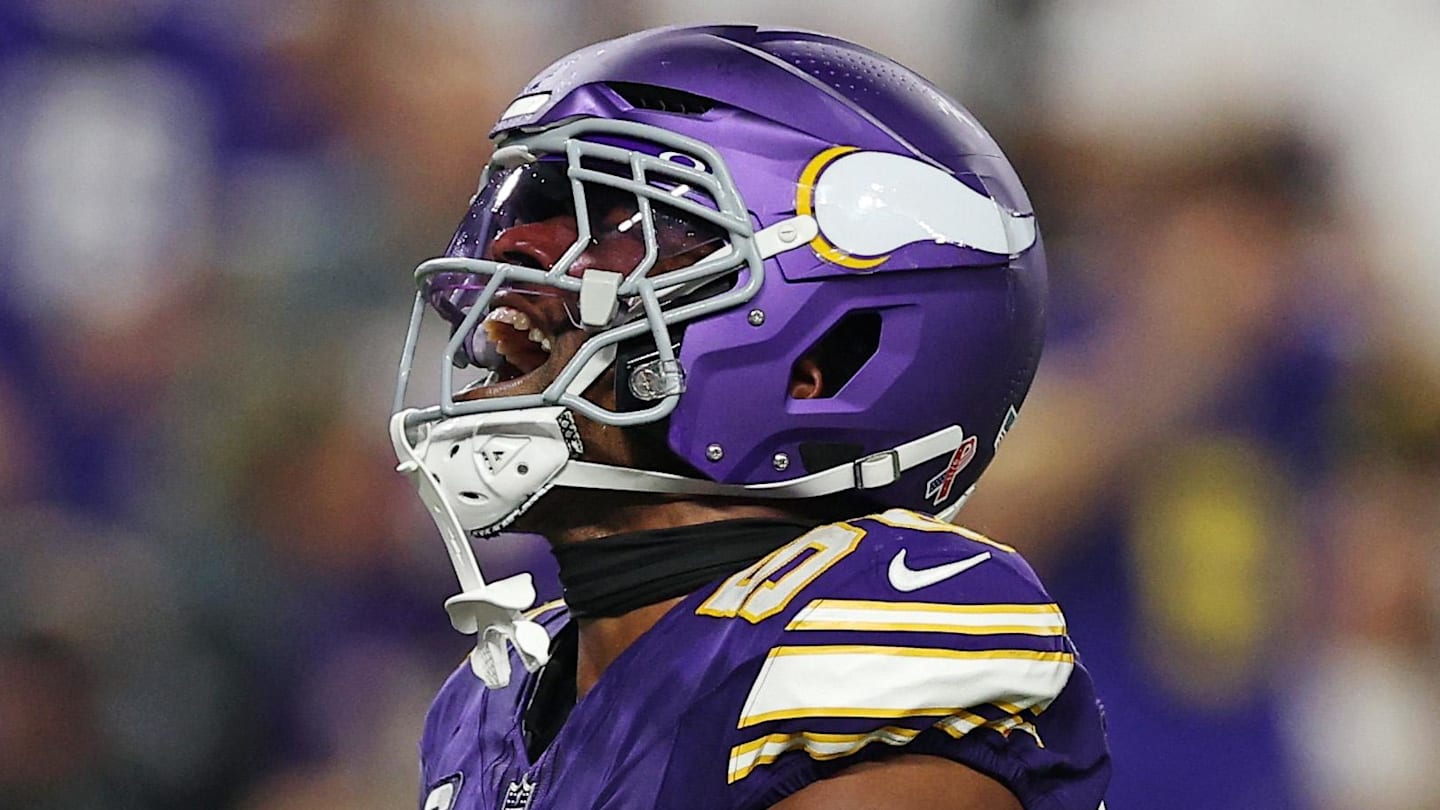
Pretty much since the start of the 2026 offseason, there’s been chatter and buzz about the Minnesota Vikings trading Jonathan Greenard. That rumor picked up speed just ahead of free agency, when it was revealed that Greenard and his camp were seeking a pay raise.
It was also reported that the Vikings were unable or unwilling to meet those demands and that the team was instead looking to trade him. Minnesota fans and the media were closely watching their news feeds, expecting the news to break early in free agency that he was dealt, with teams like the New England Patriots and Philadelphia Eagles being rumored as the favorites.
Those talks never materialized, and some assumed it was because the Vikings and Rob Brzezinski were holding out for the best possible deal. It was recently revealed that the snag was, in fact, the contract demands of Greenard, and that teams interested weren’t willing to dish out $30 million a year to a 28-year-old edge rusher.
This recent holdup has had a chain reaction on Minnesota’s plans, not just in free agency but also in the 2026 NFL Draft.
Here’s how the Jonathan Greenard trade holdup affects the Vikings‘ plans for this year’s NFL Draft.
How the Jonathan Greenard situation impacts what the Minnesota Vikings will do in the 2026 NFL Draft
Before we get into how the Greenard situation affects Minnesota’s draft plans, let’s just review what the initial plan likely was. The first plan was the assumption that Greenard would honor his contract and be coming back healthy and ready to roll in 2026, giving the Vikings a dynamic three-headed monster at the edge position.
With those three topping the depth chart, Minnesota would’ve had edge rusher near the bottom of their needs list, and likely would’ve only addressed it with a late round selection, perhaps with a guy like Mason Reiger out of Wisconsin.
The next plan would’ve involved trading Jonathan Greenard. The assumed compensation was a second-round draft pick. Knowing Greenard wouldn’t be back on the team, the Vikings could’ve then added a veteran edge rusher in free agency or added one earlier in the draft to bolster the depth in that room.
The additional second-round pick would’ve allowed Minnesota to address their top three needs: defensive line, safety, and cornerback, before having to thicken a position they were already top-heavy at. They could’ve used one of their third-round picks on a pass rusher with upside, while still upgrading their biggest areas of need.
With that trade at an impasse, the need for another edge rusher gets bumped up the list.
Edge is a premium position in the NFL, and with only two established ones on the roster in Dallas Turner and Andrew Van Ginkel, the need skyrockets up the Vikings’ list.
It’ll become so crucial that it could really be addressed at any point in the draft and even be an option at pick No. 18. Minnesota fans have gotten very accustomed to seeing names like Dillon Thieneman, Peter Woods, and Aveion Terrell being the pick at No. 18 in mock drafts.
Now they need to start looking at guys like Zion Young, Keldric Faulk, and Akheem Mesidor, all being dark-horse options at that selection.
The real fallout of this Greenard holdup is that the Vikings may be forced to leave a bigger need unaddressed with a premium early draft pick because they now need to bolster their group of edge rushers. Minnesota likely would’ve addressed the defensive line and secondary with their first two picks.
Other positions that they’ve been projected to upgrade in the draft’s first two days were center and running back. If they do take an edge instead of one of those, they will then have to fill a bigger need with a lesser prospect.
That could mean that the area of weakness remains, and the Vikings would be forced to address it with either an aging veteran or a player already on the roster.
The real win of this whole situation is if Minnesota can work out a deal with Greenard before the draft. Perhaps they find a way to give him the pay increase he wants without crippling future contracts or putting the team in salary cap hell again next season.
That would allow the team not to worry about upgrading edge rusher early in the draft, and would allow them to hit bigger areas of concern. If they can’t, and this situation lingers into the draft, it could have a domino effect on who the Vikings select and what areas of need ultimately get upgraded.