
Talking through the AFC teams’ free agencies with NFL executives was so much fun that we’re back with a run through the NFC. And what a run it turned out to be.
There is nothing about what they have done that I can say, “That makes sense.”
That’s a grab bag of, “We don’t know what we’re doing.”
Why are you doing these deals?
That’s three execs from three teams, all trying to figure out the same team’s plan.
Which team was it? You won’t have to read long.
For each team, we’ve listed their average salary per year (APY) added, lost and the differential, along with their rank in each category. Figures include contracts with values reported as of April 1.
Arizona Cardinals
Added: $38.6M (20th) | Lost: $18.3M (28th) | Differential: $20.3M (11th)
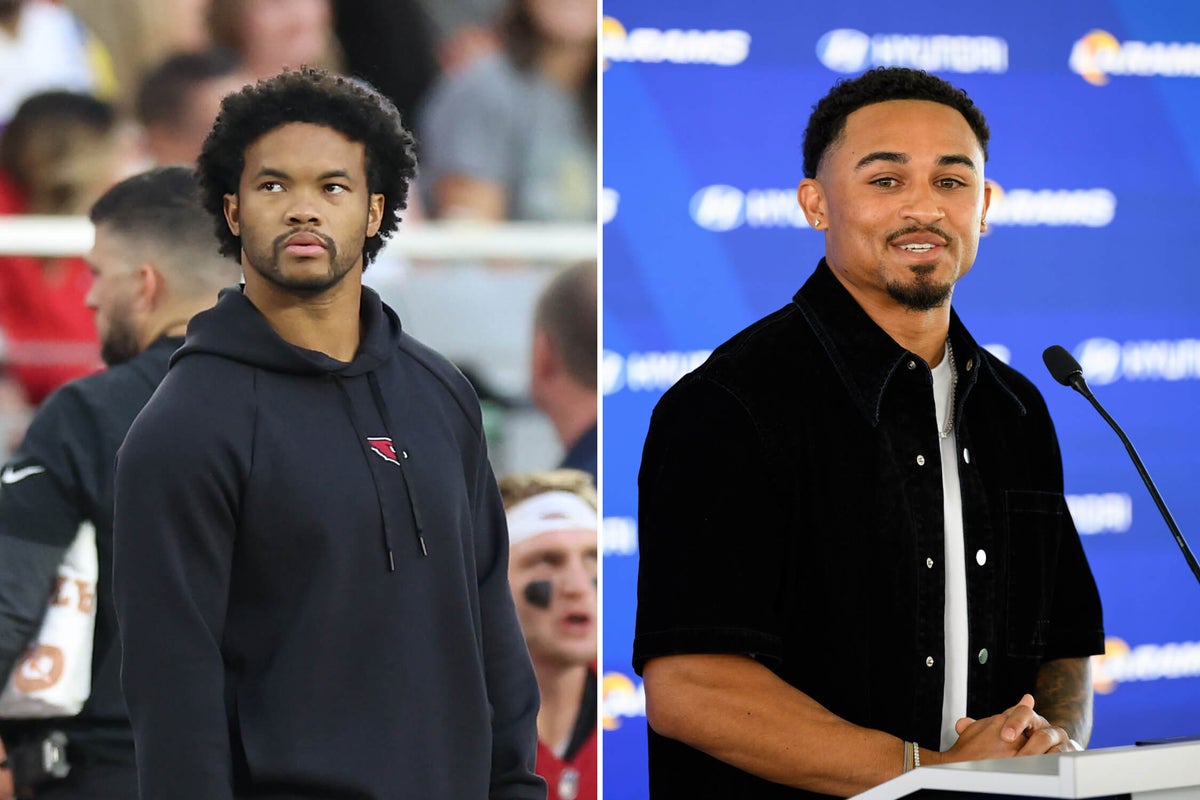
The Cardinals released quarterback Kyler Murray instead of trading him, and it’s easy to see why. The team began telegraphing Murray’s exit last season when handing over the job to Jacoby Brissett, limiting its leverage in trade talks.
Some saw that as a missed chance.
“I feel like they could have done a lot of different things, but they chose not to,” one exec said. “They just wanted him off the roster, wanted to save the $19.5 million (in 2027 salary that would have become fully guaranteed this month). They did not want to mess with it. I don’t know why. They don’t have a good enough roster where that $19.5 million really matters.”
Cutting Murray now meant there was zero chance the team would be on the hook for that $19.5 million in 2027 salary, in addition to the $22.8 million already locked in for 2026. (Minnesota is paying $1.3 million of that after signing Murray as a free agent and promising not to use the franchise tag on him next offseason.)
“I don’t know why you would not just keep him on your roster for the whole season and then figure it out next year,” another exec said. “You could probably trade him straight up off the $19.5 million, or if you cut him, then he’s making $1.5 million next year with someone else, so it’s an $18 million risk. If you can get a third-round pick for him, that is well worth the risk.”
The Cardinals did not want to take that risk, and so first-year coach Mike LaFleur heads into the draft with Brissett, Gardner Minshew and Kedon Slovis on the QB depth chart. Arizona possesses the No. 3 pick.
“How were the Cardinals not able to trade him to the Jets, eat $35 million this year and then the Jets are on the hook for the $19.5 million next year?” the exec added. “That is basically two years at $25 million. The Jets would not have signed up for that?”
The Jets went with Geno Smith instead. Whatever the Cardinals do at quarterback, they will be banking on better health in 2026, without Murray’s presence defining the narrative. Their free-agent class was modest, led by former Steelers guard Isaac Seumalo at $10.5 million per year.
Atlanta Falcons
Added: $37.9M (21st) | Lost: $42.6M (16th) | Differential: -$4.7M (19th)
The Falcons have been an easy team to question over the years. They got even easier to question during this free-agency cycle despite having new leadership in place.
“There is nothing about what they have done that I can say, ‘That makes sense,’” one exec said.
What about signing Tua Tagovailoa on the cheap?
“For the price, you can’t hate on that,” another exec said. “But overall, it seems like they swapped out guys for guys. They have some talent, but they are not in win-now mode. They are not in tank mode, either. They seem very net neutral.”
That was about as positive as these discussions sounded.
“You give the 41-year-old kicker (Nick Folk) two years, $9 million, $4 million guaranteed,” a third exec said. “Jake Bailey, a punter, gets three years, $9 million, $5 million guaranteed. Austin Hooper is 31. Tua, I can see that — they needed to do something. Christian Harris is young enough as a linebacker to have some upside. But that is not a good class. That’s a grab bag of, ‘We don’t know what we’re doing.’”
It sounds harsh, but this feedback was consistent across every conversation regarding Atlanta. Either the Falcons are smarter than everyone else, or they are making confounding moves.
“Why are you doing these deals?” the third exec added. “If you are going to pay these guys, why wouldn’t you pay to keep Kaden Elliss? He is 30 years old, but a good player coming off one of his best years. Played like 100 percent of the snaps (99.9 percent), can play multiple spots, can rush, play off the ball. It’s crazy.”
Carolina Panthers
Added: $54.7M (8th) | Lost: $31.5M (23rd) | Differential: $23.2M (9th)
If paying $30 million per year for Jaelan Phillips felt like going over the top one year after getting outbid for Milton Williams, who chose New England over Carolina in 2025 free agency, it’s a plausible theory.
The deal for Phillips, whom Philadelphia tried to re-sign, ranks No. 1 in annual average among all deals for free agents changing teams this offseason (Trent McDuffie got more from the Rams after they acquired him by trade). The Panthers invested another $14 million per year in linebacker Devin Lloyd, a clear signal they expect another jump in defensive performance after moving from last to 22nd in defensive EPA per play last season.
“Lloyd has one year of production, but I like him,” an exec said. “I like Phillips as a move-around piece, but he has never been a finisher.”
Phillips, 26, set a career high in pressure rate last season (18.8 percent). That ranked eighth among 271 players with at least 100 pass-rush snaps (10.8 percent was the average). He converted only 6.8 percent of those pressures (five) into sacks, which ranked 199th (12.6 percent was the average).
“(Phillips) fits that 26-year-old, second-contract guy who matches your window,” another exec said. “That’s where Maxx Crosby and Trey Hendrickson don’t make as much sense for Carolina. Jaelan kind of allows them to finally replace Brian Burns, who they traded for cents on the dollar.”
Chicago Bears
Added: $43.6M (18th) | Lost: $69.3M (6th) | Differential: -$25.7M (23rd)
The Bills took heat for sending a second-round pick to Chicago for receiver D.J. Moore, which means the Bears deserve some applause for the move. The Bears didn’t do much else on offense, but acquiring Garrett Bradbury from the Patriots provided Caleb Williams with a veteran center after Drew Dalman’s surprise retirement.
Execs also liked safety Coby Bryant’s addition to the secondary.
“Good player — wish we could have gotten him,” an exec said of Bryant.
“Seattle wanted to keep him,” another exec said.
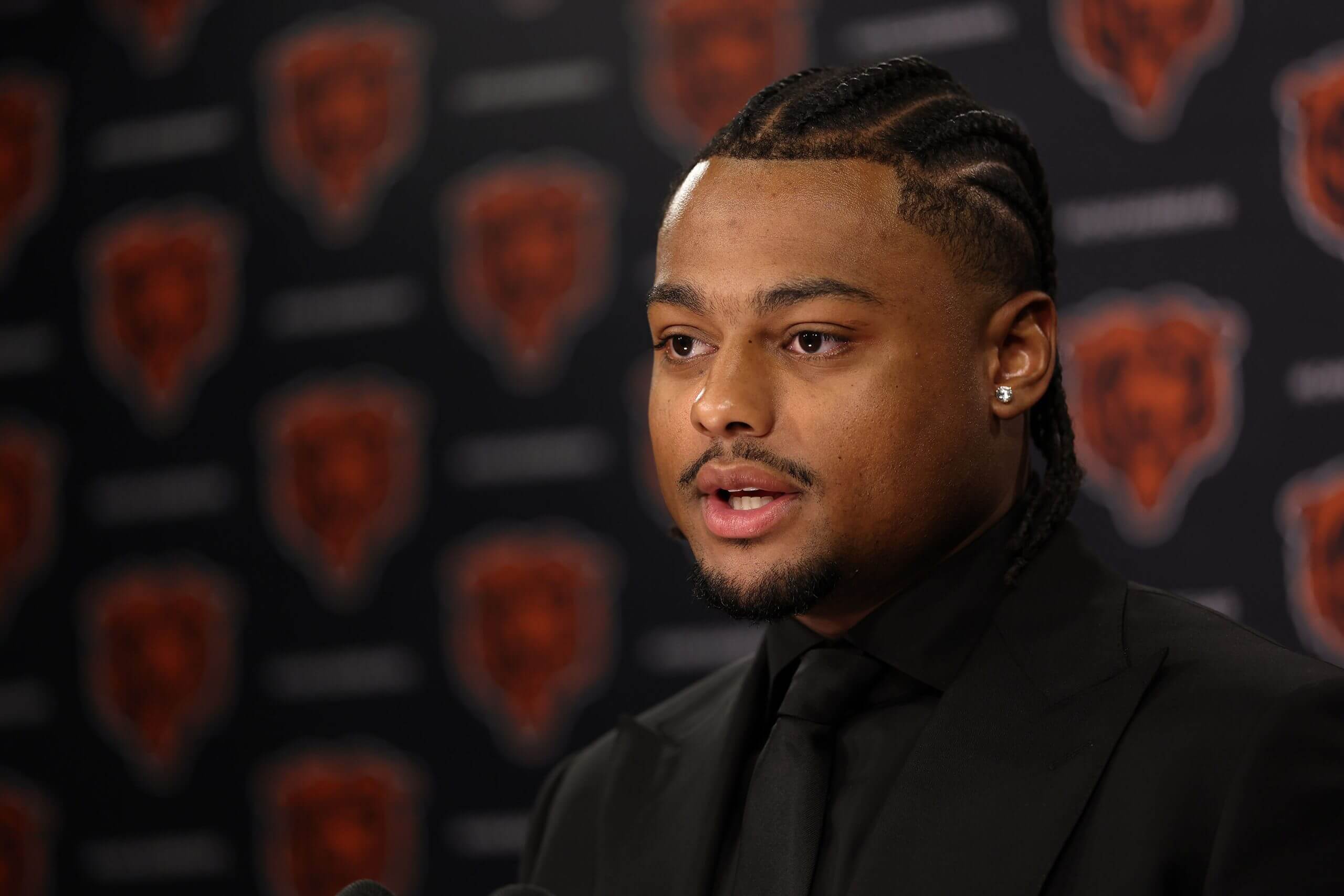
Many around the league approved of the Bears’ addition of safety Coby Bryant. (Chris Sweda / Chicago Tribune / Tribune News Service via Getty Images)
The Bears’ defense led the NFL with 33 turnovers collected last season. Their top three turnover producers — cornerback Nahshon Wright (eight), safety Kevin Byard (seven) and linebacker Tremaine Edmunds (five) — all signed elsewhere. (Chicago cut Edmunds in a salary dump.)
The message was clear: Chicago felt the turnovers masked bigger problems, so it signed Bryant and linebacker Devin Bush early in free agency.
“You cannot bank on that stuff,” an exec said of the turnovers. “They had to get better. They are banking on (corners) Jaylon Johnson and Kyler Gordon being healthy. Coby Bryant is going to play in the post. Devin Bush is the athlete that they like. They will probably either (blitz) him or match him underneath. And then I’d be shocked if they do not continue to build the defensive front.”
A gap remains between what the Bears have invested in their defensive front and what they are getting from that group. Eight of the top 12 players on the depth chart at defensive line and linebacker started their careers elsewhere, led by Montez Sweat, Grady Jarrett, Dayo Odeyingbo, T.J. Edwards and now Bush.
“The pass rush has been their biggest question on defense the last few years,” another exec said. “It hasn’t really been the back end, where they’ve given contracts to Jaylon Johnson and their nickel (Gordon), drafted Tyrique Stevenson. They need to improve the D-line, but they couldn’t really do it because they are locked into guys with guaranteed money. They didn’t really address their biggest defensive need.”
Dallas Cowboys
Added: $42.9M (19th) | Lost: $21.2M (27th) | Differential: $21.7M (10th)
The Cowboys own two of the top 20 picks in the draft, which should help them for the long term, but is there any evidence they are pushing to get past where they’ve been for decades?
“Dallas is one of those spin-your-wheels type teams that never really gets a lot better,” an exec said.
The Cowboys traded a fourth-round pick for Rashan Gary, who was a candidate to be released, to help a pass rush that wasn’t as good without Micah Parsons. They also subtracted defensive tackle Osa Odighizuwa, whom they traded to San Francisco for a third-round pick a year after signing him to a four-year, $80 million deal.
“I was a little disappointed with Dallas,” another exec said. “They got Rashan Gary, who Green Bay was not fired up about. They were not necessarily going to bring him back.”
Owner/GM Jerry Jones said the Cowboys have long-term plans for receiver George Pickens, whom the team franchise-tagged, but what does that mean?
“What are they going to do with Pickens?” another exec asked. “Are you going to have two receivers making (at least $34 million, CeeDee Lamb’s APY), plus the quarterback (Dak Prescott) making $60 million?”
Detroit Lions
Added: $18.7M (28th) | Lost: $43.4M (13th) | Differential: -$24.7M (22nd)
For the second offseason in a row, the Lions are waiting to see whether new additions to their coaching staff can give Detroit the edge it enjoyed before acclaimed offensive coordinator Ben Johnson left to become the Bears’ head coach.
New offensive coordinator Drew Petzing and new pass game coordinator Mike Kafka appear more important than the modest additions in free agency, which addressed the offensive line. Cade Mays was added at center, but the biggest move might be internal, with right tackle Penei Sewell moving to the left side after the release of Taylor Decker.
“To me, they did not do anything notable from a personnel standpoint outside of some special teams guys they added, which I think were pretty good for them,” an exec said.
Linebacker Damone Clark, signed from Houston, made eight solo tackles on special teams last season, more than anyone else currently on the Lions. Exciting, right?
“The biggest questions with Detroit remain on the coaching staff,” another exec said. “Let’s see what Petzing and Kafka are able to infuse in terms of better ideas, better execution, more creative play calling or whatever.”
Green Bay Packers
Added: $26.8M (26th) | Lost: $97.6M (2nd) | Differential: -$70.8M (31st)
The Packers took a big swing in acquiring Micah Parsons before the 2025 season, but that was an outlier move, not an indication Green Bay is suddenly shoving all its chips to the middle.
Players leaving their roster in free agency or via trade commanded $97.6 million in combined APY, second most in the league. That was a big part of the -$70.8 million APY differential for the Packers, the second-largest negative differential this offseason (Miami is at -$79.0 million — no other team is beyond -$60 million). The differential would have been more extreme if left tackle Rasheed Walker, who is facing a gun charge, hadn’t found a cool market.
“They drafted (receiver Matthew) Golden in the first round and are letting him flourish while they let Romeo Doubs hit the market,” an exec said. “That’s them.”
The Packers are in line to net four 2027 compensatory picks, per Over the Cap: fourth-rounders for Malik Willis and Romeo Doubs, a fifth-rounder for Quay Walker and a sixth for Kingsley Enagbare.
The cycle will repeat.
“Green Bay didn’t do anything,” another exec said. “They are a team that historically drafts very well. They are really not a player in free agency.”
The Packers’ most expensive signing, Javon Hargrave, will not cost them a comp pick because he was not a true unrestricted free agent (the Vikings released him). The Packers traded defensive tackle Colby Wooden to Indy for linebacker Zaire Franklin, so no draft picks were sacrificed there.
“It is hard to say they did anything beyond just stay pat,” another exec said.
With no first-round pick because of the Parsons trade, Green Bay has few avenues remaining to make impact additions.
Los Angeles Rams
Added: $50.2M (11th) | Lost: $5.4M (32nd) | Differential: $44.8M (4th)
Acquiring former Chiefs cornerback Trent McDuffie for picks in the first, fifth and sixth rounds this year, plus a third-rounder in 2027, showed how serious the Rams were about fixing a fatal flaw at the position.
“I don’t mind it,” an exec said. “If you still think you are in the window and you have Matt Stafford coming back, you have to do everything you can to try to win it one more time. They still have a first-round pick.”
McDuffie’s addition was only part of the story. Signing him for $31 million per year, the highest figure among cornerbacks, was the exclamation point.
“I know they paid McDuffie a ton of money. But those teams that embrace where the cap is going and can adjust to the percentages instead of the sticker shock are ahead of the game,” another exec said. “They realize that $30 million is going to be (more palatable) down the line because other guys will get paid.”
One exec joked he had a hard time picturing coach Sean McVay waiting to see what player might be available to him in the 29th slot.
“They probably didn’t see much value in the first-rounder they had and said f— it, if we can get this guy (McDuffie), let’s just get him,” another exec said.
Adding McDuffie’s former Kansas City teammate, cornerback Jaylen Watson, in free agency felt like an attempt to replicate in the secondary what worked well for the Rams atop the 2024 draft. That’s when they selected Florida State teammates Jared Verse and Braden Fiske in the first two rounds.
“Corner is a position where even for the top guys, it’s hard to be consistent year over year,” another exec said, “but I do like how they were aggressive. Their biggest need by far was to get more size, more competitive in the secondary. You are pairing McDuffie with Watson so they can come in together, communicate well together, have that rapport.”
The Rams traded their own first-round pick, No. 29, to Kansas City while holding onto the 13th pick, which they acquired from Atlanta to drop from 26th to 46th in the 2025 draft. The Rams could have drafted a corner at No. 26 last year, but Maxwell Hairston, who picked off two passes for Buffalo as the 30th pick in 2025, was the only corner selected between the 20th and 47th choices.
“They put their chips to the middle of the table,” another exec said. “They have not extended any of their young core. It’s going to be very interesting what happens there if it doesn’t work.”
Minnesota Vikings
Added: $11.3M (30th) | Lost: $40.5M (17th) | Differential: -$29.2M (26th)
The Vikings had to feel even better about adding quarterback Kyler Murray on the cheap after seeing one of their former QBs, Kirk Cousins, command guarantees in the second year from Las Vegas. Yes, the Vikings agreed not to use the franchise tag on Murray after 2026, but that’s a problem Minnesota might welcome at this point.
“Minnesota improved,” an exec said. “I like what they did with Kyler Murray. How could you not? They have a ton of talent on offense. They have a more competitive QB room now.”
Murray is one of 29 quarterbacks to start at least 25 games over the past three seasons. He ranks 17th among them in quarterback EPA per start, about the same as Sam Darnold, who ranks 16th.
Darnold has a league-best 28-7 (.800) starting record among those 29 quarterbacks over this three-year span. Murray’s record is only 13-17 (.433).
The difference: Darnold’s Vikings and Seahawks averaged +7.5 combined EPA on defense and special teams in his starts, which ranked No. 1 in the 29-quarterback sample. Murray’s Cardinals averaged -2.5 combined EPA on defense/special teams, worst in the sample.
This all points to Murray’s record improving significantly in Minnesota, unless the defense falls off.
“They lost some pieces on defense and had to shed a lot of cap,” another exec said. “Without a GM in place, I’d imagine (defensive coordinator) Brian Flores is very involved in what decisions are being made on defense, and he’ll be able to adjust. That should give them some comfort.”
New Orleans Saints
Added: $47.1M (15th) | Lost: $38.5M (20th) | Differential: $8.7M (14th)
The Saints rank second to the Dolphins ($179.2 million) in dead money at $112.1 million, the amount of salary counting against the cap for players no longer with the team. New Orleans avoided making short-term moves that might grow that number, which execs around the league applauded.
“The Saints’ build is impressive, I’ll give them that,” an exec said. “(Travis) Etienne is a fast guy that has juice on that turf. Losing Demario Davis and his leadership is tough. We liked Alontae Taylor as well. Those defensive losses are huge, but they make sense. They are not trying to build around 30-year-olds.”
The additions on offense — David Edwards at guard, Etienne at running back and Noah Fant at tight end — give second-year quarterback Tyler Shough more of a chance.
“They are limited because of the cap, and so you can’t go wrong investing in O-line,” another exec said. “They got younger at running back. Outside of (Chris) Olave, they did not have much speed. Adding Fant and Etienne, they definitely got a lot faster. Kaden Elliss is solid.”
The Saints still need receiver help and could target that in the draft.
“They are slowly and steadily getting out of cap hell, and making moves that don’t hamper flexibility is smart,” an exec said.
New York Giants
Added: $48.4M (12th) | Lost: $50.9M (10th) | Differential: -$2.5M (17th)
The Giants’ big free-agent signing was coach John Harbaugh, not tight end Isaiah Likely, linebacker Tremaine Edmunds or cornerback Greg Newsome. Harbaugh, whose background is in special teams, also brought in a new kicker (Jason Sanders), punter (Jordan Stout, whom his Ravens drafted in Round 4 in 2022) and long snapper (Zach Triner).
“I think what they have done is pretty good to this point,” an exec said. “To get some familiarity, Likely is a good get for them. The key is, the two rookies from last year, (Cam) Skattebo and (Jaxson) Dart. They did the right thing by letting the receiver (Wan’Dale Robinson) go, but they do not have a lot there beyond (Malik) Nabers. I could see them drafting one of the receivers early on.”
Likely ($13.3 million APY) and Edmunds ($12 million) were the most expensive additions.
“We liked Isaiah Likely,” another exec said. “They know him well. He is a good No. 2 (tight end). I’ve never been a huge fan of Edmunds. We were looking at linebackers, and that was not someone we spent a lot of time on. Nothing they did really scares you.”
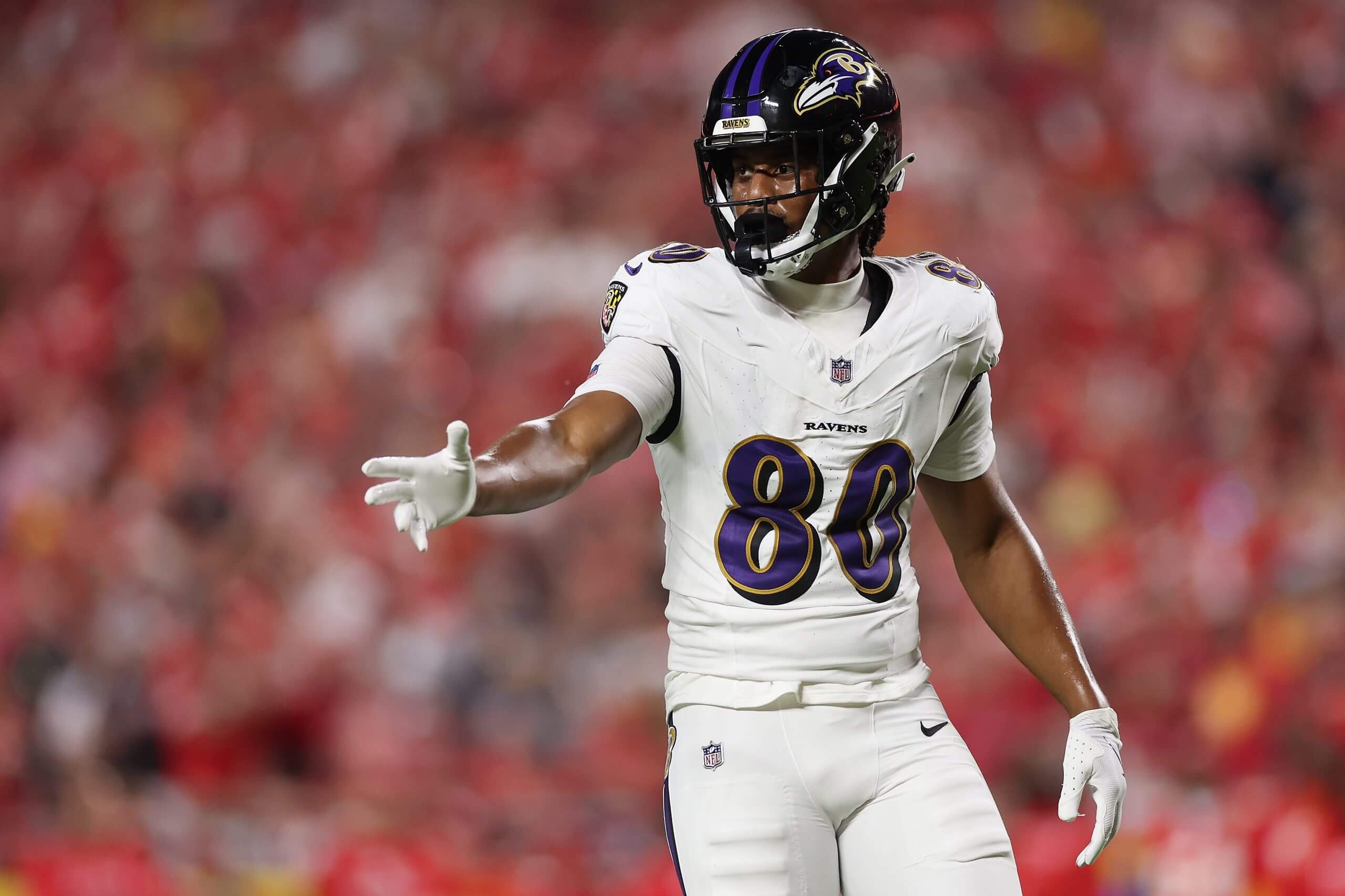
Isaiah Likely will be reunited with former Ravens head coach John Harbaugh with the Giants. (Christian Petersen / Getty Images)
Philadelphia Eagles
Added: $25.1M (27th) | Lost: $52.1M (9th) | Differential: -$27.0M (24th)
It’s easy to forget the Eagles won 11 games last season and were the third seed in the NFC, as the roster seems to be trending negatively in some key spots.
“It’s just like a little lull in their process, and they will build back up,” an exec said. “They lost guys, and that is what happens when you are in your window. They have done some for-now moves. They also have acquired future picks. They will get a third-round comp pick for (Jaelan) Phillips, so they will be whole there.”
Much rides on whether the offensive line and offensive play calling can elevate quarterback Jalen Hurts.
“Philly is always going to be Philly by virtue of them drafting and then making strategic decisions, signing guys for extensions early, whether it was the quarterback or the two receivers,” another exec said. “Now they are doing it with the D-linemen. They got stale because their running game sucked and their offensive line was not very good. Let’s see what they do in the draft and if the quarterback can get better.”
The Eagles signed Jordan Davis, who had 4.5 of his eight career sacks in 2025, to the league’s second-highest APY ($26 million) at his position, and fellow defensive tackle Jalen Carter is also eligible for an extension. A third exec predicted Philadelphia could wind up like New Orleans did in recent years after overleveraging the cap.
“You find yourself having to extend players you do not necessarily want to extend to help leverage your books out so you can keep a competitive roster,” this exec said. “If you don’t continue to win, that thing blows itself up. … When you are paying those high-priced players, they have to come through.”
This exec was not the only one predicting darker days ahead. So much depends on drafting replacements so the Eagles can escape leveraged contracts over time.
“They cannot even trade A.J. Brown until June 2 because of the (salary-cap impact),” another exec said. “They have a lot of deals they have to pay the piper on.”
San Francisco 49ers
Added: $50.8M (10th) | Lost: $11.6M (30th) | Differential: $39.2M (6th)
The 49ers recently declared their practice facility safe, citing a study they commissioned to determine whether a nearby electrical substation was causing injuries.
“Everyone starts talking about the substation and, ‘Why are we always hurt?’” an exec said. “It’s because you sign hurt players. Mike Evans is going to miss 4-6 games this year, Dre Greenlaw is going to miss eight and you are going to wonder why your players are always hurt.”
Evans and Greenlaw, the 49ers’ most expensive additions in free agency, each missed nine of 17 games last season.
“A one-year deal for $14 million, that is low risk (on Evans),” another exec said. “It gives them a big body. You get a vet in that locker room at that position. I do not mind it for a one-year rental.”
There were conflicting opinions over just how much Evans would help the offense.
“They are going for it, man,” another exec said. “The red zone production is going to go up even more. Now you have the backside X that can win one-on-one.”
A different exec challenged what he heard from a national analyst suggesting Evans would help create space and stretch the field.
“This guy runs 19 mph,” this exec said. “He is a back-shoulder, possession X, which has not been Brock Purdy’s game, and he’s not going to run in the middle of the field like Jauan Jennings did on those bang 8s (skinny posts) and daggers and the deep-ins, catching it on the go and being a run-after-catch guy.”
One move everyone liked: adding Osa Odighizuwa to the defensive line via trade with Dallas.
“That was a good get and a total upgrade,” one of the execs said.
Seattle Seahawks
Added: $3.0M (32nd) | Lost: $61.5M (8th) | Differential: -$58.5M (30th)
The Seahawks have added zero players for more than $1.8 million per year, choosing instead to make homegrown receiver Jaxon Smith-Njigba the NFL’s highest-paid receiver, while exercising a $21.2 million fifth-year option on cornerback Devon Witherspoon, who could be next to cash in with Seattle.
Meanwhile, the Seahawks watched a long list of contributors leave in free agency, including rotational pass rusher Boye Mafe, Super Bowl MVP running back Kenneth Walker III, safety Coby Bryant and cornerback Riq Woolen.
“I don’t mind them letting the back go for that price,” an exec said. “They will draft one.”
It’s tough to say the Super Bowl champs got better, and with only four picks in the upcoming draft, this figures to be a mostly quiet offseason until the team is sold. Execs felt the team wanted Bryant back, but not Woolen. Most understood the investment in Smith-Njigba.
“The receiver (Smith-Njigba) is one of their own, and (GM) John (Schneider) has never really made an outside guy the highest-paid player,” an exec said. “(Smith-Njigba) is a good player, great kid, does it the right way, and he has really developed into one of the best receivers in the NFL.”
The team’s upcoming sale had some execs looking into the future.
“Do we think Sam Darnold is the long-term answer at quarterback?” one asked. “What happens a year from now when there’s a new owner who is not emotionally connected?”
Darnold has two years left on his contract. An extension could make sense one year from now.
“Dak Prescott is making $60 million without a Super Bowl,” the exec added. “Sam is at $33.5 million, so …”
It’s early for that kind of talk.
One small surprise for Seattle: re-signing receiver and game-breaking return specialist Rashid Shaheed for $17.5 million per year.
“We had $15 million-$18 million listed for him,” an exec said. “You throw in the return factor and how it flips the field, that is a huge piece of that $17.5 million. You are starting at the 40-yard line if someone lets him return the ball. Then he has such an explosive element that … I don’t want to say Jaxon is not explosive, but Rashid has that dynamic speed.”
Tampa Bay Buccaneers
Added: $30.8M (24th) | Lost: $38.7M (19th) | Differential: -$7.8M (20th)
The general feeling among execs was that the Buccaneers slipped this offseason after receiver Mike Evans and cornerback Jamel Dean signed elsewhere.
“They have definitely taken a step back,” one exec said. “I don’t know how they are better.”
Tampa Bay is certainly different without mainstays in Evans, who signed with San Francisco, and linebacker Lavonte David, who retired.
“Losing Mike Evans is huge, and the fact that he left for what he perceived to be a closer contender, and for less money, seems like an indictment on the direction in Tampa,” one exec said. “Lavonte David was more veteran presence but starting to become a liability in coverage. ”
Rachaad White is out at running back. Kenneth Gainwell is in for $7 million per year.
“Everything they did was kind of a wash,” another exec said.
Washington Commanders
Added: $80.1M (3rd) | Lost: $23.1M (26th) | Differential: $57.0M (3rd)
The Commanders entered free agency with lots of cap space, but that was partly a mirage. They had more roster spots to fill than most after signing so many short-term contracts over the past two offseasons, and they filled them with a league-high seven newcomers earning at least $6.5 million per year.
“You kind of get what you pay for with those $6 million-$8 million guys,” an exec said. “They are fringe starters. It makes some sense. You gotta fill out your roster. They had to get younger.”
Badly in need of pass-rush help, Washington committed $35 million in combined APY to free-agent edge rushers Odafe Oweh ($24 million) and K’Lavon Chaisson ($11 million).
“Those are rotational pieces,” an exec said. “Oweh is more of a DPR (designated pass rusher) than an every-down guy, a little hit and miss. But they needed some speed on defense.”
One under-the-radar signing to watch: defensive lineman Tim Settle, who spent his first four seasons in D.C. after Washington drafted him in 2018.
“Settle was Houston’s best run defender, the interior guy who knocks people back,” one exec said. “I would have loved to have had him. He’s a Virginia Tech kid, from Virginia, so that was what it was.”
Quarterback Jayden Daniels’ return to health under first-time offensive coordinator David Blough stands out as the key variable, more than these signings.
“They are making a bunch of revolving-door moves this year, which looks like a panic to me,” one exec said. “It is going to depend on how the quarterback plays. He can save it all.”