
With the draft nearing and bulk of the Pittsburgh Steelers’ free agency moves in the books, it’s time to give some grades. Even knowing what happens on the field in 2026 and beyond is the true measure of success or failure, I wanted to share my thoughts on each notable offseason addition.
This is where I stand on each decision. This grade is based on scheme fit, player talent and how much the addition addressed a need. This only includes external additions, not internal re-signings, and only confirmed signings. So no S Darnell Savage, since that move still hasn’t been made official.
WR Michael Pittman Jr.
Pittman brings plenty of value. From a trade aspect, it’s easy to love the move. Pittsburgh gave up almost nothing to acquire him, moving down 16 spots in a sixth/seventh round swap with the Indianapolis Colts. Some were surprised by how “cheap” Pittman was, but with the Colts re-signing WR Alec Pierce and retaining QB Daniel Jones, they had little leverage. Pittman would either be cut or basically given away.
Pittman’s contract, however, isn’t small – three years for $59 million. It’s not major money for a receiver market that’s gotten hot the last 12 months, but it’s far from pennies, either. Expectations should be appropriate.
Here’s what Pittman offers: tough catches in the short/intermediate game. He’ll block in the run game, use his size well and be a professional in every sense. A leader and tone setter in the locker room, there’s no concern over him being a diva like receivers Pittsburgh has had before.
But Pittman doesn’t scratch the itch Pittsburgh has. The Steelers need playmaking and route-running. Someone who can separate and beat man coverage. That was the team’s biggest issue in 2025. Pittman isn’t that guy. Mike McCarthy seemingly wants to diversify his route tree and use him vertically like he was during his first few years in Indianapolis, but how well Pittman can fit the role remains to be seen. He wasn’t that guy the past two seasons. Of the 45 receivers with at least 100 combined receptions over the last two years, his 9.6-yard ADOT ranked 31st.
Pittsburgh has more work to do. In fairness, that would’ve been true no matter who the team signed. The Steelers need three starting receivers and currently only have two clear-cut ones. Pittman has a role to play and may play it well, but he wasn’t the guy I would’ve gone after for my first swing to improve the position.
You’ll see the below grade and think I’m crushing the move. I’m not. I’m using the entire grading scale to say, “This move was fine but didn’t truly move the needle of what Pittsburgh needs.”
Grade: C+
CB Jamel Dean
Dean is a good player coming off a bounce-back season. There’s no debating that. Pairing him opposite Joey Porter Jr. gives the Steelers two large and physical cornerbacks to help combat the likes of Ja’Marr Chase and Tee Higgins for two annual games against the Cincinnati Bengals. Dean’s contract, three years for $36.75 million, is large for Pittsburgh but not over-the-top, given the NFL’s landscape and premium price the position often pays. It’s also structured to where the Steelers could exit it after one season, even if that’s not the goal.
My concern is his age. Dean turns 30 in October, but that doesn’t mean his play is destined to fall off a cliff. He’s not as old as Patrick Peterson or Darius Slay. But the Steelers’ defense must get younger and faster, and Dean doesn’t meet that bar (though he ran a hot 40 coming out of Auburn, that speed isn’t as evident on tape anymore). Receivers can stack and get behind Dean, and he’ll be playing in a system that calls for plenty of man coverage on third down.
Can Dean keep his strong play going? Maybe. His career hasn’t always been consistent. He was terrible in 2024 to the point he took a paycut just to stay on the roster, but he responded in 2025 with a great campaign. All the analytics love him. But Dean is no sure bet to keep that going into 2026 and ideally, beyond. Pittsburgh can’t keep going year-to-year with veteran corners: Levi Wallace, Donte Jackson, Peterson, Slay. These names have come and gone many times before. Dean must change that recent history.
I did like the shrewd move of Dean’s signing not counting against Pittsburgh’s comp formula. That’s due to the rulebook quirk that a player who has a modified contract (in Tampa, Dean agreed to have his contract shortened) can’t count in the comp pick game. Ultimately, it seems like the Steelers won’t receive any 2027 comp picks, but it was a nice bonus at the time.
Grade: B-
RB Rico Dowdle
Losing Kenneth Gainwell was the biggest pain point of Pittsburgh’s own free agent losses. The Steelers quickly soothed that by bringing in Rico Dowdle. Reuniting with Mike McCarthy from their time together in Dallas, Dowdle has rushed for 1,000 yards in back-to-back seasons despite not being the bellcow. He ended 2025 as Carolina’s backup, but his ability to post huge games is remarkable. Over the last two years, he has five 130-yard rushing performances. Only Derrick Henry and Saquan Barkley have more.
Dowdle isn’t hyper-versatile like Gainwell, but he’s bigger, stronger and still brings a well-rounded game. He’s quietly caught 39 receptions in each of the past two seasons while averaging a healthy 4.6 YPC. Whether he’s 1A or 1B alongside Jaylen Warren, the two should find plenty of success behind a surging Steelers’ offensive line.
Grade: B+
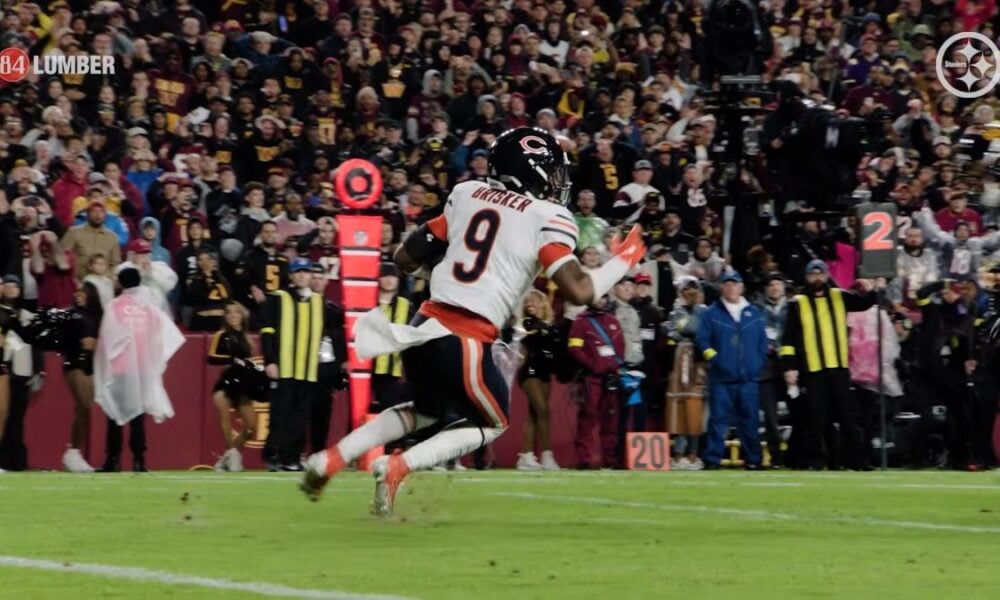
S Jaquan Brisker
It’s easy to love this addition. A soft safety market coupled with a lengthy concussion history made Brisker affordable, inking a one-year, $5.5 million to return to the city he grew up in. Brisker started all 17 games last season and is versatile enough to play all over the secondary. He’s most impactful closer to the line of scrimmage and his ball production isn’t gaudy with just four interceptions across four seasons.
But he’s always around the ball, physical and showcased his ceiling in the Divisional Round playoff loss to the Los Angeles Rams. Brisker racked up 14 tackles, two pass breakups and a sack. No worse than the team’s No. 3 safety who should have a role in sub-packages, perhaps Jalen Ramsey moves to the slot in those moments, Brisker is a great and economical pickup. New defensive coordinator Patrick Graham could use him the way he utilized Tre’von Moehrig in Las Vegas.
Grade: A
DL Sebastian Joseph-Day
Joseph-Day isn’t a sexy signing, but for a Steelers’ defense that must get back to stopping the run, he’s an important one. Soon to be 31, Joseph-Day won’t make the unit any younger, but a strong and stout defensive lineman can still play well into his 30s – just look at Cam Heyward.
Joseph-Day is steady against the run and can play up and down the line. Most likely, he’ll rotate behind Derrick Harmon and Heyward at defensive end, but he could return to play backup nose tackle. In his early days in Los Angeles, he played one-tech and over the A-gap with Aaron Donald dominating at the three.
Our Clayton Eckert recently noted Joseph-Day’s excellent run game metrics. The contract isn’t small but hardly breaking the bank. Pittsburgh’s defensive line depth has been too poor in recent years. Guys like Isaiahh Loudermilk and Logan Lee were seeing too many snaps with a noticeable drop-off in play. Joseph-Day won’t offer much as a pass rusher, but he can plug the run. It’s a critical component in an AFC North facing Baltimore and Baltimore-lite in Cleveland, now coached by former Ravens’ offensive coordinator Todd Monken.
Grade: A-
OG/C Brock Hoffman
I was excited about adding Hoffman – both the first time it was reported and two weeks later when the deal was actually finalized. Hoffman is far from a star and may end up becoming a versatile backup, but the fact the Steelers showed they weren’t willing to overpay for an over-the-hill veteran.
Hoffman has primarily played center but has snaps at both guard spots. He’s likely to be in the mix for the starting left guard spot left vacant by Isaac Seumalo’s departure to Arizona. Hoffman does a little bit of everything well and knows Mike McCarthy, creating a quick transition. He could even help decode some of the language for those returning.
Hoffman himself is a fine player. But the philosophy Pittsburgh showed, likely to go back to the draft instead of paying through the nose on the market, really had me excited. It’s the right way to build the line.
Grade: B
RB Travis Homer
Homer’s addition is easy to overlook. With just three total offensive touchdowns and fewer than 100 combined offensive snaps over the past three seasons, there’s no guarantee he makes the roster. But Homer offers something different in the running back room. He’s an accomplished special teamer who can play on nearly any phase. That’ll give Pittsburgh options and continue pushing Kaleb Johnson, who needs a big summer performance.
Ultimately, Homer isn’t going to dictate the team’s win/loss record. But it’s good to know McCarthy and the Steelers still value special teams, keeping in-line a Mike Tomlin philosophy. Everyone takes it for granted until the unit – and team – suffers.
Grade: B-
P Cameron Johnston
He’s back again to win the job he lost out on in 2025. Corliss Waitman got the nod over Johnston last summer, leaving Johnston to bounce around a couple NFL teams. He has a proven track record, and the Steelers liked him enough to make him their starter heading into the 2024 season. It feels like Pittsburgh could’ve done better, and Johnston’s spot isn’t locked in. But he’ll likely be the guy, and as a holder, he offers familiarity with Chris Boswell. This move was just okay.
Grade: C