
There are times when an NFL season is derailed not by talent problems or design flaws, but by something more subtle, something less visible but has a far more damaging outcome. Like a play call delivered through a headset with static, but the execution becomes distorted somewhere between the sideline and the field. The Green Bay Packers’ 2025 season appears to have been shaped in part by this type of distortion.
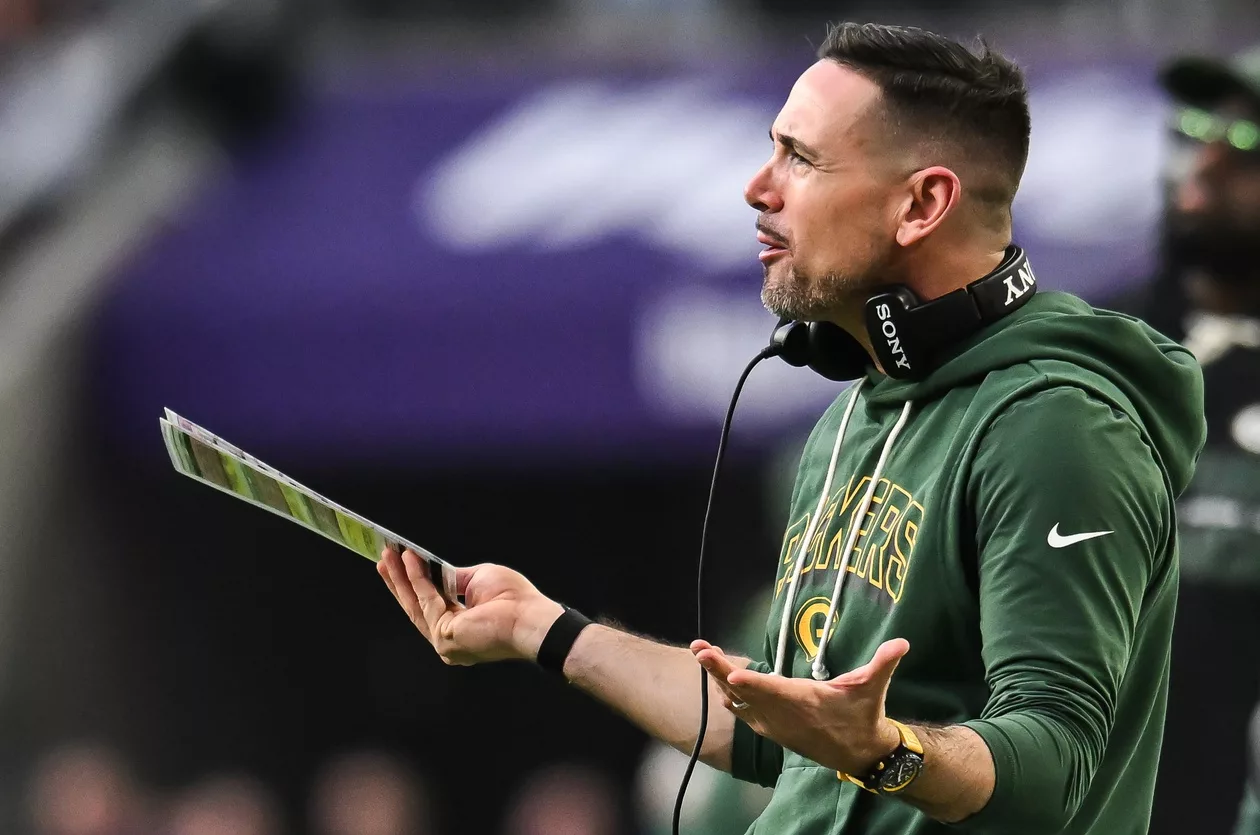
The NFLPA’s annual player survey provided revealing data. Head coach Matt LaFleur’s grade dropped from an A-minus in 2024 to a B-minus in 2025, with feedback showing that some players felt disrespected during their time with him. While not a harsh criticism, the shift highlights an area that requires focus, especially for a team with postseason goals.
Packers Seek Clarity as Matt LaFleur Responds to NFLPA Feedback
Accountability at the Podium
LaFleur addressed the feedback directly, taking a careful approach. He emphasized the importance of improving communication and building relationships in the Packers’ locker room. His main focus was on connection, a principle he has repeatedly cited as the foundation for this team’s success.
He recognized that not every player saw the environment in the same way, and that reality alone requires adjustment. In a results-driven league, self-awareness often separates stable organizations from struggling ones. That acknowledgment set the tone for what happened next.
Reading Between the Roster Moves
Green Bay moved on from several key players from last year’s roster. Romeo Doubs, Quay Walker, and Rasheed Walker left for free agency. While Elgton Jenkins and Nate Hobbs were released, Rashan Gary’s exit showed the team’s desire to reshape its defensive foundation. Salary cap considerations and long-term planning were clearly incorporated into those decisions. However, the underlying tension cannot be ignored.
LaFleur noted that during the season, some players expressed frustration with their roles, which had an impact on overall performance. Several individual cases reflect this. Quay Walker’s post-departure comments showed a desire for better utilization on defense. Elgton Jenkins’ concerns about his position change and contract situation pointed to a clash in expectations. Romeo Doubs’ prior suspension, tied to frustration with his involvement, showed how quickly dissatisfaction can escalate. Individually, these moments may appear isolated and not connected. But, together they form a pattern that requires attention.
A Shift Towards Stability
The Packers appear to be addressing those patterns and issues this offseason. This offseason, they acquired experienced players such as Zaire Franklin and Javon Hargrave. Who brings both leadership and production to this team?
The additions of veterans demonstrate an effort to bring experience and leadership to a previously young roster. These players bring not only production, but also professionalism and perspective, which can help to stabilize a locker room.
That is significant for a team that has been among the league’s youngest in recent years. At the same time, LaFleur’s willingness to change is equally important. Identifying a problem is the first step. Consistent effort is required to fix it.
What Comes Next
Not every player who left Green Bay had a problem with the coaching staff. Roster turnover is part of the NFL. However, when multiple situations point to the same problem, it must be addressed.
If 2025 exposed a disconnect, 2026 will show whether it has been fixed. Better communication should lead to clearer roles. Clearer roles should lead to more consistent performance. For the Packers, the goal is not to completely change their message. It is to make sure that the message is understood, by every player, in every meeting room, and on every snap. Because in the NFL, talent sets the ceiling. But alignment determines whether a team can reach it.
Main Image: Jeffrey Becker-Imagn Images