
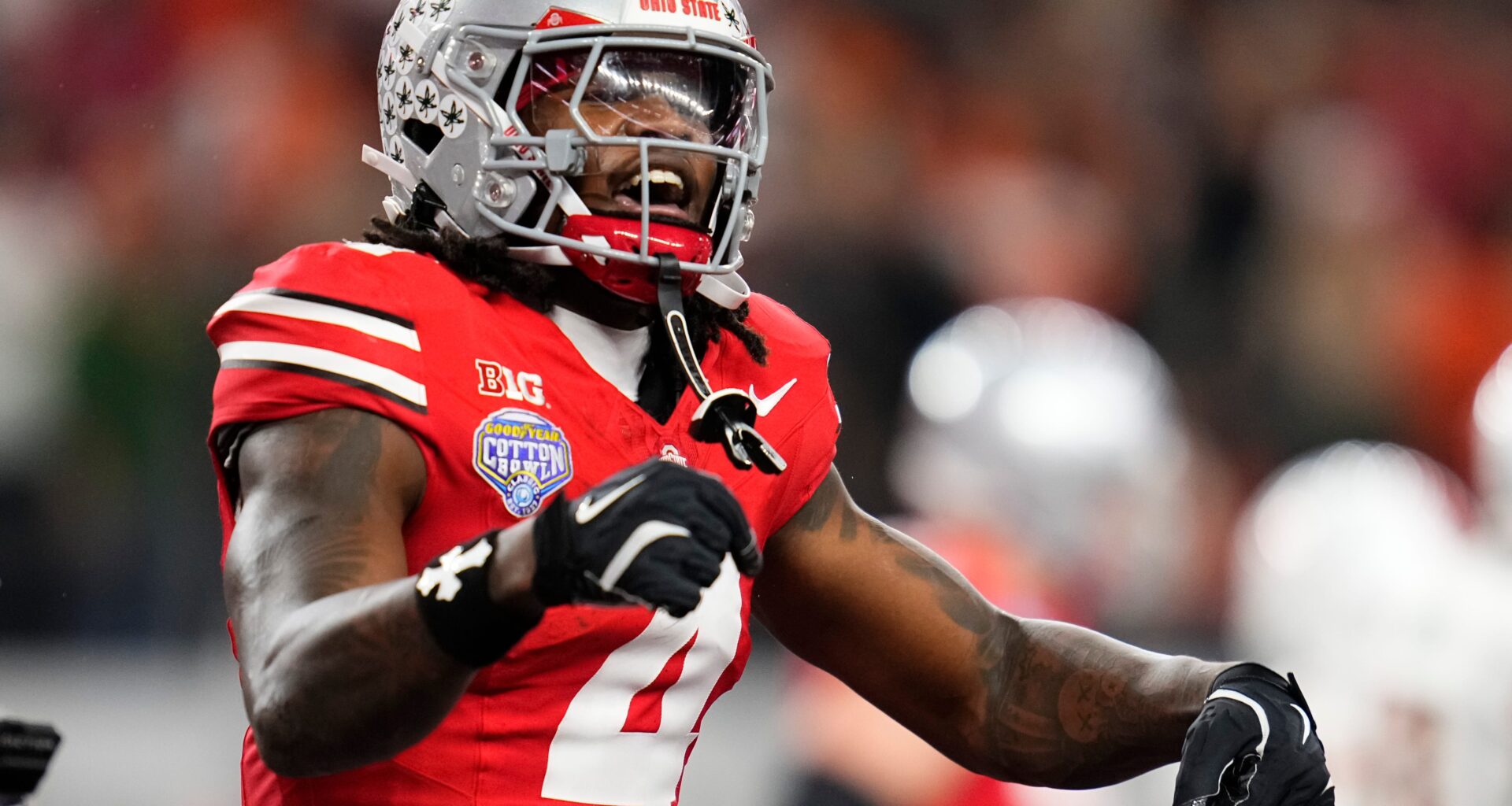
Each college football season introduces a new wave of playmakers, but few position groups shape the modern game quite like wide receivers. As offenses continue to evolve—leaning into tempo, spacing, and vertical aggression—the importance of dynamic pass-catchers has never been greater. Heading into the 2026 season, CBS Sports has spotlighted a group of wide receivers who embody the next phase of offensive dominance: versatile, explosive, and increasingly pro-ready.
This year’s collection is as diverse as it is dangerous. From physically imposing outside threats who win contested catches to electric slot weapons capable of turning short gains into long touchdowns, these receivers stress defenses in every conceivable way. Programs like Ohio State Buckeyes football, Miami Hurricanes football, and Alabama Crimson Tide football once again showcase elite talent pipelines, while emerging programs are beginning to produce difference-makers of their own.
RELATED: College football’s most elite playmakers in 2026
What separates this group is not just raw athleticism, but refinement—route precision, situational awareness, and the ability to dictate coverage. Many of these players are no longer just complementary pieces; they are offensive focal points capable of tilting game plans and determining outcomes. Whether it’s a deep-ball specialist stretching the field or a possession receiver moving the chains, each brings a unique dimension that reflects the modern passing era.
As the 2026 season approaches, these wide receivers are poised to headline some of the sport’s most explosive offenses—and, in many cases, begin building résumés that will carry them into the next level.
1. Jeremiah Smith
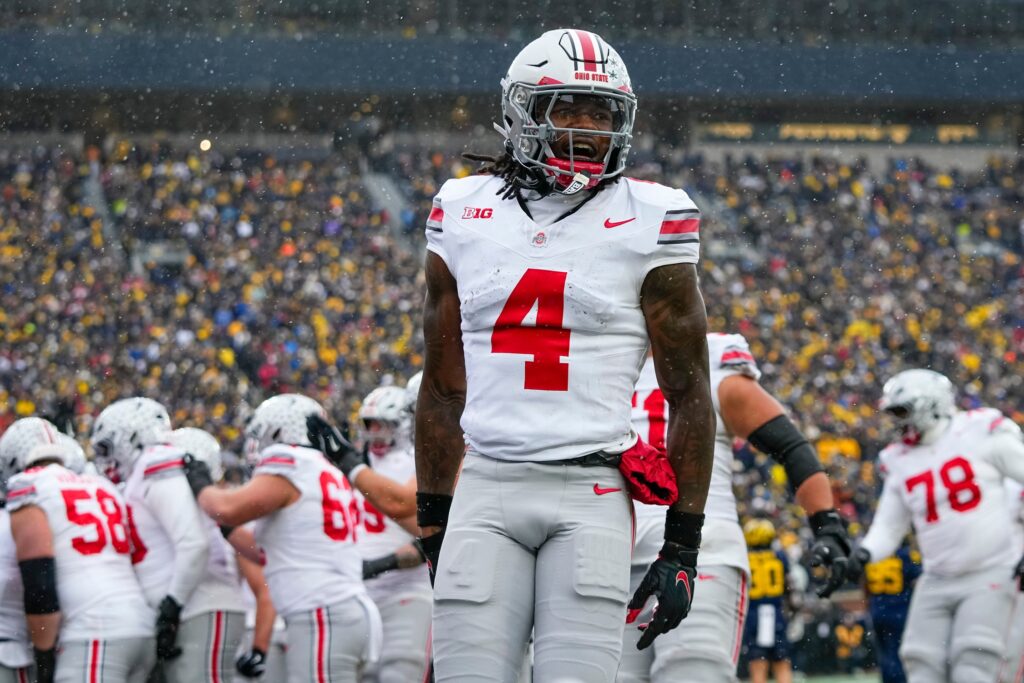 Ohio State Buckeyes wide receiver Jeremiah Smith (4) celebrates during the NCAA football game against the Michigan Wolverines at Michigan Stadium in Ann Arbor, Mich. on Nov. 29, 2025. Ohio State won 27-9. Credit: © Adam Cairns/Columbus Dispatch / USA TODAY NETWORK via Imagn Images
Jeremiah Smith continues to look like the next elite prototype at the position, combining rare size with explosive acceleration. At Ohio State, he has already demonstrated the ability to dominate elite defensive backs with both physicality and refined route-running. His catch radius and body control make him a quarterback’s safety net, particularly in contested situations. Entering 2026, he profiles as not just a top college receiver, but a potential future WR1 at the next level.
2. Malachi Toney
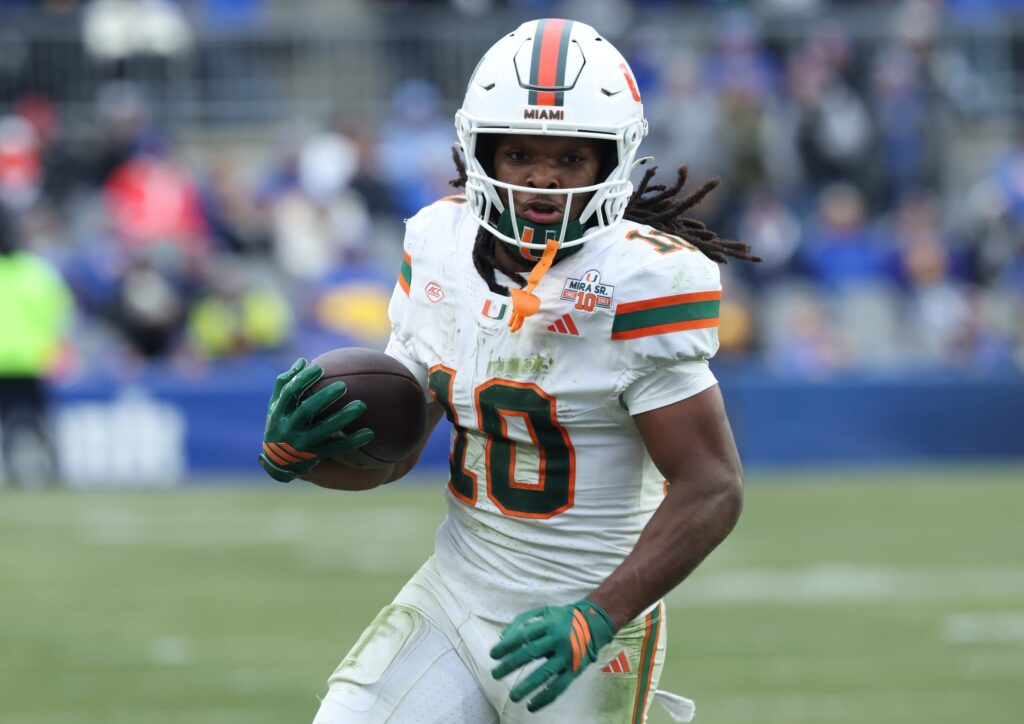 Miami Hurricanes wide receiver Malachi Toney (10) runs against the Pittsburgh Panthers during the third quarter at Acrisure Stadium. Credit: Charles LeClaire-Imagn Images
Malachi Toney brings a dynamic, twitchy play style that thrives in space and stresses defenses horizontally and vertically. His ability after the catch stands out, turning routine completions into chunk gains with sharp cuts and vision. Miami has increasingly leaned on his versatility, using him in motion and creative alignments to maximize mismatches. If his route tree continues to expand, he could become one of the most complete offensive weapons in the country.
3. Cam Coleman
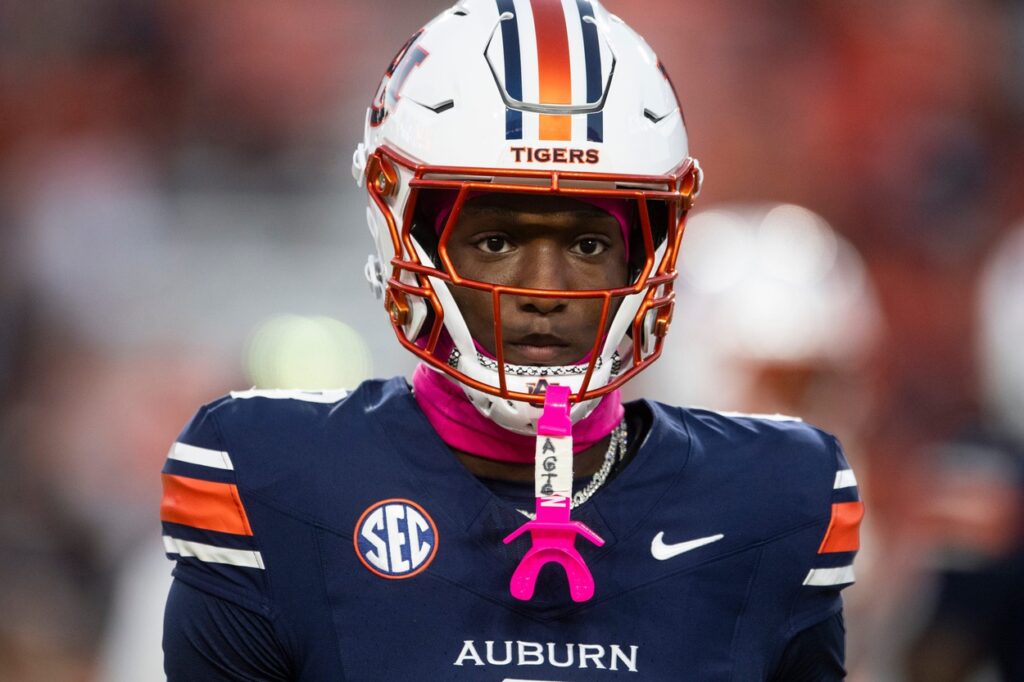 Auburn Tigers wide receiver Cam Coleman (8) during warm ups as Auburn Tigers take on Georgia Bulldogs at Jordan-Hare Stadium in Auburn, Ala. on Saturday, Oct. 11, 2025. Georgia Bulldogs defeated Auburn Tigers 20-10. Credit: © Jake Crandall/ Advertiser / USA TODAY NETWORK via Imagn Images
Cam Coleman is a physically imposing receiver who wins with length, strength, and downfield tracking ability. Auburn has utilized him as a true outside threat, where his ability to high-point the football and separate late in routes becomes particularly dangerous. He shows flashes of dominance against press coverage, an indicator of high-end potential. Heading into 2026, consistency will be the key to unlocking his full star-level impact.
RELATED: New top 10 in college football’s class of 2027
4. Duce Robinson
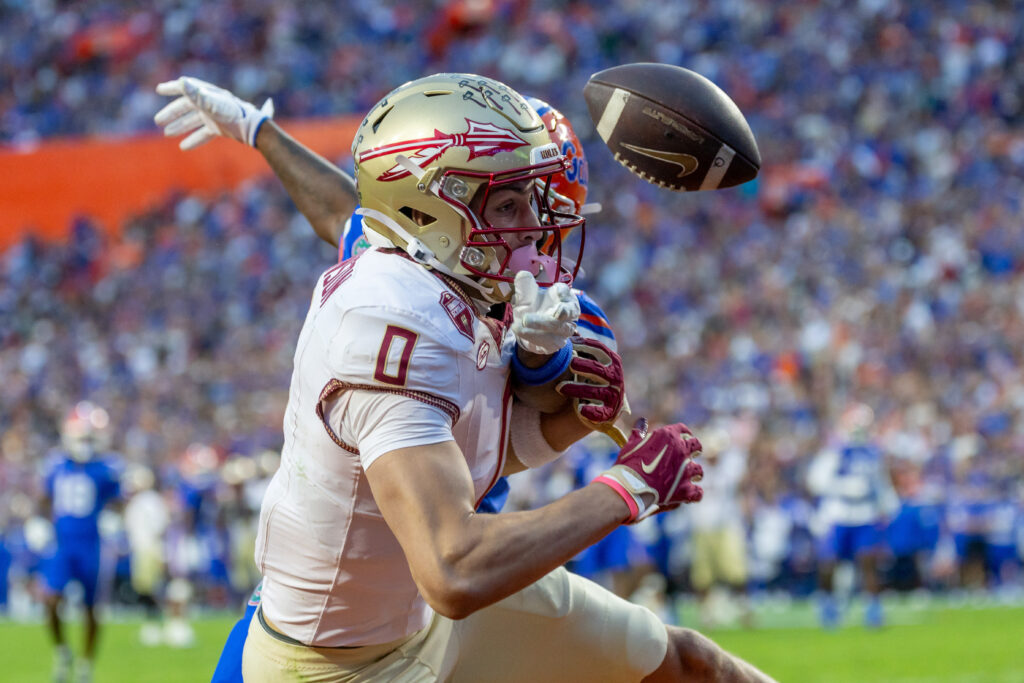 Florida State Seminoles wide receiver Duce Robinson (0) drops the ball during the second quarter against the Florida Gators at Ben Hill Griffin Stadium. Credit: Bob Kupbens-Imagn Images
Duce Robinson offers a rare blend of size and athletic fluidity that makes him a matchup nightmare, especially in the red zone. His background as a multi-sport athlete shows up in his coordination and ability to adjust mid-air. Florida State has leaned into his versatility, using him both as a traditional receiver and in hybrid roles. If he continues to refine his route discipline, his ceiling is among the highest in this group.
5. Charlie Becker
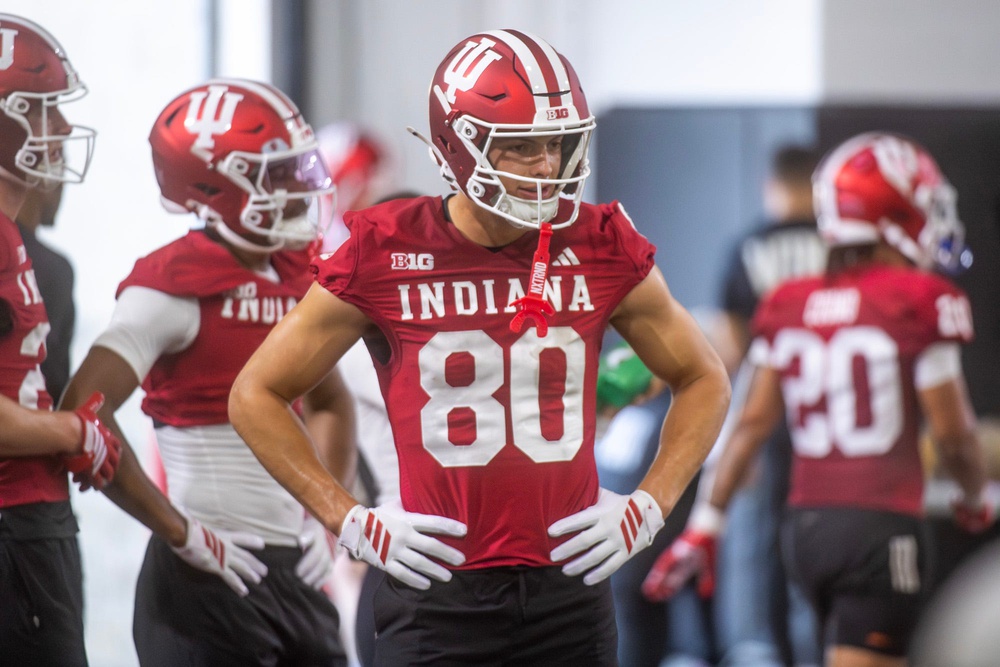 Indiana’s Charlie Becker (80) during Indiana University spring football practice on Thursday, March 26, 2026. Credit: © Rich Janzaruk/Herald-Times / USA TODAY NETWORK via Imagn Images
Charlie Becker has emerged as a polished and reliable target, showcasing strong hands and a nuanced understanding of coverage. He may not be the flashiest athlete on this list, but his precision and timing make him extremely effective in structured offenses. Indiana has benefited from his ability to move the chains and create separation through technique. Entering 2026, he projects as a high-volume producer with pro-ready traits.
6. Mario Craver
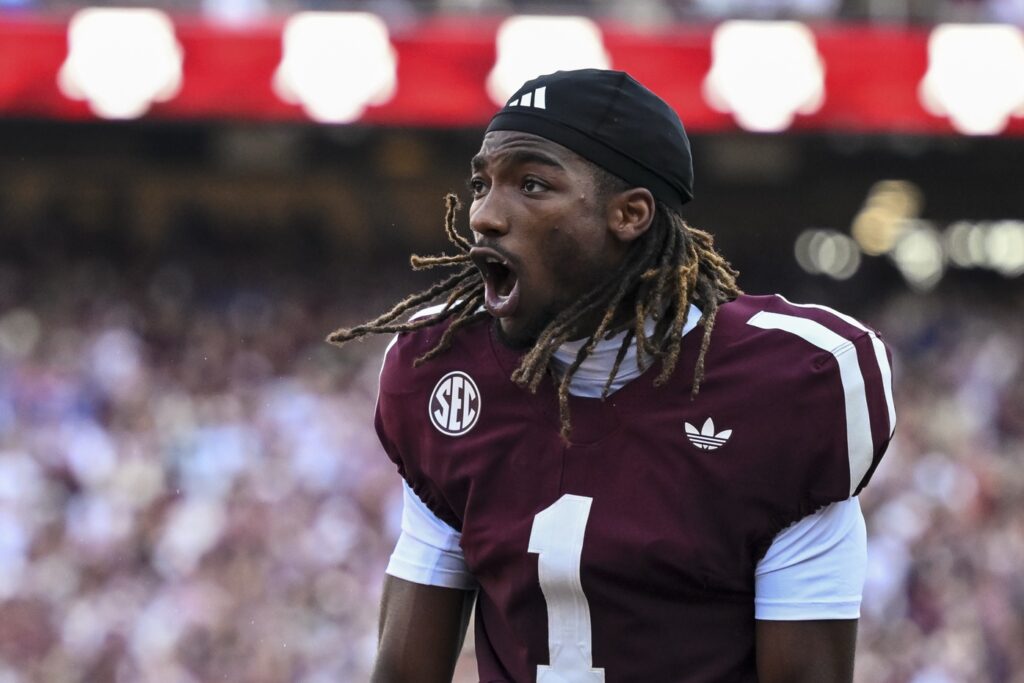 Texas A&M Aggies wide receiver Mario Craver (1) reacts prior to the game against the Florida Gators at Kyle Field. Credit: Maria Lysaker-Imagn Images
Mario Craver brings elite speed to the Texas A&M offense, consistently threatening defenses over the top. His acceleration off the line forces defensive backs to respect the deep ball, opening opportunities underneath. He has shown improvement in tracking and finishing plays downfield, making him more than just a vertical specialist. With continued development, he could become one of the SEC’s most feared big-play receivers.
7. Wyatt Young
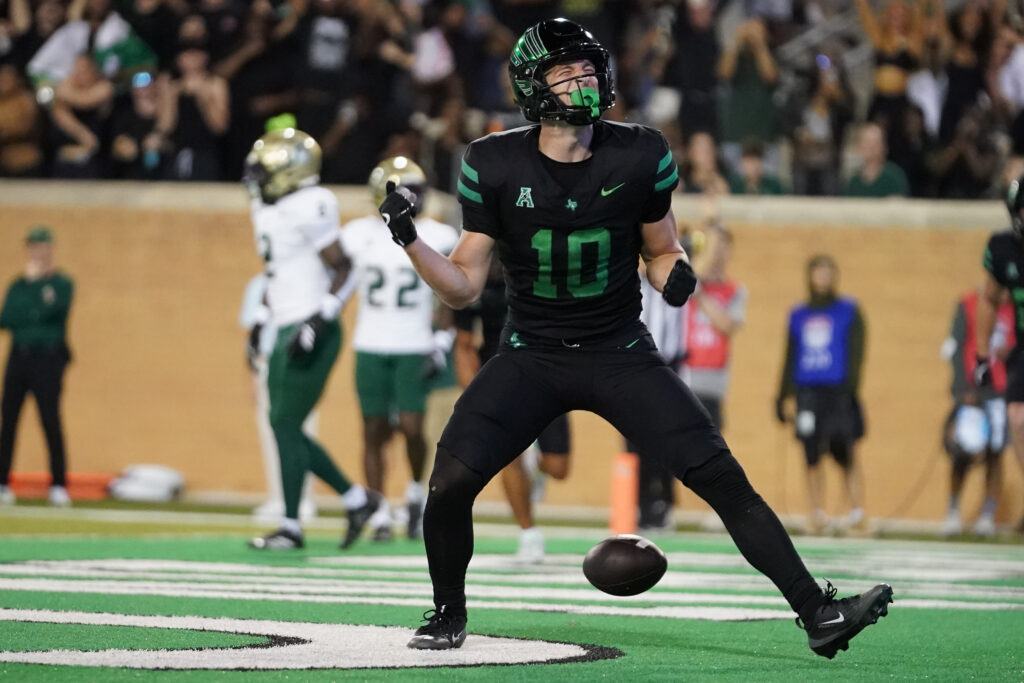 North Texas Mean Green wide receiver Wyatt Young (10) reacts after scoring a touchdown against the South Florida Bulls during the first half of a game at DATCU Stadium. Credit: Raymond Carlin III-Imagn Images
Wyatt Young is a tough, competitive receiver who excels in contested situations and plays with noticeable edge. His physicality at the catch point and willingness to work over the middle make him a dependable option in critical moments. Oklahoma State has used him as both a possession receiver and a situational deep threat. As he refines his route-running, his all-around game could take a significant leap forward.
RELATED: 10 most annoying people in college football media
8. KJ Duff
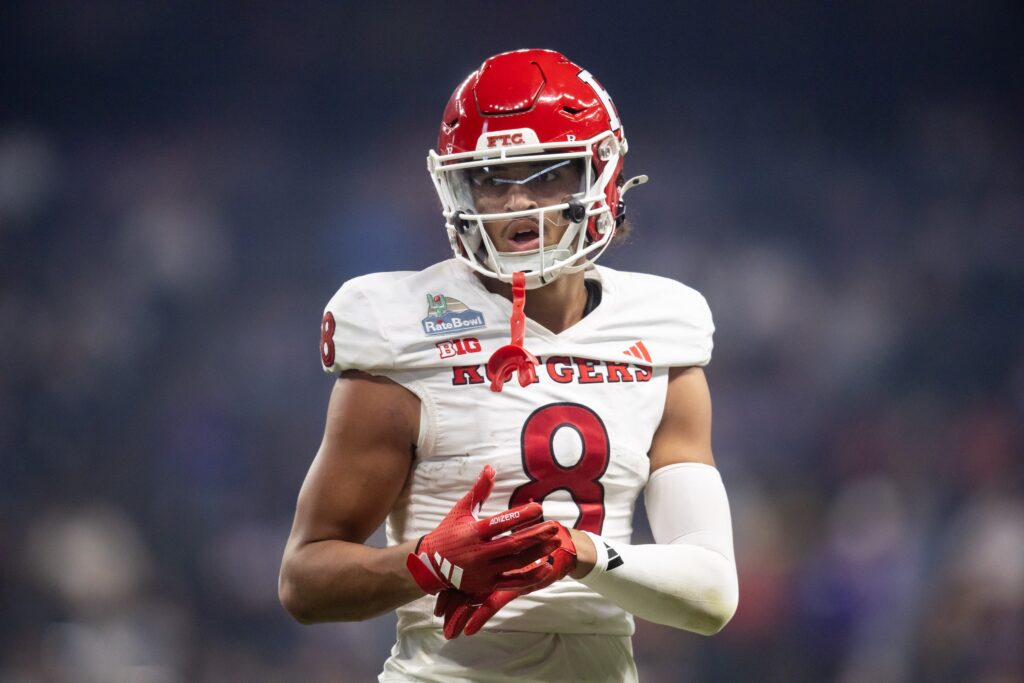 Rutgers Scarlet Knights wide receiver KJ Duff (8) against the Kansas State Wildcats during the Rate Bowl at Chase Field. Credit: Mark J. Rebilas-Imagn Images
KJ Duff has quietly developed into one of the most intriguing receivers in the Big Ten, combining athleticism with improving technical skills. His explosiveness allows him to separate quickly, particularly on intermediate routes. Rutgers has increasingly featured him as a focal point in their passing attack. If his production continues to rise, he could become one of the breakout stars of the 2026 season.
9. Ryan Coleman-Williams
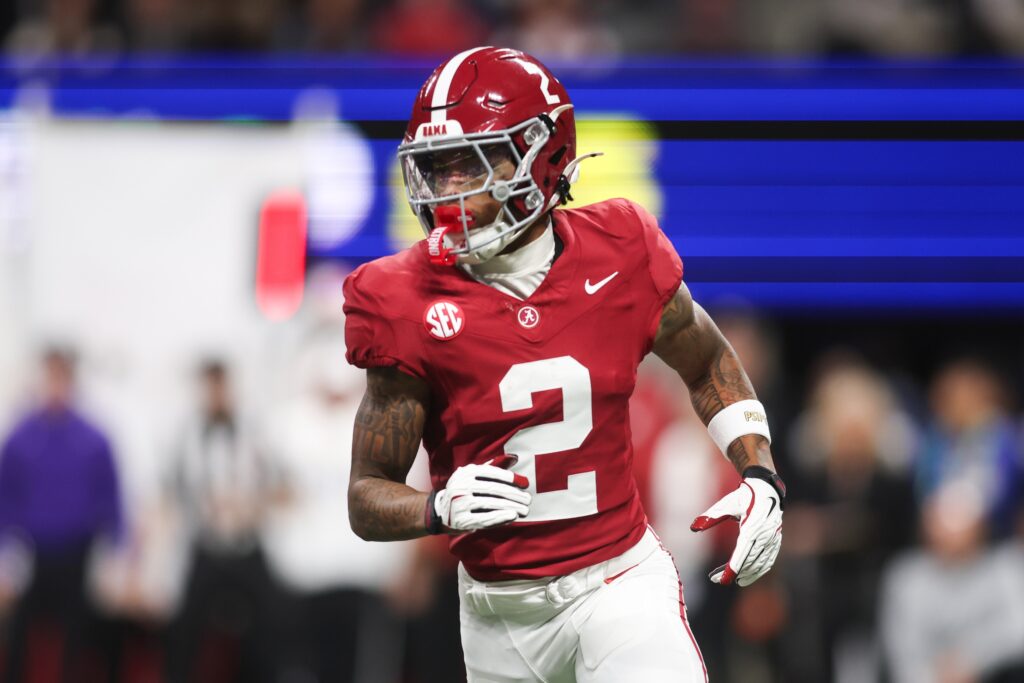 Alabama Crimson Tide wide receiver Ryan Williams (2) looks on during the first quarter against the Georgia Bulldogs during the 2025 SEC Championship game at Mercedes-Benz Stadium. Credit: Brett Davis-Imagn Images
Ryan Coleman-Williams fits the mold of Alabama’s recent wide receiver pipeline: fast, physical, and highly competitive. He shows strong hands and the ability to win in traffic, a critical trait in high-pressure SEC matchups. His route-running is still developing, but the raw tools are undeniable. With Alabama’s track record of receiver development, he could emerge as one of the nation’s premier targets.
10. Bryant Wesco
 Clemson Tigers wide receiver Bryant Wesco Jr. (12) runs with the ball during the first half against the Boston College Eagles at Alumni Stadium. Credit: Eric Canha-Imagn Images
Bryant Wesco is an explosive playmaker who thrives on speed and separation, particularly in Clemson’s vertical passing scheme. His ability to stretch the field forces defenses to adjust coverage, often opening opportunities for others. He has shown flashes of elite burst and tracking ability on deep routes. Entering 2026, refining his consistency and route detail could elevate him into the upper tier of college wideouts.
Conclusion
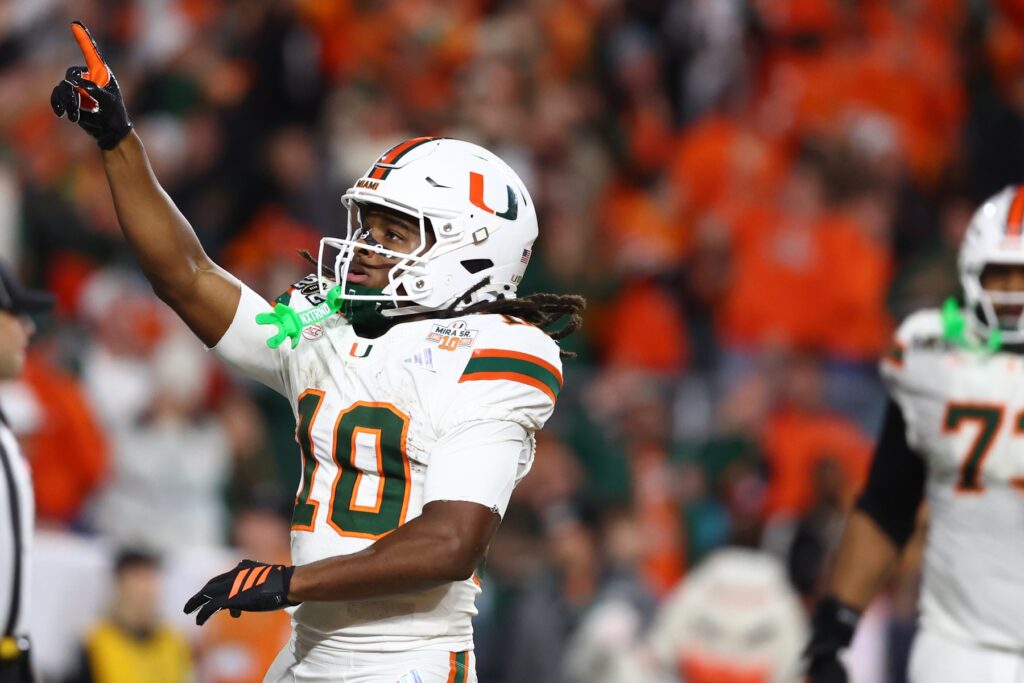 Miami Hurricanes wide receiver Malachi Toney (10) reacts after scoring a touchdown against the Indiana Hoosiers in the second half during the College Football Playoff National Championship game at Hard Rock Stadium. Credit: Mark J. Rebilas-Imagn Images
This group of wide receivers represents the cutting edge of college football’s offensive evolution, where versatility and explosiveness define elite play. Each player enters 2026 with the potential to elevate both their program and their professional outlook. If early projections hold, this class could leave a lasting imprint on the season—and beyond.