
The NFL Draft begins in two days. How will the Los Angeles Chargers utilize their five picks?
This is your final Chargers big board for 2026. Below are 100 prospects the team could target.
The Chargers hold the No. 22 pick in the first round, No. 55 in the second round, No. 86 in the third round, No. 123 in the fourth round and No. 204 in the sixth round. Their two most pressing needs are left guard and edge rusher. Behind those, the Chargers have less pressing needs at interior defensive line, cornerback and receiver. Most of the prospects below will fit into those five positions.
Last year, five of the Chargers’ nine selections were included in our final big board: running back Omarion Hampton, receiver Tre’ Harris, defensive lineman Jamaree Caldwell, edge rusher Kyle Kennard and tight end Oronde Gadsden.
We will pass over some of the highest-ranked players on Dane Brugler’s big board, as they are unlikely to be available to the Chargers at No. 22.
Onto the board …
Day 1Spencer Fano, OT, Utah
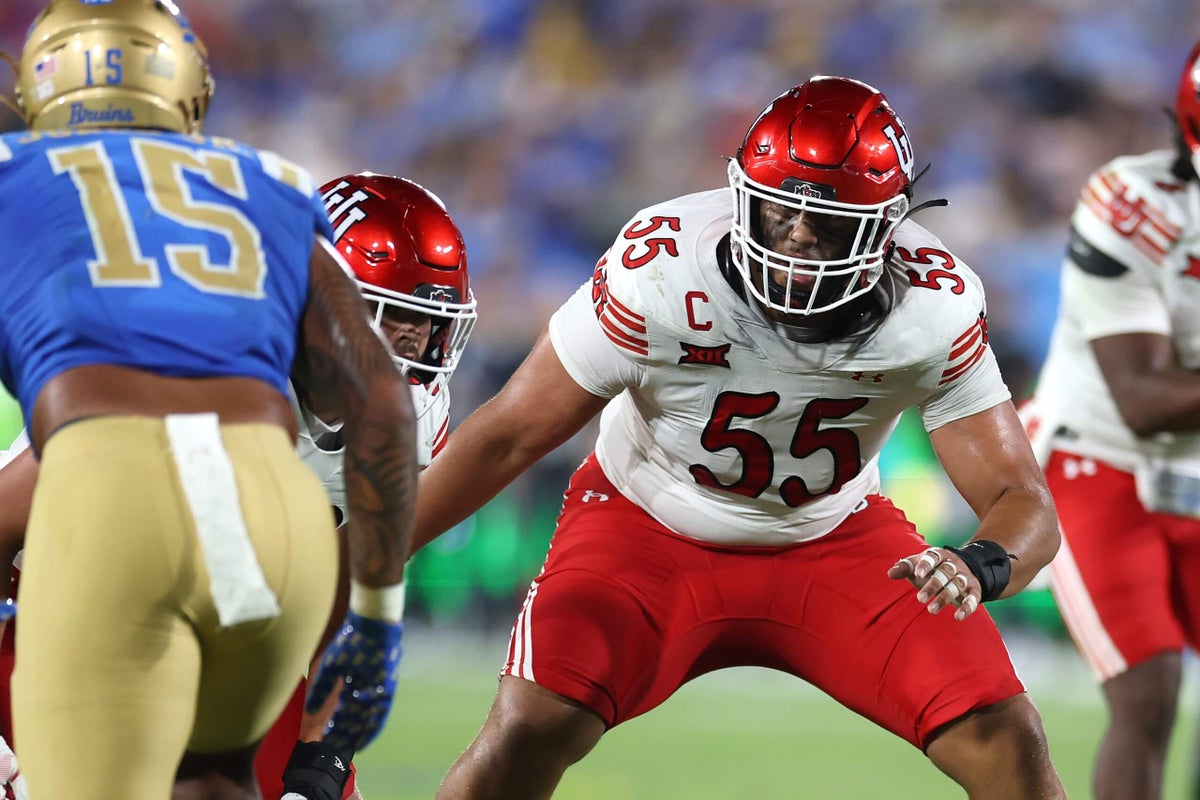
Fano is Brugler’s No. 8 overall prospect. He is the highest-ranked prospect on our Chargers board. He started all 36 of his games at Utah at tackle, including 24 starts at right tackle over his final two seasons. Brugler believes Fano can start at guard at the next level. He has the movement skills and athleticism to play in offensive coordinator Mike McDaniel’s scheme.
Vega Ioane, G, Penn State
Ioane falling to No. 22 is the dream scenario for the Chargers. Will he be there? The Chargers need to add a starting-caliber player at left guard at some point early in this draft. The starter at left guard right now is Trevor Penning. Ioane started 32 games at left guard for the Nittany Lions. He has an athletic, sturdy base, and he uses his lower body to drive defenders backward in the run game. He has the movement skills to reach difficult blocks and play in space, two key factors for offensive linemen in McDaniel’s system.
Jermod McCoy, CB, Tennessee
McCoy missed all of 2025 after suffering a torn ACL, but as Brugler notes, “McCoy’s 2024 tape is really, really good.” He is comfortable in press-man coverage and can smother receivers when he aligns close to the line of scrimmage. He can also trigger on routes in front of him. The injury situation comes with some risk. But I saw enough on tape in 2024. McCoy could be the No. 1 outside corner the Chargers have been searching for.
Keldric Faulk, edge, Auburn
Faulk is big, long, athletic and raw. He is a bit of an in-between prospect. He played from multiple alignments at Auburn, including on the edge and the interior. But he does not fall firmly into either of those buckets. The traits are very enticing, however. As Brugler wrote, “He has major upside.” If the Chargers are looking for an immediate-impact player, they might go with a different option. Faulk is more of a project.
Kenyon Sadiq, TE, Oregon
Sadiq is an obvious fit as a versatile piece in McDaniel’s offense. He can impact the game in various ways as a pass catcher, creating after the catch and pushing vertically. He can play from multiple alignments as a receiver. And I was pleasantly surprised by what I saw from Sadiq as a blocker. I view him as useful in this phase, but is tight end a luxury pick for the Chargers at No. 22 when they have more pressing needs?
Dillon Thieneman, S, Oregon
It is easy to see how Thieneman fits into the Chargers’ defense. Chris O’Leary is replacing Jesse Minter as coordinator. He coached for Minter with the Chargers in 2024 and will be running the same scheme. That means Derwin James Jr. will continue to play often in the slot. Right now, the Chargers have Elijah Molden, RJ Mickens and Tony Jefferson as options to play deep when James moves closer to the line of scrimmage. They don’t need to add another safety in this draft, but Thieneman could be the best player available when the Chargers are up at No. 22. He is very comfortable in zone. He has sound eyes. He can run the alley and make plays in the run game. According to Brugler, Thieneman “projects as a durable NFL starter.”
KC Concepcion, WR, Texas A&M
The Chargers should be looking to add a yards-after-the-catch weapon at some point in this draft. Addressing this need in the first round is a little rich for my taste. But I wouldn’t rule it out. Concepcion is instinctive with the ball in his hands, both after the catch and on end-arounds. “He is a versatile playmaker with an innate feel for getting open before the catch and creating after it,” Brugler writes.
T.J. Parker, edge, Clemson
Parker was the pick at No. 22 in my final mock draft. It is a deep edge class, and the Chargers should have options at this spot. Parker is my favorite edge fit in the No. 22 range. The Chargers must replace Odafe Oweh, who left in free agency to sign with the Washington Commanders. Parker plays with length and physicality as a rusher and run defender. I think he has polished hands. Parker “offers a reliable foundation built on leveraged power and a consistent motor that helps him make plays,” according to Brugler.
Omar Cooper Jr., WR, Indiana
Cooper is another receiver who thrives after the catch. He has impressive contact balance. “He projects as an inside-outside receiver who can be weaponized when featured,” Brugler writes.
Emmanuel McNeil-Warren, S, ToledoChris Johnson, CB, San Diego State
The Chargers could use some competition at outside cornerback, and Johnson would provide that. He has good recovery speed in the deep part of the field. He is disciplined in zone. He shows sharp instincts to close on routes in front of him, and he is comfortable in isolation situations as a man defender. “Johnson offers a combination of instinctive eyes and athletic movement skills that allow him to consistently make plays on the football,” according to Brugler.
Chase Bisontis, G, Texas A&M
Bisontis is the No. 34 player on Brugler’s big board. He started 22 games at left guard over his final two college seasons. He would give the Chargers the competition they are looking for at left guard. Bisontis has the athleticism and movement skills to play in McDaniel’s scheme. He is a “burly, sawed-off blocker with the body quickness and core strength to get the upper-hand in all phases,” according to Brugler. Is No. 22 too high to take Bisontis? The Chargers likely will miss out on him if they wait until No. 55 in the second round.
Caleb Lomu, OT, Utah
The Chargers might look at some tackles in the first round who could move inside to guard. Lomu is a really good athlete with the range the Chargers are looking for in McDaniel’s system. He lacks some power and a consistent anchor in pass protection, but it’s clear the Chargers are not prioritizing those traits in their offensive linemen in this new offense. “NFL teams are understandably intrigued by his movement ability,” Brugler writes of Lomu.
Avieon Terrell, CB, Clemson
Terrell has excellent eyes to play from depth in zone coverage and the foot quickness to mirror routes. He played both inside and outside at Clemson. He is a smaller corner, so he might not bring ideal press-man skills to the next level. But I like the fit in the Chargers’ defensive system.
Akheem Mesidor, edge, Miami
Mesidor turned 25 earlier this month, and age is a factor in his draft profile. But he has a physical, violent, energetic play style. He is disruptive as a run defender, and he has active hands as a pass rusher. He can make an impact right away.
Blake Miller, OT, Clemson
Miller was exclusively a tackle in college, and Brugler writes that there are “lingering questions about his position flex.” Different teams will have different projections about whether Miller can make a move inside. He is a solid mover and shows really strong hands.
Kayden McDonald, DT, Ohio State
The Chargers signed Dalvin Tomlinson in free agency to be their big, stout run stuffer on the interior. Do they feel like they need more players in that mold? Or will they be looking for more pass-rush upside? McDonald has “dominant run-game qualities,” according to Brugler. He is difficult to move off his spot, and he has a nose for the football in congested areas. His fit will depend on what flavor the Chargers are looking for on the interior of their defensive line.
Peter Woods, DT, Clemson
I was a little underwhelmed watching Woods, and Brugler put it best in his scouting report: “Draft projections for Woods will depend on a team’s willingness to grade to his flashes. He moves with big-man twitch and has the foot quickness to elude blocks in tight quarters. However, for a player with his explosive traits, he doesn’t have many quick wins on his tape.”
Malachi Lawrence, edge, UCFZion Young, edge, MissouriCashius Howell, edge, Texas A&M
Howell brings pass-rush upside and a diverse array of rush moves. He is twitchy and plays with a relentless motor, but he is not an impact player as a run defender. “His development in defending the run game will determine his pro ceiling,” writes Brugler. The Chargers are positioned to take more of a designated pass rusher to complement Tuli Tuipulotu and Khalil Mack, who are both elite run defenders. Howell is that type of player.
Christen Miller, DT, GeorgiaR Mason Thomas, edge, Oklahoma
Thomas is undersized, but is a feisty rusher with burst and motor. His initial fit as a rookie in the Chargers’ defense would be as a known-passing-down rusher. I have some worries about how his frame will translate to the next level. He measured in at the combine at 6-foot-2, 241 pounds. “Though he plays with grit,” Brugler writes, “his lack of length shows in the run game.”
Day 2Keylan Rutledge, G, Georgia Tech
If the Chargers do not come away from Day 1 with a left guard option, Rutledge is the player to target at No. 55. He is a fit for McDaniel’s scheme. He is a fit for Harbaugh’s play style. Rutledge plays with a mean, violent edge. He has really good feet, both in pass protection and as a lateral mover in the run game. “Medicals on his left foot are imperative,” Brugler writes of Rutledge. If those check out, the Chargers should be very interested.
Brandon Cisse, CB, South Carolina
Cisse is an elite athlete, but as Brugler writes, “There are holes in his game that create some doubt about his pro transition.” I thought he struggled, at times, to locate the ball and attack the catch point.
Chris Bell, WR, Louisville
Bell tore his ACL in November 2025, but as Brugler writes, he is a “dangerous run-after-catch weapon because of his ability to plant, go and pull away from pursuit.” I would wait until the third round to look for a receiving piece. I think the Chargers are in a good spot with their collection of young receivers. Nonetheless, Bell would be an interesting option in the second round.
Gabe Jacas, edge, Illinois
Jacas was my pick at No. 55 in my Mock 2.0. I love his violent play style, and I could see the Chargers being intrigued by the way he destroys blocks as a pass rusher and run defender. Of course, the Chargers could seek a different body type to complement the power of Mack and Tuipulotu. But physically imposing players like Jacas tend to have more potential for immediate impact at the next level.
Caleb Banks, DT, Florida
Banks is a big, powerful, athletic interior player with eye-popping flashes. It is easy to watch Banks and see traits that Chargers defensive line coach Mike Elston could mold into something special. Banks needs more polish and consistency to reach his full potential. He was also limited to three games in 2025 because of a foot injury. “It is hard to find 6-foot-6, 335-pound athletes with 35-inch arms and Banks’ level of ability,” Brugler writes. Banks underwent surgery in March after suffering another injury to his left foot.
Keyron Crawford, edge, Auburn
Crawford is a smaller speed rusher who can bend and close on the quarterback. He does not have the size to consistently set the edge in the run game, so he profiles more as a known-passing-down player — at least early in his career. But that skill set would fit. Crawford plays with an excellent pass-rush motor. As Brugler writes, “His effort consistently pops.”
Lee Hunter, DT, Texas Tech
At 6-3, 322 pounds, Hunter offers a huge frame with foot quickness and twitch. He has impressive penetration instincts as a run defender — shooting gaps, shedding and swinging past blockers, exploding upfield. Hunter also has the upper-body power and heavy hands to create knockback as a pass rusher. As Brugler writes, Hunter’s “pads get high in a hurry.” But I think Elston would have a lot to work with in Hunter’s package of traits.
Keith Abney II, CB, Arizona State
Abney shows the instincts and trigger that will fit well in some of the zone looks in O’Leary’s scheme. He is quick to diagnose from off alignments and he flies downhill to make tackles in space. As Brugler writes, Abney is a “little bit of a wild defender.” But I think the Chargers can harness this play style.
Emmanuel Pregnon, G, Oregon
Pregnon is big and powerful with heavy hands, and he has a sudden get-off as a run blocker, especially when pulling. But I would characterize his movement skills as more explosive than smooth. He has the athleticism to get to space but is not always consistent in fitting up blocks when he gets there. Pregnon is an aggressive finisher in the run game.
Dani Dennis-Sutton, edge, Penn StateDavison Igbinosun, CB, Ohio StateA.J. Haulcy, S, LSUGennings Dunker, G, IowaZachariah Branch, WR, Georgia
Branch has the potential to be a YAC monster in the NFL. Georgia used him often as a pre-snap move piece and also got the ball in his hands on screens. As Brugler writes, Branch’s “manufactured touches allowed him to show off his catch-and-burst ability.” He is a challenge to bring down in the open field. I like his contact balance. He was an elite tester, running a 4.35 40-yard dash and jumping 38 inches in the vertical leap. Branch and McDaniel seem like a perfect match.
Tyler Onyedim, DT, Texas A&MDerrick Moore, edge, MichiganRomello Height, edge, Texas Tech
Though Height is a slender edge rusher at 234 pounds, he has real juice. He is slippery and deceptive as a rusher. He looks to be shot out of a cannon coming off the ball, especially when pressing to the outside shoulder of tackles. Brugler put it best: “Height doesn’t have the size that teams desire for an edge player. But keeping him blocked is easier said than done.”
Brenen Thompson, WR, Mississippi State
As Brugler notes, Thompson led the SEC in receiving last season. He ran a 4.26 40 at the combine, and I think he provides more than just pure speed. I see some nuance in his route-running. “He is a smaller target but creates big plays at every level of the field,” Brugler writes.
Chandler Rivers, CB, Duke
Rivers is one of my favorite players in this draft. He is versatile and is a true playmaker in multiple phases. I could see him fitting into numerous roles within O’Leary’s scheme — outside, nickel, safety. I love him as a blitzer, too. “Rivers turns you off with his size, but then immediately draws you back in with his on-field play,” Brugler writes.
Jalen Farmer, G, Kentucky
Farmer has plus movement skills with the capability to reach block in outside-zone schemes. He tested off the charts at the combine, and he takes great angles as a run blocker. Farmer is a weapon as a puller. He shows an athletic base in pass protection.
Sam Hecht, C, Kansas StateBryce Lance, WR, North Dakota StateBud Clark, S, TCUMalik Muhammad, CB, TexasDaylen Everette, CB, GeorgiaDeion Burks, WR, OklahomaDay 3Austin Barber, OT, FloridaConnor Lew, C, AuburnTrey Zuhn III, C, Texas A&MChris McClellan, DT, MissouriBilly Schrauth, G, Notre Dame
Schrauth is a functional mover with good eyes and awareness in pass protection. I think he lacks some power and pop in the run game, and he struggles to fit up against twitchier players, especially when climbing to the second level. Injuries will be a factor with Schrauth, as he missed time in 2024 with an ankle injury and suffered a season-ending knee injury in 2025.
Genesis Smith, S, ArizonaBrian Parker, C, DukeKamari Ramsey, S, USCWill Lee III, CB, Texas A&M
I think Lee has outstanding coverage instincts. Though he is a little “wiry,” as Brugler writes, Lee is natural in coverage, both in man and zone. He earned the nickname “The Blanket” while in junior college at Iowa Western Community College. I think Lee could press for playing time on the outside as a rookie.
Nate Boerkircher, TE, Texas A&MFebechi Nwaiwu, G, OklahomaTacario Davis, CB, Washington
Davis would be a traits bet on Day 3. He is over 6-3. His arms are over 33 inches. He ran a 4.41 40-yard dash. The Chargers could really use a player with upside at outside cornerback to compete with Cam Hart, Tarheeb Still and Donte Jackson. “Davis has truly unique measurables for a cornerback, which work against him at times, but his size-speed traits and ball skills are worth the gamble,” Brugler writes.
Logan Taylor, G, Boston CollegeJulian Neal, CB, ArkansasLT Overton, edge, Alabama
Overton is a bit of a “tweener body type,” according to Brugler. But he provides upside if the Chargers come away from the first two days without an additional edge rusher. He is explosive, big, powerful and long. “Overton isn’t yet the sum of his parts and hasn’t turned the flashes into consistency (and there is no guarantee he ever will), but the potential is enticing from a player who’s still very young,” Brugler writes.
Gracen Halton, DT, Oklahoma
Halton finished second in pressures for Oklahoma in 2025 with 30, according to Brugler. He has an explosive get-off and a persistent motor. Halton does not have the size that coach Jim Harbaugh typically values on the interior defensive line, but I think the Chargers would be intrigued by his play style.
Devin Moore, CB, Florida
Moore has a lengthy injury history, but he is worth a bet on Day 3 because of his size and length. He could give O’Leary some press-man upside, and I also thought he looked comfortable in zone, including in a deep part of the field as an outside Cover 3 defender. Moore “is a good-sized cover man with the speed and ball skills to be a scheme-versatile developmental option,” according to Brugler.
Ephesians Prysock, CB, WashingtonDarrell Jackson Jr., DT, Florida StateJadon Canady, CB, OregonBeau Stephens, G, IowaKage Casey, G, Boise StateJakobe Thomas, S, MiamiCaden Curry, edge, Ohio StateJude Bowry, OT, Boston College
The Chargers could target some additional tackle depth late in this draft. Starting tackles Rashawn Slater and Joe Alt are both working their way back from season-ending injuries. Slater and Alt were both on the field Monday for the start of the Chargers’ offseason program. The Chargers re-signed Trey Pipkins III this offseason to be their swing tackle. Bowry would be a development pick. He also potentially has some flexibility at guard. Bowry’s “ease of movement stands out when operating in space,” according to Brugler.
Rayshaun Benny, DT, MichiganDallen Bentley, TE, UtahLatrell McCutchin Sr., CB, HoustonJoshua Josephs, Edge, TennesseeKendrick Law, WR, KentuckyNick Barrett, DT, South CarolinaKaleb Proctor, DT, Southeastern LouisianaParker Brailsford, C, AlabamaEli Heidenreich, RB, Navy
Heidenreich is the only running back on our list. The Chargers bring back Omarion Hampton and Kimani Vidal. They also signed Keaton Mitchell in free agency. I do not expect the Chargers to draft a true running back this year. Heidenreich is more of a gadget weapon, the type of player that could be very interesting in McDaniel’s offense. He aligned in the backfield, out wide, in the slot and inline in 2025. “Heidenreich has dynamic pass-catching ability that can be weaponized in a hybrid role,” Brugler writes.
Michael Taaffe, S, TexasAlex Harkey, G, OregonDeMonte Capehart, DT, Clemson
Capehart has very workable traits that are worth a flier in the later rounds. He “is a massive, powerful human who moves like a much smaller person,” according to Brugler. Character will be a factor, as Capehart as charged with unlawful possession of a firearm in 2024.
Jager Burton, C, Kentucky
If the Chargers can address left guard early in the draft, they will have one remaining need in their offensive line room: a backup center with guard flexibility. They signed Tyler Biadasz as their starting center in free agency. The current backup center is Josh Kaltenberger, a 2025 undrafted free agent who spent last season on the practice squad. Burton started 12 games at center for Kentucky last season. He also started 23 games at left guard and nine games at right guard over his college career. I like Burton’s movement skills.
Bryson Eason, DT, Tennessee
Eason has a lot of the traits the Chargers look for on the interior. He is big. He is long. He is explosive. He is powerful. Eason started his career as an inside linebacker before shifting to defensive tackle in 2022. He weighed in at his pro day at 330 pounds. I see traits that Elston can mold.
Landon Robinson, DT, NavyNadame Tucker, edge, Western Michigan
Tucker had 14.5 sacks while playing for O’Leary at Western Michigan last season. O’Leary was the Chargers’ safeties coach in 2024. He left in 2025 to call plays at Western Michigan. Easy to connect the dots here if the Chargers do not draft an edge rusher early. Tucker will turn 26 in June. His “high-effort pass rush can earn him a subpackage role,” according to Brugler.
Pat Coogan, C, IndianaDae’Quan Wright, TE, MississippiRene Konga, DT, LouisvilleTanner Koziol, TE, HoustonTJ Hall, CB, IowaBrandon Cleveland, DT, N.C. StateKaden Wetjen, WR, IowaJalen Huskey, S, MarylandLouis Moore, S, IndianaAndre Fuller, CB, Toledo