
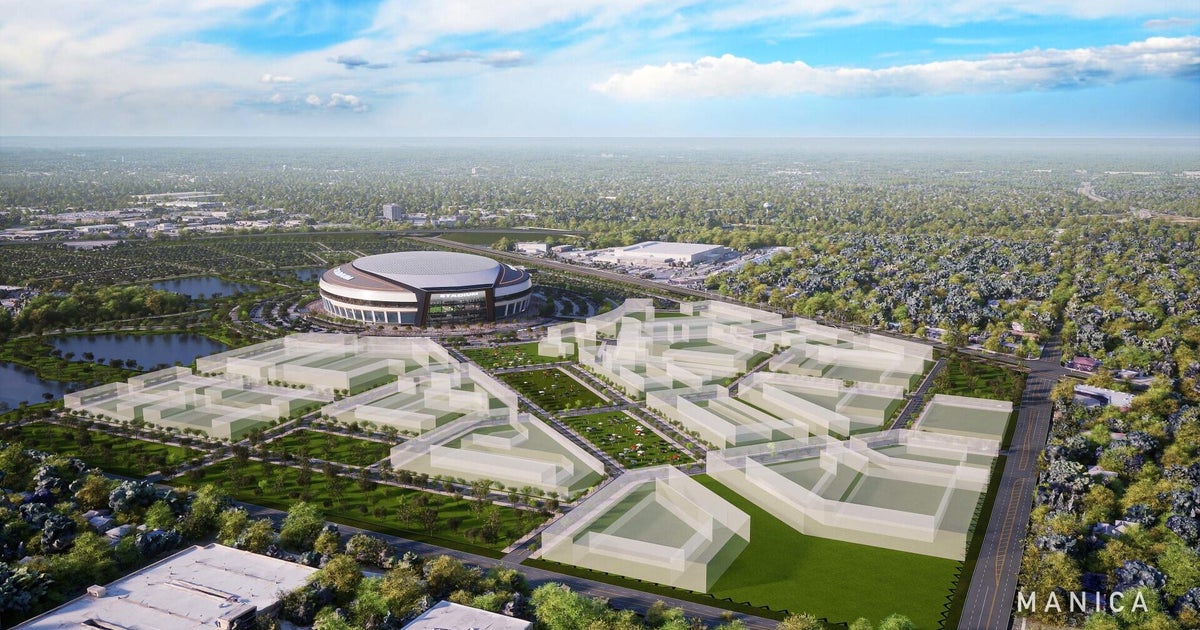
The Illinois House has voted to pass the latest proposed legislation aimed at helping the Chicago Bears move to a new domed stadium in Arlington Heights, rather than heading across the state line to Indiana.
Overnight, lawmakers filed a revamped version of the so-called “megaprojects” bill, with key changes aimed at winning the needed votes in Springfield.
The House passed the bill with a 78-32 vote on Wednesday night after the House Revenue & Finance Committee voted 15-5 earlier in the day to send the measure to the full House.
For leaders across the state, the legislation is more than just about keeping the Bears in Illinois, but spurring other major developments across the state.
Lawmakers are racing to pass the legislation before the end of the spring session in Springfield as Illinois faces the very real possibility of losing the Bears to Indiana.
The latest version of the bill is designed to clear a key hurdle the team says is necessary to move forward with a new domed stadium in Arlington Heights, but even with those changes, questions remain.
A late-night rewrite is putting new momentum and new scrutiny on Illinois’ megaprojects bill.
The updated proposal tightens the rules on who benefits and how.
The measure would allow megaproject developers to freeze property tax assessments for 25 to 45 years, and rather than paying higher property tax bills that would come with rising assessments, developers would be allowed to negotiate long-term Payments in Lieu of Taxes, or PILOT, with local taxing bodies.
Buckner, who has been leading negotiations on the megaprojects legislation, said the bill is about more than just the Bears, and said the bill will unlock economic developement in the state.
“We needed to create a streamlined, modernized statewide mechanism for megaprojects, huge developments across Illinois,” said Buckner. “Obviously, a lot of folks are talking about the Bears and Arlington Heights, but this is bigger than that. This is creating the framework so that we can have development come to our state and cities around the state.”
Other recent changes to the legislation include stronger language aimed at protecting local schools, including financial support if large developments drive up student enrollment.
Supporters of the legislation are also seeking to ease concerns about shifting the property tax burden onto regular taxpayers by including property tax relief in the proposal.
And there’s a growing focus on property tax certainty — not just for developers, but for everyday Illinoisans.
A total of 50% of the revenues from PILOT payments would go toward property tax relief. Of that fund, 60% would go toward property tax rebates for homeowners within the district where the megaproject is located, while the other 40% would go toward the existing Illinois Property Tax Relief Fund.
“If we have conversations about certainty and property taxes for corporations, companies, and developers, then we have that same conversation about property tax certainty for everyday Illinoisans who are struggling to make ends meet,” Buckner said.
The bill would also ban megaproject incentives from being used by data centers, and would include a sunset clause, under which incentives would expire after five years unless renewed.
Still, there’s hesitation, even among Democrats, especially in Chicago, where some lawmakers are wary of backing incentives that could help the Bears leave Soldier Field — a stadium taxpayers are still paying off.
“I mean, when the Bears leave, that’s a big void in Chicago, and so we’re looking at taking billions of dollars in taxpayers’ funds. That’s a problem,” said Illinois state Rep. La Shawn Ford (D-Chicago).
House Republican leaders broke off into a late-day caucus to debate the latest changes to the megaprojects legislation.
Brian Costin, deputy state director of Americans For Prosperity, a right-leaning grassroots government affairs organization, has been speaking with GOP leaders about their concerns. Their biggest fear is that any tax freeze for the wealthy could impact bills for Illinois homeowners.
“There’s no indication that property taxpayers are going to be treated well. We want to get as much protection in the bill as we possibly can as it moves forward,” he said.
Justin Marlowe, a public policy researcher with the University of Chicago, said before the vote that the effort to add property tax relief for homeowners could be key to getting the votes needed to pass the legislation.
“It really does represent a fundamental shift in the way that the state is now thinking in how the state is now competing for economic development,” Marlowe said.
The measure will now have to be approved by the Illinois Senate, which returns to session in Springfield on Tuesday. The latest changes also still need the blessing of Gov. JB Pritzker.
The governor’s office said in a statement:
“Governor Pritzker has been clear and consistent for years that the Bears should remain in Illinois, and that any legislation needs to protect taxpayers. Throughout the past few months, the Governor’s Office brought team leadership, local officials, and legislative partners to the table to craft a deal around public infrastructure improvements, property tax fairness, and affordability measures. Today is an important step, and the Governor’s Office looks forward to working with the Illinois General Assembly to advance a bill that reflects our shared priorities.”
The Bears bought the old Arlington International Racecourse property in Arlington Heights years ago, with plans to build a new domed stadium there. Pritzker and most state lawmakers have been vocal about not providing the NFL team with public funds to finance the stadium itself, but have been supportive of paying for related infrastructure.
There have been dueling proposals ever since, with some fighting to keep the Bears in Chicago proper, others fighting to help the stadium get built in Arlington Heights. But recently, Northwest Indiana has jumped into the fray, proposing sites for a new Bears stadium in Hammond.
Indiana state legislators recently passed their own bill to create a stadium authority to fund a new stadium in Hammond for the Bears using taxpayer dollars, but the Bears have yet to commit to any specific plan for a new stadium.
More from CBS News