
The New York Giants have selected just two offensive linemen in the past three drafts. They don’t have a single guard or center signed beyond this season. That’s why it was alarming when general manager Joe Schoen declared “mission accomplished” when discussing the offensive line last week.
With four veterans and 2023 second-round pick John Michael Schmitz, the Giants finally had a solid offensive line last season after a decade plagued by subpar line play. Now is not the time for the Giants to celebrate their progress. With eight picks in the draft, including two in the top 10, the Giants must prioritize the trenches.
The fifth pick seemed too rich for an offensive lineman in this class, so it appeared that the Giants were backing themselves into a corner of needing to take a guard with their second-round pick (No. 37). It was reminiscent of 2023, when the Giants entered the draft without a credible center on the roster and seemed to be banking on landing Schmitz with the 57th pick. When the Chicago Bears traded up one spot in front of the Giants, anxiety spiked in New York’s war room. The Bears took cornerback Tyrique Stevenson, allowing the Giants to land Schmitz, who has started 41 games over the past three seasons. If the Bears had taken Schmitz, the Giants would have taken wide receiver Jalin Hyatt, whom they traded up for in the third round, and been left to scramble for a center.
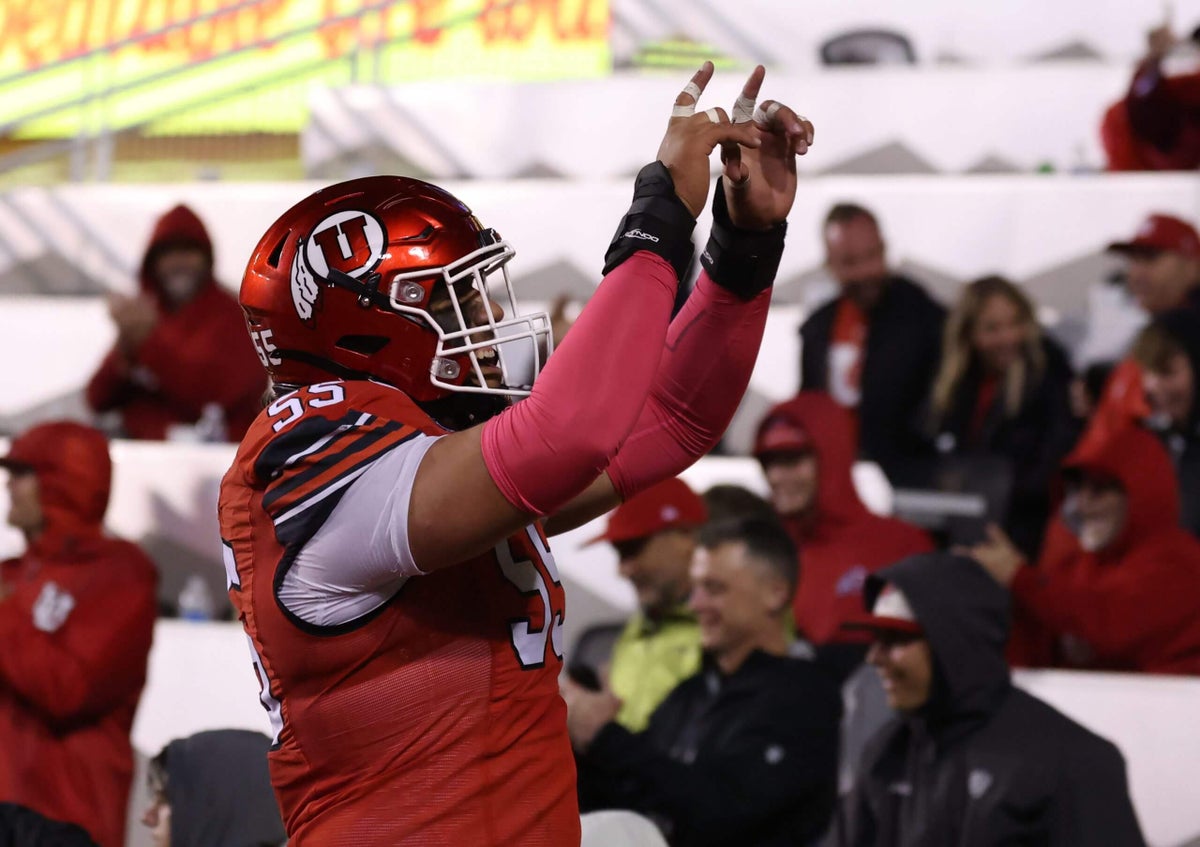
The Giants gained much more flexibility when they traded All-Pro defensive tackle Dexter Lawrence to the Cincinnati Bengals for the No. 10 pick. There’s a chance that all of the top offensive linemen in this class — Utah’s Spencer Fano, Miami’s Francis Mauigoa and Penn State’s Vega Ioane — could be available at No. 10. If the Giants want to make a major investment in their offensive line, the opportunity is now there.
Taking the success of the offensive line last season for granted would be misguided. For starters, the unit was exceptionally healthy. Greg Van Roten, who remains unsigned, played every snap at right guard for the second straight season. Left guard Jon Runyan and right tackle Jermaine Eluemunor each made 16 starts. Schmitz and All-Pro left tackle Andrew Thomas each made 13 starts.
Some intangibles from the past two seasons can’t be discounted. Van Roten is a journeyman, but the 36-year-old’s experience and intelligence are invaluable. Including the 2023 season in Las Vegas, Van Roten and Eluemunor have played next to each other for three straight seasons. The Giants also lost offensive line coach Carmen Bricillo, who players credited for the unit’s cohesiveness.
Schoen made the “mission accomplished” comment in response to a question about the possibility of using the fifth pick on running back Jeremiyah Love two years after letting Saquon Barkley leave in free agency. He spoke about how the roster is constructed differently now and proudly pointed to the Giants’ fifth-ranked rushing offense last season as evidence that the offensive line had improved.
“We upgraded the offensive line and improved the run game,” Schoen said. “I thought we had to start by doing that up front, and we did that.”
It’s inarguable that the Giants ranked fifth in the NFL with 2,195 rushing yards, but a closer examination raises questions about how much of that success was based on an elite offensive line. Volume played a role in the Giants’ ranking, as they were second in the NFL with 511 rushing attempts. Their 4.3 yards per carry average was tied for 16th in the league.
The Giants ranked 25th with a 37.8 percent rushing success rate (defined as a play that gains at least 40 percent of yards required on first down, 60 percent of yards required on second down and 100 percent on third or fourth down). They ranked 13th in EPA (Expected Points Added) per rush.
Jaxson Dart’s legs also boosted the overall rushing attack, as his 487 rushing yards ranked third among quarterbacks. The offensive line merits credit for Dart’s yardage on designed runs, but his scrambles were mostly independent of the run-blocking. When scramble yardage is removed from the Giants’ rushing total, they drop to 12th in rushing yards. The Giants had the third-best EPA in the league on quarterback scrambles.
There were real indicators that the offensive line boosted the running backs. The Giants ranked seventh in yards before contact per rush, and they had the third-lowest percentage of rushes for no gain or negative yardage.
Still, the offensive line is far from a finished product, especially with former Baltimore Raven Daniel Faalele, who signed a one-year minimum contract, penciled in as the starting right guard. Perhaps the Giants could turn back to Van Roten after the draft, but he’d only be a stopgap to get them through another season.
The Giants didn’t sign any guards for more than the minimum in free agency, so that leaves the draft as their only opportunity to make a major investment in the trenches this offseason. Upgrading the offensive line long-term should be the Giants’ mission, rather than being satisfied with last season’s adequate performance.
Trade-back scenarios for No. 5
It’s odd that there’s still so little clarity on what the New York Jets will do with the No. 2 pick since there’s no advantage to hiding their intentions. Quarterback Francisco Mendoza a lock to go first overall to the Las Vegas Raiders. Regardless, the expectation is that the Jets will select an edge rusher, whether that’s Texas Tech’s David Bailey or Ohio State’s Arvell Reese. That’s when the draft really gets interesting.
The Arizona Cardinals have the third pick and plenty of needs. They’re an obvious candidate to trade back, presumably to a team targeting whichever edge rusher remains on the board. If the Cardinals stay at No. 3, there’s growing speculation that they’ll select Notre Dame running back Jeremiyah Love.
Alternatively, the Tennessee Titans could go get Love, the best edge rusher available or Ohio State linebacker Sonny Styles with the fourth pick. If the Giants are hoping to trade back from No. 5, the best outcome seemingly would be for Reese or Bailey to slide to them. Wide receiver also could be a sleeper position to stir trade interest for the fifth pick, as there are receiver-needy teams positioned directly behind the Giants.
Here’s a look at potential trade packages the Giants could get if they trade back from No. 5 with another team in the top 10. Using the Jimmy Johnson trade chart as a guide, it would be reasonable for the Giants to trade the fifth pick to the Saints for the eighth pick, a third-round pick (No. 73) and a fourth-round pick (No. 132). Another option could be trading the fifth pick to the Kansas City Chiefs for the No. 9 pick, a second-round pick (No. 40) and a fourth-round pick (No. 109).
Reader, Beckham, and the lingering chance of a Thibodeaux trade
The Giants enter the draft with $18.6 million in salary-cap space after creating $13 million in cap savings by trading Lawrence. Much of that space will go toward signing the draft class, which is projected to count $14.9 million against the cap, according to Over the Cap.
They can afford a veteran defensive tackle after the draft, when signings no longer count in the compensatory pick formula. DJ Reader, who earned $11 million per year on his most recent contract, should end the Giants’ streak of minimum-contract signings. Reader should come cheaper than his last contract, but he has leverage based on the Giants’ desperation to replace Lawrence. The Giants also know he has interest from the Ravens, who hosted the 31-year-old for a recent visit.
There’s also the possibility of a reunion with Odell Beckham Jr., though the 33-year-old wide receiver is likely only in line for a minimum contract with incentives after sitting out last season.
Eventually, the Giants will need to create more cap space. Restructuring left tackle Andrew Thomas’ contract could create $11 million in cap space, giving the Giants breathing room to operate during the season.
The other avenue to create significant cap savings would be trading outside linebacker Kayvon Thibodeaux, whose entire $14.75 million cap hit would then come off the books. Thibodeaux has been available all offseason, but the Giants haven’t gotten a strong enough offer to pull the trigger.
It was reported earlier this week that the Lawrence trade makes dealing Thibodeaux less likely. While it’s understandable that the Giants wouldn’t want to subtract another quality player from their defense, the report doesn’t fully add up. If a team meets the Giants’ asking price, it wouldn’t make sense to hold onto Thibodeaux just because they dealt Lawrence. They play different positions, are different caliber players, have different contracts and have different financial implications in a trade.
The takeaway from the report is that the Giants still haven’t received any suitable offers — a Day 2 pick was believed to be their asking price. The Giants don’t need to dump Thibodeaux now, as he will still have value at the trade deadline. There’s also the possibility that Thibodeaux could land the Giants a comp pick if he departs in free agency next offseason.
How much room is left post-draft?
The Giants have 77 players under contract, which leaves 13 openings on their 90-man roster. They enter the draft with eight picks, although that number could change based on any trades. They currently have room for five undrafted free agent signings, but they could cut other players at the bottom of the roster to make room if they want to add more rookies after the draft.
The biggest perk of having a new coach is that teams are allowed to hold an additional three-day minicamp before the draft. The Giants’ voluntary minicamp wraps up on Thursday, and their mandatory minicamp is scheduled for June 8-10 before a seven-week break leading into training camp. There was no media access to this week’s minicamp, but cornerback Paulson Adebo was in attendance after missing the start of the voluntary program.