
EUREKA, Ill. — A desk with beat-up corners in a small office with cinderblock walls.
Yellow sheets from a mini legal pad strewn here and there.
Neatly written notes.
This one is about expectations for players and staff. That one is spring scheduling. Another has information from the team dashboard. Here is one from a check-in earlier in the day with a mentor about how he is living life.
And Dion Jordan, the new head football coach at Eureka College, is living life as no one could have imagined.
He works 12 hours a day, seven days a week, trying to turn around a team that lost 18 of 20 games over the last two seasons, pitching recruits without scholarships or sparkle, as Eureka competes at the Division III level with modest resources. Jordan lives in the president’s guest house on campus, makes $40,000 a year, launders socks and jocks, keeps track of his players’ workouts and asks recruits how they would feel about living in Central Illinois.
He carries the torch for a program that began in the 1800s. From 1928 through ’31, Ronald Reagan, known as “Dutch” in those days, played offensive and defensive guard for Eureka, and his name now adorns the athletic complex where Jordan’s team trains.
In the nearly 100 years since Reagan called Eureka home, it hasn’t changed as much as most of the country. Then, and now, the city is surrounded by thousands of acres of soybean and corn fields, and its timeworn farmhouses are inhabited mostly by working-class folk. According to the 2000 census, the population of Eureka is less than 1 percent African American, and living here has been an adjustment for Jordan, one of the few. Initially, he says he felt like he was in the middle of nowhere and had to get accustomed to being the only Black person in the grocery store or at the gas station.
Eureka is a long way from Ocean Drive in Miami Beach, with its international vibe, Art Deco buildings and white-sand beach. Back when Jordan was one of the most promising edge rushers in the NFL for the Miami Dolphins, he was ushered to the front of the line at the most exclusive clubs there. It’s where the glitterati sashayed, the bass thumped, the lasers pulsed and the trouble began.
That, he knows now, was not the real world. A small school in America’s heartland is as real as the world gets.
In a cramped equipment shed with a concrete floor framed by exposed two-by-fours, Jordan organizes jerseys in plastic bins, stacks shoulder pads on racks and hangs helmets on hooks.
And even if it’s hard to believe, there’s no place he would rather be.
On the hilly streets of Hunter’s Point in the shadows of Candlestick Park, young Dion Jordan saw things children should not. He saw them in his San Francisco home, too. His crack-addicted mother was a victim of domestic abuse, and his father was who knows where. When Jordan was 10, a homeless shelter was home for the holidays.
A couple of years went by, and his parents lost custody of their children. It appeared he and his siblings might end up wards of the state. Then, at a hearing to determine their fate, his aunt Yative Tiger surprised them.
“She came through the door,” he says. “I was so grateful. Beyond grateful.”
Tiger became their guardian, and they relocated to the suburbs of Phoenix, where stability helped Jordan become a star athlete. He dominated in track and field, finishing second in the state in the 100- and 300-meter hurdles while also excelling in the long jump and shot put. He was ranked the 10th-best tight end prospect in the country by Scout.com, as well as the sixth-best defensive end by 247 Sports.
Jordan had caught 26 touchdown passes in 19 games when he tried to siphon gasoline from an inoperable car with a vacuum cleaner after the sixth game of his senior season. A spark from the electrical outlet caused an explosion that blew out the windows of the garage and began a fire that engulfed him, giving him third-degree burns on his legs, hip, arms and shoulders. Jordan was airlifted to Maricopa Medical Center, where doctors warned he may not walk again. He spent six weeks there and still can describe the smell of burning flesh wafting through the hallways.
Until then, he couldn’t possibly understand how much resilience he had been blessed with. Or the power of a second chance.
Jordan returned to play football that season.
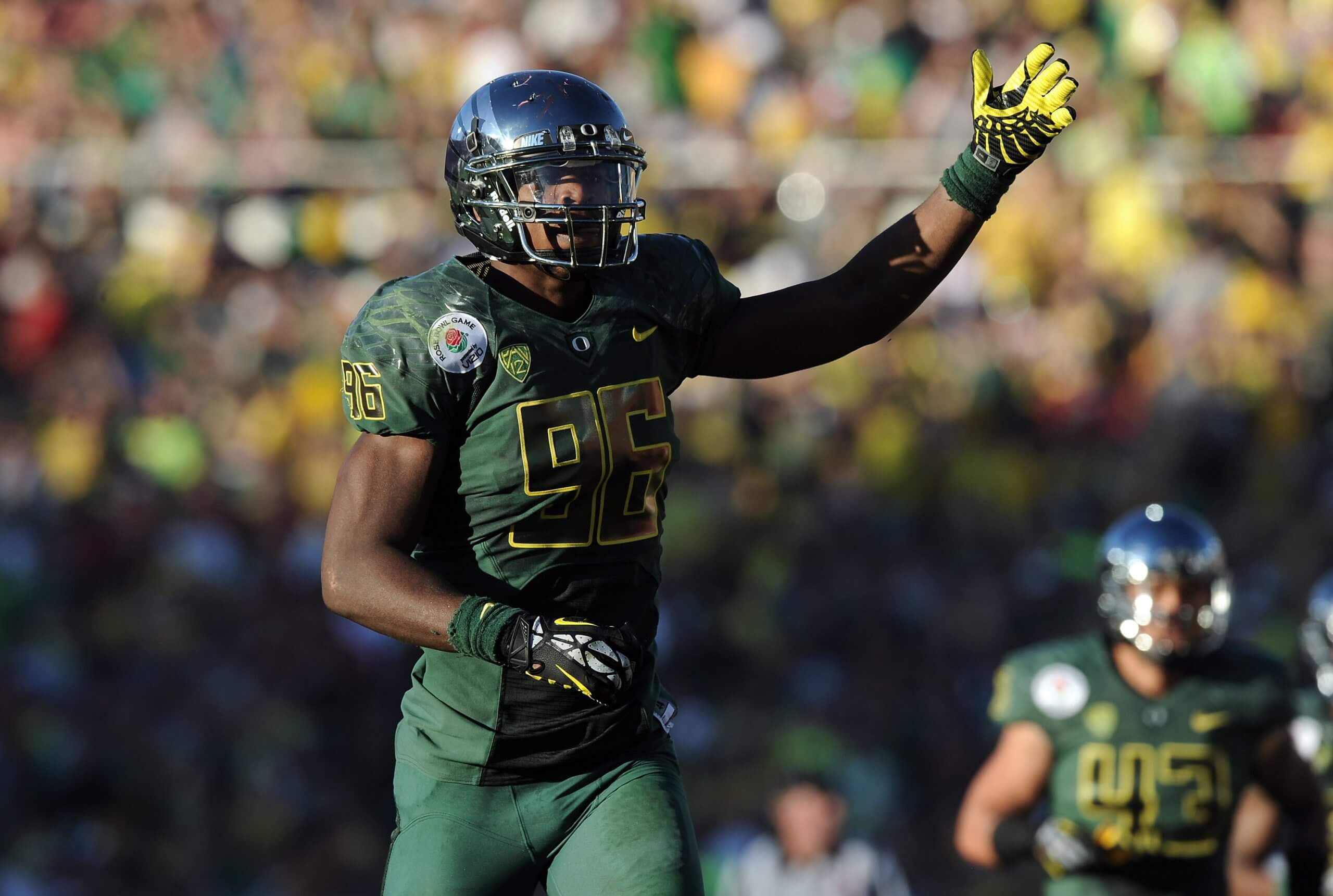
Dion Jordan earned first-team All-Pac-12 honors twice at Oregon. (Harry How / Getty Images)
At Oregon, he began as a tight end and became an outside linebacker who dabbled in special teams, earning first-team All-Pac-12 honors twice.
“The image that’s stuck in my mind is this guy who would be the third pick of the draft being the first guy down the field on kickoffs and in conditioning drills,” said Kyle Long, who was his locker mate at Oregon. “In practice, they do these reps a dozen times, and he won every single one of them on a team of track stars.”
Effort and attitude endeared Jordan to all corners of the locker room, and his teammates gave him a leadership award. But it was his physical attributes that captivated NFL scouts. At the scouting combine, Jordan’s wingspan measured 81 inches, which meant he could almost get his hands on a quarterback in the pocket from a hashmark. He accelerated to 10 yards in 1.57 seconds, faster than any wide receiver at the combine, as well as most jet skis. His body fat reportedly was 3.8 percent, not much different from that of an elite bodybuilder during peak week.
The Dolphins traded up to take Jordan with the third pick of the draft. Long, chosen 17 picks after Jordan, says he thought Jordan was a “sure thing” in the NFL. And he wasn’t alone. ESPN’s Mel Kiper Jr. ranked him the fifth-best player in the draft and called him the kind of pass rusher quarterbacks always account for. Mike Mayock, then an analyst for NFL Network, said, “This young man, I think he’s got the potential to be the player that I compare him to, which is Jason Taylor.”
When he arrived at the Dolphins headquarters for the first time, Jordan was offered jersey No. 99 — the same number the Hall of Famer Taylor wore for Miami.
He refused, but even wearing No. 95, the expectations were oppressive and the circumstances challenging. At Oregon, Jordan was a stand-up outside linebacker in a 3-4 front, and the consensus was he needed to be used the same way in the NFL. The Dolphins, however, played a 4-3 front and made him a hand-in-the-dirt defensive end even though he weighed just 240 pounds. He gained weight as he was instructed, and when he reached 250, his speed was diminished.
After the combine, Jordan underwent surgery to repair a torn shoulder labrum, and when the NFL season began, he was neither as healthy nor as strong as he wanted to be.
“My competition knows what’s going on and they are taking advantage of it,” Jordan says. “The people in the building don’t give a s—. They don’t care if your shoulder’s hurt. ‘Figure it out how to rush. We’re paying you to play.’”
In meetings, Jordan sat in the row behind Randy Starks, a veteran defensive lineman. One day, Starks turned around, pointed at Jordan and told him to sit next to him. Starks had a notepad on which he took meticulous notes. He handed the notepad to Jordan.
“Now you will write notes for me, too,” he told him.
It was the beginning of a practice that served him well, and still does.
Starks remembers Jordan working hard and doing everything right — he approached challenges with humility, stayed after practice to work on coverage against tight ends and brought Five Guys burgers on the team plane for the veterans when he was told to do so.
But two sacks in 16 games overshadowed everything.
“I wasn’t playing free,” he says. “I was in my head too much. You feel me? And then it affected my body.”
After his rookie season, he says he took a muscle relaxant that he didn’t have a prescription for and was drug-tested the following day. That put him in the league’s drug program, which meant frequent testing. The failed test, along with the sunshine, South Beach and the songs of sirens created a spiral.
“I started playing the victim card,” he says. “It was ‘why me?’ So I’m gonna drink more because I can’t get in trouble for drinking. And then there were party drugs.”
Another test came back positive for MDMA, better known as ecstasy. He says it was the first time he tried it. The result was a four-game suspension at the start of his second season. Another two games were added to the suspension after he failed another test, reportedly for marijuana.
He never was deep into drugs, he says — he only dabbled. But drinking, admittedly, was his downfall. He’d drink anything just to drink, and the more he drank, the more depressed he became.
“I should have been focusing on what it is to be a pro,” he says. “I didn’t know how to structure myself, how to be disciplined.”
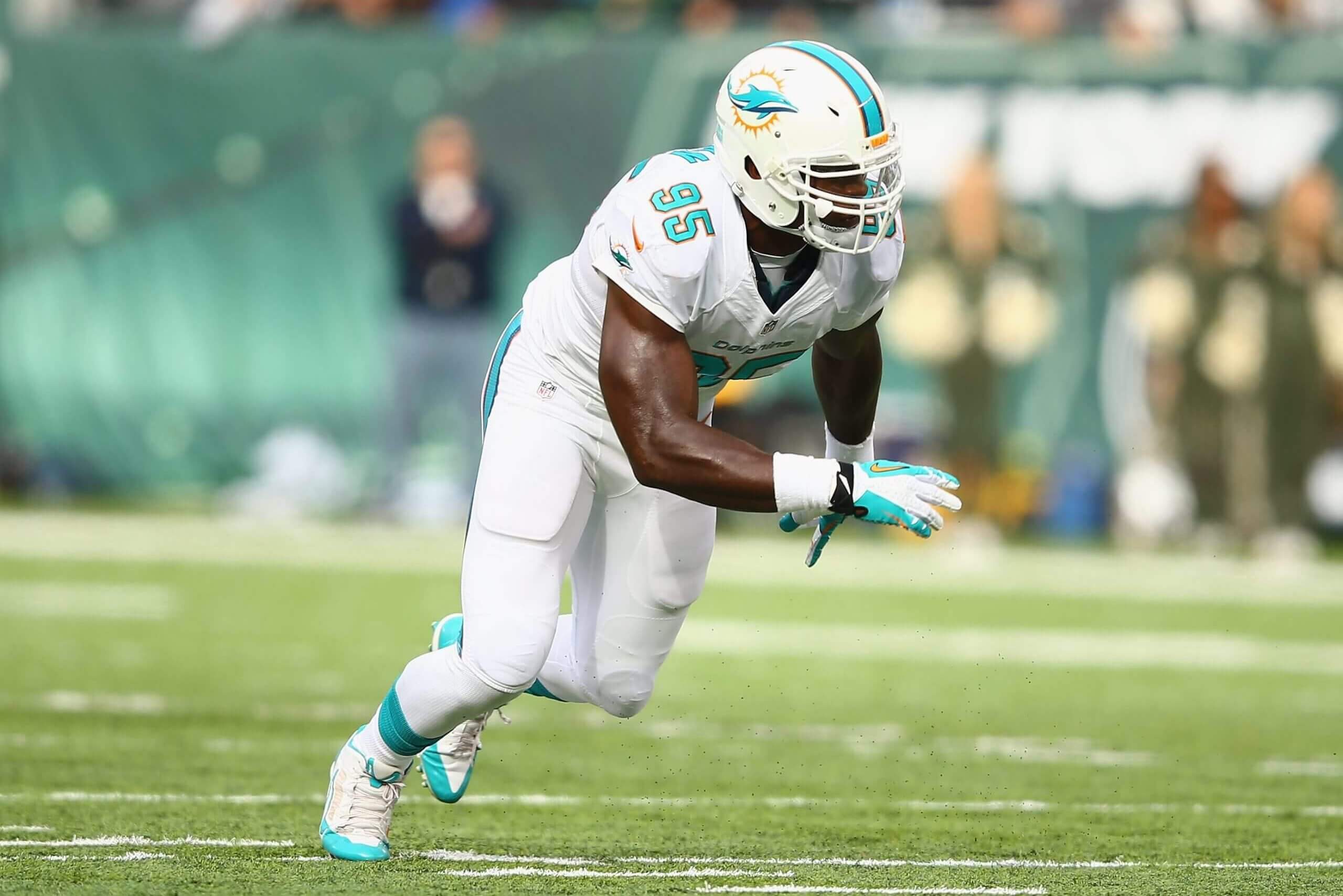
Dion Jordan failed to live up to his lofty draft position with the Dolphins, who cut him after two years. (Al Bello / Getty Images)
When they partied together, Starks kept one eye on Jordan and then put him in a car to make sure he went home before the witching hours. Starks wasn’t always around, though, and the Dolphins cut him after Jordan’s second year.
Not long after, one of the urine samples Jordan provided for a drug test was diluted, which is considered a positive test. He was not allowed to play the entire 2015 season, but it felt more like a depression than a suspension.
“It’s like you were kicked out of your castle and you have to look in from the outside,” he says. “You had no contact with anybody in the building outside of your teammates, and a year goes by slowly.”
Jordan didn’t return messages, and he took to binge drinking alone. His agent, Doug Hendrickson, told Sports Illustrated he looked homeless, and Jordan cried in his arms for 20 minutes. Hendrickson introduced him to Tareq Azim, a trainer and counselor who helped Jordan get back in shape, encouraged him to do one good deed every day (he once bought 100 Subway sandwiches and distributed them to people experiencing homelessness) and strengthened his faith.
Hopes were high again when Jordan was reinstated in 2016, but he tore his meniscus while training on his own and then had surgery that turned out to be more extensive than anticipated. Desperate to return to action, he kept training, doing more harm.
“I’m out there at camp the first couple of weeks trying to do drills, and I’m falling over,” he says.
Another knee operation was necessary before the season began, this one microfracture surgery that left him on crutches for a month and a half. He didn’t play a game for a second straight year. Instead of attending the team’s playoff game against the Steelers as was expected, he walked off. His lowest point, he calls it.
“I had been there for 20 weeks,” he says. “I checked out, packed all my s— and went back to California. I had dug myself a hole and wanted to get out, but I knew it wasn’t going to be there.”
In the offseason, he failed a team physical and was cut. Promise was renewed when he signed with the Seahawks, but shortly after he arrived in Seattle, it was determined that he needed additional knee surgery. Knee and neck issues limited him to five games that year. There was more knee surgery the following spring, followed by another season of struggles.
Next came another failed drug test, this one for taking Adderall without a prescription. Jordan says he was not diagnosed with attention deficit disorder, but he thought the medicine could give him an edge, so he took it for two weeks before testing positive. The price was a 10-game suspension.
“A dumb, dumb mistake,” he says. “It was trying to find a way around hard work to get what I wanted out of football because my body was essentially not allowing me to do what I wanted to do.”
By then, the hope he had represented had faded, and it was just a matter of how much longer. He played a couple of years with the Raiders and 49ers, had a couple of tryouts, then vanished. By then, Jordan had played 63 games while missing 66 because of four suspensions and injuries. It had been eight hard years, a domino effect of bad decisions and bad breaks, and Jordan was done with trying to be Jason Taylor.
“I was pushing myself mentally and physically really hard and got to the point where I didn’t want to keep putting myself through some of that,” he says. “I was like, ‘I want to breathe.’”
For a long time, Jordan didn’t like himself any more than most Dolphins fans did. He could think of himself only as Dion Jordan, football player.
But the struggle that had defined him ultimately refined him.
Through football, Jordan learned what accountability looks like. Failing those drug tests forced Jordan into counseling and therapy, and it went on for years, sometimes twice a day. There was 30-day inpatient therapy, 30-day outpatient therapy and therapists living with him. Some he did on his own.
“I’m Dion, and I am an alcoholic.” That was him.
He learned to understand himself, to love himself.
“I knew I deserved to be in the NFL,” he says. “I was good. And I had one of the best opportunities in the world. It was the biggest blessing at the time I ever had. But I didn’t use it the right way. I just feel bad for young Dion for putting himself through that.”
A fence separates a football field from the stands at a park in Gilbert, Ariz. For a year or two after he retired, Jordan sat on the spectator side of the fence watching his little cousins play. But he was still “the football guy” to everyone.
Jordan didn’t like it. He wasn’t interested in being associated with football. Being retired gave him a peace he’d never felt before. He spent quality time with his mother and father, both of whom changed their lives for the better. He grew Spread Your Wings, his non-profit that focuses on youth mentoring, and worked with the Arizona Burn Foundation.
Then his aunt had a talk with him.
“Dion,” she told him, “you’ll never be able to run away from it. Why not lean into it?”
So he jumped the fence one day and helped coach the kids. He didn’t realize it at the time, but that’s really when he was born again.
When he wore a helmet, Jordan loved being a teammate more than he loved being a player. It was relationships within the game that lit him up. Being a coach brought back that joy.
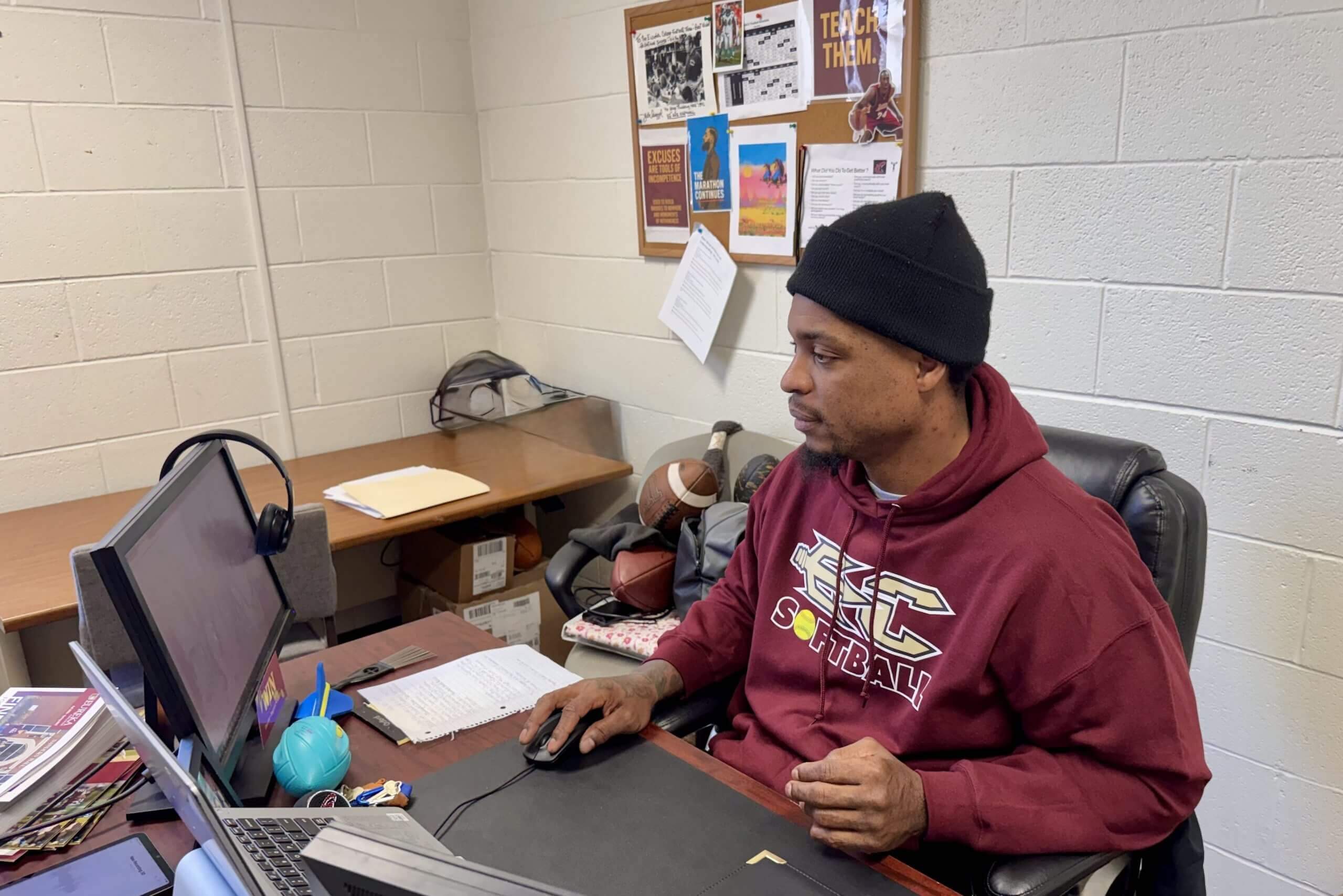
Eureka College football coach Dion Jordan wants to help his players find their purpose like he found his. (Dan Pompei / The Athletic)
Thankfully, there was Starks, whose picture in a Dolphins uniform is on the corkboard behind Jordan’s desk. When Starks became the head coach at Eureka in 2024, he asked Jordan to join him as an assistant. Jordan wasn’t looking for a job, but he accepted one that paid $600 a month. When Starks left to become Maryland’s defensive line coach in February, Jordan replaced him as head coach.
Starks thought Jordan could bring out the best in college players, and perhaps more importantly, he believed Jordan could find his purpose through coaching.
“He cares, he knows football, and he has life experience,” Starks says. “Just because you haven’t done everything right your whole life doesn’t mean you can’t be a good coach. In fact, if you haven’t done everything right, you probably can reach somebody that someone with a cleaner track record can’t.”
Jordan, who says he hasn’t had an illegal substance in about a decade and hasn’t had a sip of alcohol since arriving in Eureka more than two years ago, considers being a coach a sacred trust. And a man whose name is mostly associated with unrealized potential is bursting with possibilities again, a 36-year-old rookie.
When he started out at Eureka, he rehearsed his recruiting lines before making a call, then read “Never Split the Difference,” a book on persuasion.
Making no concessions to that knee, which now is arthritic, Jordan brings juice to the practice field as coaches who were players not long ago often do.
But he is the type of coach who does his best work one-on-one.
“He’s talking to multiple young men daily,” says Patrick Jordan, a 61-year-old retired policeman who joined Jordan’s staff and has had three of his grandsons play on the team. “He tries to get them in the right direction.”
Dion Jordan could talk about what it was like to be blocked by Nate Solder, who must have weighed as much as a commercial safe. Or how he thought he was working hard until he saw Richard Sherman, Kam Chancellor, Michael Bennett and Cliff Avril take it to another level. Or why being Fred Warner’s teammate was awesome.
His players sometimes question him about other aspects of his NFL life, not that they need to with ChatGPT at their fingertips. He answers honestly, believing that his missteps can be avenues for education.
In his conversations with his student-athletes, Jordan stresses being goal-oriented, dependable, respectful and punctual. He tells them about the importance of believing in something more powerful than them, than this. There is advice on girls. He tells them to call their loved ones. Jordan wants to know what they are putting in their bodies and how much rest they are getting. Classwork, that’s a big one. He has convinced some of his athletes to stay in school.
He wants to help his players find their purposes the way Starks helped him. And more. His goal is to win multiple national championships. The plan is to help athletes get to the NFL, make money like he made, and have fun doing it. Then he wants to open a place where young people can come during downtime and be encouraged and coached in their passions — art, music, science, sports, whatever.
Jordan, not the same as he was, is not yet what he plans to be.
“And this,” he says, “is what God wants me to do to get better.”
There’s a chill in the air on a gray day as Jordan walks from his office to the Reagan Athletic Complex, and a squirrel digs in hard dirt covered by brown grass for a nut that isn’t there. A student approaches from the other direction. To the student, Jordan isn’t the NFL player who should have been Jason Taylor.
“Hey,” the student says, “how you doing, Coach Dion?”
And they smile.