
The Chicago Bears are still mulling their stadium options in Hammond and Arlington Heights, so Lake and Porter county officials have some time to consider the taxes proposed as part of the state’s financial plan to bring the team to Indiana.
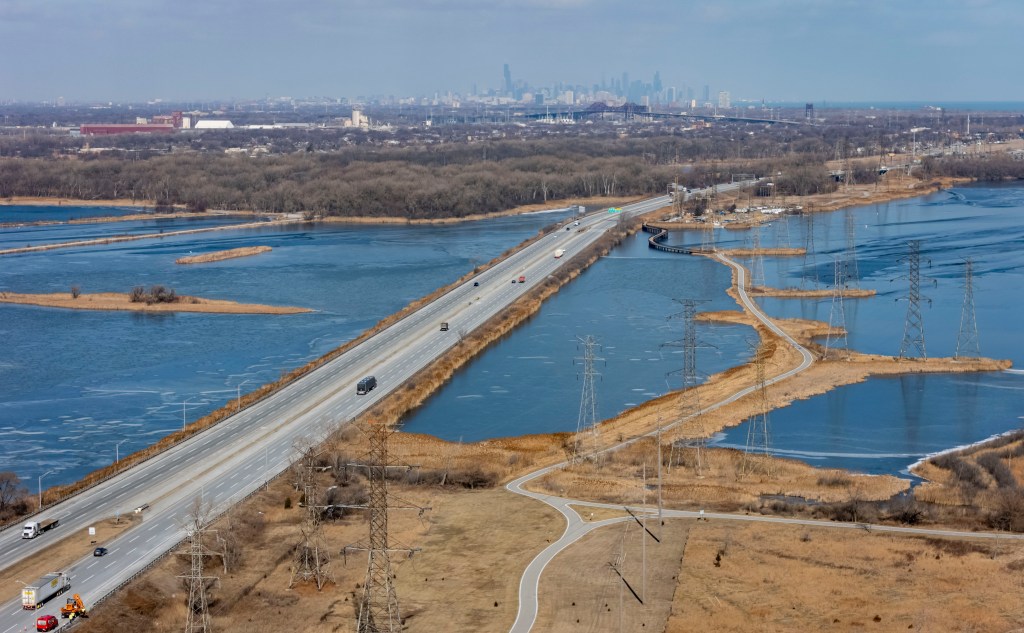
Under Senate Enrolled Act 27, a stadium authority bill that will create the financial structure for a stadium for the Chicago Bears, the team will be able to move forward with a proposed stadium near the Wolf Lake area in Hammond.
The Chicago Bears are willing to invest over $2 billion in the stadium. The state will invest around $1 billion in the stadium through various financing avenues, House Speaker Todd Huston, R-Fishers, previously said.
What to know about the Chicago Bears’ possible move from Soldier Field
The state has asked Lake and Porter counties to adopt a 1% food and beverage tax and for Lake County to pass a 5% innkeepers tax. The counties have until June 30, 2027 to approve the taxes, according to the bill’s fiscal note.
If both counties approve a 1% food and beverage tax, they could generate between $12 million to $18 million annually. The innkeeper’s tax could generate $5.4 million annually, according to the fiscal note.
Lake County Council President Christine Cid, D-East Chicago, said the council has time to pass the food and beverage tax and the innkeepers tax.
“It’s premature to consider either a food and beverage tax or an increase in the innkeeper’s tax until the Chicago Bears sign an agreement with the state to relocate to Hammond,” Cid said. “It’s really moot at this point. I know the legislation is there. I know when they sign that’s when the discussion should start.”
Porter County Council President Andy Vasquez said the Porter County Council hasn’t discussed the food and beverage ordinance yet, and it won’t before the end of this year because new board members will be elected in the November election.
Vasquez, who lost his reelection bid in Tuesday’s primary, said he would support an ordinance for a food and beverage tax because it could help the county amid its projected financial losses as the state begins to implement property tax cuts.
“It’s in the best interest in the long run,” Vasquez said of the ordinance.
But, Vasquez said he wouldn’t bring up the ordinance before leaving office in January because he won’t be on the council to monitor the ordinance’s impact.
“I think I should be held accountable,” Vasquez said. “I can’t vote for it because I won’t be here. Those who pass it must be held accountable.”
The state will issue a bond for the construction of the stadium, which will be repaid through Hammond’s 12% admissions’ tax, once the city council passes it, and a Professional Sports Development Area specialized tax district, Huston said.
The admissions tax will generate around $12 million when the facility begins holding events. But, the revenue could be higher depending on the type of events held in the stadium, according to the fiscal note of the bill.
The bill allows the Hammond city council to designate a stadium development district within the city but that can’t include areas of the PSDA. Under the stadium development district, at least 12% of the allocated property taxes have to be transferred each year to the city of Hammond’s general fund, according to the fiscal note of the bill.
To further support infrastructure costs, the state has renegotiated its lease with the Indiana Toll Road.
The Indiana Finance Authority approved a resolution on April 14 to allow the Indiana Toll Road to increase tolls by at least 1.5% or by inflation, whichever is greater, twice a year in exchange for $700 million in payments.
The resolution allows for the Indiana Toll Road’s private operator to increase tolls twice a year, beginning December 31 this year and then every six months after that, according to the resolution passed by the Indiana Finance Authority.
The operator will pay IFA $700 million: $300 million within 30 days of the resolution going into effect, then another $200 million within a year of the first payment, and another $200 million within two years, according to the resolution.
The resolution also stipulates that the toll road operator has to pay at least $25 million in capital improvements to the Indiana Toll Road within five years.
The money will go into a special payment reserve fund and can be spent on transportation and infrastructure projects in Lake, Porter, LaPorte, Elkhart, LaGrange, Steuben and St. Joseph counties, according to the resolution.
Indiana Gov. Mike Braun signed Senate Bill 27 into law in February moments after the state Senate gave the bill its final approval.
“We made it clear from the beginning that Indiana is open for business. I’m thrilled to sign Senate Bill 27 to create the framework to build a new world-class stadium in Northwest Indiana. Now let’s get this across the goal line,” Braun said in a statement on social media with a picture of him signing the bill.
After Braun signed the bill into law, the Bears sent out a statement: “Indiana has taken important steps over the last few months, and we are grateful for the leadership reflected by Governor Braun signing SB 27, establishing the framework for a stadium development in Northwest Indiana. We continue to work on the necessary due diligence and appreciate the ongoing engagement with Indiana state and local leaders.”