
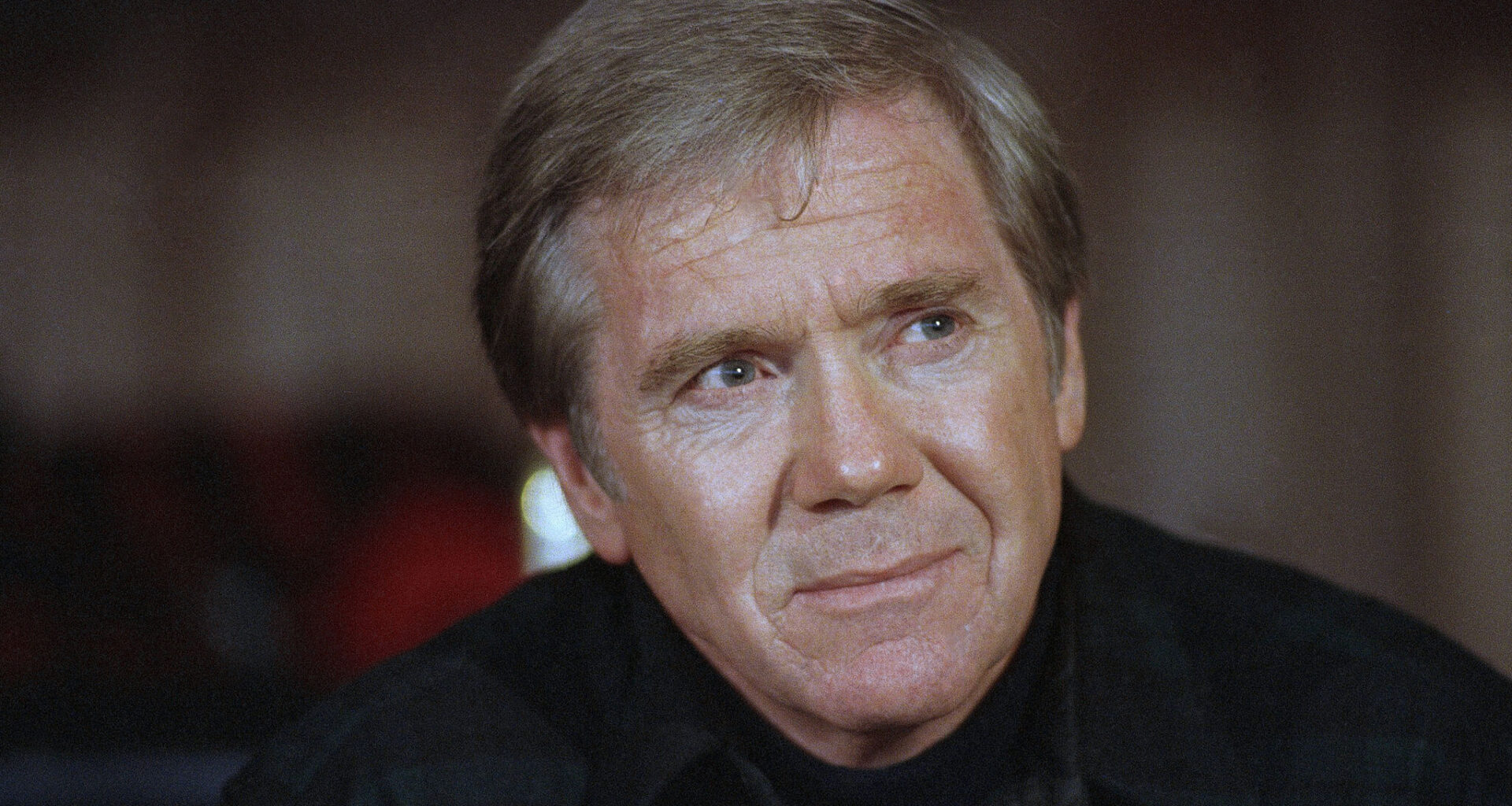
Raymond Berry, head coach of the New England Patriots, is shown in 1986. (AP Photo)
AP
NEW YORK — Raymond Berry, the Hall of Fame wide receiver and SMU alum who teamed with Baltimore quarterback Johnny Unitas for one of the NFL’s greatest passing combinations has died, according to an announcement on Monday. He was 93.

Berry, a two-time NFL champion as a player who later coached the New England Patriots in Super Bowl XX, died on May 25, the Pro Football Hall of Fame said.
His family said in a statement that Berry died peacefully at home in Murfreesboro, Tennessee, surrounded by family, including his wife of 65 years, Sally.
Article continues below this ad
Berry was a member of the NFL’s All-Decade team in the 1950s, as well as a member of the league’s 75th anniversary all-time team and the 100th all-time team. He had a coaching career that spanned from 1968 to 1992. He started his coaching career as a receivers coach with the Dallas Cowboys.
A 20th round draft pick out of SMU in 1954, the Texas native became a model for the virtues of hard work and determination.
“In college he had really not reached his peak, being the fact that we were more of a running offense then,” Berry’s SMU quarterback Duane Nutt once said of Berry. “He was not really noted for his pass catching as he was known later when he played for the Baltimore Colts.”
Berry spent one season at a junior college before he arrived at SMU. He was given, in his words, a “tryout scholarship.” He spent his first season as a redshirt, scout team wide receiver. If that year didn’t go well he said he would’ve had to go to a smaller school. Instead, Berry would stay at SMU, earning second-team all-conference honors in 1954.
Article continues below this ad
Berry was inducted into the school’s Hall of Fame in 2010. He was inducted into the Texas Sports Hall of Fame in 1974.
Berry had average speed, legs of different length, a bad back, imperfect eyesight and oversized feet that in high school gave him the nickname “Skis.” But he willed himself into a superstar through exhaustive preparation and study, whether using Silly Putty to strengthen his fingers or simulating entire games on the practice field.
“I was surprised and I think Raymond was surprised by how good he got,” Nutt said, “but he understood hard work and consistent diligence to be perfect in everything he did paid off for him.”
Berry was among the most reliable receivers in league history, rarely dropping a pass and fumbling only twice, according to the Pro Football Reference website. By his own count, he developed 88 separate routes to get open, his discipline so unyielding that even his coach, Weeb Ewbank, tried to intervene.
“One of his drills was to throw nothing but bad balls to him,” Ewbank told the Los Angeles Times in 1986. “I used to have to run John (Unitas) off — ‘John, you’ve had enough throwing today’ — and he’d say, ‘Yeah, talk to that guy out there.’”
Article continues below this ad
Over 13 seasons, Berry caught a then-record 631 passes (Jerry Rice is now the all-time leader, with 1,549) for 68 touchdowns, led the NFL in receptions three times and played in six Pro Bowls. A mainstay of one of the league’s top offenses, featuring Unitas, running back Lenny Moore and offensive lineman Jim Parker, Berry played on championship teams in 1958 and 1959 and a runner-up in 1964.
Berry was inducted into the NFL Hall of Fame in 1973. The Colts retired his uniform number, 82. SMU retired his number from college, 87.
“The SMU Football family mourns the loss of Raymond Berry,” the school wrote in a social media post. “A member of the Pro Football Hall of Fame and one of six Mustang football players to have his jersey retired, Berry left an undeniable impact on the SMU community. Our thoughts and prayers are with his loved ones during this difficult time.”
A performance for the ages
Berry was at his peak during a signature day in NFL history: the 1958 finale against the Giants at Yankee Stadium, an overtime classic nationally televised and often cited as one of the sport’s greatest games and the starting point for the league’s rise over the following decades.
Article continues below this ad
Playing against the NFL’s toughest defense, Berry caught 12 passes for 178 yards and one touchdown, including three consecutive receptions during the 86-yard drive that tied the game 17-17 in regulation and two crucial grabs during the 80-yard drive that gave the Colts a 23-17 win. The league’s first championship to finish in overtime helped make Unitas a hero and Berry his ideal target.
“We worked and got to know each other and developed timing you just can’t get any other way,” Berry later told the radio program Sports & Torts. “He (Unitas) knew I was going to be there when I was supposed to be there and he knew I was going to catch it.”
A fight for drug testing
After retiring in 1967, Berry was a wide receivers coach for the Dallas Cowboys, Cleveland Browns and New England Patriots, and head coach of the Pats from 1984-89. He finished 48-39 with New England, including an 11-5 season in 1985 and a trip to Super Bowl XX. But the Patriots were crushed 46-10 by the Chicago Bears and soon after the Boston Globe revealed that several New England players had drug problems. Berry had been a source for the Globe story and his push for the team to agree to drug testing was forcefully opposed by the NFL players union.
Berry, a deeply religious man who didn’t drink or smoke, had personal reasons for supporting drug treatment. His former Colts teammate, All-Pro defensive tackle Gene “Big Daddy” Lipscomb, had struggled with addiction.
Article continues below this ad
“They didn’t help him, they just cut him,” Berry told The Patriot Ledger in 1986. “Three years later, he was dead.”
Berry married fellow Texan Sally Crook in 1960. They had three children.
He was born in Corpus Christi in 1933 and would credit some of his success to his high school coach, his father, Mark Raymond Berry, who taught his son the basics of football even if he didn’t play him much. He attended Schreiner College in Kerrville for a year before transferring to SMU, where during one crucial game he fumbled twice, mistakes he vowed not to commit in the pros.
With the Colts, he caught only 13 passes in his rookie season, but the following year the team signed a free agent quarterback cut by the Pittsburgh Steelers — Unitas. The two soon began practicing together.
Article continues below this ad
“I didn’t know my butt from first base about how to run pass routes,” Berry told Sports & Torts. “If you saw both of us in training camp in 1956, you may have gone away sobbing. We were two pitiful football players, good grief.”
Staff writer Joseph Hoyt contributed to this report.