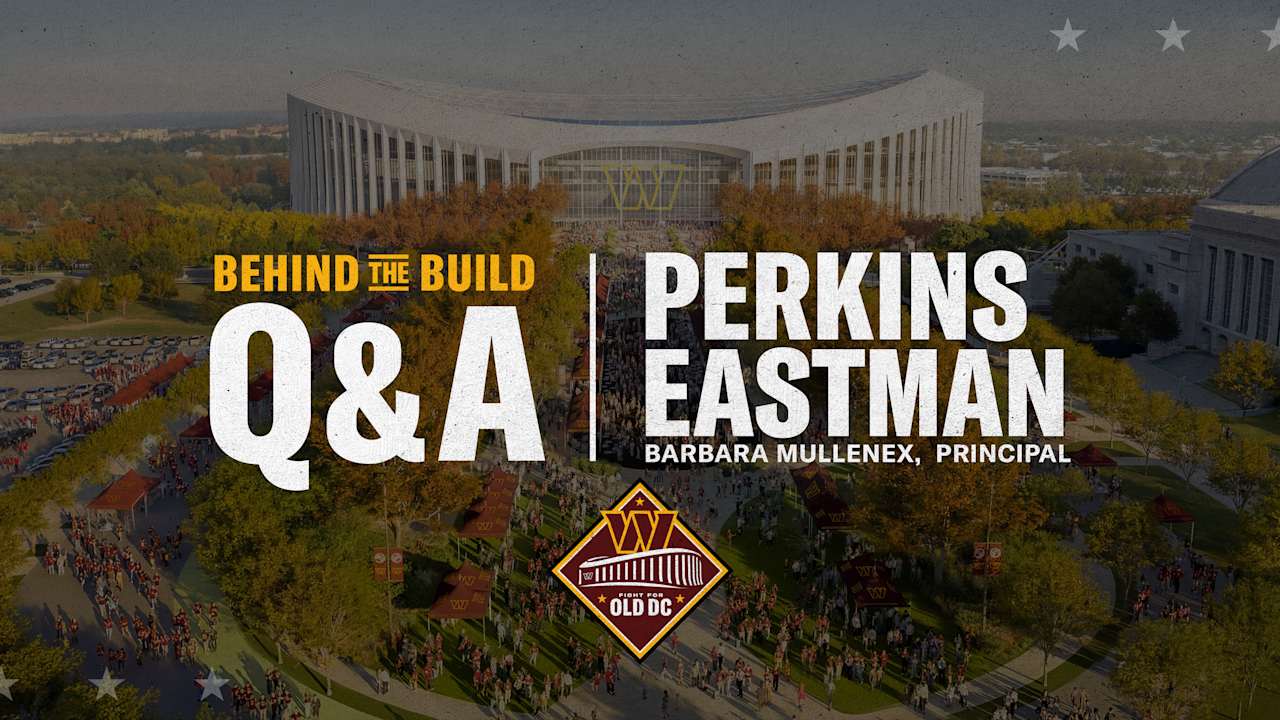
Q: What makes Perkins Eastman stand out as an urban design firm?
A: “I think it’s a deep understanding of urbanism and a deep understanding of what’s possible. We understand the city very well. We understand the interests that come from a lot of sides, the community side, the mayor side, the Council side, and how you create something that works for everybody.
I think one of the most important decisions we made at the very beginning was to reuse all the infrastructure that we could. We made the decision of, ‘We have to work with this infrastructure because this is there.’ And if we want this to happen, we have to be practical about making it happen.”
Q: How are you thinking about a year-round destination when you work on the master plan?
A: “One of the things we always said at the Wharf was, ‘It has to work on a cold rainy day in February.’ The Wharf was going to work during cherry blossoms, you didn’t have to do anything during that time, but how do you get people there on a cold winter day? And I am always stunned and amazed and thrilled when I go there at random times during the year, and it’s so active.
The way to activate this neighborhood around RFK is to make it a place that people want to go to on a cold rainy day. And in that setting, the stadium becomes kind of like a backdrop, kind of like how the Lincoln Memorial is a backdrop. There have to be connections from the neighborhood, through the site, around the stadium to all these amenities so that you kind of use the stadium as a place to orient yourself and then discover all these other things. And these other things have to be at the scale and kinds of places people want to be.”
Q: How would you describe the stadium site on the roughly 355 days a year where there isn’t a Commanders home game?
A: “I think it will be really activated as a community hub for the Capitol Hill neighborhood. People need outdoor space, and it’s going to be a great place for families. It’s going to have more amenities that people in Capitol Hill and Ward 7 can enjoy every day, like grocery stores, restaurants, places for their children to play. Maybe you say, ‘Hey, let’s ride our bike over to the Wharf, get a coffee. There’s a great bike shop there. We could walk along the river, maybe grab a kayak. And ‘Hey, we get to walk around the stadium. That’s really cool.’ You’ll have all these things for people to do and imagine.”
Q: In what ways are you bringing the community into your work?
“One of the things we started with is making a list of all the community groups that we could find and started paying attention to what their concerns are. We’ve had lots of community meetings, and I think we have a good track record of getting community agreement and community support for things. I learned a lot from [D.C. real estate developer] Monty Hoffman at the Wharf — I think they had something like 600 community meetings. Learning what’s important to residents, local businesses, churches, the community garden folks…and that goes back to the advantage of us being so embedded in D.C. We understand it. Sometimes we fly in somewhere and we bring a fresh perspective, but there’s something about the granularity about knowing, say, the history of the skate park people that makes a difference.”