
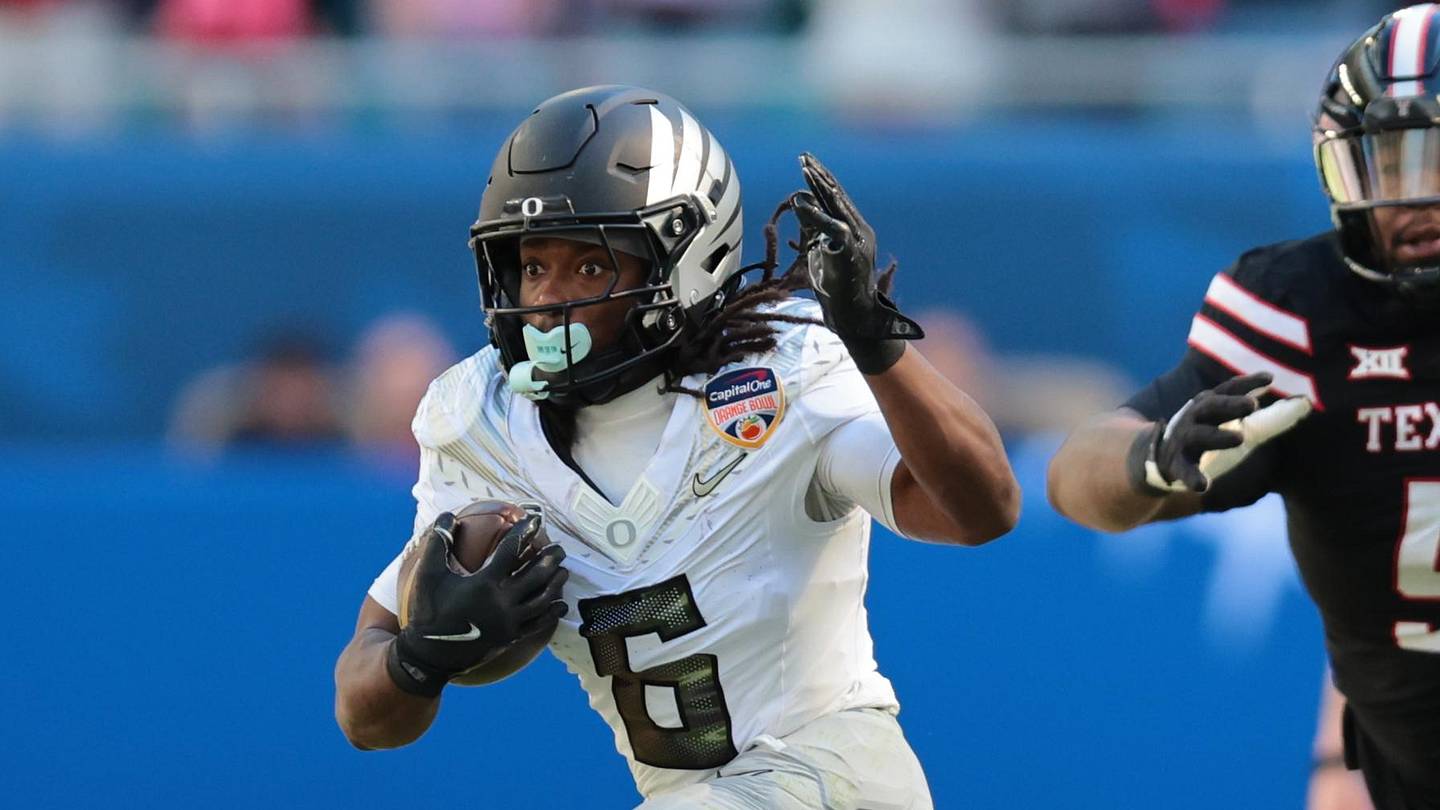
Much has been made about how much the Houston Texans have reshaped their rushing attack ahead of their 25th anniversary season. Between adding at least five new names to the offensive line group, having a more experienced rusher in Woody Marks and acquiring veteran running back David Montgomery via trade, Houston is primed to change the narrative on how effective their ground game can be.
Except, the topic of who will be RB3 continues to make the rounds in certain portions of the fanbase. After Montgomery and Marks, an opportunity still exists for Houston to identify a playmaker who could join the rotation and help apply constant pressure to opposing run defenses across 60 minutes of NFL play.
A while ago, I wrote a piece detailing how I believed that undrafted free agent Noah Whittington had the chance to be that explosive addition to the team at the spot. Unfortunately for him, incumbent RB3 Jawhar Jordan has already made a strong case last season for why he should continue in the role. In fact, KPRC 2 Texans Insider Aaron Wilson mentioned Jordan as his definitive answer at the position on a Youtube livestream last Thursday. By his tone, he didn’t even really consider it a “competition.”
Thus, Whittington is currently operating as a “forgotten man” in a majority of 53-man roster conversations. However, training camp could be an opportunity for Whittington to show the coaching staff and fan base that he could provide a spark to the offense that wouldn’t exist otherwise. This is mainly due to the level of physicality and variation in play style that Whittington could add to the equation.
Noah Whittington’s brings traits that could fit Houston’s new offensive identity
While Jordan electrified the rushing attack for Houston in their week 15 matchup against the Arizona Cardinals last season (15 carries, 101 yards, only 100-plus yard rusher on the season), he also struggled to receive consistent opportunities for live reps throughout his almost two-year tenure with the organization leading up to that moment. This being due to him spending the majority of his time on the practice squad.
To be fair to Jordan though, he was drafted at a time where he Texans had a running back unit that already featured names like the newly acquired Joe Mixon (trade), third-year rusher Dameon Pierce and the ever-reliable Dare Ogunbowale. Amongst other additional options, Jordan just didn’t have a shot. Compare that to Whittington, who I believe is joining the team with a much more feasible opportunity for immediate consideration that Jordan did.
Whittington comes to Houston at a time where the running back room is undergoing a certain level of overhauling. Not only has the offensive personnel changed, but the offensive philosophy has shifted as well. Now that tone setters like Braden Smith, Wyatt Teller, Ed Ingram and Keylan Rutledge are in the fold, there will be a renewed emphasis for a hard-nosed ground-and-pound approach from offensive coordinator Nick Caley.
This includes a continued evolution of play design that has taken the offense from more of a wide zone scheme (with Bobby Slowik) to much more of a gap scheme.
Zone blocking
Translated, zone play is all about unified lateral movement by offensive linemen that leads the running back to having to read where the best holes to run would be. This leads to backs deciding to either bend, bang or bounce the ball in response to the alterations in how defenders are sealing rushing lanes.
Gap blocking
A gap scheme is much more direct. It calls for offensive linemen to essentially win their one-on-one assignments in such a dominating fashion to where the back can barrel through the designated opening point (usually between the tackles) and climb to the second level of the defense.
Jordan thrived in his limited role last season partly due to the offense still arguably being more so tailored to the strengths of Mixon, which would be a cut-back-centric style of rushing that’s virtually synonymous with zone blocking. Jordan’s elusivity and quickness allowed him to navigate his way around multiple bodies around the line of scrimmage en route to him finding open field. However, his 5-foot-10, 185-pound frame puts some limitations on how aggressively he can engage with incoming linebackers and safeties.
Whittington is the opposite. Though he’s 5-foot-8, he’s 203 pounds and actually invites contact when he has the ball in his hands. His center of gravity and ability to absorb punishment while on the move seems much more in line with what could flourish in Caley’s brand of offense. He’s much more equipped to be a between-the-tackles style of runner, which fits the collective identity that the current the offensive line and primary running back duo of Montgomery and Marks appear to be presenting. That, and Whittington has shown acceleration burst that help to create huge chunk plays on the back end of clearing multiple initial defenders.
The battle for RB3 should be more of a discussion than what onlookers are willing to acknowledge. While I personally have rooted for Jordan to get his “moment in the sun” since his selection out of the sixth-round in 2024, I also see Whittington as an exciting addition who could truly help further the type of offensive physicality and grit that Caley and the coaching staff want out of their 53-man roster.
Training camp will be the next opportunity for Whittington to prove that he belongs on an NFL team. If he can manufacture several eye-opening moments when the pads and helmets arrive, don’t be surprised if this debate gets reopened in short order.
 Add us as a preferred source on GoogleFollow