
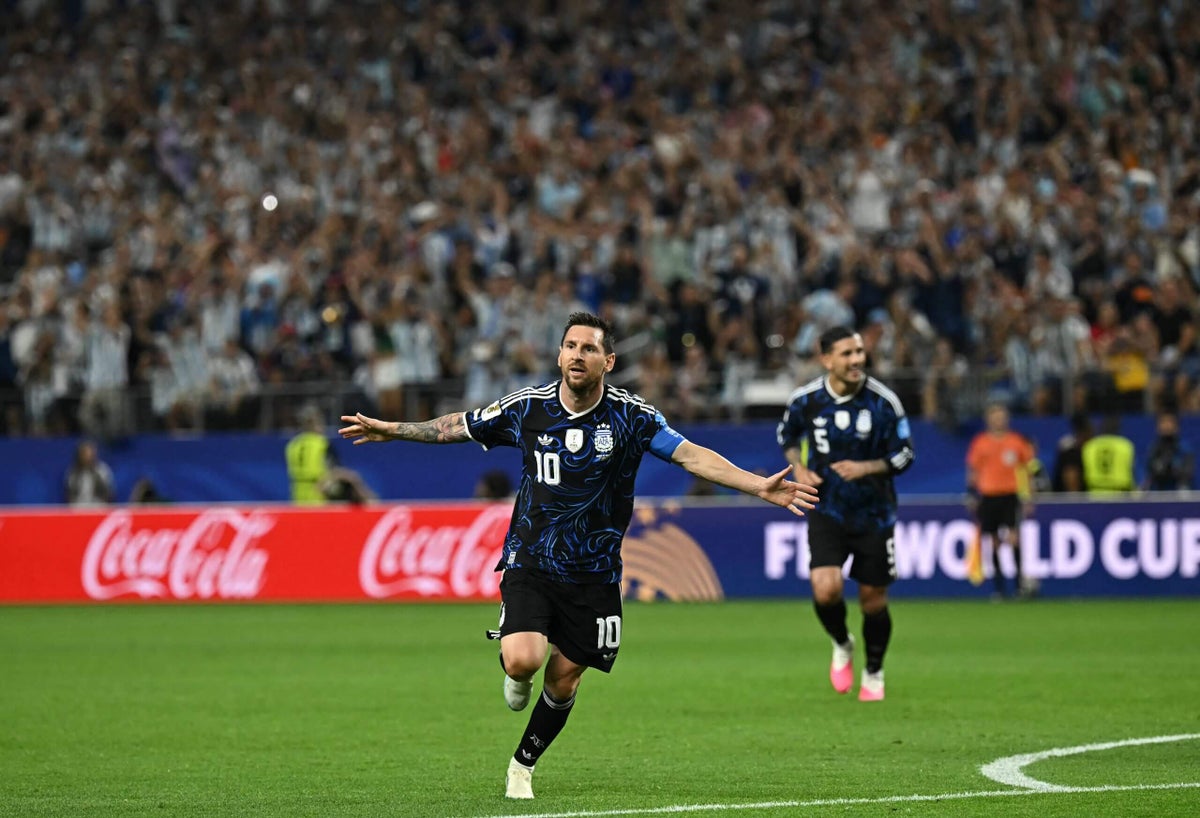
Argentina prepared for the World Cup knockout stage with a 3-1 victory against Jordan in Dallas. The world champions came into the game having qualified, and will face Cape Verde in Miami on July 3.
Lionel Scaloni made nine changes to Argentina’s starting XI, dropping Lionel Messi to the bench. And one of those starters put Argentina ahead on 19 minutes — Giovani Lo Celso curling in a direct free-kick, helped by questionable goalkeeping from Yazeed Abulaila. Lautaro Martínez then made it two just after the half-hour mark from the penalty spot.
Jordan periodically threatened, and pulled a goal back 10 minutes into the second half via half-time substitute Mousa Tamari; Messi was duly introduced to proceedings shortly afterwards. He scored, of course, firing home a direct free kick with 10 minutes remaining, becoming the first player in World Cup history to net in seven successive games. It’s his sixth goal at this tournament and his 19th overall at World Cups. The records just keep on coming.
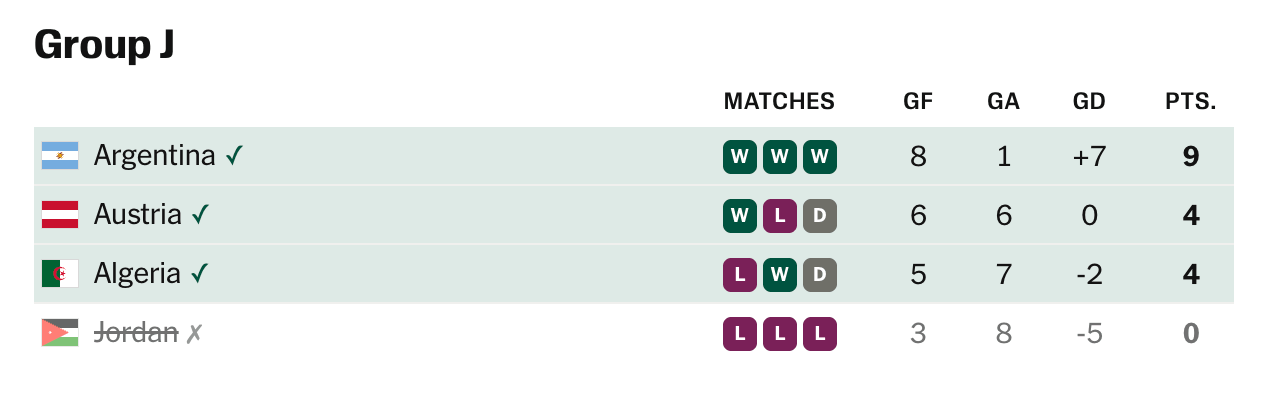

Michael Cox and Patrick Iversen break down the key storylines from the game.
Yet another landmark night for Lionel Messi
Scaloni had warned supporters that Messi would be rested for this final group game, although promised the 39-year-old would come on.
So for many supporters here in Dallas, much of the match was a guessing game about when he would be introduced. An hour in? You’d have won.
Two minutes after replacing Martínez, Messi seemed to be through on goal, but couldn’t gather a through-ball. Two minutes after that, he had a decent attempt from a free kick which dipped, but not enough to take it under the bar. He spent long periods wandering in offside positions, before coming alive when the Jordan defence dropped back.
Then, 10 minutes from time, it happened. Messi won a free kick in his classic territory and, presumably having seen Jordan goalkeeper Abulaila move bizarrely early towards his left-hand post for the set piece scored by Lo Celso, hoped the same would happen.
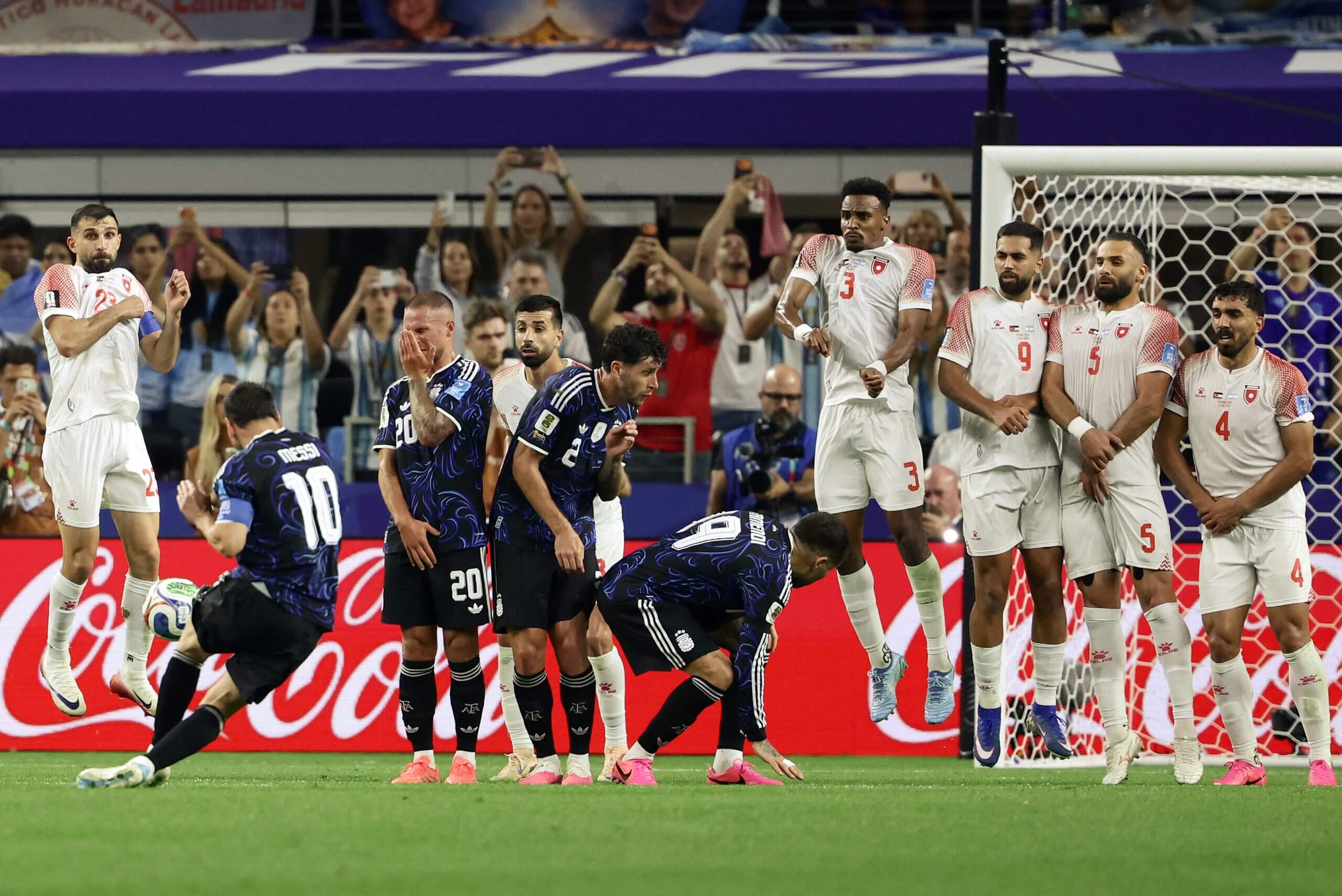
The free kick was Messi’s sixth goal of the World Cup (Aric Becker / AFP via Getty Images)
And so it did. Messi’s free kick almost trickled in. Six goals for the tournament, 19 in World Cups overall. This means he’s now scored in seven straight World Cup matches across two tournaments, beating a record held by Just Fontaine and Jairzinho.
Thousands of people in Dallas will be boasting to their friends, possibly for the rest of their lives, that they saw Messi score at a World Cup.
Michael Cox
Do Argentina have the perfect pathway to the semi-finals?
Let’s be honest about the nature of this game. Argentina had qualified as group winners, while Jordan were eliminated. There was nothing riding on this whatsoever.
And, given the sheer number of Argentines here — it looked and sounded like about 95 per cent of the crowd were behind the defending champions — it didn’t really feel like a World Cup game at all, and more a send-off friendly before a World Cup. Dallas, where Argentina have played twice and many of their fans have used as their base for the tournament, has become their second home.
Overall, the third round of group games has worked out excellently for Argentina. Not only did it have this gentle exhibition match against arguably the least impressive side in the competition, Argentina had the good news that its round-of-32 match in Miami will not be a high-stakes, aggressive scrap against their great rivals Uruguay, but instead a much less intense fixture against Cape Verde.
The African side has been one of the feel-good stories of this competition, but this is as kind as you could hope for from a World Cup knockout match — let’s not forget, Cape Verde hasn’t won a game at this tournament.

Argentina head coach Lionel Scaloni should not be too troubled by Argentina’s side of the bracket (David Ramos / Getty Images)
After that should come Australia or Egypt. The former caused Argentina problems in the last World Cup, and the latter does boast Mohamed Salah, one of the few players in the competition who, at his peak, recorded Messi-like numbers from the right flank. But neither should trouble the world champions.
Then, their most likely quarter-final opponents would be Colombia or Switzerland. Argentina not only had an easy group draw, the bracket has worked out well too — they might reach the semi-final without facing anyone who has a genuine chance of following them as World Cup winners.
For their part, Jordan at least got on the scoresheet — as they’ve done in all three of their World Cup games — with a goal from Tamari. They head home without having won a point, but at no stage of this tournament have they felt out of place.
Michael Cox
Intensity on pause for a night of celebration
When the tournament’s top team rests its starters against an opponent eliminated from contention, you get this evening.
It was a low bar for entertainment, and the game barely cleared it. Otherwise, it fell to the atmosphere to meet the World Cup moment, and it did in its own way. Hours before kickoff, the fan zone was uncharacteristically peaceful. Supporters sat in the grass, dining on nachos and hot dogs in the shade of the stadium. A sharp contrast to the pulsating energy seen at other matches in Dallas.
Inside the stadium, the fans were there to sing and see Messi. The fan shops ran out of Messi jerseys outside before the match, and inside, some stalls appeared to be running low by kickoff. All game, a horn buzzed in time with an intricate drum routine and the supporters’ songs, providing a steady rhythm to the evening.
When Messi came on, the crowd erupted, but the intensity didn’t change until his sixth goal of the tournament late in the second half. At that, the songs became full-throated, echoing off the walls down to their man on the pitch.
Messi or no, this was a stadium that traded in “just happy to be here” vibes for hours and hours.

Messi prepares to come on against Jordan (David Ramos / Getty Images)
For Jordanian fans (there were a few thousand!), this game must have felt like a slow final breath of their nation’s tournament. But not an uncomfortable one. It was a genuinely nice second-half score, and Jordan fans even got in on celebrating Messi’s goal.
It was all very pleasant. The real intensity of the tournament was firmly on pause.
Patrick Iversen
Has Nico Paz played his way into contention?
Only two names remained on the team sheet from Argentina’s 2-0 win over Austria. Well, arguably it was just one name: Martínez.
Emiliano Martínez started in goal — no need to rest your goalkeeper — and Lautaro Martínez continued up front. The latter got on the scoresheet from the penalty spot, then clipped the bar with a long-range drive after the break.
But the focus was on the others — did anyone play their way into Scaloni’s starting XI?
Lo Celso was bright throughout the first half to the left of midfield, having a goal disallowed for offside and then curling a precise free-kick into the top corner for the opener. The more eye-catching performer was Nico Paz, the exciting Como playmaker. A tall, imposing figure in possession who always takes one more touch than you expect, yet never loses the ball, he was the victim of physical treatment from Jordan, but always shrugged off challenges. At one point, he toppled to the ground having been fouled but retained possession, got up and played a pass.
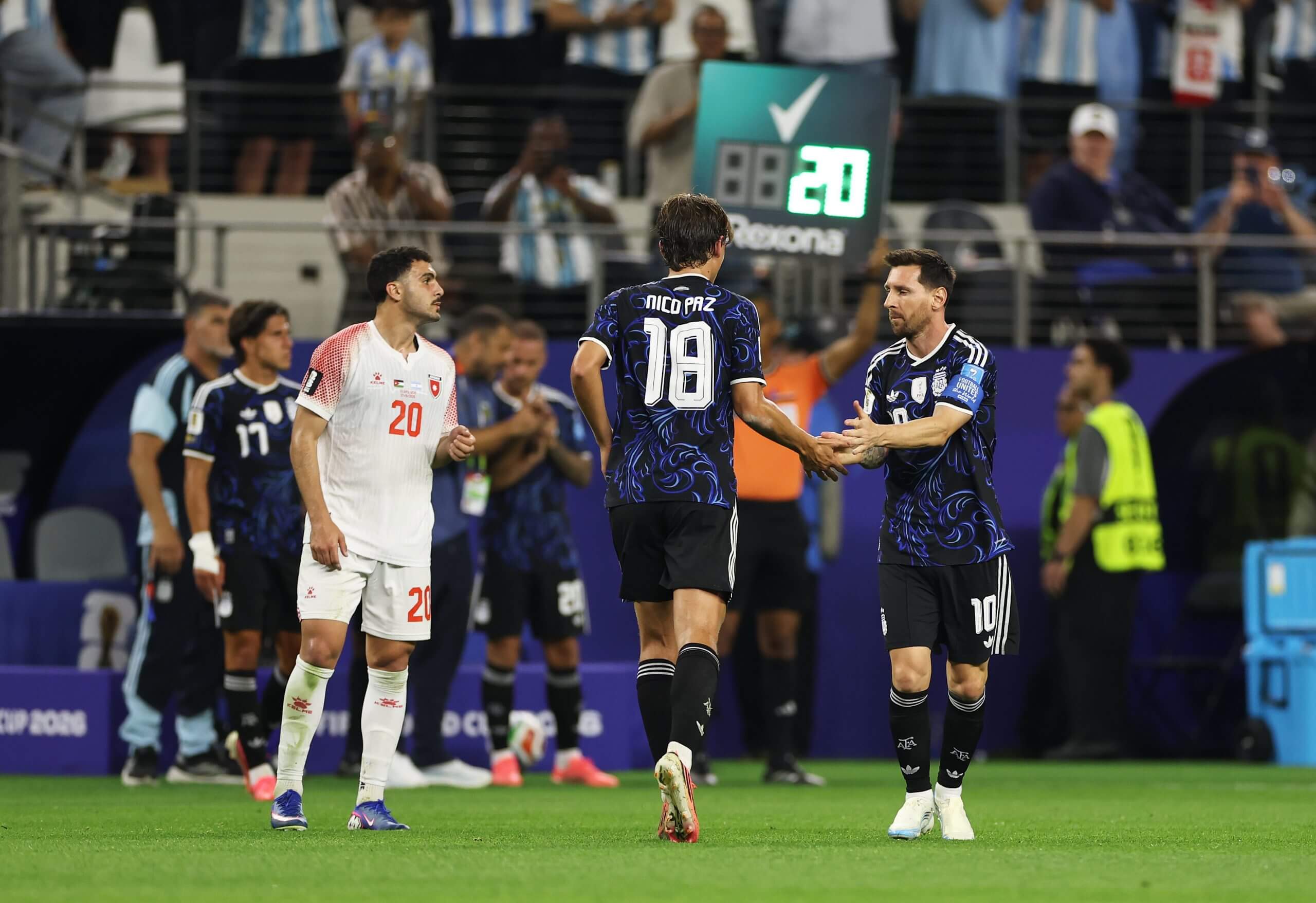
Nico Paz impressed against Jordan (Stacy Revere/Getty Images)
It would be bold for Scaloni to replace one of his ‘wide’ midfielders — who actually play narrow — with the creative but inexperienced Paz. But given the nature of Argentina’s next game, why not add in extra left-footed creativity, even when Messi is back?
If this was a shootout between the two strikers to see who will partner Messi next time out, Julian Alvarez — who replaced Martínez up front midway through World Cup 2022 to great effect — was quiet. Amid continued speculation, largely fuelled by himself, about a transfer away from Atletico Madrid, Scaloni may worry his focus isn’t 100 per cent on this tournament.
Michael Cox