

Some finality, at least regarding the NFL, in Brendan Sorsby‘s 2026 journey emerged Tuesday afternoon. The embattled quarterback is no longer attempting a push to enter the NFL this year.
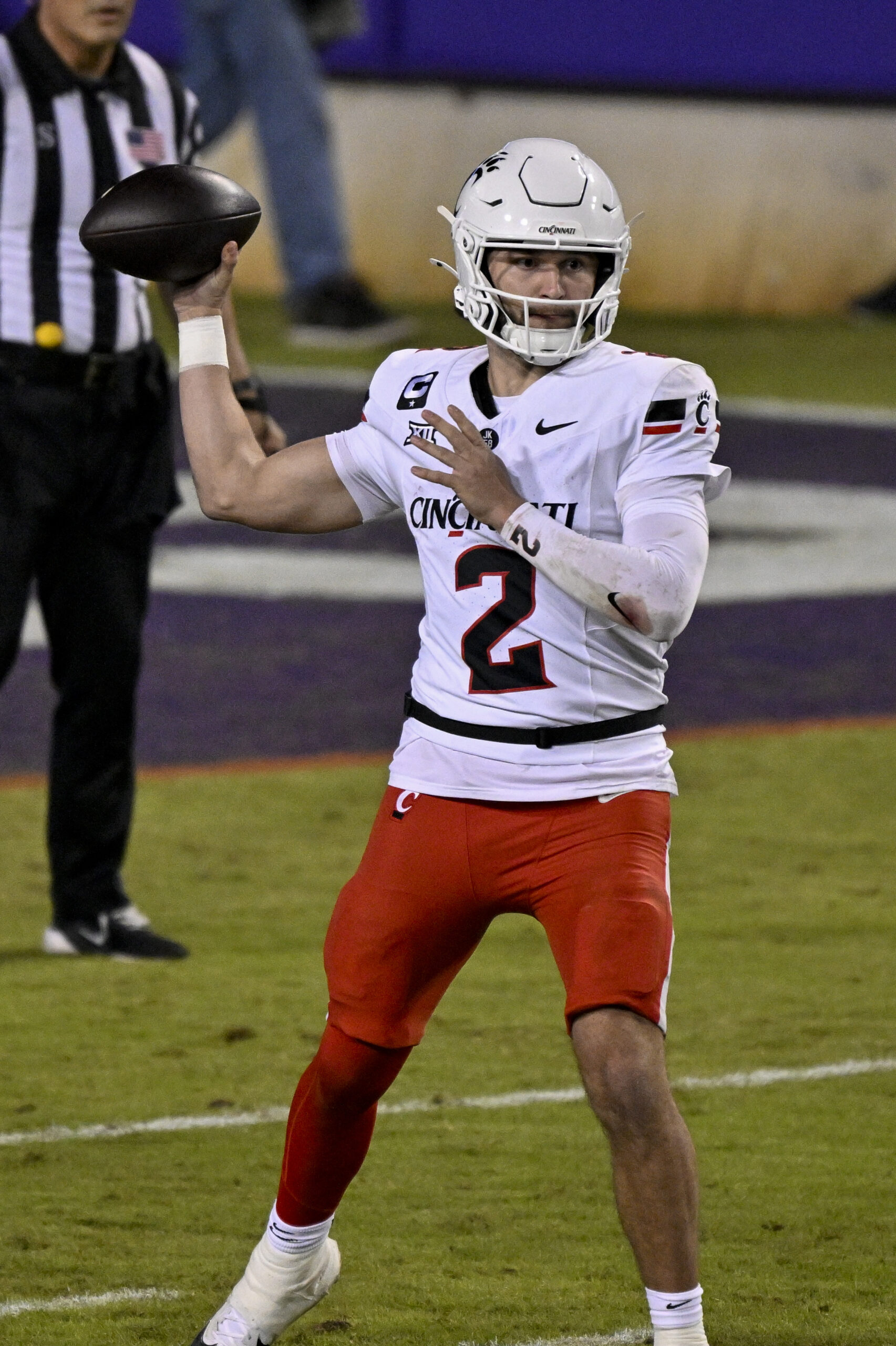 A memo released to the league’s 32 teams (via ESPN’s Adam Schefter) indicates Sorsby will not pursue legal action for 2026 NFL entry. Instead, the former Indiana and Cincinnati quarterback will turn his attention to the 2027 draft. A legal battle — after the suddenly high-profile quarterback had scored a win against the NCAA — was rumored, but the prospect’s camp will now avoid that route.
As part of an agreement between Sorsby’s camp, the NFL and NFLPA (via NFL.com’s Tom Pelissero), no discipline for previously known acts will commence. However, the league will retain the right to investigate findings that surface in the future, per NFL.com’s Ian Rapoport.
This certainly could be interpreted as good news for the confessed gambling addict, who has received treatment amid turmoil with the NCAA, though it does not offer the would-be Texas Tech passer assurances he will enter the NFL without punishment. It will depend on any further discoveries related to his gambling habit.
Another interesting piece of fallout here concerns Sorsby’s 2027 pre-draft path. He will be eligible to conduct pre-draft visits and workouts with teams, per Pelissero, who adds the QB would also be Senior Bowl-eligible next year. That would certainly be an interesting invite for the top college all-star game to extend, considering the events that led the QB to his current position. Pelissero did not mention the Combine here, which is notable.
“I accept 100% responsibility for my actions. I did not have control of my gambling problem, and it took getting caught for me to realize that. But it was truly the best thing that could have happened to me,” Sorsby said in a statement (h/t Pelissero). “Because of this, I have been able to get the help I need and fully focus on my recovery.”
 “The news about the supplemental draft changes nothing about my recovery journey. … I am fully committed to being the best version of myself that I can be while getting ready for the 2027 draft.”
The former college standout admitted to making thousands of bets on college and pro sports; those totaled upwards of $90K and included 40 wagers on Indiana while he was on the Hoosiers’ roster. The NCAA did not reinstate Sorsby after his release from rehab, but a Lubbock, Texas, judge issued a surprising injunction that would have allowed the QB to play for Texas Tech this season. Tremendous backlash against the NCAA and the Red Raiders ensued, and the Big 12 program soon urged the transfer to declare for the supplemental draft rather than move forward with his quest to outflank the NCAA in court.
It appeared Sorsby was set to reignite the NFL’s dormant midsummer supplemental draft, but the league decided to deny him entry by not holding the draft this year. The league has not conducted a supplemental draft since 2023 and has not seen a player selected since 2019 (Jalen Thompson), but Sorsby was expected to be chosen with a Day 2 supplemental choice (which would have stripped the drafting team of its 2027 pick in the corresponding round). Months of draft prep will instead commence for a player who would have entered the 2026 college season on the first-round radar.
Sorsby will not be eligible to sign with a team in free agency, as he is not yet eligible for a draft. Instead, he will serve a de facto one-year suspension. This is in line with how the NFL has proceeded against those found to have bet on NFL games in recent years.
Calvin Ridley and Isaiah Rodgers served year-long suspensions earlier this decade for such violations, each being reinstated the following year. Sorsby won’t need reinstatement, but barring a move to the NAIA or JUCO levels (as our Ely Allen discussed previously), he will be out of game action for the 2026 season.
While Sorsby will not need NFL reinstatement, Sports Illustrated’s Albert Breer notes the league is likely to treat him as a repeat offender if new information comes to light bringing forth a suspension. For now, though, it appears Sorsby will not play football in 2026 while readying for the draft. A potential path to the CFL brought a swift denial from the northern league, closing another door for Sorsby. The UFL season wrapped this month.
 This strategy proved effective for a few key members of the 2021 draft class who sat out the COVID-19-marred 2020 college season. Micah Parsons, Penei Sewell and Rashawn Slater became first-round picks and soared to the Pro Bowl level quickly. Though, Sorsby’s journey has been much more complicated by comparison. He also carries more questions about his prospect status than those standouts did in 2021.
The supplemental draft was designed to be an alternative NFL path for players whose eligibility statuses changed following a standard draft. Academic violations or other off-field issues have not stopped a host of players — Josh Gordon, Terrelle Pryor and Ahmad Brooks are among the modern examples, with 46 players being chosen since 1977 — from being supplemental draft-eligible in the past. But the NFL faced a new challenge with Sorsby. A league often criticized for its punishments and overall direction with off-field misconduct has received praise for its Sorsby roadblock, as it would have been difficult to reconcile the bans of Ridley, Rodgers and others while allowing Sorsby immediate entry.
A 2027 draft class tentatively expected to include Arch Manning, Dante Moore, LaNorris Sellers and some other promising QB prospects is now ticketed to feature Sorsby as well. The high-priced Big 12 transfer has been viewed as a first-round talent, and considerable buzz will likely follow in the months to come.
While Manning, Moore and others will have the chance to boost their stock on the field this coming season, Sorsby will have a year of behind-the-scenes development while attempting to avoid more trouble. The latter component will obviously be critical ahead of the draft, as QB-needy teams will want to know if they can eventually count on Sorsby. But the much-discussed prospect now has a clear timeline, as legal challenges — and a path back to college — appear out of the picture.