
July 14, 2026, 7:00 p.m. PT
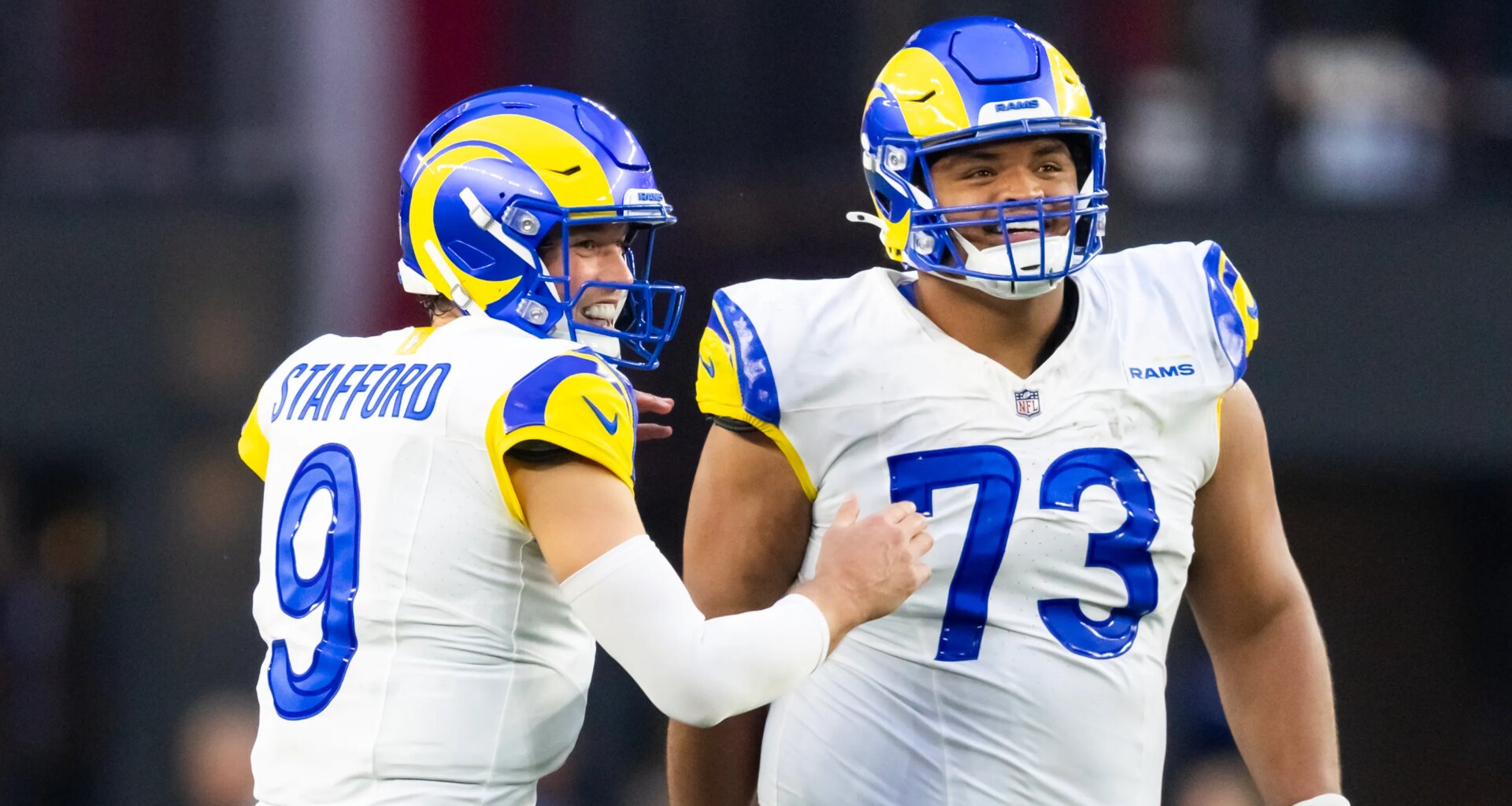
The Los Angeles Rams are getting one of the best returns on investment at offensive line in the NFL, ranking near the bottom of the league in spending on the position group despite fielding a unit that grades out among the sport’s best, according to salary data from Over the Cap.
Los Angeles ranks 28th in adjusted average offensive line salary at $65,460,011, well below the league-leading Philadelphia Eagles ($110,017,672) and third in the NFC West behind the San Francisco 49ers and Seattle Seahawks but just above the Arizona Cardinals.
The bulk of the Rams’ cap investment up front is tied to two players: left tackle Alaric Jackson, who carries a $25.375 million cap hit, and left guard Kevin Dotson, at $17.91 million cap hit. Beyond that pair, the rest of the line is remarkably cost-effective. Center Coleman Shelton carries a modest $9.5 million cap hit, while guard Steve Avila and right tackle Warren McClendon Jr. are both still playing on rookie contracts.
That inexpensive continuity hasn’t come at the expense of performance. A composite of expert rankings compiled by Football Insights placed the Rams’ offensive line third in the NFL entering 2026, behind only the Denver Broncos and Eagles. No outlet in that composite ranked the group lower than sixth, and at least one had Los Angeles second overall, trailing only Denver.
The financial picture could look different soon. Dotson, Avila and McClendon are all entering the final years of their respective contracts, meaning the Rams’ below-market spending at the position may not last. Extensions for any of the three would push Los Angeles’ offensive line cap number closer to the middle or top of the league.
Expert NFL picks: Exclusive betting insights only at USA TODAY.
For now, the low spending reflects where the Rams have chosen to allocate resources elsewhere on the roster, investing heavily in quarterback Matthew Stafford, newly acquired edge rusher Myles Garrett and the cornerback position this offseason. The approach has left the offensive line as a value play built largely on continuity and player development rather than big-money additions.
Looking further down the road, Stafford’s age and the eventual transition to a successor will likely factor into how the Rams approach the offensive line’s long-term construction, particularly as their current cost-controlled deals expire.
