
Before we begin, just a quick Mailbag PSA.
While I usually try to address your most commonly asked questions, I have nothing left to say about Texas Tech/Brendan Sorsby. You can tuck those questions away for the next time a school tries to play someone who got popped for betting on his own team.
I prefer more refreshing topics, like conference breakaway threats and schools trying to hide their $12 million investigations.
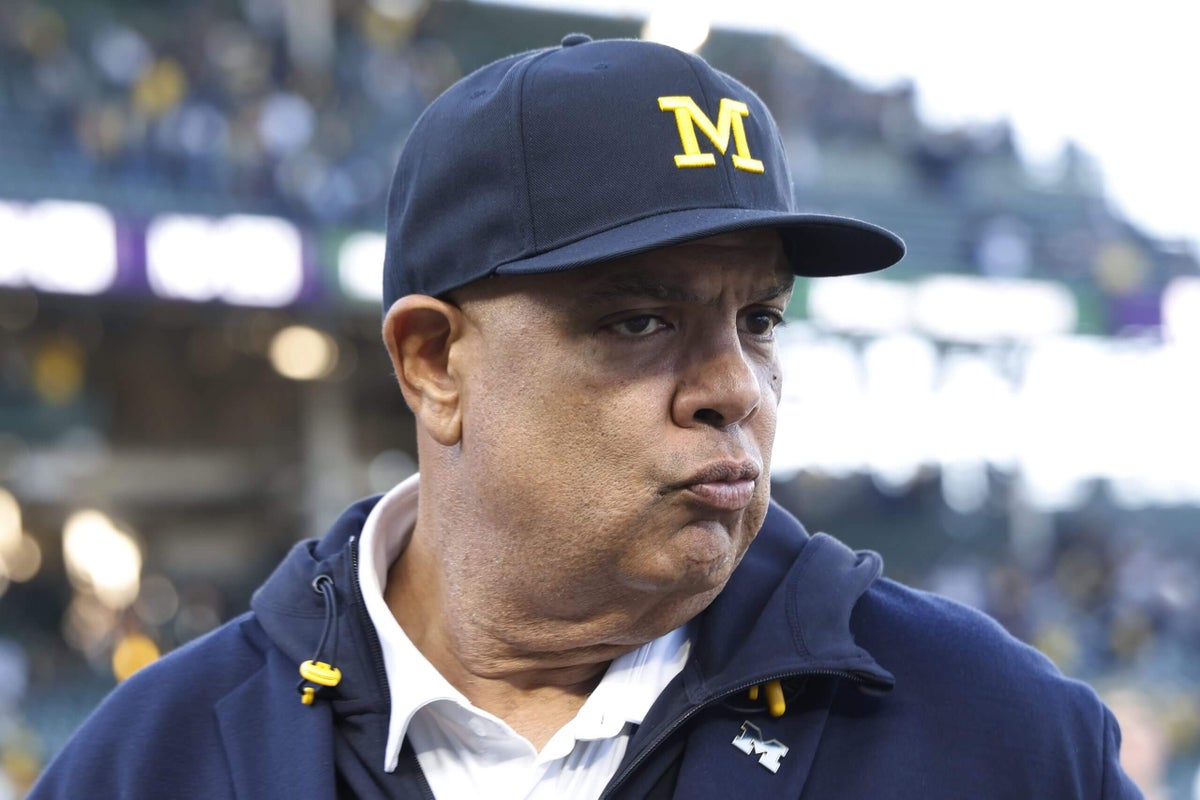
What on earth is happening in Ann Arbor? Spending $12 million on an investigation, only to not publish the results? Why force AD Warde Manuel to step down, only to let him stick around for another five months to assist in changing the culture? Have you ever seen anything like this before? — Mike J.
Oh, sure. Pretty much every College Sports Internal Investigation boils down to three core principles:
1. Finding just enough evidence to avoid paying someone’s buyout without incriminating anyone else.
2. Making sure we don’t get sued.
3. Making sure we can’t get FOIA’d
While unsurprising, it’s still insulting that Michigan’s strategy was to delay announcing anything until after its public board meeting last week, and then, when it did, to issue just a few vague bullet points about the findings with no real details. It’s only a major public university with 700,000 alumni who deserve answers.
My alma mater, Northwestern, tried this approach three years ago during its hazing investigation, sending out a two-page news release over a holiday weekend announcing Pat Fitzgerald’s two-week suspension. Within a few days, an anonymous whistleblower came forward with a range of allegations. Social media erupted, the school president reversed course and fired Fitzgerald, whom he’d previously absolved, and the school is now paying out hundreds of millions in settlements to its former coach and some former players.
Here’s wishing you better luck, Michigan.
Reading between the lines, the investigation didn’t find the smoking gun Michigan needed to avoid paying Manuel the three-plus years remaining on his $1.9 million-a-year contract, so they presumably negotiated a reduced buyout that included a softer exit plan. Given Manuel’s intimate knowledge of the athletic department, it’s probably better to pay him than end up in a lawsuit that involves discovery.
Almost all the coverage of this story has focused on who knew what, and when, about Sherrone Moore’s affair with a subordinate. Understandably so. But the moment I’ll remember most from Manuel’s tenure was the scorched-earth statement he released at the height of Connor Stalions Gate calling the Big Ten’s three-game suspension of Jim Harbaugh “completely unethical” and “an assault on the rights of everyone (especially in the Big Ten) to be judged by a fair and complete investigation.”
It was the most high-profile embodiment of Michigan’s “F all of you, we want our banner” mentality during the Harbaugh/early-Moore era. Three years and $12 million later, someone in charge finally said, “Maybe we should try to start following the rules.”
Play out the SEC breaking away from the NCAA without linking it to anything bigger. What happens to the SEC as a truly standalone conference over five, 10, 20 years, financially and competitively? What happens to the rest of college football? How does it impact other sports? — Andy
I don’t know how to answer it without linking the impact on the conference to the impact on college sports. Because the SEC’s fortunes would be determined in large part by how other parties respond.
If the other Power 4 conferences remained exactly as is and the NCAA banned SEC schools from its championships, SEC football might still get a good TV deal and remain relevant, but the College Football Playoff would lose credibility. It would also be devastating for the SEC’s other sports. If I’m an elite athlete, why would I go somewhere I can’t win a national championship? What would they be playing for?
If the other P4 conferences remained exactly as is, but the SEC’s schools remained eligible for NCAA championships, it might not have much effect on the other sports. But if football were essentially a parallel league to the CFP with its own standalone champion, it would be mutual self-destruction.
But then there’s this scenario: The second the SEC goes solo, the Big Ten does the same. The two conferences absorb the few remaining big brands in the ACC/Big 12. They stage their own football playoff, which by then includes every viable national title contender, keeping interest strong. And the rest of the conferences have no choice but to keep including them in NCAA tournaments if they want those tournaments to still exist.
Depressing, I know.
Fortunately, a full-on SEC breakaway is not imminent. As Greg Sankey has said repeatedly this week, the SEC wants to set its own rules on eligibility, NIL, the portal, etc., rather than continue watching the courts neuter the NCAA rulebook. Theoretically, they would be on more defensible ground because there are hundreds of other schools an athlete can choose from if they don’t like one conference’s rules.
I still fail to see how they could do that without putting their coaches at a disadvantage. If, say, the SEC imposes a strict $45 million NIL cap, but the Big Ten’s is $55 million, aren’t you right back in the same place? If the SEC somehow manages to outlaw tampering within the conference, but the ACC/Big Ten/Big 12 can still tamper with SEC athletes, aren’t you making it harder, not easier, to retain your rosters?
But there are absolutely presidents and ADs within that conference who are ready to press the button if and when Congress gives up the fight. What could go wrong?
Please answer these three “what-ifs.” What if Dabo Swinney goes 6-6 this year? What if Kalen DeBoer goes 6-6? And what if Mike Norvell goes 6-6? — Andy R.
I’ll answer that from easiest to hardest.
Alabama AD Greg Byrne gave DeBoer an extension (through the 2032 season) and a raise (from $10.3 million to $12.5 million) in April to officially squash any hot-seat chatter. I’m sure Bama fans would be apoplectic if DeBoer goes 6-6 in Year 3, but the only way he’s not coming back is if it’s by choice.
If Norvell goes 6-6, he will be fired. The donors and the fans have already thrown in the towel on him, and it’s going to take much more than a .500 season to change that. His buyout is still steep — $46.5 million — but at some point, it becomes more expensive to do nothing.
Dabo is the hard one. I’ve long assumed the two-time national champion will be at Clemson for as long as he wants. I don’t know any Clemson fans who want him gone (yet), and I’m not sure Clemson could afford a $57 million buyout (with no offset) even if they did.
But a second straight dud season would really muck things up. Perhaps folks there would root for him to walk away on his own, but it’s hard to see him doing that. It reminds me a bit of Bobby Bowden’s depressing last decade at Florida State, when the Seminoles sank from 14 straight years of national title contention to 9-3, 8-5, 7-6. Of course, Bowden was well into his 70s by then, while Dabo is only 56.
If Dabo were to go 9-3 every year and make the Playoff occasionally, he’d probably be able to ride off into the sunset. As of now, though, he’s gone .500 in the ACC two of the past three years, and his team will be unranked to start this season. I’d be shocked if he’s not still coaching the Tigers in 2027, but things could get awkward if this trajectory continues.
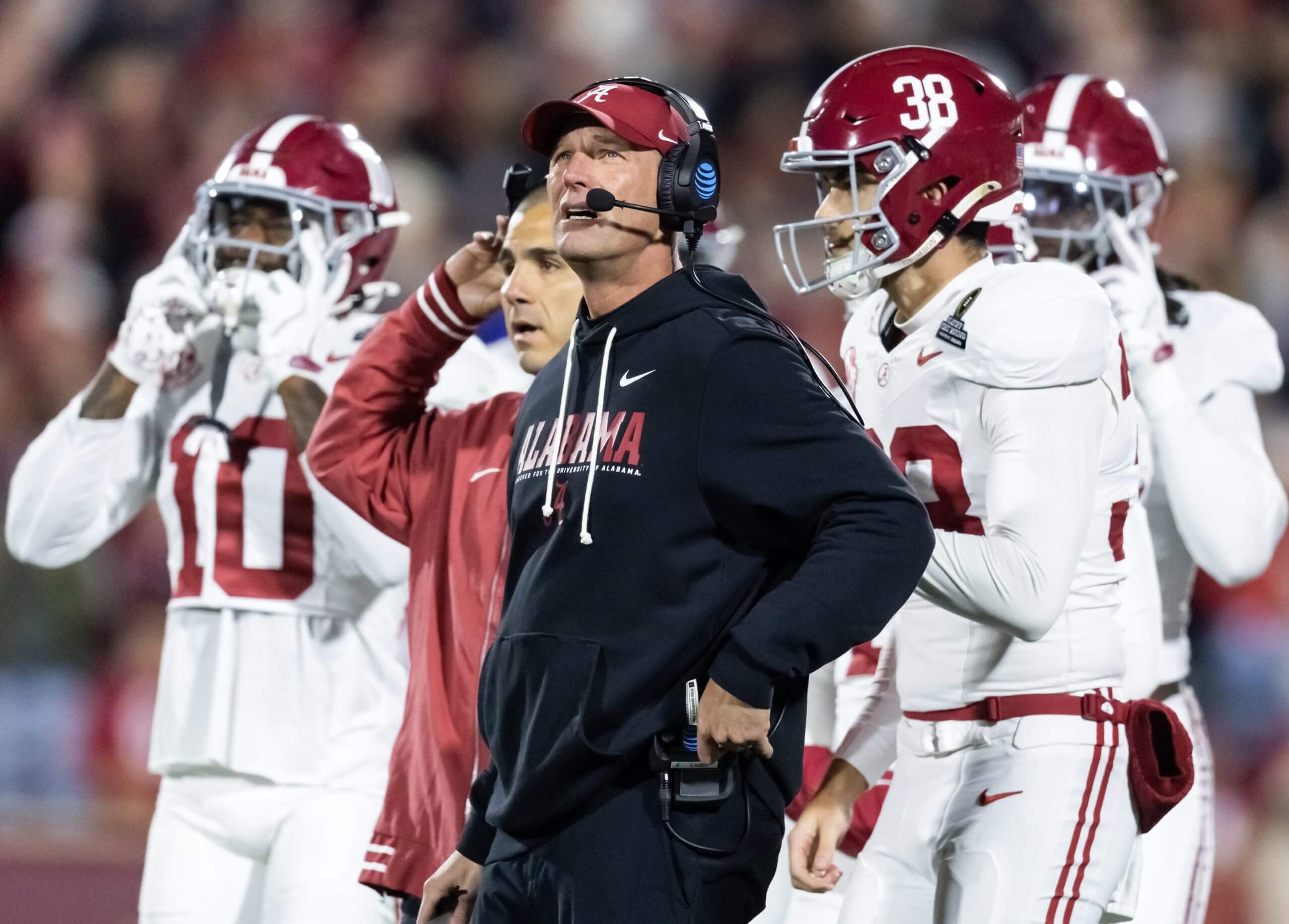
Kalen DeBoer received a contract extension in the spring that eased his hot seat. (Mark J. Rebilas / USA Today Network)
Florida has another top-10 strength of schedule. We expect NATIONAL CHAMPIONSHIPS NOW, but in reality, what should Gators fans expect this season? Is 6-6 the outcome before the games are even played, or could you see a 9-3 season or better? — Jeff H
Florida’s schedule is hard, but not quite as murderous as the previous two seasons, in part because Miami is no longer on it. The 2025 Gators faced four of the top 8 in the final AP poll (No. 2 Miami, No. 3 Ole Miss, No. 6 Georgia and No. 8 Texas A&M) plus No. 12 Texas. Billy Napier’s last team was not up to the challenge, going 1-4 in those games.
This year, Florida still has Ole Miss, Texas and Georgia (and picks up CFP foe Oklahoma), but it also drops Miami, and the majority of its nine SEC games are against teams closer to its level — Auburn, Missouri, South Carolina, Kentucky and Vanderbilt. Plus mediocre rival Florida State.
All of which has me bullish on Jon Sumrall’s Gators to win at least eight games. Last year’s team had more talent than its 4-8 record suggested. And unlike many Year 1s where the coach flips the roster, Sumrall retained many of Florida’s top players: RB Jadan Baugh, WRs Vernell Brown III and Dallas Wilson, edge rushers Kamran James and Jayden Woods and LB Myles Graham.
While conceding this is truly cliché, Florida’s stock will be dependent on what it gets from its quarterback and offensive line. Expected QB1 Aaron Philo (ranked No. 55 in The Athletic’s QB tiers) followed OC Buster Faulkner from Georgia Tech and spent the spring competing with redshirt freshman Tramell Jones Jr. Chances are whoever wins will be an upgrade from how five-star punching bag DJ Lagway played. The O-line, on the other hand, is a huge question mark with a horde of transfers competing for four open spots.
Right now, you would not expect Sumrall’s team to beat any of Georgia/Texas/Ole Miss, but upsets happen. (Last year’s Gators knocked off Arch Manning.) The key will be pulling out some of those swing games against the next tier down. Frankly, 6-6 would be disappointing given Sumrall’s track record, while 9-3 would be a huge triumph.
Stew, several outlets reported Monday that one revision to the proposed Congressional bill under discussion would cap conference membership at 19 teams. If you were the commissioner of the SEC/BIG and those schools wanted to expand to 19, which schools would you add? — Luigi M.
First of all, what a hilariously random number. But also suspiciously convenient for the 18-team Big Ten if a certain South Bend school ever becomes interested. Because this reported compromise comes with a bizarre requirement that schools spend five years as an independent before changing conferences.
But let’s assume for these purposes that Notre Dame remains off the table.
Big Ten: Miami. Having already added Washington D.C., New York (sort of), Los Angeles, Seattle and Portland, Miami/Fort Lauderdale seems like the logical next step. Miami itself is believed to be more interested in that conference than the SEC.
SEC: North Carolina, Virginia Tech, Louisville. All three keep with the league’s philosophy of making sure its footprint comprises connected states. I’d be slightly concerned that UNC and Louisville are basketball schools, but UNC is attractive regardless, and Louisville has proven it can compete at a Top 25 level.
While we’re at it, we might as well figure out how the ACC, reduced to 13 schools in this scenario, reaches 19: Memphis, Tulane, USF, UConn, James Madison and Appalachian State.
And of course, the Big 12 wouldn’t stay at 16 if the others go to 19. Oregon State, Washington State and UNLV.

Could Miami move to the Big Ten in another round of expansion? (Mark J. Rebilas / USA Today Network)
Greg Sankey said on Monday, “Federal legislation is needed …” (to fix college sports.) Everyone has a different interpretation of what that should mean. So, what should that mean, and how does your definition conflict with the various stakeholders’ interests? — Pat T.
Indeed, 99 percent of College Sports Inc. believe federal legislation is their knight in shining armor. But from one conference to another, and even from one school to another, folks want different things.
Even more so among the legislators themselves. The competing agendas have led to the Ted Cruz-Maria Cantwell Protect College Sports Act, which is essentially a college sports Mad Lib. The authors aimed to save college sports by (restricting the transfer portal) and (hard-capping NIL) but also (kneecapping the Big Ten and SEC) and proclaiming (schools can’t change conferences).
With a straight face. This is how you wind up spending many years and millions of dollars only to accomplish absolutely nothing.
I’m not opposed to legislation, but some of the proposals are patently ridiculous. The federal government should not be expected to regulate college athlete NIL deals, football roster budgets or conference realignment.
The most reasonable option would be to afford the NCAA a limited antitrust exemption allowing it to impose no-brainer rules — eligibility standards, a one-time transfer exception, etc. — without getting sued to oblivion. Elements that figure to be less politically divisive.
But once you start tacking on political pet causes — Sen. Cantwell in particular seems fixated on realignment due to Washington State’s ordeal — the harder it is to pass.
I see that many prognosticators have Louisville in their Top 25 this year, but looking at their schedule, could they be a sneaky top-10 team by the end of the year? They open against Ole Miss, which has a lot of turnover from last season, in Nashville. They get their toughest ACC games (SMU, Florida State) at home, and miss Miami and Clemson. Is this an 11-1 team, or will it be a classic 9-4 Jeff Brohm season? — Doug W.
Someone other than Miami will inevitably rise and contend in the ACC, so sure, why not Louisville?
Remember, the Cardinals knocked off the second-ranked Hurricanes at Hard Rock Stadium last season (the game where Carson Beck threw four interceptions) and were 7-1 in early November when they lost star running back Isaac Brown for the rest of the regular season. More injuries followed. Louisville, which got a meh return on USC transfer QB Miller Moss, lost three straight to Cal, Clemson and SMU before rebounding to humiliate rival Kentucky 41-0 and beat Toledo in its bowl game.
The biggest reason to be bullish on this season’s Cardinals is their absolutely stacked backfield. Brown, when healthy, is one of the most explosive ball-carriers in the country, averaging 8.8 yards per attempt last season. He’s joined by Keyjuan Brown, who averaged 7.3 yards per carry; Missouri transfer Marquise Davis, a redshirt freshman who ran for 200 yards in three games last season; and former walk-on Braxton Jennings, who went for 113 yards as a fill-in for that Kentucky game.
But Brohm said at ACC media days last week that he needs a better vertical passing game this season. And the guy they’re looking to deliver it is a near-complete mystery.
Do you remember the name Lincoln Kienholz (No. 54 in The Athletic’s QB tiers)? Think back to the 2023 Ohio State-Missouri Cotton Bowl. The Buckeyes’ season-long starter Kyle McCord was already off to Syracuse, and his initial replacement, Devin Brown (now at Weber State), sprained his ankle in the second quarter. Ryan Day had to turn to then-true freshman Kienholz, who was not remotely ready, and Mizzou won 14-3. Kienholz never started in three years in Columbus, but he legit competed with Julian Sayin for the job last year.
When he finally went in the portal, Brohm scooped him up. Clearly, he saw something he liked. If Kienholz actually does elevate Louisville’s passing game, then yes, I can absolutely see the Cardinals vying for the ACC title. And yes, I’d give them a shot against Ole Miss. Though I could see it being a 40-35 type of game.
Can we thank your article last year for the return of Sporting News and ESPN’s season preview magazines among others, and is it a return for print or just a test? — Mick L.
I can’t take credit, no, but Arch Manning and Dante Moore are currently staring up at me from the Sporting News mag sitting on my desk. I was shocked to read on the first page that this is their first edition in 14 years. It used to be one of my go-tos.
No idea if they’re back for good. It’s just nice to see something on the Safeway newsstand besides “K-Pop Superstars” and “What is Your Cat Thinking?”