
Peak newsletter 🧠 | This is an excerpt from The Athletic’s weekly newsletter covering the mental side of sports. Sign up here to receive the Peak newsletter directly in your inbox.
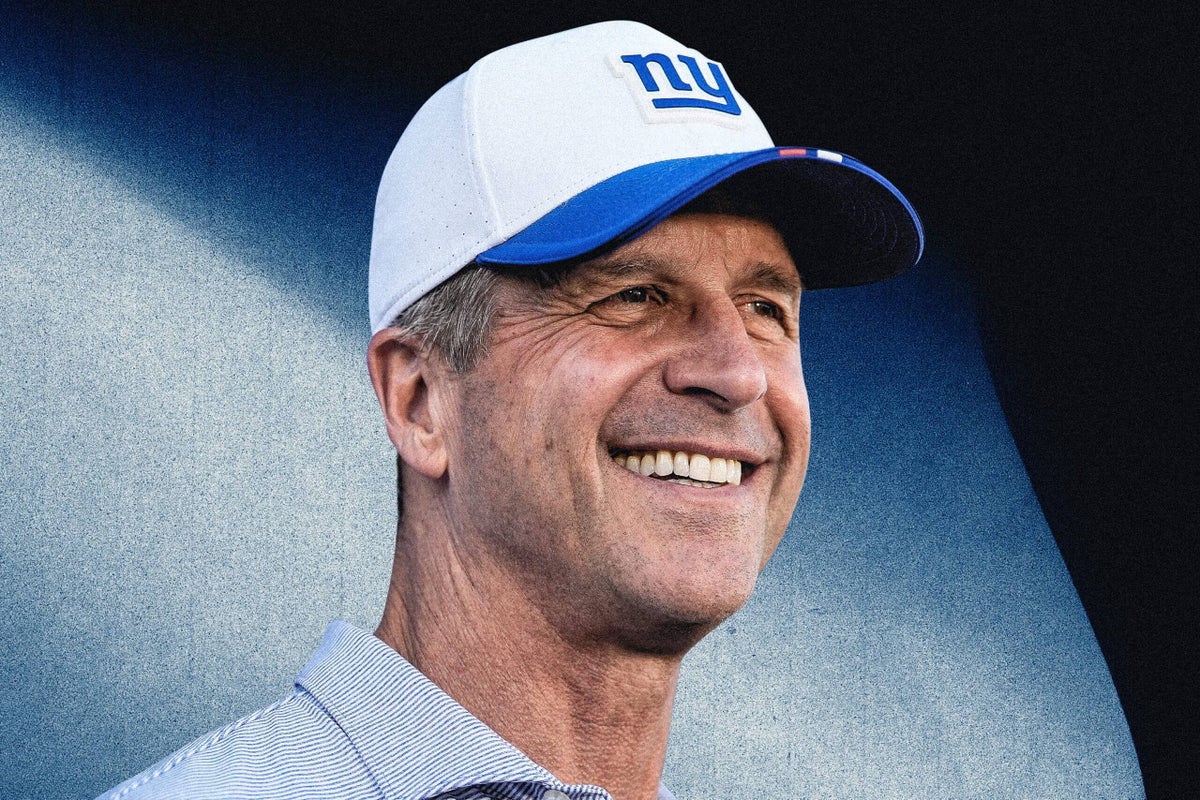
Every month, New York Giants coach John Harbaugh will answer reader-submitted questions about leadership.
Harbaugh is in his first year with the Giants after 18 seasons coaching the Baltimore Ravens, where he won the Super Bowl in 2013. He is also the co-founder of the Harbaugh Coaching Academy, a non-profit designed to help coaches at all levels.
Two weeks ago, readers of the Peak newsletter emailed the first round of questions, and I picked seven for Harbaugh to answer.
Anyone interested in asking Harbaugh a question about leadership can submit one in the box below.
Now, on to the questions:
How do you help a player get their confidence back? — Ted S.
Harbaugh: You’re meeting people where they’re at all the time. When a player loses confidence, what does that mean? What’s been going on in their life? What’s been going on in their career? Was it a specific play?
The bottom line is that if you build a relationship with people, especially those you work with or coach in this case, you build trust. They know you’re in their corner, that you care about them, that you want what’s best for them.
And maybe sometimes your dreams for them are even bigger than their own dreams, perhaps. Your vision for them is, in their heart of hearts, what they hope and dream for themselves — that big dream they have is the same big dream you have for them.
When you start with that, then it’s easy to have the conversations around achievement, accomplishment, performance and even confidence.
Confidence is a very important thing; it’s a key thing. But it’s built on a lot of platforms.
To me, that’s what a good coach, a good mentor, a good teacher, a good friend would want to do.
Jason Kelce’s favorite piece of mental advice
Elise Devlin
We often hear that coaches get fired when players have tuned them out or are tired of their coaching styles. As someone who manages people, I won’t get fired for that, but how do you change your style or message without changing who you are when you feel you are being tuned out or ignored by subordinates (in your case, players)? — Chris J.
Harbaugh: It’s not so much about group dynamics as it is individual relationships. Before I get into a team meeting, I’ve already had a bunch of conversations with as many guys in the room as I can.
We have a lot of guys and a lot of people, so it’s hard to touch everybody every day. But every chance I get, every opportunity that comes my way, I try to get involved with the individual.
So then when I’m standing in front of the room, and I see the faces, we’ve had a talk. I can look them right in the eye, and we both know where we’re at in our particular relationship.
It goes back to trying to meet everybody where they’re at one at a time, and then there is no such thing as a stale message. That’s not relevant. Because you’re in a relationship. You’re working with the person, you’re working together, and you’re working for something really important to that person, which in this case is their career.
I always make the charitable assumption that they want to do well. That they want to be successful. That they’re here because they want to thrive.
I want to help them do that, and I make sure that they know that.
What’s the biggest mistake you ever made as a leader? What did you learn from it? — Larry C.
Harbaugh: My very first year of coaching, I was 21 years old (and an assistant at Western Michigan). I overreacted to a freshman player who really was struggling with a conditioning workout.
I thought I knew something, and when I played, that was the type of thing that wasn’t hard for me. So it was hard for me to understand why it was so hard for him.
I made the uncharitable assumption that he wasn’t in shape. I really, really acted in a … I said some demeaning things. And I really felt bad about it.
One of the veteran coaches let me know later that I was out of line. I talked to the player about it, and I apologized.
It was one of the very first days of me as a coach, a man, and I never forgot. Not that I didn’t make mistakes after that, but I’ve always remembered that one.
It’s about them and not you as a coach. It’s about your player. It’s about your pupil. If you make it about you, then you’re making a big mistake.
Is there a specific trait you look for in players because that trait will either best mesh with your leadership style or, alternatively, that trait suggests the player will be a leader for your team? — David W.
Harbaugh: No. Everybody is unique and different. Everybody in the whole world is a unique, one-of-a-kind creation that has never been heard of since or will ever be in the future. Everybody is one of a kind.
Everybody has some amazing strengths. Everybody has superpowers. The hope is that you can find them, that you can encourage them, that you can bring those out in people so they can be their best self.
You do that by building relationships and by caring. The first thing that gets in our way in our relationships — and this is true for everybody — is ourselves. Our own agenda, our own feelings, our own pride, our own self-interest.
You have to try to find a way to check your heart, your ego, your selfishness as much as possible in your relationships and try to be empathetic and put yourself in another person’s shoes. Or as Christ would say: serve.
I think the best leaders are the ones who do everything they can to bring out the best in the people they lead. It’s more of a servant-based mindset.
Former NFL player thinks we should embarrass ourselves
Elise Devlin
When you have a terrible practice or make a costly mistake, what do you actually tell yourself in the first five minutes afterward, and has that self-talk changed over the course of your career? — Cameryn P.
Harbaugh: I’m probably like any other person. You go through the gamut of disappointment or frustration or anger or sadness when things don’t go the way you want them to go.
You can have a bad play at the end of an AFC championship game, and it can cost you the Super Bowl. It’s nobody’s fault. We’re all responsible in a sense. Something didn’t happen the way it was supposed to happen, and nobody feels worse than the person who made the mistake.
The thing you try to do as a leader is to get to that person right away, put your arm around them, and say, “We’re going through this together. This is life. This is the fight that we make.”
I think you do your best work in the adverse moments.
Raj G: As you step into a new organization, how do you think about defining and building culture?
Harbaugh: We have a vision for sure of what we want it to look like principally. There are things that we believe in. We call them self-evident football truths that we believe in, that are written in stone, that are requirements for success in football.
Many of which are also requirements for success in life generally. It’s the beautiful metaphor.
These are things we have to accomplish and that we’re always chasing. Around that, how you work toward those things and the strategies that you use, those are methods. Those are like water. They are powerful. They are effective. They can do great harm, they can do great good, and they can do it in every way you can imagine.
Those things are ever-changing. They’re adapting, they’re growing.
Culture is not imposed. Culture is transformational. It’s growth. It’s people growing together as a bunch of separate entities into one social unit, so to speak.
And it has to be based on certain beliefs that we all agree on. We have to establish those things, and we have to convince the people in the room that those things are, in fact, necessary truths.
How do we do that? Through shared experiences and creating a shared understanding.
(Editor’s note: I asked what those principles were. Harbaugh’s response: “Is it important to work hard? Is it important to build an organized practice? Do you believe in running the football? Do you believe in stopping the run? How about running to the ball on defense?”)
Amy W: What’s the smallest habit you’ve adopted that has had the biggest impact on your leadership over the years?
Harbaugh: It’s two-fold. I work out every morning. That definitely helps me start the day the right way. Being physically in the right space is such a benefit to your mental health and your intellectual sharpness.
After that, I take spiritual time. I do some personal study, devotional type stuff, prayer. Just to set my heart in the right place to start my day.
Sometimes about 10 minutes after that I’m right back in the challenges and fire, and I’m like, “Oh man, it was only 10 minutes ago … what happened??”
That gives me a chance, at least, to be in the right spot.