
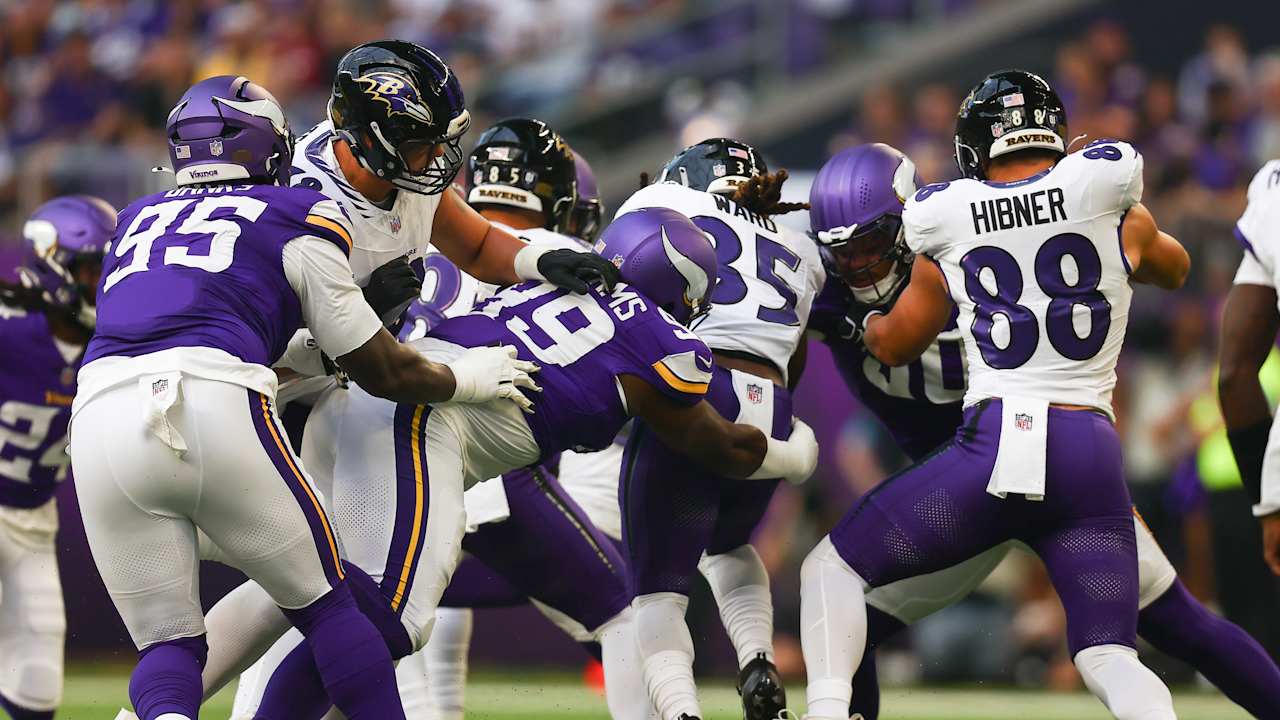
I wanted to share an idea about how I believe the Vikings could use the preseason to create an advantage heading into the regular season.
My suggestion is to treat the three preseason games as three additional opportunities to prepare our starting team before the games actually count.
The NFL gives every team three games with no consequences to their regular-season record. I believe we should take full advantage of that.
Rather than using preseason games primarily to determine the depth chart, I would use training camp practices for that purpose. Let players compete every day for their positions and establish who has earned the right to play.
Then, when the preseason games begin, play our starters.
What the opposing team chooses to do with its own lineup shouldn’t really matter. Whether they play their starters, backups or third-string players, our objective should be preparing the Vikings.
The value isn’t necessarily who is lined up across from us. The value is getting our starting players into an actual NFL game environment.
They get to experience the speed of the game, communication, timing, substitutions, play-calling, situational football and the process of playing together under game conditions.
And there is a very simple way to manage the risk:
If we’re destroying the other team, take the starters out.
If we’re up by a significant margin after three quarters, there is little reason to keep exposing them. Let the backups finish the game.
But if we’re not playing well, or the game is competitive, keep the starters on the field and use the opportunity.
That’s what makes the preseason so valuable.
If everything is going well, you’ve gotten your starters meaningful reps and can get them out early.
If things aren’t going well, you have another quarter — and potentially another preseason game — to work on it before anything counts.
You’re essentially being given three games to identify and correct problems for free.
I also believe this approach would make roster evaluation more effective. Instead of relying heavily on third-string players playing against third-string players, use training camp to evaluate those players against the Vikings’ best players every day.
A young offensive lineman shouldn’t need four quarters against another team’s third-string defensive line to determine whether he belongs. Coaches can learn a tremendous amount by watching him compete against the Vikings’ starting defensive line throughout training camp.
Then the preseason games can serve their most important purpose:
Preparing the players who are actually expected to carry the team during the regular season.
Training camp: Determine who deserves to play.
Preseason: Get those players ready to play.
Regular season: Let the results count.
The Vikings have three games where a loss doesn’t hurt the standings. I believe that’s an opportunity that shouldn’t be wasted.
If we’re dominating, pull the starters. If we’re not, keep working.
Either way, we’re using those three games to make the team better before Week 1.
Thank you for taking the time to consider my perspective.
O’Connell prioritizes the joint practices as two of the best days of training camp to prepare first and second teamers for the regular season. The benefits include the number of snaps that can be accomplished each day, as well as going through some scripted and unscripted scenarios in a controlled environment that hopefully makes teams less susceptible to injuries.
That means a preseason game at the end of a week of joint practices is likely to have third stringers or folks further down the depth chart in for most of the time, and the players who are suited up won’t have gone through as many preparation reps, which are still few, during the week.
Five years ago, Irv Smith, Jr., was entering his third pro season, and the Vikings had designed some plays to create mismatches for him. On the heels of catching 30 passes for 365 yards and five touchdowns in 2020, Smith was looking good in camp.
For some reason, Smith was playing in the third preseason contest at Kansas City and suffered a season-ending injury. Fellow tight end Tyler Conklin went on to have a breakout season with 61 catches for 593 yards and three touchdowns, but I have wondered what the combo of Smith and Conklin could have done in 12 personnel and how that duplicity may have helped other aspects of the offense.
O’Connell also believes in the importance of developing younger players. To that end, the preseason contests offer in-game reps, even though the scoreboard results don’t matter.
In a league where every regular-season game means so much, it’s weird to think a team can have different goals not necessarily tied to the final score in the preseason, but that’s likely going to be the case.