
What is the value of experience? In a sport still populated by fifth, sixth and even seventh- and eighth-year players, it’s a question worth asking. Indiana’s roster won a national title a year ago with a roster loaded up on upperclassmen.
The Hoosiers chose production over potential, and other college football coaches told The Athletic this offseason there were lessons to be learned from that.
“Everyone is already trying to get older and more experienced and everyone is trying to get the best QB — Indiana just did it better,” a power-conference head coach said in January.
So who are the most experienced teams in the country this fall?? We tallied up every Power 4 team’s career starts and snaps played to find the answer.
For the purpose of this exercise, we accounted for the top 105 players — by career snap count — on each roster, since that’s the current roster limit. Many teams have more than 105 players, which includes walk-ons who were on 2025 rosters and don’t count toward the limit, as a condition of the House v. NCAA settlement, but no FBS team in our analysis had more than 105 players with college snaps.
Here’s what we found. You can use the search function to narrow by team or conference.
Note: Roster data did not include players potentially coming back from the Class of 2022 as those situations progressed through the courts. Player snap totals are Division I (FBS and FCS) only, no Division II or junior college snaps were included.
A few observations:
The most experienced
Virginia
Oklahoma State
Texas Tech
UCLA
Colorado
Houston
Michigan State
Indiana
Ole Miss
South Carolina
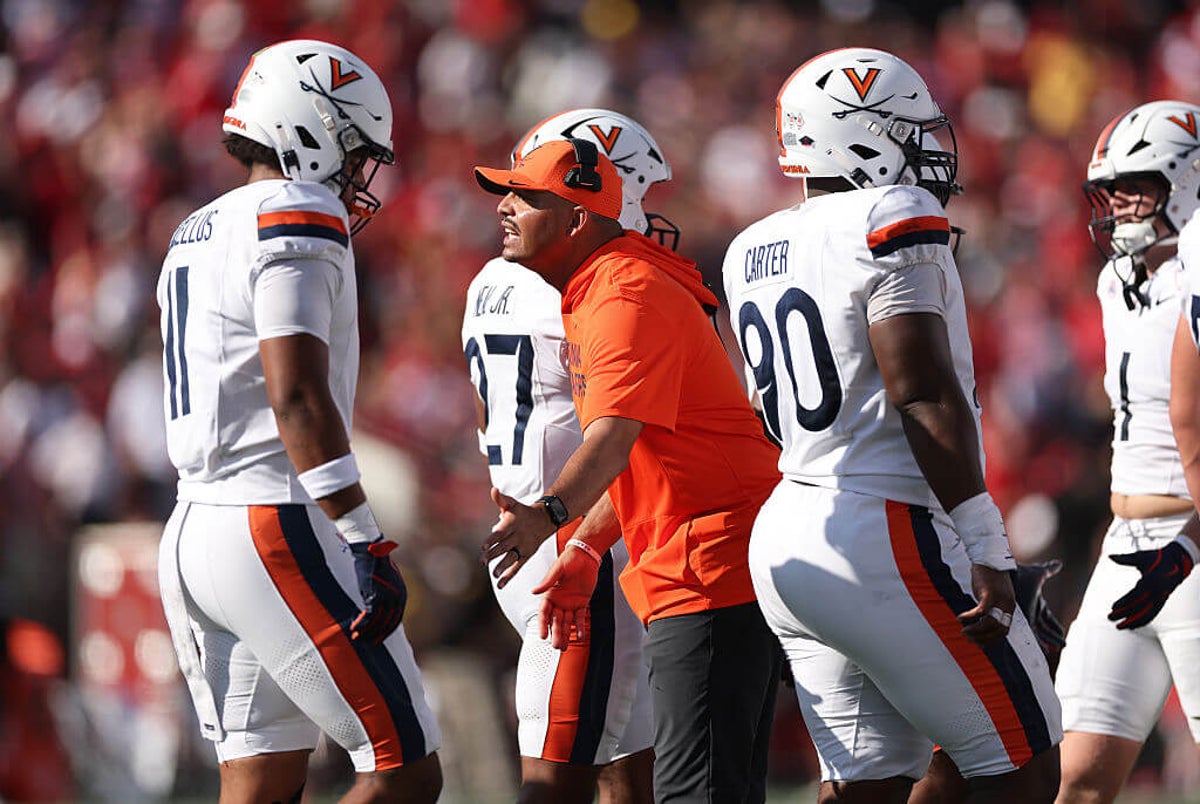
• Virginia played for an ACC title last season and returned more than half of its production. Then it added 29 transfers who brought 22,953 career snaps to the roster, including a pair of quarterbacks in Beau Pribula (Missouri) and Eli Holstein (Pitt), who have 24 major-conference starts under their belt. Nine of the 29 incoming transfers had earned all-conference honors at a previous school. That boosted them to the top of the list.
• Oklahoma State and UCLA have new coaches — Eric Morris (North Texas) and Bob Chesney (UCLA) who brought over roster experience from their previous schools and retained some experienced talent from programs that struggled a season ago. Both UCLA and OSU fired their coaches after three games last season.
Morris added 88 new players (surpassing Deion Sanders’ 2023 Colorado team, which had 87, for the most in college football history) to Oklahoma State, and 19 of those followed him from North Texas, headlined by quarterback Drew Mestemaker and running back Caleb Hawkins, who combined to account for 64 touchdowns last season.
Chesney added 42 transfers to his UCLA roster, with seven joining him from James Madison, including Wayne Knight, who started the last two seasons and has played in 39 games. The other transfers bring experience, too. Receiver Semaj Morgan played in 37 games at Michigan, defensive back Tao Johnson played 34 at Utah, defensive back Ta’Shawn James played in 26 at Iowa State, and so on.
• Texas Tech returned around two-thirds of its production from last year’s Big 12 championship team, and if the Red Raiders are going to spend big, they’re not going to do it on inexperienced players looking for a new proving ground. Linebacker Austin Romaine arrived via Kansas State after earning All-Big 12 honors the last three seasons. Receiver Kenny Johnson played three seasons at Pitt, amassing 695 yards last season. Malcolm Simmons was a two-year major contributor at Auburn. Edge rusher Adam Trick spent four seasons at Miami (Ohio) and was an All-MAC first-teamer last season.
• Unlike Eric Morris and Bob Chesney, Michigan State coach Pat Fitzgerald didn’t have a roster he could take with him to East Lansing. Still, he added experience in the 32 transfers Michigan State signed.
• The same is true of Deion Sanders at Colorado, who shifted his target in the portal and went after more accomplished players over high-level recruits who lacked playing experience, including Vanderbilt/TCU linebacker Randon Fontenette (nearly 2,000 career snaps), Tulane/Appalachian State defensive lineman Santana Hopper (29 career starts) and San Jose State/Sacramento State wide receiver Danny Scudero (1,958 yards receiving at his first two spots).
• Making one’s way to the top of a list like this requires being heavy on retention and experienced transfers and lighter on incoming freshman. That was close to the model that helped Indiana win a national title last year … and wait, who is that at No. 8 on the list?
The least experienced
Iowa
North Carolina
Mississippi State
Michigan
Syracuse
NC State
Alabama
Clemson
Utah
Kansas State
• The gap is wide. The top 10 teams averaged around 410-520 career snaps per player. The teams at the bottom are around 270-300. Iowa, at 222.4, is more than 50 snaps per player lower than the second-least experienced team.
• Naturally, there’s going to be a small bias on this list against teams that can recruit at an elite level and heavily invest in incoming freshmen — and their ability to retain them. Three of the bottom 13 teams — Alabama, Georgia and USC — all signed top-10 classes, with the Trojans at No. 1. Michigan ranked in the top 15. Clemson famously takes few transfers and added a freshman class of 23 players. North Carolina, in Bill Belichick’s second season, also added 40 freshmen to its roster, as well as some transfers who weren’t as experienced.