
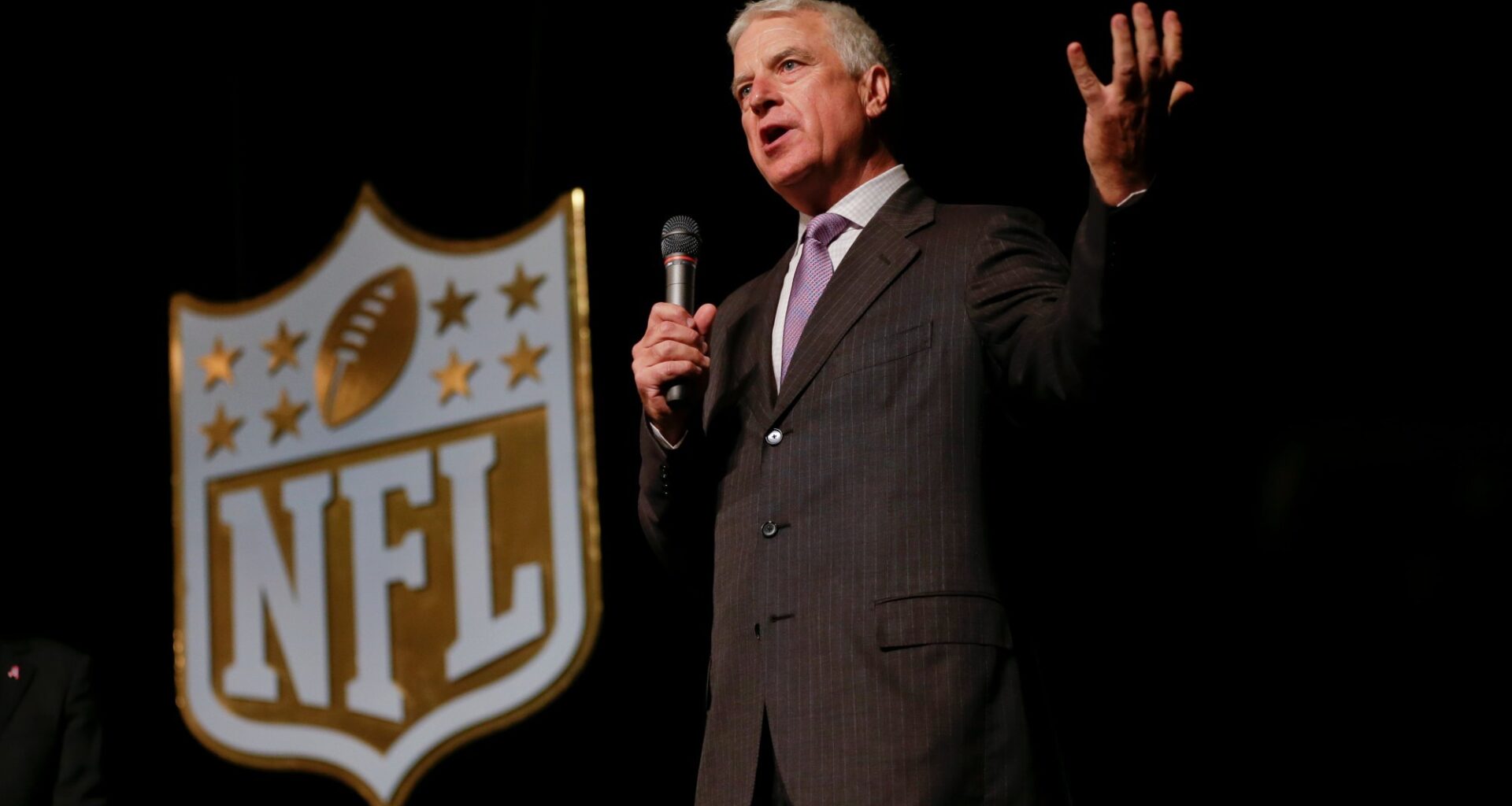
On June 2, 2015, San Diego officials and the Chargers met at the U.S. Grant Hotel downtown.
According to Mark Fabiani, the team’s longtime stadium adviser, the gathering was supposed to move the city closer to keeping its NFL franchise.
Mayor Kevin Faulconer was there, as was County Supervisor Ron Roberts, City Attorney Jan Goldsmith, Chargers chairman Dean Spanos and Fabiani.
Two weeks earlier, a mayor-appointed committee had proposed financing a new Mission Valley stadium partly by selling and developing 75 acres of city-owned land for an estimated $225 million. But the Chargers say that premise was discarded at the first formal negotiating session.
According to an internal draft of the team’s relocation application obtained by the Union-Tribune, San Diego representatives “explicitly abandoned the CSAG recommendations” at the outset, concluding that developing and selling the land was not feasible.
Fabiani, who later confirmed that account, recalled being surprised that officials moved away from the proposal so quickly. Fabiani considered their skepticism about the land proceeds realistic, but believed the abrupt shift exposed months of lost time.
The encounter distilled the problem that had consumed 15 years. The Chargers doubted San Diego could deliver a legally and financially certain stadium. City officials had reason to question whether a franchise pursuing a Los Angeles County stadium was committed to staying.
Time and trust were running out on both sides.
The Chargers declined an interview request for this story. Fabiani, who no longer works for the team, discussed his former role, as did those community members working to keep the team in San Diego. Others spoke on background.
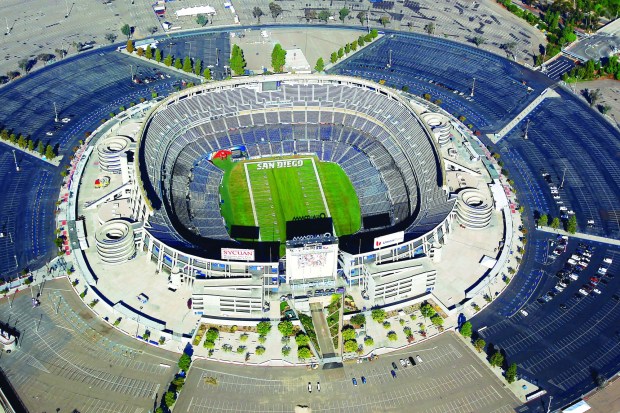 Qualcomm Stadium sat on 166 acres of land in Mission Valley. (KC Alfred, The San Diego Union-Tribune)
When there was more time
In 2003, San Diego was already struggling with the Chargers’ Qualcomm Stadium lease and the question of how to replace the aging facility.
On April 21, 2004, Mayor Dick Murphy announced an effort to reset the relationship. A revised lease completed that summer eliminated the city’s controversial ticket guarantee, ended litigation and opened the possibility of financing a new stadium partly through development of nearby land.
Fabiani now considers roughly 2003 through 2006 the best opportunity. The city owned the property, developers were interested and NFL stadiums cost considerably less.
The Arizona Cardinals’ stadium, opened in 2006, cost about $455 million, including construction, site improvements and land. It had substantial public financing and was not directly comparable to San Diego’s later plans, but it illustrates how sharply construction costs subsequently climbed.
The opening narrowed amid political turmoil. Murphy resigned in 2005 during San Diego’s pension and financial crisis. Acting Mayor Michael Zucchet stepped aside after a federal corruption conviction, which was later overturned; Toni Atkins then served until Jerry Sanders won a special election.
Fabiani says City Attorney Mike Aguirre’s opposition to transferring public land deterred developers.
The Chargers never secured a partner for their original Mission Valley concept. Other sites brought land, infrastructure and financing problems. California’s elimination of redevelopment agencies removed another potential funding source.
As costs rose, a stadium increasingly required some combination of team and NFL financing, public money, stadium revenues and surrounding development.
The city also had a competing priority: expanding the San Diego Convention Center.
The Chargers saw a potential opportunity to combine a downtown football stadium with convention and event space. But Sanders and other city leaders pursued an expansion connected to the existing Convention Center instead.
The disagreement was about more than architecture. It involved competing uses of public resources, competing development visions and different judgments about which project San Diego could actually complete.
According to an internal draft of the team’s relocation application obtained by the Union-Tribune, the Chargers asserted that they had warned Sanders that the Convention Center financing mechanism promoted by Sanders and council members Faulconer and Todd Gloria was vulnerable to a legal challenge. The team predicted that the approach could leave San Diego with neither an expanded Convention Center nor a new football stadium.
A California appeals court later invalidated the financing election because the city’s registered voters had not been allowed to vote on the special tax. Neither project was built.
The court decision supported the narrow legal concern about the financing mechanism. It didn’t establish that the Chargers’ alternative would have succeeded, or that the invalidated tax alone caused both projects to fail.
Meanwhile, Anschutz Entertainment Group advanced Farmers Field, a proposed downtown Los Angeles NFL stadium, beginning in 2010. The project secured naming rights in 2011 and final city approvals in 2012, but no NFL tenant. AEG abandoned the idea in March 2015.
Fabiani believes Spanos could have pursued the opportunity more aggressively, but preferred to keep searching in San Diego.
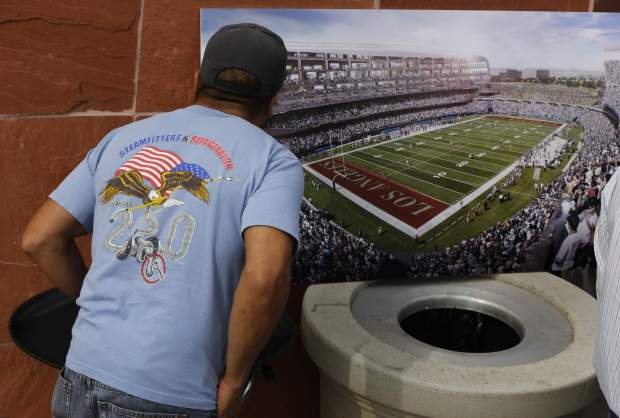 In this Feb. 19, 2015, file photo, a football fan checks a rendering for a proposed NFL football stadium by the owners of the San Diego Chargers and Oakland Raiders during a news conference in Carson, Calif. (Damian Dovarganes, The Associated Press)
Los Angeles changes the clock
On Jan. 5, 2015, a stadium plan backed by Rams owner Stan Kroenke was unveiled in Inglewood.
For the Chargers, Los Angeles was no longer just negotiating leverage. Another NFL owner was advancing a stadium in a market the team already depended on.
According to an internal draft of the team’s relocation application obtained by the Union-Tribune, 25% of Chargers season-ticket holders at the time lived in Los Angeles and Orange counties and the Inland Empire.
Fabiani feared competing teams in Los Angeles could erode that business while the Chargers remained in Qualcomm Stadium. “That would have been catastrophic,” he said.
In Fabiani’s telling, the threat extended beyond ticket sales. Other teams occupying Los Angeles could also eliminate the Chargers’ most valuable alternative if negotiations in San Diego failed.
Kroenke’s announcement dramatically accelerated the franchise’s timetable, Fabiani said.
Faulconer responded by appointing the Citizens’ Stadium Advisory Group, or CSAG, on Jan. 30.
The effort served a purpose beyond assembling a construction budget. It also demonstrated that community leaders were willing to devote time and expertise to keeping the Chargers in San Diego.
Chaired by Adam Day, with Mary Lydon among its members, the volunteer committee sought a workable financing framework while demonstrating San Diego’s civic commitment to keeping the team. It could make recommendations, but not commit public money.
CSAG favored Mission Valley over a more complicated downtown project. But its members questioned whether the Chargers wanted to stay.
Day recalled leaving an early meeting with Fabiani believing the franchise had turned toward Los Angeles.
“The sentiment was they were done with the city, they were done with the region,” he said.
Fabiani disputes that interpretation. He says he warned that another Mission Valley proposal would fail unless it addressed the obstacles that defeated earlier efforts. Day, who did not participate in subsequent negotiations, acknowledged that his conclusion was an impression, not knowledge of Spanos’ intentions.
Lydon also questioned the team’s commitment but insisted the committee’s work was genuine.
“It was real,” she said.
On the night of Feb. 19, the Chargers and Oakland Raiders announced a joint stadium plan in Carson.
City officials now had concrete grounds to doubt the team’s commitment. Fabiani portrays Carson as protection against the risk of another franchise taking the Los Angeles market.
On May 18, CSAG proposed a roughly $1.1 billion Mission Valley stadium financed in part by $300 million from the Chargers, $200 million from the NFL, approximately $121 million each from the city and county, and $225 million from developing 75 acres. Stadium-related revenues and borrowing would help fill out the package.
The proposal was described as requiring no tax increase, but its money was not secured. The land proceeds were an estimate, and Faulconer said a final deal would go to voters. Goldsmith had stressed that CSAG was advisory, not the city’s negotiating team.
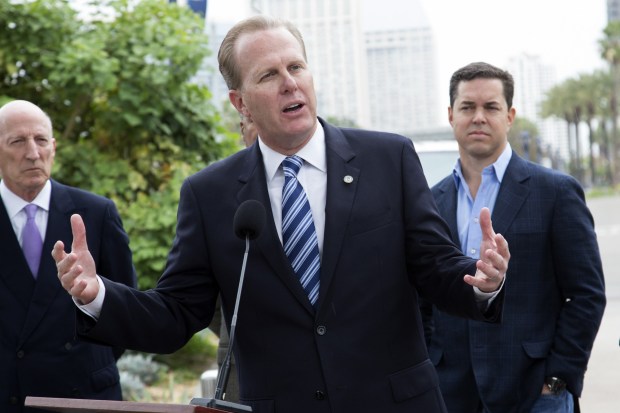 In this Jan. 29, 2015 photo, San Diego Mayor Kevin Faulconer announced his new task force he has assembled to help develop a plan for a new Chargers stadium in San Diego. (Nelvin C. Cepeda, The San Diego Union-Tribune)
The plan breaks down
That distinction became crucial when the parties met June 2.
The Chargers’ account says city representatives immediately set aside the land-sale mechanism.
From the city’s perspective, setting aside an uncertain revenue source could be viewed as necessary due diligence. From the Chargers’ perspective, it meant the city was abandoning a major component of a plan it had unveiled just two weeks earlier.
Environmental review became the next impasse. Under the California Environmental Quality Act, a stadium project needed an environmental impact report that could be challenged in court.
Goldsmith had written in February that a typical report took about 12 to 18 months. Yet the city said consultants could finish the stadium review by Oct. 15. Fabiani says the Chargers’ lawyers believed a defensible report would take roughly two years.
The city believed its consultants could deliver the work quickly enough to keep negotiations moving. The Chargers questioned whether that speed would survive litigation. The dispute was about legal certainty, not merely administrative urgency.
On June 16, the Chargers said the city’s timetable could not produce a legally defensible vote and effectively ended direct negotiations, though communication was not entirely foreclosed.
San Diego pressed ahead. On Aug. 10, it released a roughly 6,000-page draft environmental report and a revised financing framework.
The plan no longer counted on the $225 million land sale. Instead, it contemplated $200 million from the city and up to $150 million from the county, subject to approval.
Those were proposed contributions, not committed funds. Roberts later acknowledged the county Board of Supervisors had never approved its share, describing the concept as a potential bridge loan.
The city had kept working. The Chargers still doubted the financing and legal timetable, even as they pursued Carson.
Each side saw evidence that the other could not — or would not — deliver.
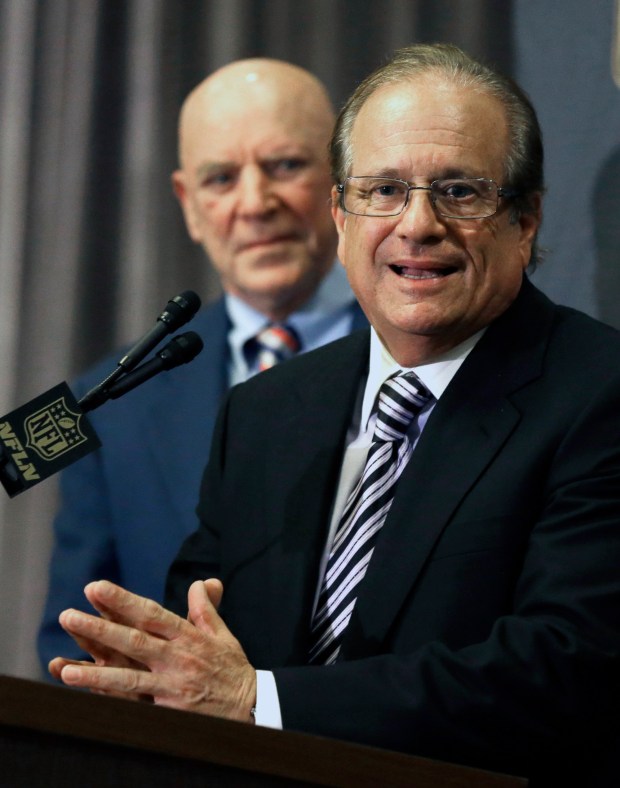 Houston Texans owner Bob McNair, left, listens as San Diego Chargers owner Dean Spanos talks to the media after team owners voted in January 2016 to allow the St. Louis Rams to move to a new stadium just outside Los Angeles. The Chargers will have an option to share the facility. (AP Photo/Pat Sullivan)
One year, and no more
On Jan. 4, 2016, the Chargers, Rams and Raiders formally applied to relocate. Eight days later, NFL owners approved the Rams’ move to Inglewood and gave the Chargers first option to join them.
If the Chargers passed, the Raiders would receive a conditional one-year opportunity for the second Inglewood position.
The NFL offered an additional $100 million toward a Chargers stadium in San Diego. Staying remained possible, but the team’s Los Angeles opportunity now had a deadline. The Chargers had until Jan. 15, 2017 to decide, although an approved San Diego stadium-financing referendum could have allowed an extension.
Fabiani now describes the choice in stark terms.
“At that point, there was no choice,” he said. “It was either move to L.A., or watch the Raiders take that spot.”
That was his assessment, not an inevitable outcome: By early 2016, the Raiders were also exploring Las Vegas.
The Chargers made one final San Diego push with Measure C, a downtown stadium and convention-related proposal. Faulconer endorsed it Oct. 3 after Spanos provided written assurances on cost overruns, land acquisition and protections for the city’s general fund.
Measure C received 43.64% of the vote on the November ballot, far short of the required two-thirds.
On Jan. 12, 2017, three days before the deadline, Spanos announced the Chargers were moving to Los Angeles.
The departure did not settle who was responsible. Day and Lydon questioned whether the team ever intended to accept a San Diego deal in 2015. Fabiani maintains that the Chargers spent years seeking one and that Kroenke’s project finally made delay untenable. Neither account establishes what Spanos privately decided or when.
By then, both parties were evaluating one another through years of disappointment.
The June 2, 2015 meeting captured the impasse. At the U.S. Grant Hotel, city representatives set aside a financing concept that had taken months to assemble. The Chargers saw another reason to question the city’s promises. City officials had reason to question whether the team would stay long enough for a replacement to be negotiated.
Neither side had confidence in the other’s assurances. Neither controlled the NFL’s clock.
And after 15 years, there was no time left to rebuild the trust a stadium agreement required.
Editor’s note: Almost 10 years have passed since the Chargers ended their 56-year run in San Diego and moved to Los Angeles. Over the course of this NFL season, this series will trace the stadium fight and decisions that led to the move, revisit the fans and community left behind, assess the Chargers’ decade in Los Angeles and San Diego’s life without them, and explore whether the NFL could ever return.
Our series: Bolting San Diego
Part 1: Nearly 10 years after the Chargers, one fan has no team — and no regrets
Part 2: ‘We’re still here’: Die-hard Chargers fans root for team from San Diego
Part 3: What happens after the NFL leaves?
Part 4: How San Diego’s economy moved on from the Chargers
Part 5: Ten years after Chargers’ departure, their old stadium site is being transformed
Part 6: Why 9 stadium possibilities failed to keep the Chargers in San Diego