
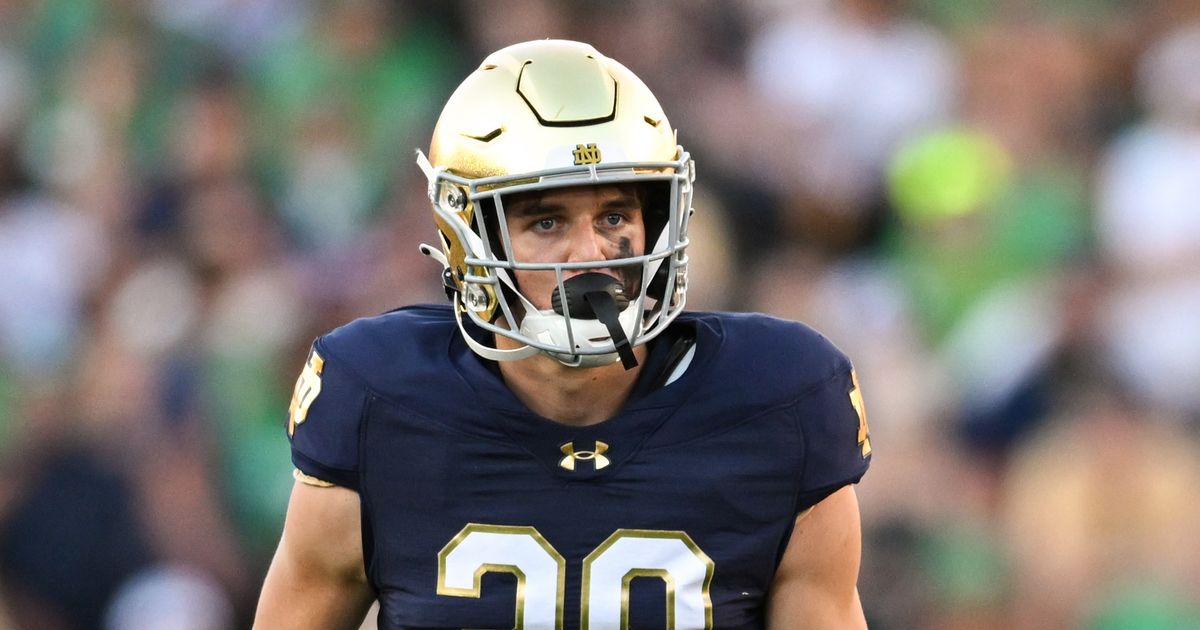
Final approval to a settlement of three athlete-compensation antitrust cases against the NCAA and the Power Five conferences was granted on Friday, yet one of them has been described as “tragic” Notre Dame safety Luke Talich previously labeled the NCAA’s proposal to cut down FBS rosters as ‘tragic'(Image: Getty Images)
Notre Dame star Luke Talich has already made his feelings clear on the NCAA’s settlement’s approval as college sports prepare to change forever.
Friday saw the final approval to a settlement of three athlete-compensation antitrust cases against the NCAA and the Power Five conferences granted, with student-athletes now set to be paid by their institutions for the very first time. Schools will be able to pay athletes up to $20.5 million a year, starting in 2025-26.
Colleges will also back-pay $2.8 billion in damages to current and former athletes – and their lawyers who represented them – who competed from 2016 to 2025, while the NCAA’s current system of sport-by-sport athletic scholarship limits will be scrapped in favor of sport-by-sport roster limits.
READ MORE: Donald Trump’s granddaughter Kai shows true colors after suffering meltdownREAD MORE: Mary Lou Retton status since alarming arrest and concerning family update
In football, for instance, the roster limit will be 105. This comes as a huge blow to walk-ons, which have been a huge part of the football culture at a number of schools.
One of those includes current Notre Dame safety Talich, who previously described the initial proposal to cut down FBS rosters as “tragic.” As a former walk-on himself, he understands their importance and fears for the futures of those who aren’t automatically offered terms by colleges and universities.
“I think it’s tragic, honestly. As a walk-on myself, if I was two years younger, I would never have that opportunity,” Talich told South Bend Tribune in April. “I don’t know what the system is; I don’t know how it has to work. But there has to be some system for walk-ons, I believe.”
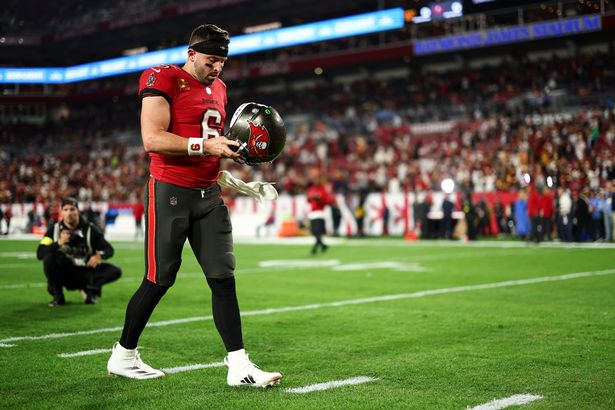 Baker Mayfield of the Tampa Bay Buccaneers is perhaps one of the most notable walk-ons in football history(Image: Getty Images)
With the vast majority of the total sports budget of $20.5m earmarked for football, this could make it difficult for walk-ons to make the team, given their position on the squad ladder.
In Notre Dame’s case, the fall roster projects at 120 players, including 13 scholarship signees or incoming transfers set to enroll in June. For those from smaller communities, walk-on opportunities are the only chance they have to play at larger programs.
Hailing from the northwestern Wyoming town of Cody, which has a population of approximately 10,240, Talich passed up scholarship offers from the likes of Oregon State to walk on at his dream school. By November of his freshman year in 2023, he earned himself a scholarship through his play on Irish special teams.
Such stories represent why walk-ons are so important for those from smaller areas where there is no hope of breaking through in big state competitions, leading Talich to fear for the futures of those who have also grown up under similar circumstances.
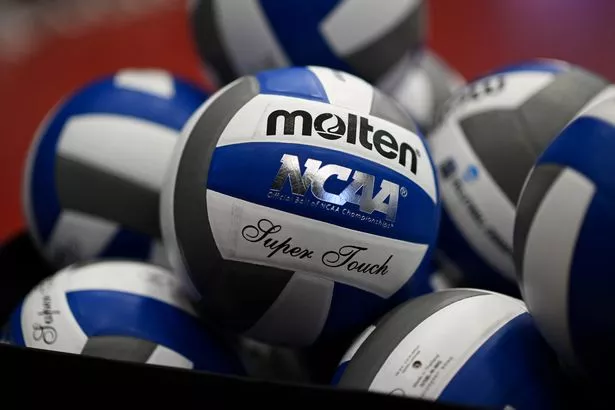 The recent NCAA settlement has brought an end to college sports’ foundation of amateurism(Image: Getty Images)
Now that the House settlement has been approved, it could now be near-on impossible for walk-ons to succeed. “It’s not good. I don’t know why they’re doing it. Technically, I guess it has to do with NIL (Name, Image and Likeness),” Talich added.
“For me, and for a lot of people in America, it’s never been about money. Our parents didn’t grow up making money in college. You made zero dollars in college, and that was fine. I don’t know what the solution is, but I don’t think (roster limitation) is a good thing.”
The new revenue-sharing model will also have no effect on current name, image and likeness (NIL) deals, which have completely changed the game in college sports since their inception a few years ago.