

When Liverpool sealed the Premier League title in April with a 5-1 win against Tottenham Hotspur at Anfield, Alisson followed another goalkeeping great into one particular record book.
The 32-year-old became the first goalkeeper since Manchester United’s Peter Schmeichel in 1999 to win the English top flight wearing gloves manufactured by Reusch.
When Liverpool won the Premier League in 2020, Alisson wore Nike gloves, but in October 2023, he signed a deal with Reusch, which meant a return to a brand he used as a young goalkeeper in Novo Hamburgo, just north of Porto Alegre in Brazil. It was a major coup for the German brand, which also has Liverpool’s second-choice goalkeeper Caoimhin Kelleher on its books.
Reusch is one of the oldest brands in glove manufacturing. Alongside West Germany and Bayern Munich goalkeeper Sepp Maier, they created what is thought to be the first glove with a latex palm in 1973. After Maier’s appearances at the 1974 World Cup, which West Germany won, latex gloves began to rapidly catch on.
Before then, the take-up of goalkeeper gloves had risen steadily. Some wore rubber gardening gloves, others opted for the warmth of wool in the winter. In the 1940s, one early glove adopter was an Argentinian, Amadeo Carrizo, who played for River Plate more than 500 times from 1945 to 1968. In 1966, Gordon Banks wore gloves as England won the World Cup and rumour has it that Banks liked to garden in his old gloves before throwing them away.
But it took nearly 100 years for goalkeeper gloves to take off. In 1885, an English manufacturer called William Sykes patented a leather glove design for goalkeeping, known to be one of the first patented glove designs. For the 1970 World Cup in Mexico, Banks wore an experimental pair with rubber dimples on the palms, the gloves he used in his famous save against Brazilian forward Pele. Eight years later in Argentina, only one World Cup goalkeeper, Scotland’s Alan Rough, did not wear gloves.

West Ham United goalkeeper Mervyn Day makes a save with his bare hands against Tottenham Hotspur in 1973 (Evening Standard/Hulton Archive/Getty Images)
The technology and aesthetic allure of goalkeeper gloves have also significantly improved. The ill-fitting, bulky designs of the 1980s and ’90s are a distant memory, with elite goalkeepers now wearing lightweight ‘second skin’ gloves individually moulded to their hands. Modern iterations can feature air vents, latex punching zones and strapless wrists.
Whether they are smothering them in Vaseline or getting through a new pair every game, goalkeepers would be lost without their gloves. Here, we will look at why goalkeepers are wearing non-stick gloves, discuss a frustrating gap in the market for women’s gloves, and touch on a curious lack of sustainability.
Goalkeeper gloves tend to follow the same pattern, though Reusch is among the brands to have different cuts to pick from.
On the cheaper end of the spectrum, where you can get gloves for around £25 ($33), the combination of fabrics in the gloves, such as mesh and rubber, is less costly to produce on a mass scale. These gloves will usually follow a flat design, unlike the ergonomic focus of what elite goalkeepers wear, which retail from £80 to £180. The price rise is because of the expensive materials used, such as neoprene, a synthetic rubber also used in wetsuits.
Typical designs also include velcro wrist wraps, though many glove manufacturers are now opting for strapless wrists or a latex wraparound to help with ball control. Air vents are becoming a popular way of keeping hands from sweating as much and a ‘punching side’ of the glove has been a design focal point in recent years.
In October 2021, former Liverpool goalkeeper Rylee Foster was told she was lucky to be alive and that she would never play football again after being involved in a car crash in her native Canada. Two years later, after extensive rehabilitation, Foster, now 26, went against all odds, pulling on her gloves again in a professional match for A-League Women side Wellington Phoenix.
After returning to the Women’s Super League in England with Everton this season, Foster is now playing in the Women’s Championship for Durham, whose home ground is an artificial pitch at Maiden Castle sports centre.
“I’m going through gloves a lot faster than I normally would (playing on artificial grass),” Foster says. “I wash my gloves after every single training session, after every single match, and I can get a month out of a pair of gloves.”
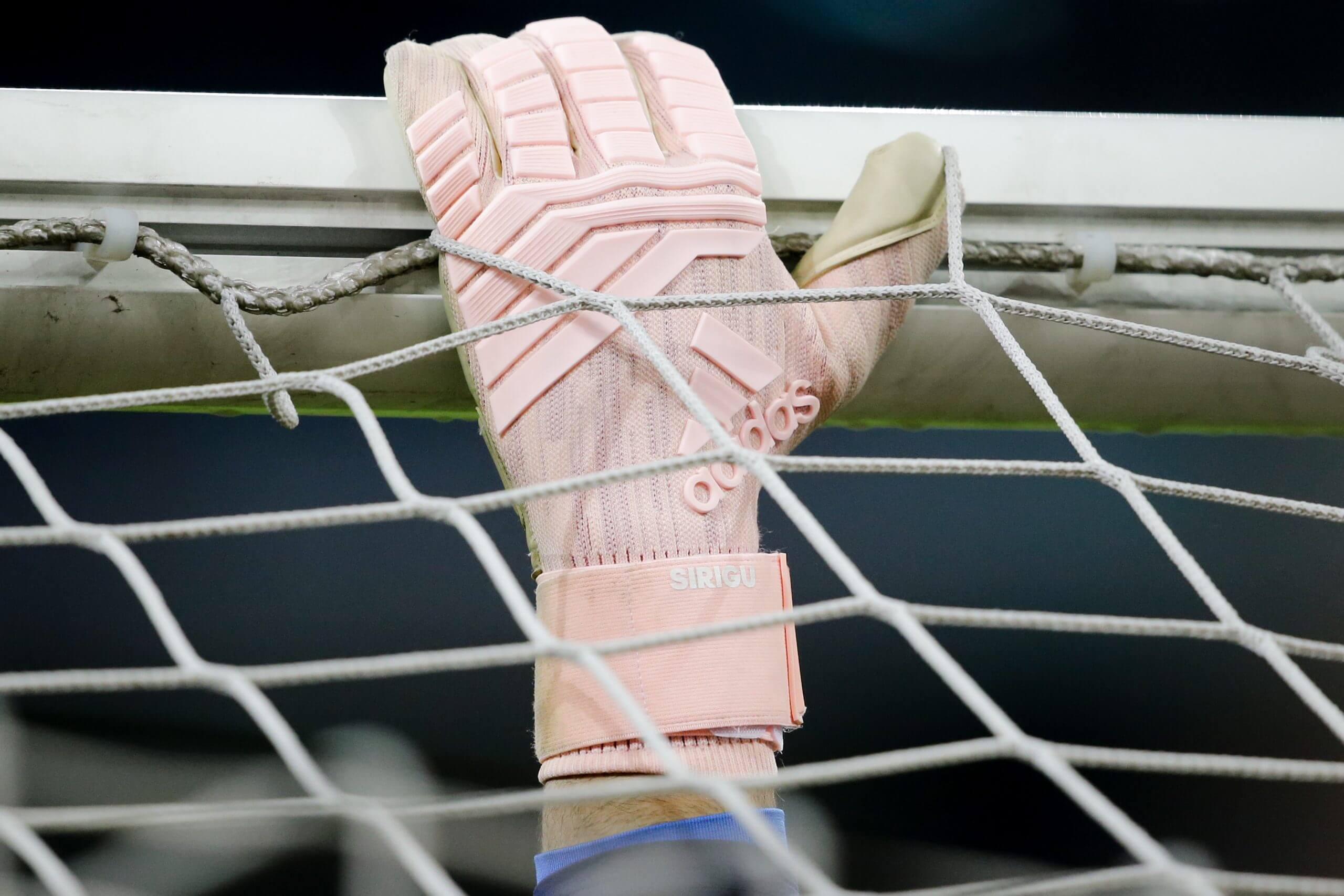
A close-up view of gloves worn by Italy’s Salvatore Sirigu in 2018 (Erwin Spek/Soccrates/Getty Images)
After using a pair for around a month, professional goalkeepers, even those wearing the most expensive gloves, regularly notice a drop-off in grip.
“It is very common,” Bob Fidler, country manager at Reusch UK, says. “Peter Schmeichel, when he was wearing our brand, used to go through 50 or 60 pairs a season — and then footballers have gloves they wear for training, so that number goes up. That’s part of their sponsorship deal. We give them the gloves for free and then they can do what they want. More often than not, goalkeepers will sign them and throw them into the crowd for fans, or give them to friends or family.”
“Gloves are just so expensive,” Dan Atherton, a goalkeeper for Warrington Town in the sixth tier of English football, says. “If you want them to be top quality, most glove brands will only last you a month. Outfield players will say they only cost £60, but that is eight or nine times a year.”
Once the grip on a glove is gone, Foster, Atherton and most other goalkeepers tend to give their worn gloves to young fans.
“If I can inspire just one person to become a goalkeeper by doing that, I will. It’s not like we’re a fruitful group, us goalkeepers,” Foster laughs. “We always have to keep convincing people to try it out.”
In 2016, former England goalkeeper Carly Telford helped Precision co-design gloves specifically for women. Features included a narrow fit, smaller finger length and tighter grip around the back of the hand. But almost a decade on and most women’s goalkeepers continue to wear men’s gloves in smaller sizes. To find your glove size, most brands require you to measure the width of the middle of your palm and the length from the bottom of your hand to the top of your middle finger.
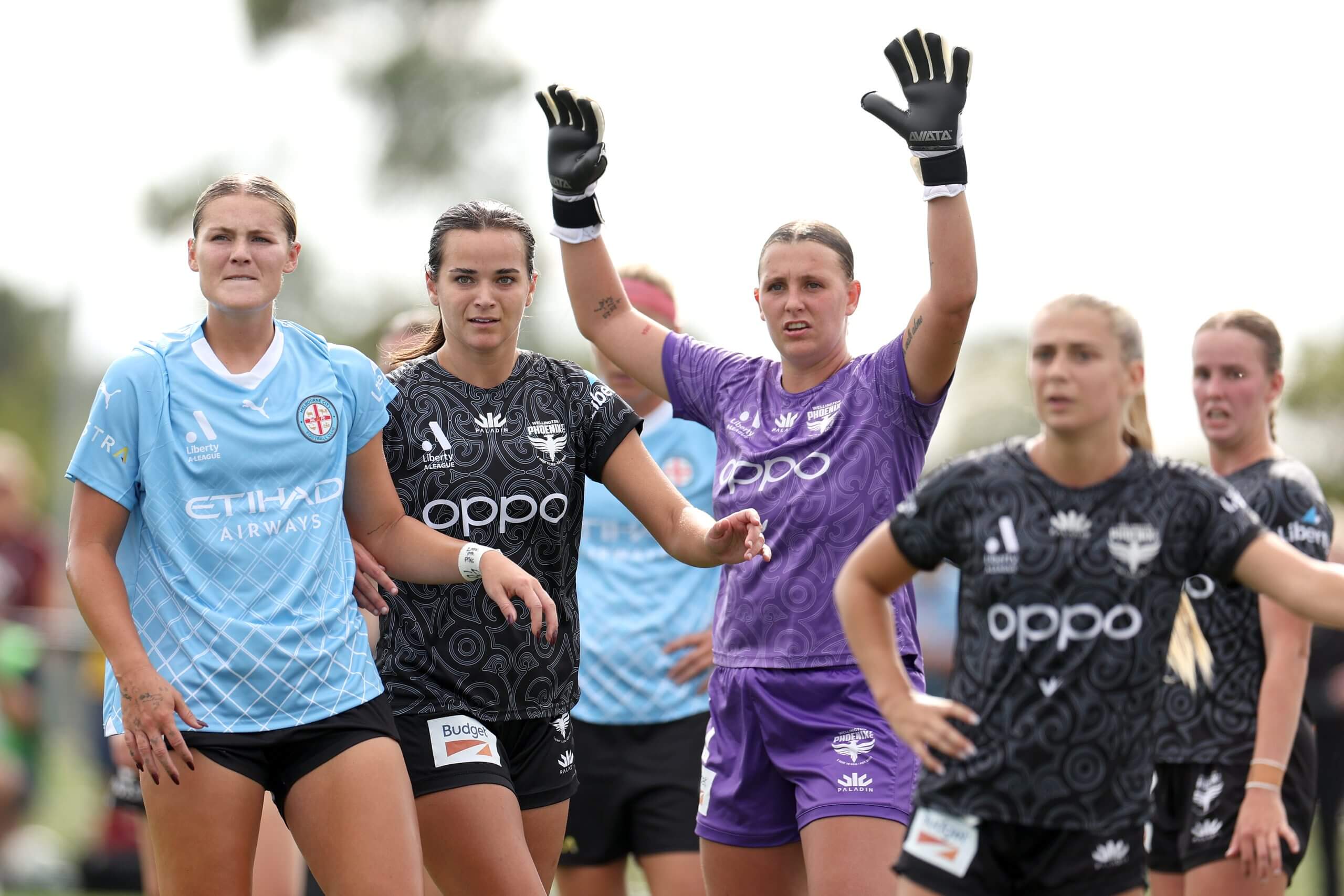
Rylee Foster, centre, in action for Wellington Phoenix in 2024 (Jonathan DiMaggio/Getty Images)
“It’s hard to find something that’s slim-fitting,” Foster, who is in discussions with English brand VOS on designing a glove for women to use, says. “A lot of gloves are generic and mass-produced. A lot of women have smaller hands and it’s not easy finding something that fits you. We’ve had a lot of conversations about how we can tailor a glove to fit my hand and what that would be like for other female goalkeepers.”
On average, women wear size seven or eight gloves and men would typically wear a nine or 10. Some goalkeepers like to wear a size down to ensure a snug feeling, but it remains a problem for female goalkeepers trying to find the perfect fit.
Safety is another key factor in innovation. Adidas is one of the brands exploring how to protect goalkeepers’ fingers from overextension. That led them to bring out ‘Fingersave’ technology, inserts built into the glove designed to reduce impact when saving shots.
“They protect your fingers from either going into overextension when you’re saving the ball,” Emily Burns, a Canadian goalkeeper playing for Nantes in France, says. “But I prefer not to use them. I usually tape my wrists and fingers — it’s not something I need to do from an injury standpoint, it’s just kind of a superstition.”
Punching zones have proven to be another area for reinvention. Adidas put almost 300 spikes on the back of the Predator Pro Hybrid gloves, which Gianluigi Donnarumma wore as Italy won the European Championship in 2021.
“Some gloves have specific designs that are supposed to help with your punching ability,” Burns says. “Directionally, if you want to punch in a certain way, it’ll help you. Before, they were a bit bulkier and not as comfortable, but now you feel like when you go to punch the ball, it’s pretty natural and comfortable.”
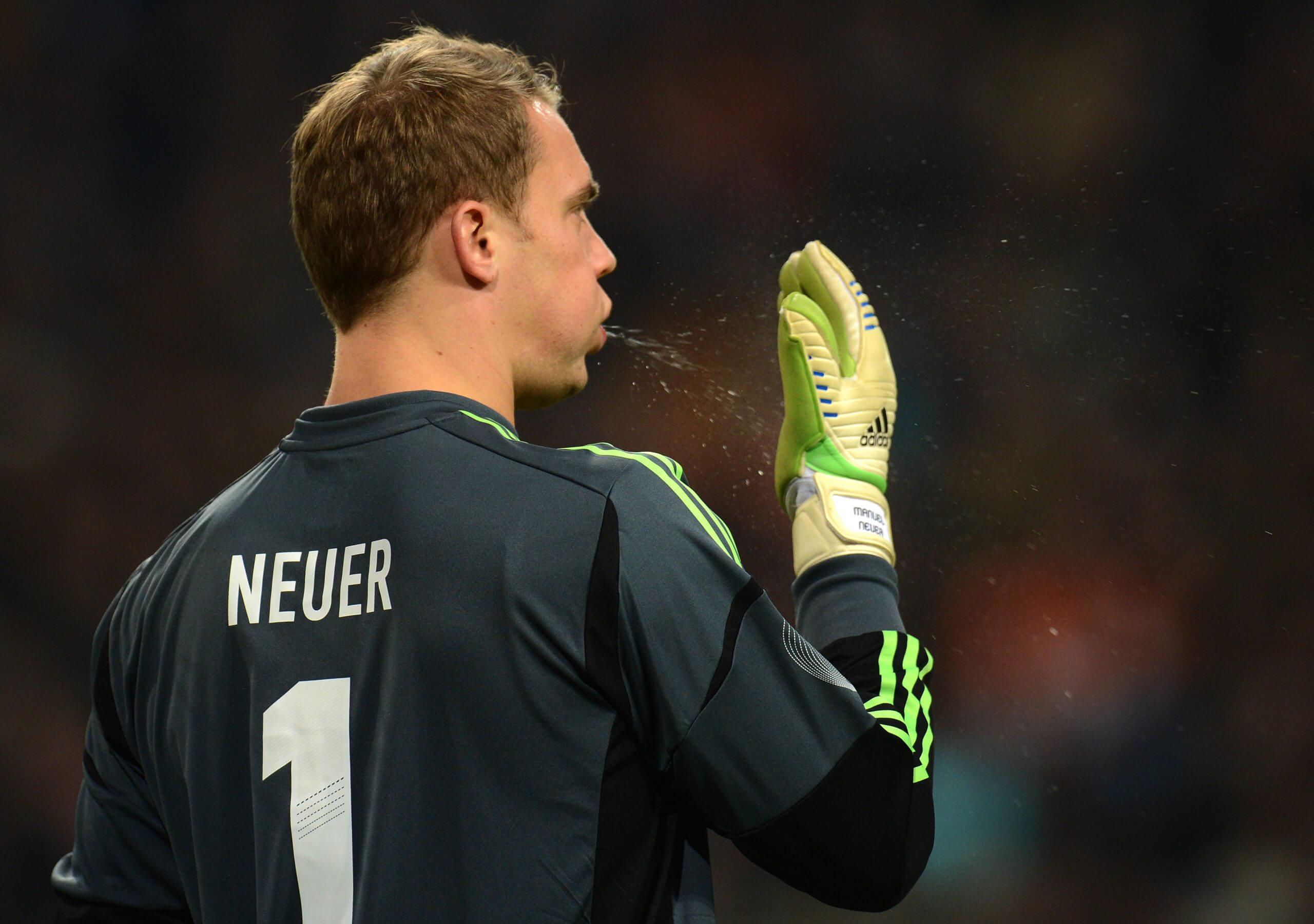
Germany’s Manuel Neuer spits on his glove during a match in 2012 (Patrick Stollarz/AFP via Getty Images)
There are countless different glove cuts and goalkeepers prefer different styles.
“When I was growing up, the only cut that existed was ‘flat palm’,” Matt Pyzdrowski, The Athletic’s goalkeeping expert, says.
“I remember the first time I put on a roll-finger glove, where the latex wraps around the finger, my mind was blown. It felt like it created a bigger surface area to catch and control the ball.
“They’ve even made hybrid gloves, a mix between roll-finger and flat-palm ‘negative’ cuts —negative is where the stitching goes inside, so it is a bigger surface area than a flat palm but not as big as a roll finger. The roll finger is where the latex goes all the way around and the stitching is on the back side of the hand.
“The advantage of the negative cut is that it fits tighter to your fingers. It’s for goalkeepers who want that second-skin feel, where it feels like you’re just using your hands.”
When jumping into a crowd of players and trying to punch or catch a football, injuries can occur, requiring goalkeepers to wear specially adapted gloves.
Southampton goalkeeper Aaron Ramsdale used a glove with four fingers during a 0-0 draw against Fulham in December. In 2023, former England goalkeeper Rob Green told Amazon Prime Sport how in the last decade of his career, his little finger on his right hand “started to die” after being repeatedly broken and dislocated. He finished his career wearing a webbed-style glove to accommodate it.

Southampton’s Aaron Ramsdale wore a distinctive four-fingered glove on his left hand in December (Clive Rose/Getty Images)
Given the high risk involved in goalkeeping, one thing you might not expect goalkeepers to wear are gloves without any grip.
Burns and Foster are advocates of non-sticky training gloves made by VOS, which was founded by three brothers, Mark, Lee (a former Rangers goalkeeper) and Shaun Robinson. Together, they founded a leading goalkeeper content creation account called The Modern-Day Goalkeeper, which has 3.5 million followers on TikTok.
One of their most successful innovations has been the slippy training glove.
“It is a glove that makes training harder and when you take them off and wear your match gloves, it is going to feel really easy,” Mark Robinson explains.
“Goalies go through a whole week without making one mistake because it’s all premeditated. They never have a chance to deal with failure and we’ve designed a glove where your failure rate goes really high, and then you start to develop a more positive relationship with failure. It allows you to deal with and recover from mistakes in training.”
@moderndaygkWe have the WORST Goalkeeper glove in the world…♬ original sound – Moderndaygk
“It really forces you to trust your own hands and develop your handwork, too. It has given me even more confidence in my catching ability,” Burns, 27, says.
Robinson says the slippy glove has, in the past, been used at La Masia, Barcelona’s iconic academy, thanks to former Barca goalkeeping coach Xavi Ferrando.
“We had a really good relationship with him and he was really interested in using them,” Robinson says. “We went over to Barcelona to meet him and watch training. He had the goalkeepers from under-14s all the way up to the B team using them. But it was one of those things where we couldn’t get any photos or videos, so we couldn’t share anything about it. All we could say was that they were wearing them.”
In April 2024, Manchester United goalkeeper Andre Onana caused a stir within the goalkeeping community when it was found he was using Vaseline, petroleum jelly typically used to heal dry skin, to keep his gloves moist during games.
“I do it sometimes, but I don’t know why Onana is doing it,” Atherton, a former Liverpool academy goalkeeper who trained with Alisson, says. “I can’t wrap my head around that.
“He probably plays with a fresh pair of gloves every week, on pitches where there’s rarely any loose mud. I don’t see why he needs it. I use it sometimes if I have gloves that are getting towards the end of their life but I am playing well so don’t want to throw them away yet. Vaseline gives the grip an extra couple of weeks.”
“There are two reasons you might use substance on your gloves,” Pyzdrowski says. “One, because you want to extend the life of an old pair, or two, because it actually does make the grip better.
“For someone like Onana, it’s probably a psychological thing. When he has Vaseline on his gloves, it makes him feel more confident. A sticky substance on your gloves can improve your grip of the ball and keep out a lot of dirt and dust from getting into your latex.”
At Reusch, Fidler’s recommendation is to slightly dampen the gloves.
“It activates the grains in the latex to offer a better grip if the gloves are slightly wetter,” Fidler says. “Before first use, you should wash the gloves to get any resins out of the palm and then keep them damp. Always wash after use and just keep it damp for the next time. Goalkeepers do spit on gloves — some of that is a habit, something they’ve always done. Spitting doesn’t make much difference because the glove should be damp anyway.”
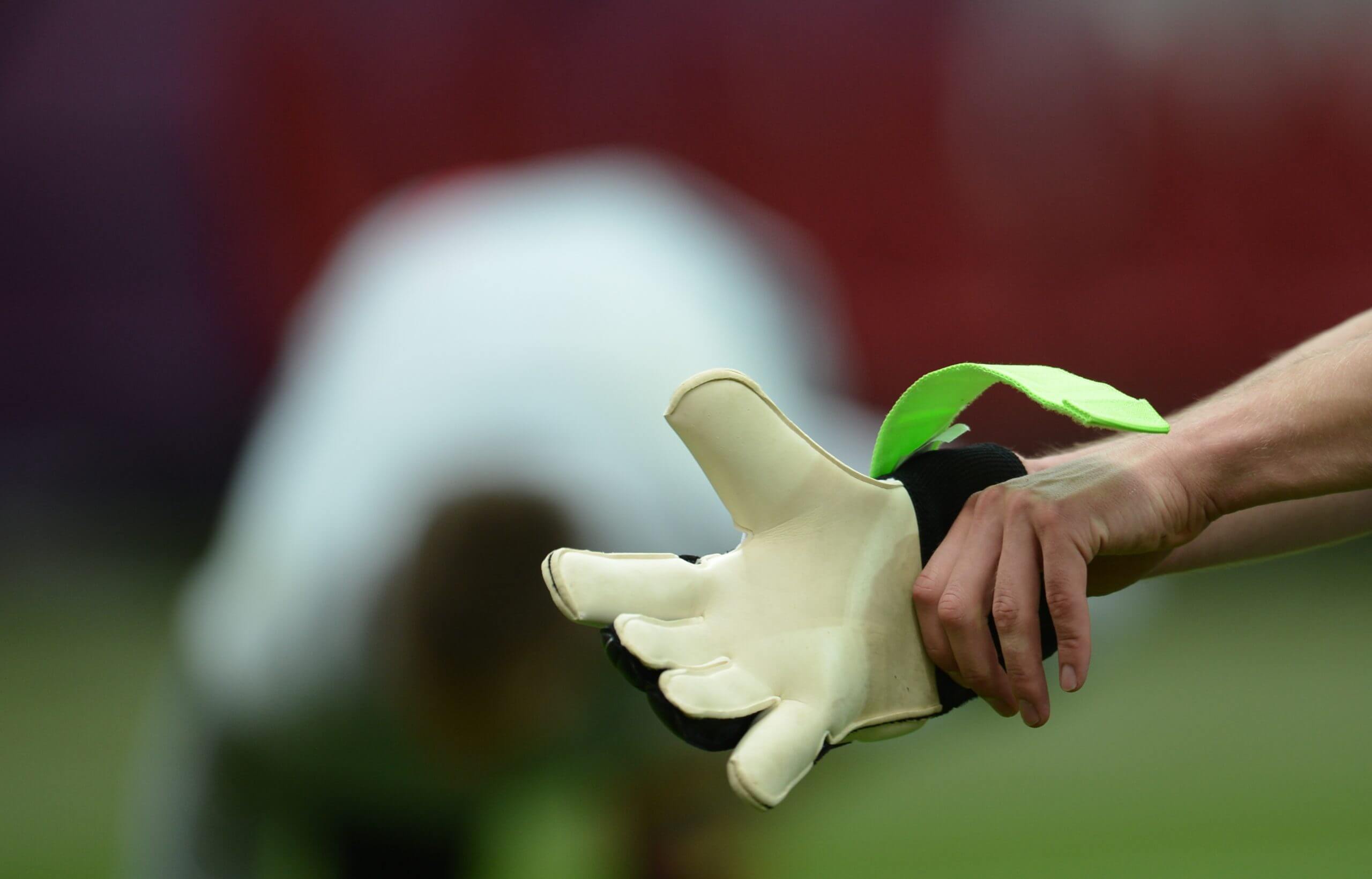
(Aris Messinis/AFP/Getty Images)
As for the Vaseline debate, Reusch looked into it and found no real benefits of wearing petroleum jelly lathered onto the palm. “It is not going to aid the grip in any way,” Fidler adds. “Water is quite adequate for doing that.”
“You will notice almost every single goalkeeper sits a towel next to their goal and that’s to take off some of the water that gets on and into your gloves,” Pyzdrowski says. “When your gloves get too much water in them, they get heavy and then you can’t feel the ball. If you want to catch the ball, you need to be able to feel it.”
Goalkeepers are creatures of habit, but their union continually embraces changes in glove design and technology every season. For those in the glove-making business, the pursuit of perfection is never-ending and will probably never be reached.
Will a more sustainable glove ever exist?
“That would mean someone needs to come up with a better product,” Pyzdrowksi says. “I just don’t know what that would be because the focus now is on improving the latex. The best latex gloves are usually softer. That means they’re less durable. If you use a harder latex, the grip won’t be as good.
“The really cheap pairs last a lot longer, but they will never have good grip. The really expensive ones have incredible grip, but they just don’t last just because they get torn up.”
(Top photos: Alisson and Peter Schmeichel; by Getty Images; design: Eamonn Dalton)