
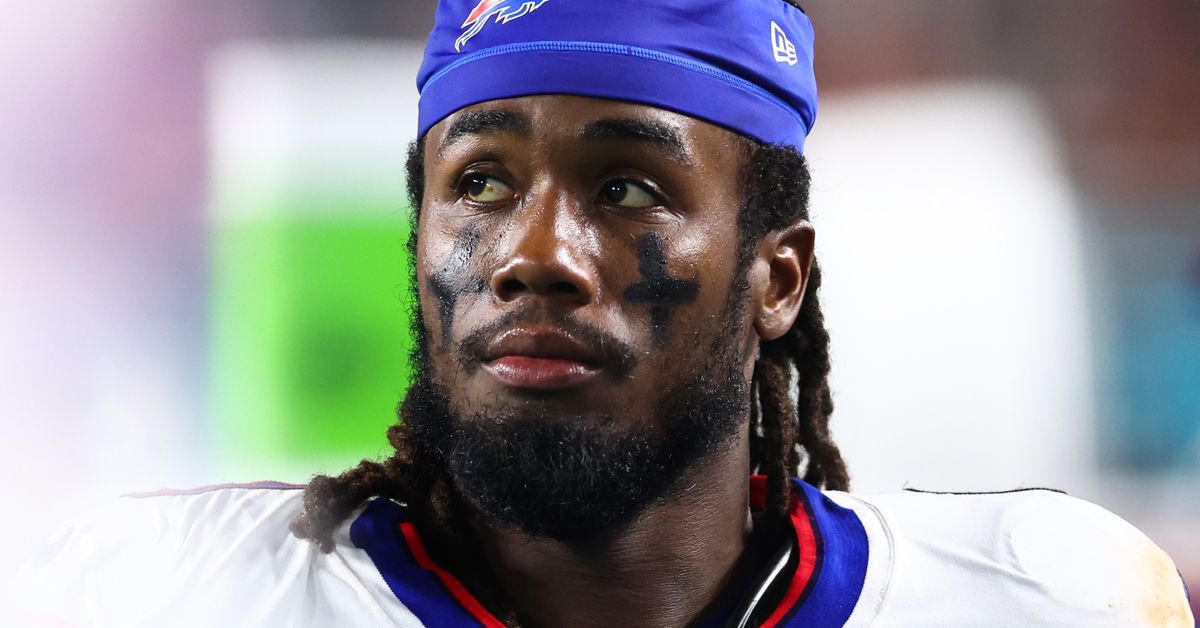
The Buffalo Bills face a major decision regarding running back James Cook, who reportedly seeks a contract extension north of $15 million annually. Such a pay day would place him among the NFL’s highest-paid running backs, rivaling Saquon Barkley, Derrick Henry, and Christian McCaffrey.
While Cook’s 2024 season was notable — 1,009 rushing yards and a league-leading 16 rushing touchdowns — there are several reasons why committing to such a deal is poor business. The former Georgia Bulldog has gotten better year after year in his young career, and his recent body of work, especially in the playoffs, has made him a fan favorite for some.
Let’s be honest, though — Are we sure James Cook is a top-five NFL running back, and most importantly, an irreplaceable piece in the Bills’ dynamic offense? He surely wants to be paid as so. Let’s dive deep into this conundrum, where I’ll point out why I wouldn’t budge if I were making this decision for the Bills.
James Cook has limited three-down versatility
James Cook’s inability to serve as a reliable third-down back undermines his case for a $15 million salary. In 2024, Cook played just 48% of Buffalo’s offensive snaps — far below elite backs like Barkley (68%) and Henry (62%), who are trusted in all situations. His struggles in pass protection relegated him to early down duties, with Ty Johnson handling third downs and two-minute drills.
Pro Football Focus (PFF) gave Cook a pass-blocking grade of 52.3 in 2024, placing him in the bottom third of starting running backs. This deficiency is critical in an offense reliant on MVP quarterback Josh Allen, who faces blitzes on 28% of dropbacks (per Next Gen Stats).

Photo by Timothy T Ludwig/Getty Images
Cook’s receiving production is also inconsistent. His 32 receptions for 258 yards and two touchdowns in 2024 aren’t bad for his usage. However, Cook’s six drops in 2023, including three potential touchdowns, and a 7.4% drop rate in 2024 speak to his inconsistency. His limited role in passing situations — 2.4 receptions per game under Ken Dorsey and 3.1 under Joe Brady — further shows that he’s not (yet) a complete back worthy of elite pay.
The Bills’ run game: A team effort
I can’t help but believe Cook’s 4.9 yards per carry and 16 touchdowns in 2024 were amplified by Buffalo’s offensive structure in general. The team’s offensive line, with all five starters playing over 1,100 snaps, excelled in run blocking.
Connor McGovern, who moved to center after Mitch Morse’s departure, and David Edwards, who took over at left guard, were key. THe line received a PFF grade of 78.6 for run blocking, with McGovern’s transition enhancing cohesion, and Edwards’ size and physicality improving the unit’s run block.
O’Cyrus Torrence is extremely powerful at that department as well, and that’s the strength of Spencer Brown and Dion Dawkins’ games, with their movement skills shining in coach Aaron Kromer’s schemes. Cook’s 120-yard Wild Card performance against Denver owed much to the line’s ability to create gaps.
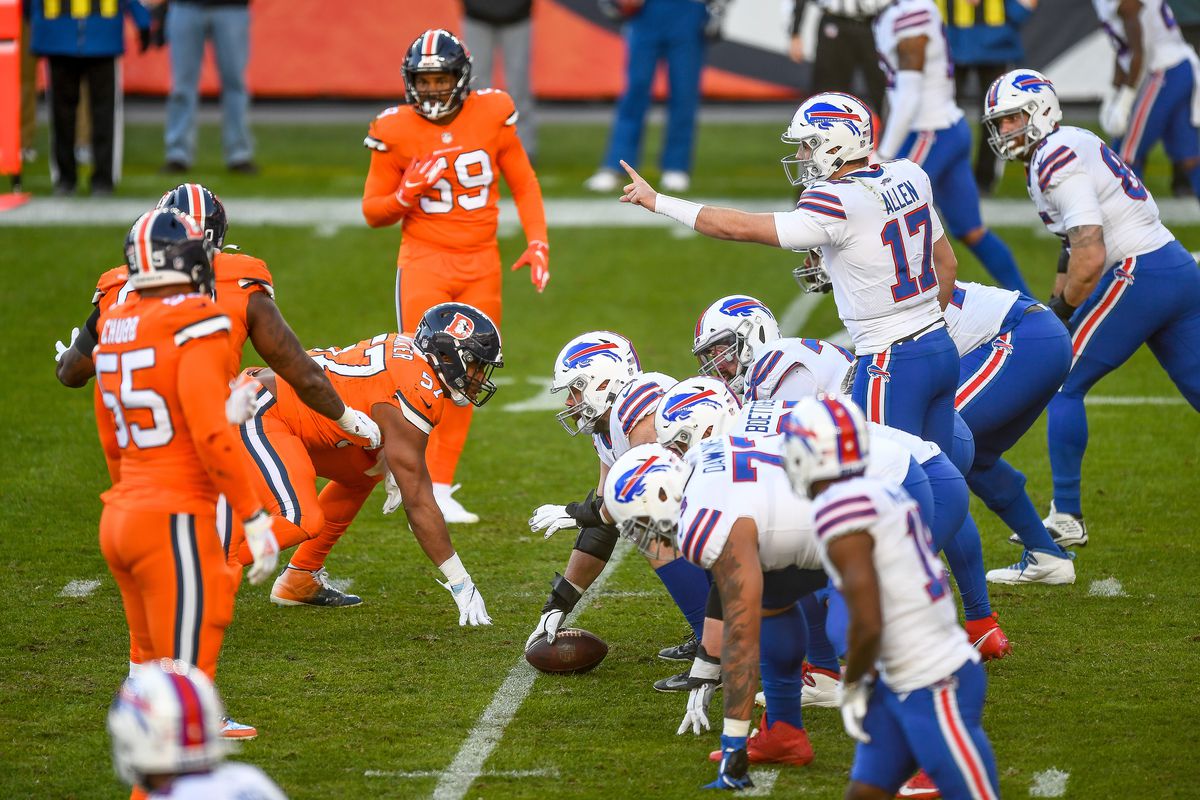
Photo by Dustin Bradford/Icon Sportswire via Getty Images
And we can’t forget about the MVP’s impact. Josh Allen’s dual-threat presence further boosted Cook’s numbers. Allen’s 15 rushing touchdowns in 2023 and record-setting quarterback rushing in 2024 forced defenses to account for him, reducing stacked boxes for Cook (12% of carries vs. Derrick Henry’s 18%, per Next Gen Stats).
Cook’s touchdown total is also context-dependent: in 2023, he scored just two rushing touchdowns, with Allen and Latavius Murray handling goal-line work. In 2024, Cook had more red zone carries — suggesting his 16 TDs reflect opportunity more than dominance.
I don’t want to take anything away from his production. But can we honestly affirm those TDs wouldn’t be naturally allocated to other players? Other than his home run hits, I have a difficult time answering no to the question above.
Is Cook elite?
Simply put, Cook’s production doesn’t match the elite running backs commanding top salaries. Saquon Barkley, who signed a two-year, $41.2 million extension with the Philadelphia Eagles ($20.6 million AAV), ran for an NFL-high 2,005 yards and 13 touchdowns in 2024, averaging 5.8 yards per carry. His 1,137 yards after contact and 11 100-yard games show he can carry an offense.
Derrick Henry, with a two-year, $30 million deal with the Baltimore Ravens ($15 million AAV), rushed for 1,921 yards and 16 touchdowns, forcing 80 missed tackles (league-high). Both backs’ higher snap shares (Barkley 68%, Henry 62%) and three-down roles outshine Cook’s limited usage.
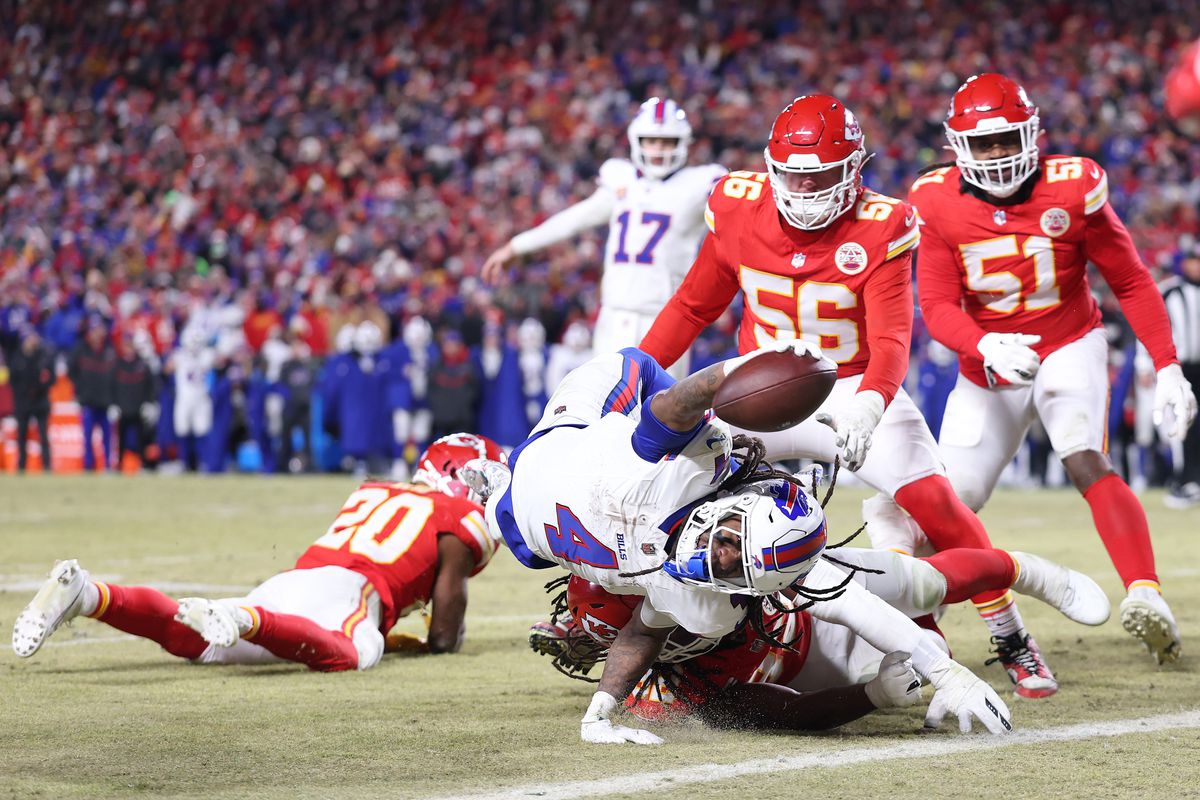
Photo by Jamie Squire/Getty Images
Christian McCaffrey ($19 million AAV) set the standard with 1,459 yards and 14 touchdowns in 2023, plus 67 receptions. Josh Jacobs ($14M AAV, three-year, $42 million with Green Bay) ran for 1,299 yards and 14 touchdowns in 2024, handling 316 carries to Cook’s 207.
Cook’s 4.9 yards per carry trails Barkley and Henry’s 5.8, and his 48% snap share is significantly lower. Spotrac’s $10.2 million AAV estimate for Cook reflects his tier below these elites. Remember, none of those guys have Josh Allen as their quarterback, which makes Cook’s life easier.
Ray Davis is exciting, Ty Johnson is reliable
If Cook decides to hold out, running back Ray Davis could step into the starting role with exciting potential. In 2024, Davis, a fourth-round pick, rushed for 320 yards on 75 carries (4.3 YPC) and three touchdowns in limited action. His Week 6 performance, filling in for Cook, was a standout: 97 rushing yards on 20 carries and 55 receiving yards on three catches, totaling 152 scrimmage yards.
Davis received a PFF grade of 72.1 overall, comparable to Cook’s 74.3, despite fewer snaps. His 0.15 missed tackles forced per carry (Next Gen Stats) nearly matches Cook’s 0.17, showing similar elusiveness.
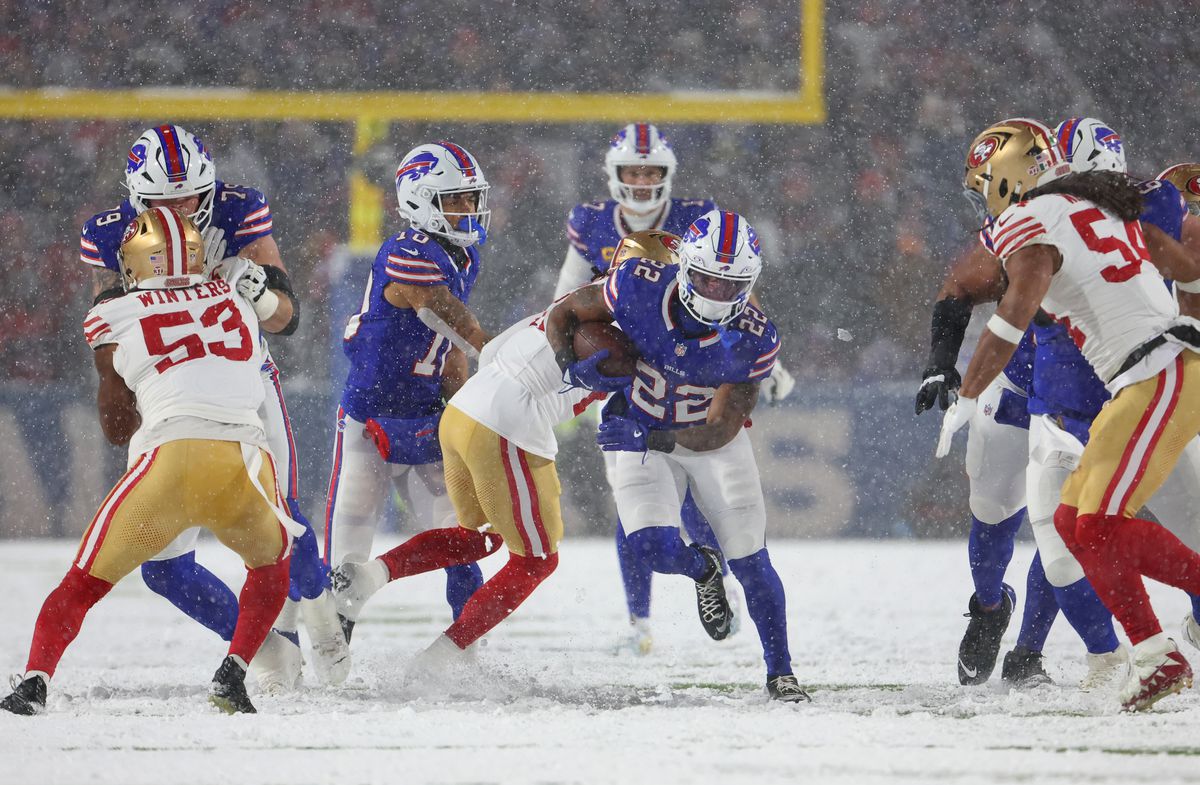
Photo by Timothy T Ludwig/Getty Images
Davis’ college numbers at Kentucky (33 receptions, 323 yards, 7 TDs in 2023) speak to his three-down potential. His 5’8”, 220-pound frame suits short-yardage work, with a 78% success rate on carries inside the five-yard line (PFF), compared to Cook’s 60%.
Davis also showed promise in pass protection, posting a 65.2 PFF pass-blocking grade in limited attempts, suggesting he could develop into a more reliable option than Cook. His direct running style minimized negative plays, with only 8% of his carries resulting in losses (vs. Cook’s 10%). At a $1 million cap hit through 2027, Davis offers cost-controlled production.
How about Ty Johnson? He further strengthens Buffalo’s backfield depth, being “the guy” when they need ball security late in games. In 2024, he averaged 4.4 yards per carry and caught 51 passes for 393 yards and six touchdowns.
His 82.4 PFF pass-blocking grade far surpasses Cook’s, explaining why he’s the ideal choice for third downs and two-minute drills. Re-signed for 2025, Johnson complements Davis, ensuring the run game, at the bare minimum, remains functional without Cook’s high salary.
The Josh Allen factor
Let’s not fool ourselves — no matter how much the Bills try to run the ball first, their offense revolves around Josh Allen, as his 2024 MVP season showed yet again: 4,269 total yards, 41 touchdowns, and just eight turnovers.
Scoring 30-plus points in 12 games last season, Buffalo’s success hinges on Allen, not a single running back. The run game’s effectiveness stems, first and foremost, from Allen’s threat. Then, after that, from the offensive line’s schemes and performances, and also from the running backs’ qualities.

Photo by Al Bello/Getty Images
It’s just very difficult to evaluate how effective the team’s run game would be without their unicorn QB under center (and we certainly don’t want to know). Paying Cook $15 million for a 48% snap share, especially when he isn’t even on the field in clutch situations, doesn’t mesh with prioritizing players who can support Allen in critical moments or even make the difference themselves — something we haven’t seen in a while.
The RB market and Cook’s value
The running back market underscores Cook’s overreach. Barkley’s $20.6 million AAV and Henry’s $15 million AAV reflect their elite status, while McCaffrey ($19 million) and Jacobs ($14 million) command premiums for workhorse roles.
Cook’s $15 million demand would make him the third-highest-paid back, despite inferior stats and usage. With the cap situation the team is in right now, the Bills can’t justify such a deal when Davis and Johnson offer affordable production.
Final Thoughts
James Cook’s talent is undeniable, but his low usage and lack of impact in the clutch make a $15 million contract untenable. Compared to the best in the business, like Barkley, Henry, McCaffrey, and Jacobs, he lacks elite three-down impact.
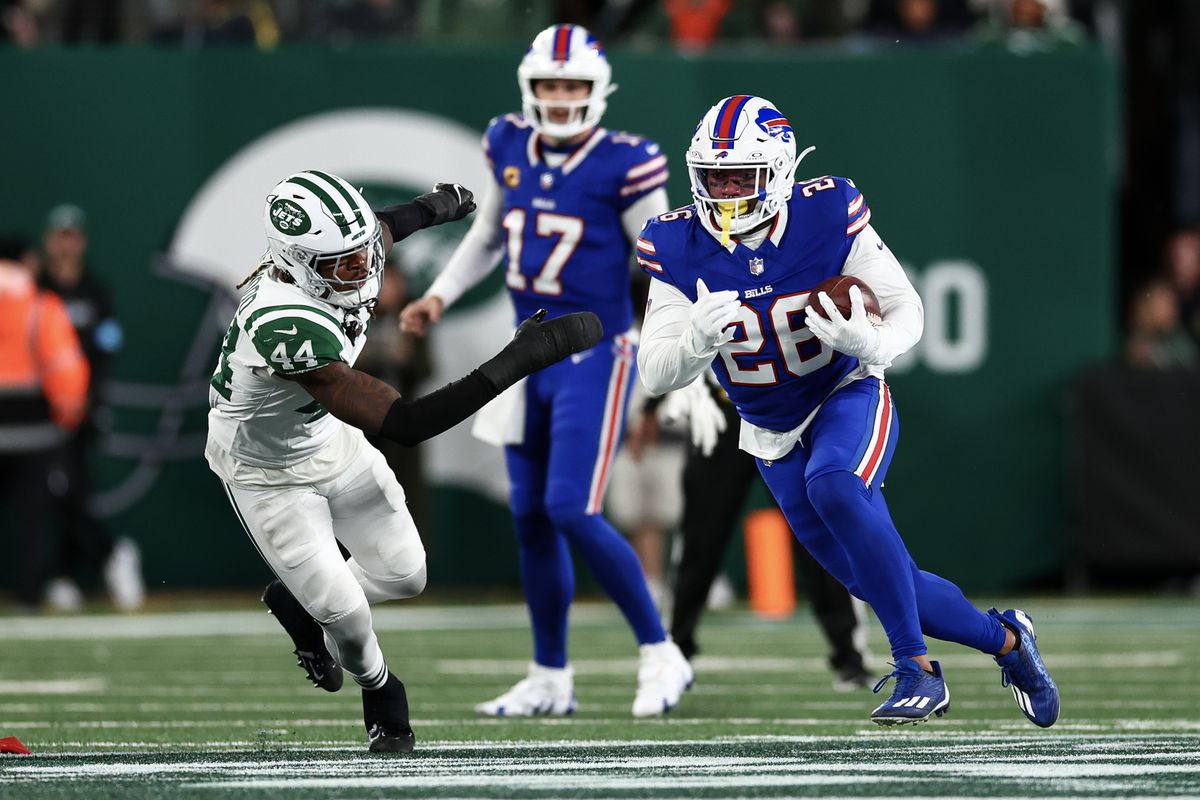
Photo by Kevin Sabitus/Getty Images
Ray Davis’ promising metrics — 4.3 YPC, strong receiving, and pass-blocking potential — make him an exciting starter if Cook leaves, while Ty Johnson provides depth and elite third-down production. Josh Allen’s dominance guarantees offensive success, allowing the Bills to prioritize cap flexibility and players who can elevate the team’s chances in critical moments.
If Cook continues to do what he’s done in his career so far, he might be able to become this type of player, perhaps making himself worthy of such a deal. He simply isn’t this player right now, though, and there are more questions about his ability to improve in the areas of his game he struggles with, instead of answers about how well he does what he already does well.
Standing firm against Cook’s demands is the prudent path to sustaining Buffalo’s Super Bowl window. He has one more year in his rookie deal to show he can become the team’s new Thurman Thomas. Right now, he isn’t, and shouldn’t be paid as such.
Catch up on all this and more with the latest edition of Leading the Charge