

Every year I take a look back at the MLB Draft class from 10 years prior to see where teams hit and where they missed in making their selections. This piece will focus on re-drafting the first 30 picks to account for the players who have succeeded the most in the 2015 class.
For people who like to call the MLB draft a “crapshoot” or similarly imply that there’s no skill in selecting players, I present the 2015 draft, where the five most successful players to date all went in the first round or the supplemental round right afterwards. That group has two true superstars — both drafted by the same team — and a couple of frequent All-Stars, but it turned out that this just wasn’t a great draft class, only looking better because the 2016 draft was a Superfund site. (For next year’s re-draft article on that group, I’m just going to submit a file that reads “-30-.”)
This is a “re-draft,” in which I try to reselect the top 30 picks based on what we know of the last 10 years and what I think these players might do for the remainder of their careers. I don’t include players who didn’t sign, and I don’t think about service time considerations (when you draft a player, you only control the first six-plus years of his career). I’m just going big picture here, and while I cite players’ Wins Above Replacement figures throughout (using Baseball-Reference), I didn’t just rank the players by their WAR totals; a few times I deviated quite a bit from those rankings.
This one got ugly pretty fast, well before I made it to 30 names, although I was pleased to see almost everyone on this list is still playing and, with probably just one exception, has a chance to still add some value in their careers.
I’ll follow up with a column on the “misses” of the first round, which includes some famous names but a lot of “remember some guys” types too.
(Note: WAR figures from Baseball-Reference through games of June 14. Scouting grades are on the 20-80 scouting scale. For a complete list of the actual 2015 draft, click here.)
1. Alex Bregman, SS/3B
Career WAR to date: 42.6
Spot Actually Selected: Round 1, Pick 2, Houston Astros
Player Actually Selected No. 1: Dansby Swanson, SS, Arizona Diamondbacks
The Astros had the second pick as compensation for their failure to sign their top pick the prior year, Brady Aiken, when a post-draft physical revealed a serious structural issue in Aiken’s elbow. The 2015 draft couldn’t have gone much better for them, as the player they took with that compensation pick, Bregman, has become the best player in the class by a huge margin.
He was a top prospect out of high school but was unsignable because of his commitment to LSU, then raked for the Tigers for three years. There was a question at the time about whether he could stay on the left side of the infield, and I don’t think even the Astros expected him to hit for this much power. His bounceback year so far in 2025, where he’s on track for his best season since 2019, doesn’t change his ranking here — he would have been first regardless — but it does change the outlook for him as he enters his mid-30s, since his 2024 season showed some possible signs of an early offensive decline.
2. Kyle Tucker, OF
Career WAR to date: 25.6
Spot Actually Selected: Round 1, Pick 5, Houston Astros
Player Actually Selected No. 2: Alex Bregman, SS/3B, Houston Astros
The Astros had the best draft in 2015, bar none. Having two picks in the top 5 certainly helped, although they hit on some other guys as well, as you’ll see later in this piece.
Tucker, who they selected with the No. 5 pick, was a highly regarded high school hitter with an advanced approach and the potential for plus power. His swing could get a little long and he was clearly destined for an outfield corner, but he was a consensus top 10 talent in the class. He’s just 28 and in the midst of what should be his fourth 5-WAR season, maybe even his best year if he stays healthy all the way through. He is the only player here who could hypothetically end up passing Bregman in total value when their careers are done.
3. Austin Riley, 3B
Career WAR to date: 22.7
Spot Actually Selected: Round 1A, Pick 41, Atlanta
Player Actually Selected No. 3: Brendan Rodgers, SS, Colorado Rockies
Riley was a two-way player in high school who some scouts preferred on the mound. He then raced through the minors after Atlanta took him with its second pick of the draft. He hit a wall in the majors, as he couldn’t hit or lay off sliders down-and-away and had similar trouble with fastballs up and in. But he overhauled his pitch recognition with the help of the late coach Mike Brumley, and became a completely different hitter. He posted an 88 wRC+ in the 2020 season, before his work with Brumley, and jumped to a 136 wRC+ the next year, and he’s been at least an above-average hitter every season since then. He’s settled in as a 45 defender at third, costing the team a couple of runs a year by Statcast measures, and may end up at first, so I don’t think he’s going to end up passing Tucker or Bregman in career WAR in the long run.
4. Dansby Swanson, SS
Career WAR to date: 26.0
Spot Actually Selected: Round 1, Pick 1, Arizona Diamondbacks
Player Actually Selected No. 4: Dillon Tate, RHP, Texas Rangers
Swanson was the first pick in the draft, and a reasonable one at the time, as a definite shortstop who’d hit well for several years at Vanderbilt despite a slight tendency to strike out too often. Then the Diamondbacks traded him that offseason in a shocking deal that sent two other players with him to Atlanta for Shelby Miller, a deal I still don’t understand 10 years later.
He seems to have peaked in 2022-23, with a pair of five-win seasons around his move to Chicago in free agency, but he’s lost some bat speed and right now is having his worst season at the plate since 2024. I don’t think he’s done as a regular, but he’s 31 and the odds are he’s not going to be nearly as valuable going forward as the younger guys I have in the two spots ahead of him.
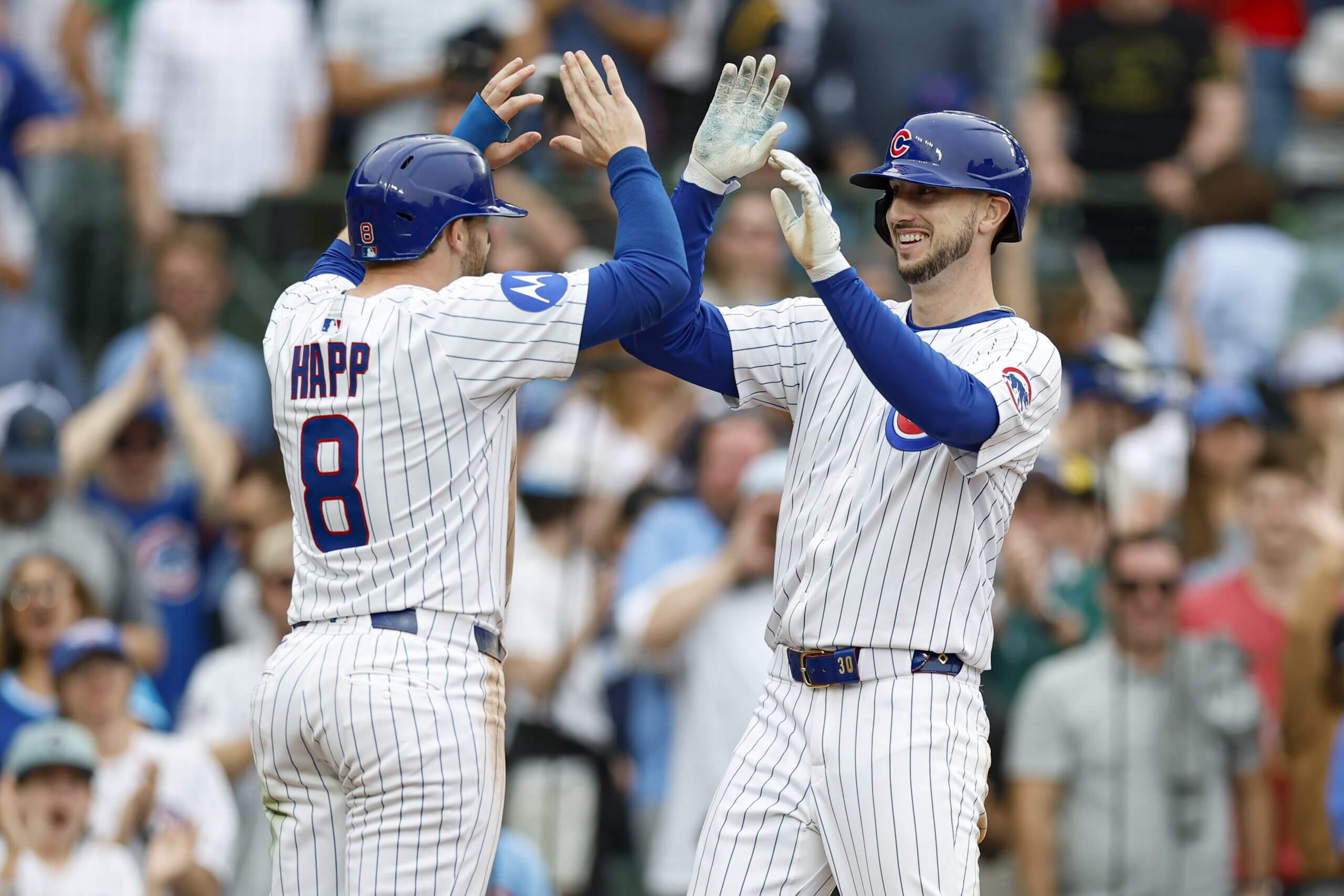
Ian Happ is teammates in Chicago with several 2015 draft picks, including Kyle Tucker. (Kamil Krzaczynski / Imagn Images)5. Ian Happ
Career WAR to date: 19.9
Spot Actually Selected: Round 1, Pick 9, Chicago Cubs
Player Actually Selected No. 5: Kyle Tucker, OF, Houston Astros
Happ has played all or part of eight seasons in the majors, reaching the big leagues just before the two-year anniversary of this draft, and his bat has been better than league-average in every one of them. The separator between him and the top four guys is defense — he’s a left fielder and a fringy one at best, after the Cubs tried him around the dirt and in center for several years. That may point to less value going forward in his 30s even if he keeps up his current walks-and-homers profile, as he could end up at DH in a couple of seasons. He has good taste in coffee, though.
6. Brandon Lowe, 2B/OF
Career WAR to date: 17.0
Spot Actually Selected: Round 3, Pick 87, Tampa Bay Rays
Player Actually Selected No. 6: Tyler Jay, LHP, Minnesota Twins
Lowe made a big swing change heading into the 2018 season that altered the course of his career, as he went from a fringe-power guy to 22 homers in the first year after the change, and a peak of 39 homers in the majors in 2021. The Rays used him at second and in right field during the earlier part of his career but he’s established now at second, where his bat is comfortably above-average and his glove is … well, not that. He has a team option for 2026 at $11.5 million, after which he’d be a free agent, and I wouldn’t be surprised to see him traded this July, even if the Rays are still in the race. He’s going to hold his value for a few more years until he has to move off second entirely.
7. Cedric Mullins, OF
Career WAR to date: 15.8
Spot Actually Selected: Round 13, Pick 403, Baltimore Orioles
Player Actually Selected No. 7: Andrew Benintendi, OF, Boston Red Sox
Mullins had a huge breakout season at 26, going from three homers in 48 games in 2020 to 30 homers in 159 games the next year, a season that was worth 6.2 WAR, which is still about 40 percent of his career value to date. He’s settled in since then as an above-average defender in center with a league-average bat, and that’s a valuable player. If the Orioles put him on the market this July as he approaches free agency, he should be one of the most-coveted rentals out there. He’s had the most valuable career to date of anyone picked after the 10th round in 2015, a great find by then-Orioles scout Rich Morales, who’s now with the Royals.
8. Harrison Bader, OF
Career WAR to date: 15.2
Spot Actually Selected: Round 3, Pick 100, St. Louis Cardinals
Player Actually Selected No. 8: Carson Fulmer, RHP, Chicago White Sox
Bader looked like he was done with any kind of regular major-league job after 2024 marked his third straight season of below-average offense, which offset a big chunk of his plus defense in center. The Twins have rejuvenated his bat, at least in the half-season he’s had so far, as he’s chasing fewer pitches out of the zone than he has since the pandemic season, and as a result his walk rate has shot up and he’s getting to some better pitches to drive.
Even if he doesn’t fully maintain this hot start, the elite defense and his ability to hit lefties well should give his career a long tail, but now there’s a chance he can tack on a few more years of everyday duty in center.
As an aside, I saw Bader in college, as I was there to see his teammate Richie Martin, and I completely whiffed on Bader’s defense — he looked sluggish, especially on first steps, and in no way did I anticipate him becoming even an above-average defender in center.
9. Trent Grisham, OF
Career WAR to date: 12.9
Spot Actually Selected: Round 1, Pick 15, Milwaukee Brewers
Player Actually Selected No. 9: Ian Happ, OF, Chicago Cubs
Grisham, who went by Trent Clark in high school, was a star on the showcase circuit in the year leading up to the 2015 draft, hitting particularly well against the best arms in those games. I had heard that he was the Rangers’ plan if they didn’t think they could sign Dillon Tate at the fourth pick.
The Brewers took Grisham at 15, but his major-league debut in 2019 was soured by a fielding blunder that cost them the Wild Card Game against the eventual World Series champion Washington Nationals. The Brewers dealt him to the Padres with Zach Davies that winter for Eric Lauer and Luis Urías, and he became the Padres’ regular center fielder, offering plus defense and a lot of walks but not much else with the bat. He went to the Yankees in the Juan Soto trade and is having a career year to date, even though Statcast has his defense regressing slightly. I think he’s going to play quite a bit longer because his ability to play center field will give him plenty of opportunities.
10. Andrew Benintendi, OF
Career WAR to date: 15.7
Spot Actually Selected: Round 1, Pick 7, Boston Red Sox
Player Actually Selected No. 10: Cornelius Randolph, SS, Philadelphia Phillies
Benintendi came out of nowhere to win the Golden Spikes Award in 2015 as a draft-eligible sophomore, then tore up the minors for a year before debuting with Boston in August 2016. He hit 20 homers in his first full year in the big leagues … and has never topped that since, tying it in 2024 in a year in which he only hit .229/.289/.396 despite the homer total.
The loss of power is one surprise, and the complete inability to play the outfield is another — he played center in college, reasonably well, and is now an awful defender in left, with minus-25 runs below average in left field over the last two full seasons, per Statcast.
His career WAR total is obviously fine given where he was picked, but I don’t think he’s lived up to the expectations of the industry from when he was drafted, and I don’t see much value going forward, either.

Ke’Bryan Hayes’ defense has lived up to the draft hype. (Orlando Ramirez / Imagn Images)11. Ke’Bryan Hayes, 3B
Career WAR to date: 13.7
Spot Actually Selected: Round 1A, Pick 32, Pittsburgh Pirates
Player Actually Selected No. 11: Tyler Stephenson, C, Cincinnati Reds
Hayes was widely seen as an elite defender even in high school, and that part of his scouting report has been spot on. He also was seen as a guy who’d hit for average, with power the ultimate question — he had the size and strength for it but never the swing — and none of that has panned out, as he’s been a league-average hitter exactly once so far in his big-league career. In about a full season’s worth of games since the start of 2024, he’s hitting .231/.283/.288. He’s 28 this year, so there is still a small window for him to make some serious changes, but right now he’s not an everyday player and I don’t see a lot of additional value for him going forward, even though he’s younger than many of the guys ahead of him on this list.
12. Walker Buehler, RHP
Career WAR to date: 12
Spot Actually Selected: Round 1, Pick 24, Los Angeles Dodgers
Player Actually Selected No. 12: Josh Naylor, 1B, Miami Marlins
Buehler was really good as a sophomore at Vanderbilt and kept it going that summer on the Cape, but in his junior year he missed time twice with what was euphemistically described as forearm tightness and the like, when it turned out he was pitching with a torn UCL. The Dodgers took him with the No. 24 pick knowing he’d need Tommy John surgery, and during his rehab, Buehler worked unbelievably hard on getting himself stronger across the board, so when he returned just to throw sim games the next year he was sitting 98-100.
We’ve seen flashes of that guy since then, including the 7.1 WAR season he posted in 2021, but since his second TJ he’s thrown 131 innings with a 5.22 ERA and 5.36 FIP, allowing 27 homers in that span. I’m not giving up on him having value in the future, as he still has a broad arsenal with enough stuff to get righties out consistently, but it may come in a different role than as a regular starter.
13. Jake Cronenworth, 2B/1B
Career WAR to date: 13.6
Spot Actually Selected: Round 7, Pick 208, Tampa Bay Rays
Player Actually Selected No. 13: Garrett Whitley, OF, Tampa Bay Rays
Cronenworth was a two-way player at Michigan and a decent prospect either way, enough that the Rays, who originally drafted him, gave him a few innings in relief in Triple A in 2019 to see if he might be able to do both. They ended up trading him to the Padres that winter in a deal that brought back Hunter Renfroe and Xavier Edwards, and he’s been a Padre — and a hitter only, aside from one relief appearance in 2021 — ever since.
He’s played all over, but is mostly at second now, although his defense has gone from above average to below since his debut and he may be best-suited to first base or an outfield corner. The bigger concern is that his bat is slowing down, for which he’s compensated this year by becoming more patient and selective than ever before. That works for a while until pitchers just decide to attack you in the zone and make you hit it.
14. Paul DeJong, SS
Career WAR to date: 13.3
Spot Actually Selected: Round 4, Pick 131, St. Louis Cardinals
Player Actually Selected No. 14: Kolby Allard, LHP, Atlanta
DeJong was — or became — an elite defender for his first few years in the majors, racking up 10.8 WAR in his first three seasons, and since then he’s been barely above replacement level while losing much of that defensive prowess. He’s at 0.7 WAR since the start of 2022, and since he turns 32 in August, he may be done as more than an emergency call-up. He was a great find in the fourth round, especially since he wasn’t especially impressive as a hitter at mid-major Illinois State.

Ty France has well out-performed his draft position in the 34th round. (Jason Miller / Getty Images)15. Ty France, IF
Career WAR to date: 8.9
Spot Actually Selected: Round 34, Pick 1,017, San Diego Padres
Player Actually Selected No. 15: Trent Grisham, OF, Milwaukee Brewers
Now we have our first player selected in a round that no longer exists. France wasn’t even a senior sign in that spot, which would be typical for a college player taken so close to the end of the draft, and signed for just $100,000 as a junior out of San Diego State. It’s never been very pretty on either side of the ball, but France could always hit, with strong contact rates all the way up the minors and in the two years he had in Seattle, where he produced nearly all of his big-league value to date (7.2 WAR between 2021-22).
16. Tyler Stephenson, C
Career WAR to date: 7.4
Spot Actually Selected: Round 1, Pick 11, Cincinnati Reds
Player Actually Selected No. 16: James Kaprielian, RHP, New York Yankees
Stephenson took a while to establish himself, due more to frequent if often unrelated injuries along the way, but right now he looks like a solid everyday catcher and someone who could probably do that for another five years or so. He was something of a pop-up guy in his senior year of high school — at least, he was the guy everyone raced in to see before his season ended — who showed plus or better power, a 70 arm, and a long swing.
He’s kept the contact rate up but hasn’t shown quite as much power as expected. His game is a quiet 1.5-2 WAR as a catcher, but those are kind of hard to find. I’m pretty sure Dave Stewart, GM of the Diamondbacks at the time, was there the day I saw him, and I remember being very confused since they picked first and not again until No. 43, so Stephenson looked for all the world like a “tweener” — a guy who’d go between their picks.
17. Josh Naylor, 1B
Career WAR to date: 6.5
Spot Actually Selected: Round 1, Pick 12, Miami Marlins
Player Actually Selected No. 17: Brady Aiken, LHP, Cleveland Guardians
I didn’t love this pick, since Naylor didn’t have a great body even as a teenager and looked like he’d be stuck at first base — or even end up at DH. High school first basemen have not been a great demographic across draft history, since they have to really hit to have any value. He’s settled in now as a solid regular with enough of a platoon split that he’ll eventually end up needing a right-handed hitting caddy. He’s on his fourth organization now, as the Marlins traded him 13 months after they drafted him, perhaps not coincidentally, shortly after an incident where he stabbed teammate Stone Garrett in the thumb in what the team called “a prank gone wrong.”
18. Ryan Mountcastle, 1B
Career WAR to date: 8.1
Spot Actually Selected: Round 1A, Pick 36, Baltimore Orioles
Player Actually Selected No. 18: Phillip Bickford, RHP, San Francisco Giants
Mountcastle had bat speed and raw power as a high school prospect, but a below-average arm and no clear position, which is how he ended up at first base. He’s done pretty well for a guy who has never developed much plate discipline, with a .313 career OBP, never once drawing 50 walks in a season, making up for it with some very hard contact and above-average power, peaking back in 2021 with 33 homers. He’s in the midst of his worst season to date across the board, although he’s just 28 and it would be early for him to actually be on his way down.
19. Taylor Ward, C
Career WAR to date: 7.8
Spot Actually Selected: Round 1, Pick 26, Los Angeles Angels
Player Actually Selected No. 19: Kevin Newman, SS, Pittsburgh Pirates
Ward was a real reach at the time of the draft, as he was a catcher who probably couldn’t catch, but to his credit he remade himself as a hitter going into 2022, by which point the Angels had moved him to the outfield. He’s never been much of a hitter for average, but he has some power and some on-base skills, racking up 7.5 WAR from 2022-24 after appearing to be a bust as recently as 2021. He’ll turn 32 this offseason but should have a few more years as a regular.
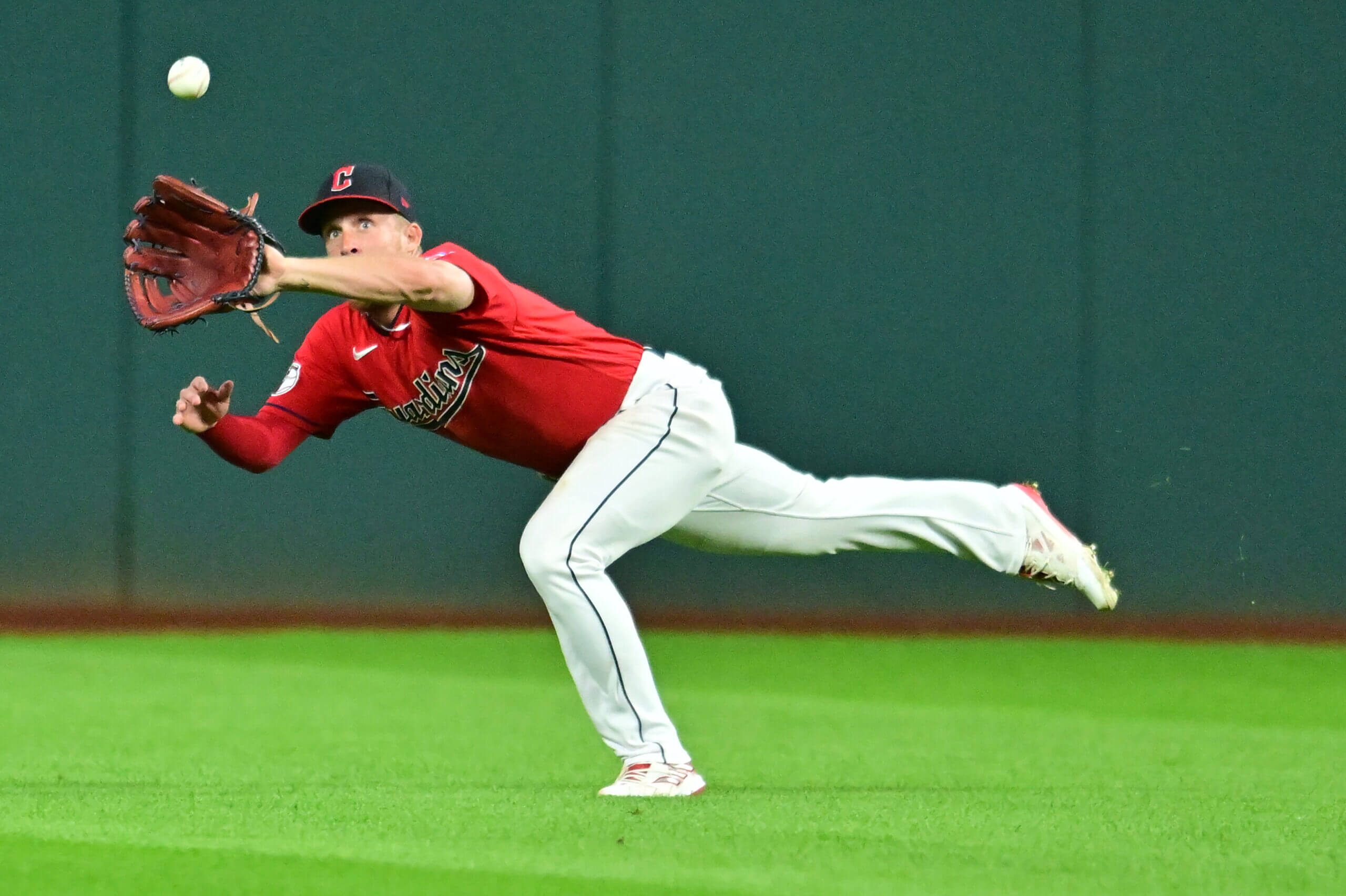
Myles Straw has been a spectacular defender as a big leaguer. (Ken Blaze / Imagn Images)20. Myles Straw, OF
Career WAR to date: 8.2
Spot Actually Selected: Round 12, Pick 349, Houston Astros
Player Actually Selected No. 20: Richie Martin, SS, Oakland Athletics
Straw generated 6.0 WAR in 2021-22, although Cleveland fans may best know him as the guy they got for Yainer Diaz (7.1 WAR for Houston and counting). Straw has no power, homering once every 89 games in his major-league career, but is a plus runner and plus defender in center, so he still has some value as the last guy on a roster.
21. Dylan Moore, UT
Career WAR to date: 8.0
Spot Actually Selected: Round 7, Pick 198, Texas Rangers
Player Actually Selected No. 21: Ashe Russell, RHP, Kansas City Royals
Moore received the second-smallest signing bonus of everyone on this list, just $10,000, as not just a senior sign, but an older one — he turned 23 two months after the draft. He didn’t debut until he was 26 1/2, after a trade that sent him to Atlanta, Jeff Francoeur to Texas and Matt Foley to live in a van down by the river. He’s now appeared in a major-league game at least once at every position but catcher, and has at least 100 innings at seven of those, just not as a pitcher. He was a solid defender at second base for a bit and drew some walks, but always struck out too much to last as a regular. If it sounds like I’m still flummoxed at how he ended up one of the 30 best players in this draft class, well, I am. Great pick by Texas, though.
22. Ryan Helsley, RHP
Career WAR to date: 7.5
Spot Actually Selected: Round 5, Pick 161, St. Louis Cardinals
Player Actually Selected No. 22: Beau Burrows, RHP, Detroit Tigers
When Helsley reached the majors in 2019, he became the first big leaguer ever from Northeastern State University in Oklahoma, and remains the only one. He’s having a down year so far, and it looks like he might have had the all-too-typical short reliever career path — of his 7.5 career WAR, 7.2 of them came in 2022-24, which included two All-Star appearances. His fastball has straightened out in 2025 and it’s getting hit hard; if there’s any silver lining here, and thus a chance he’ll continue to add to his career totals, it’s that he’s still averaging 99 mph on the pitch. Where there’s heat, there’s hope.
23. Mike Soroka, RHP
Career WAR to date: 6.5
Spot Actually Selected: Round 1, Pick 28, Atlanta
Player Actually Selected No. 23: Nick Plummer, OF, St. Louis Cardinals
Soroka’s been hurt more than he’s been healthy in pro ball, but the one full season he had in the majors was incredible: in 2019 he posted a 2.68 ERA across 174 2/3 innings and produced 6.0 bWAR/4.0 fWAR. That’s the only time he’s thrown even in 100 innings in a single season. He missed all of 2021-22 with injuries, threw just 32 innings in 2023 and then had a decent enough year as a swingman for the White Sox last year that the Nationals are trying him out as a starter. He’s in the midst of his best year since the big one, too homer-prone but otherwise effective enough to be a fifth starter for most teams. He won’t turn 28 until August.
24. David Fletcher, SS
Career WAR to date: 10.3
Spot Actually Selected: Round 6, Pick 195, Los Angeles Angels
Player Actually Selected No. 24: Walker Buehler, RHP, Los Angeles Dodgers
Fletcher was an extreme contact hitter at Loyola Marymount, with 40 strikeouts in 515 PA over his last two years there, and that’s pretty much what he was in his big-league time. He had no power to speak of, but could handle shortstop and hit for solid batting averages for a few years; the moment he lost a little bat speed, he was done. He spent most of 2024 in the minors as a pitcher, but with a 6+ ERA. As of this writing, he is in Triple A for Atlanta, hitting .155/.206/.209.
25. Brendan Rodgers, SS
Career WAR to date: 6.0
Spot Actually Selected: Round 1, Pick 3, Colorado Rockies
Player Actually Selected No. 25: D.J. Stewart, OF, Baltimore Orioles
Rodgers makes the re-draft but his major-league time has been a disappointment given where he was picked and how good he was as a high school hitter. A reader asked in the comments under a recent article if predicting a player’s hit tool was the hardest thing to do in evaluating prospects, and I said yes, by far; Rodgers is now in the pile of players who back that up.
There was a lot of disagreement over whether he’d stay at shortstop and how much power he’d develop, but he certainly looked like he was going to hit. He never made any adjustments to his approach on his way up the minor-league ladder, whether it’s pitch recognition or swing decisions, which is how you end up with a .316 OBP while playing half your games in Denver.

Jeffrey Springs was another late-round steal. (Douglas P. DeFelice / Getty Images)26. Jeffrey Springs, LHP
Career WAR to date: 6.2
Spot Actually Selected: Round 30, Pick 888, Texas Rangers
Player Actually Selected No. 26: Taylor Ward, C, Los Angeles Angels
Springs signed for just $1,000 as a college senior, so the two smallest bonuses received by the guys on this list both came from the Rangers, who had a heck of a draft that year. He was traded twice, landing in Tampa Bay. The Rays moved him to the rotation and got a 3.8 WAR year out of him before he blew out his elbow, then traded him shortly after his return from Tommy John surgery. He’s starting again, now for the A’s, whose home park in Sacramento is hitter-friendly and has made him look less valuable than he’s been. He might get back to mid-rotation level at some point. That he made the majors at all as a 30th-round pick and $1,000 sign is amazing.
27. Patrick Sandoval, LHP
Career WAR to date: 6.0
Spot Actually Selected: Round 11, Pick 319, Houston Astros
Player Actually Selected No. 27: Mike Nikorak, RHP, Colorado Rockies
Sandoval is a great, early example of the Astros’ analysts identifying a pitcher with interesting pitch characteristics who didn’t grade out as well via traditional scouting, as he never threw that hard and didn’t seem to offer much projection. He did creep up to the point where his fastball had 45 velocity, but he could get guys out with an assortment of other pitches, including a sinker, that offset the lack of pure velo. He’s out until at least the second half of this season after Tommy John surgery but should have several years of pitching left in him, assuming he returns to full strength.
28. A.J. Minter, LHP
Career WAR to date: 6.0
Spot Actually Selected: Round 2, Pick 75, Atlanta
Player Actually Selected No. 28: Mike Soroka, RHP, Atlanta
I saw Minter very early that spring, at home, on the same trip when I saw Hayes, and until 2021 or so that game at College Station was the coldest I had ever been while at a ballpark, 45 degrees at first pitch, and apparently the concourse there is just a wind tunnel. I hated his delivery but the two pitches were impressive enough to see a strong reliever upside. He blew out before the draft, Atlanta took him anyway, and he gave them 5.6 WAR over 384 appearances, all of them in relief. He’s out for the rest of 2025 after surgery to repair a lat muscle.
29. LaMonte Wade Jr., OF/1B
Career WAR to date: 5.0
Spot Actually Selected: Round 9, Pick 260, Minnesota Twins
Player Actually Selected No. 29: Jon Harris, RHP, Toronto Blue Jays
There’s a whole mess of guys in the 3.5-5 WAR range from this draft, and you could pick any of them for the last few spots here — I didn’t see anyone below that who might be a late bloomer and end up passing the group — but I went with Wade because he actually came into 2025 with 6.4 WAR, then had the worst two months of his career. He might be done, but I see a small chance he can be a bench bat against right-handers and back up at first and in the outfield corners. He was a low-power center fielder at University of Maryland who seldom struck out; I think in today’s environment, he probably goes several rounds higher given the way the industry has changed how it values college hitters.
30. Chris Paddack, RHP
Career WAR to date: 3.4
Spot Actually Selected: Round 8, Pick 236, Miami Marlins
Player Actually Selected No. 30: Kyle Holder, SS, New York Yankees
Paddack’s 0.7 WAR this year is the second best of any season in his career — in his rookie year of 2019, the closest he’s ever come to a full year of work, he produced 2.9 WAR. (He’s actually produced 3.8 WAR as a pitcher and minus-0.4 as a hitter.) The Padres picked him up in a June 2016 trade from the Marlins for Fernando Rodney, but he was likely already hurt and blew out his elbow three starts later. He was a projection right-hander in high school who sat around 89-90 mph, getting on top of the ball well with a changeup that was already promising and of course ended up a plus pitch.
(Top photo illustration Alex Bregman (left) and Kyle Tucker (right): Gary A. Vasquez, Kim Klement / Imagn Images)